Ten Incredibly Strange Singles Released By BBC Records And Tapes

BBC Records And Tapes released some really, REALLY weird singles in their time, spanning the entire spectrum of 'popular' music all the way from from the That's Life team posing as comedy punks about ten years after punk happened, to the sound of the BBC Radiophonic Workshop hitting a phone. At least they were interesting, though; here are ten singles where you can't help but wonder who anyone in their right mind thought might actually buy them...


RESL172 Wimbledon Break Point/New Balls Please - Bass Line


Originally commissioned as backing music for the BBC’s Wimbledon coverage, this upbeat electropop track was extended and bolstered by samples of top tennis ne'er-do-well of the day John McEnroe for single release, to no particularly beneficial effect. The b-side was a remix of the a-side, as if one was in any way actually needed.


RESL185 'Heroes'/A Long Way To Go - The County Line

 
Billed as featured ‘Essex Artistes for BBC Children In Need’, this rather theme-misinterpreting cover of David Bowie’s 1977 hit was one of the less inspired contributions to the mid-eighties vogue for multi-handed charity singalongs, and featured contributions from Suzi Quatro and members of The Kinks, The Rubettes and Bronski Beat amongst many decidedly less famous others.


RESL187 Boss O'The Black/Willie Thorne, King Of The Maximum Break - Jed Ford


UK country music star Jed Ford wrote and performed this bewilderingly-targeted snooker-themed song, regularly used at the time in the BBC’s television coverage of the sport, with the b-side paying oddly specific tribute to the popular snooker player who had won the previous year’s Classic Tournament. Released, it should be noted, in direct competition with Snooker Loopy by Chas'n'Dave And The Matchroom Mob.


RESL189 It's 'Orrible Being In Love (When You're Eight And A Half)/Big Sister - Claire & Friends


In 1986, Saturday Superstore launched ‘Search For A Superstar’, a lengthy contest in which viewers voted for their favourite of a group of talented youngsters. The eventual winner, narrowly beating a band of teenaged Duran Duran wannabes, was ten-year-old Claire Usher from Stockport, who sang humorous pop songs in a broad accent. In the final, she had performed It’s ‘Orrible Being In Love (When You’re Eight And A Half), written by Mick Coleman and Kevin Parrott (who, as Brian & Michael, had a number one hit with Matchstalk Men And Matchstalk Cats And Dogs in 1979), and this became a surprise hit, reaching number 13 in the charts. The 12” also included a ‘Megaminormix’ of the a-side, though is now notorious as one of the lowest-selling 12”s of a hit single for the entire eighties. Usher went on to record REB606 Super Claire.


RESL194 The Wedding Song/Sad Movies – The True Love Orchestra


Issued to commemorate the wedding of HRH Prince Andrew and Sarah Ferguson on 23rd July 1986, this synthesiser medley of Wagner’s Bridal Chorus and Mendelssohn’s Wedding March was largely the work of BBC Radio Clyde presenter John MacCalman, who had a sideline in composing library music to order. The Wedding Song was used several times in television coverage of the event. It clearly served the happy couple well.


RESL196 Superman/Rainbow – Claire


A second single outing for a now friendless Claire Usher, with another two songs lifted from REB606 Super Claire. Perhaps predictably, it failed to repeat the success of the earlier single (though more surprisingly, given what happened that time, there was a 12” featuring an extended version of the a-side), and Claire retired from pop music to pursue a successful career in stage musicals.


RESL198 Power From Within/Power From Within (Instrumental) - International Athletes Club with Steve Menzies


A fundraising effort for the International Athletes Club, this charity singalong featured bona fide athletes Sebastian Coe, Roger Black, Phil Brown, Kriss Akabusi, Todd Bennett, Tim Hutchings, Eugene Gilkes, Myrtle Augee, Kim Hagger, Sharon McPeake, Mary Berkeley, Linda Keough, Lindford Christie, Shirley Strong, Jane Parry, Paula Dunn, Kirsty Wade, Christina Boxer and Wilbert Greaves, and was written and produced by eighties chart star Phil Fearon. You can probably start humming it as it is.


RESL205 You Know The Teacher (Smash-Head)/Don't Stop - Grange Hill Cast


While others recognised its obvious novelty status, the success of the Grange Hill cast's anti-drug anthem Just Say No convinced BBC Records And Tapes that it would be worth issuing an album by the cast of their popular school drama. REB609 Grange Hill The Album featured one side of middle-of-the-road pop covers, and one of original schoolroom-themed songs with lyrics by series creator Phil Redmond. The lead single's bafflingly titled a-side – largely performed by series regulars George 'Ziggy' Christopher and John 'Gonch' McMahon – was drawn from the latter, and the ensemble Fleetwood Mac cover on the b-side from the former, with the 12” also boasting Redmond original Girls Like To Do It Too and actor Ricky 'Ant Jones' Simmonds’ cover of I Don’t Like Mondays. Despite the show’s huge popularity, and the single being afforded the rare privilege of a specially-shot video (oddly featuring the vocalists walking about in silence rather than miming), it failed to chart.


RESL206 Soapy/Al's Way - Top Of The Box


Alan Coulthard, a remixer responsible for many a chart-topping 12” Extended Version in the mid-eighties, was the man behind this peculiar medley of soap opera themes, taking in EastEnders, Dynasty, Dallas and Howard’s Way, and doubtless issued in an attempt to capitalise on the success of certain recent soap-related singles. However, club patrons were to prove to be not quite so keen on soap themes and the record failed to find an audience, despite the presence of – what else? – an Extended Version on the 12”.


RESL226 We Wanna Be Famous - Buster Gobsmack & Eats Filth/ The Toreador From Japan - El Shaftit & The Timeshares

 
One of the most convoluted stories behind a BBC Records And Tapes single release started early in 1988, when the production team of That’s Life! received several letters from struggling Manchester-based musicians complaining about a local video producer who hadn’t captured their act to their satisfaction. As part of an investigation, the show sent presenters Adrian Mills and Grant Baynham to make a video with him posing as punk rockers ‘Eats Filth’ (an anagram, in case it wasn’t obvious, of That’s Life!), ‘parodying’ a long outdated youth cult that the show still seemed to find inexplicably hilarious; as the excellent Left And To The Back blog put it, "the shrieks of laughter from the studio audience whenever a London punk was vox popped by Mills or one of his cohorts proved a baffling noise to hear". Though the video they produced was hardly likely to win any MTV Awards, the ‘expose’ on the hapless aspirant film-maker responsible was possibly a little unfair and the story was conspicuous by its failure to progress beyond one edition. We Wanna Be Famous, however, had more staying power, performed on the show – with the instruments actually played by the That’s Life! team, led inevitably by Doc Cox and including Gavin Campbell on drums and Esther Rantzen on percussion, for an authentic ‘punk’ sound – to huge gales of audience laughter, and inspiring so much viewer correspondence that it ended up on a single, which surprisingly failed to chart. It has since become, by virtue of its sheer ineptness both as a piece of music and as a lyrical parody, something of a cult classic. And as if that wasn’t all confusing enough, the b-side related to another That’s Life! Investigation into dodgy timeshare deals, which had resulted in Mills’ strangely Japanese-sounding attempts at a Spanish accent becoming a running joke. This has not quite become as much of a cult classic.


Top Of The Box, the story behind every single released by BBC Records And Tapes, is available from here.

Ten Reasons Why Dagenham Dave Is Better Than Smells Like Teen Spirit


"Smells Like Teen Spirit - it's no Dagenham Dave, is it?", I recently mused on Twitter. And while that may have been a deliberately provocative throwaway joke, it's also actually somewhat on the true side. For while the deceptively lazy 1995 half-hit in its own bizarre way encapsulates everything I have ever liked about the ideologically-challenged quiff-led erstwhile Smith (and, in fairness, everything that a lot of other people dislike about him), it also in a similarly bizarre way nails exactly what a reasonably well-adjusted youngster from the other side of the Atlantic with a liking for expensive trainers could never quite hope to find in the shampoo-averse caterwaulings of Kurt Cobain (1967-1993) and company.

Not convinced? Well, here's ten reasons why Dagenham Dave is better than Smells Like Teen Spirit:

- Whereas Nirvana have inspired a frankly terrifying volume of column inches' worth of sub-Quietus Cultural Despairers wailing "O TEMPORA O MORES O RED HOUSE PAINTERS" and launching into diatribes about how we failed to heed the message of when Juliana Hatfield was that rubbish ghost in My So Called Life and everything that's going on in the world now is all our fault (especially if you liked Blur), Dagenham Dave only ever inspired Mark Lamarr telling an anecdote about overhearing a bloke sat on a doorstep saying "he's well out of order... I mean, I'm from Dagenham, and my name's Dave...".

- In place of a heavily compressed and distorted guitar solo that inspired million upon million of teenage boys to adopt it as their 'trying out guitars in a music shop' showstopper of choice, Dagenham Dave has an hilariously lackadaisical weedy synth solo that could only feasibly inspire anyone to try and remember how the theme from Simon And The Witch went.

- The video avoids heavy-handed 'symbolism' with cheerleaders and mop buckets in favour of TV's Gripper Stebson doing some Moz-observed comedy business.

- Saying "a denial" sixteen times may well be a profound statement about something or other, but just going "Dagenham Dave/Dagenham Dave/oh Dave from Dagenham/Dagenham Dagenham Dave" is trying to get up people's noses for the sake of it.

- "On the window screen" is a more gloriously pointless distortion of the English language than mispronouncing "albino".

- Smells Like Teen Spirit may well be a clarion call to take up arms against something or other where nobody's actually sure what it is that came from the depths of a tortured yet artistically brilliant soul, but Dagenham Dave was an aimless satire of dull blokey blokes who'd done nothing outwardly obviously wrong written at the height of worries over an impending court case relating to a petty dispute over tedious details of a contract from years earlier. One of these may be slightly more easy to relate to than the other.

- "I would say more/but you get the general idea" is quite simply the best way to end a song ever. And that includes Footloose.

- On a more serious note, regardless of the rights and wrongs of the incident (well, incidents) that actually caused it, Morrissey was ostracised by the music press at that point in a way that Kurt Cobain never, ever was - again, something that it's actually slightly easier for some people to relate to - and the flippant throwawayness of Dagenham Dave could be interpreted as a massive two fingers to certain individuals who had long since given up judging his music on its own merits. Erm, possibly.

- Oh hang on, I said ten reasons, didn't I? Well, I would say more...

Unfinished Radiophonic Business

Yes, it's a great big post about the BBC Radiophonic Workshop! Sort of. One of the problems with taking a short break from this blogging malarkey - which I have done recently, in order to give you all a chance to read The Very Best Of Paintbox, The Big Book Of TATP and Super Expanded Deluxe Edition (there'll be a test later) - is that you invariably end up leaving a post that you thought was going to turn into another chart-topper half-finished, and then when you eventually come back to it you just can't work out what you would have been driving towards.

One such yanked-from-the-archives half-finished chart-topper-that-never-was began with this promising-sounding bit of history about the BBC Radiophonic Workshop...


If you own the excellent career-spanning 2CD compilation BBC Radiophonic Workshop - A Retrospective, chances are that you may not have listened to the second disc very much. In fact, you may not even have sat through it in full at all.

Stretching from 1981 to 1997, it captures the Workshop's composers, musicians, and providers of burbling scraping noises in the years after computerised sound manipulation - or, if you will, samplers, sequencers and software - had revolutionised their whole approach to making music. In the exciting new World Of Tomorrow of MIDI and the Fairlight CMI and what have you, it was now possible for those with the technological knowhow to create the kind of full-sounding ultra-realistic soundtracks that TV producers had always wanted almost at the touch of a button, though arguably at the expense of the sonic invention, make-do-and-mend electronic creativity, and, well, ridiculous noises that had characterised the Workshop's earlier output. And it's hard to argue with the idea that, as a consequence, while their compositions and arrangements became infinitely more sophisticated and suited to their intended purpose, this was somewhat at the expense of actual standalone listenability. While that second disc does indeed do a sterling job of representing the breadth and variety of their output during those years, and there are a couple of brighter moments such as Paddy Kingsland's tracks from The Hitchhikers Guide To The Galaxy (which are much more listenable than they have any right or reason to be), Peter Howell's decidedly odd 'escaping fish' rendition of Saint-Saens' Aquarium, stray bits of backing atmospherics from the likes of Captain Zep - Space Detective and Ghost In The Water, the unexpected familiarity of opening theme from late eighties Children's BBC technologically risible 'computer hacking' thriller Dead Entry, and the fact that something called Slambash Wangs Of A Compo Gormer was actually broadcast, taken as a whole it's a bit of a musical endurance test and perhaps it's hardly surprising that so many should choose to give it a wide berth.

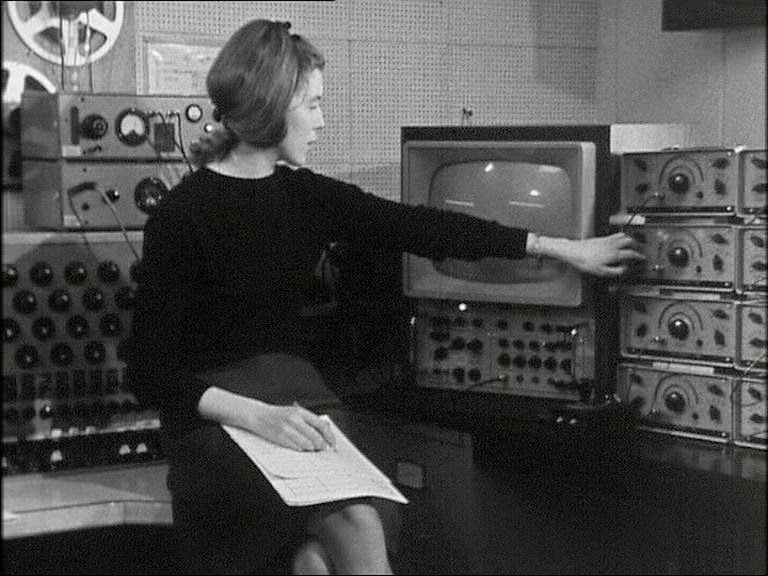
What this has also meant though, unfortunately, is that another chapter of the Workshop's history has been given almost as wide a berth by association. Perhaps understandably, a widespread belief seems to have taken hold that the only 'true' incarnation of the Radiophonic Workshop was when the likes of Delia Derbyshire, John Baker and David Cain were chopping up bits of backward tape with school geometry sets before whizzing off to the Roundhouse to listen to AMM melting a bin. There is certainly some mileage in this in theory, but in practice it just ends up excluding the second wave of prog-rock one-man-bands that took up residence in the mid-seventies with their Micro Moogs, vocoders and funny two-guitars-stuck-together things in the early seventies; the aforementioned likes of Paddy Kingsland, Roger Limb and Peter Howell, who were collectively responsible for all that stuff that sounded like Henry VIII playing with a pocket calculator that you used to get backing film of Russian Space Station experiments.


A pretty strong starting point, but where was it all leading? Well, that's as big a mystery as The Chem Lab Mystery (Maddalena Fagandini, 1963).