Showing posts with label captain zep - space detective. Show all posts
The Sci-Fi That Time Forgot
If you’re a fan of Gene Roddenberry’s Dreamgate DSV - and there must be some out there, as indeed there must be such a series, probably - it’s no good moaning about the gap between ‘seasons’. If your withdrawal symptoms are really that bad, you’ve always got the spinoff series, the DVDs, the novels, the comics, the ‘webisodes’, the soundtrack albums, the coffee mugs, the dinner jackets and the submarine to fall back on. And if you’re really really stuck, you can start your own online fan forum and argue until you’re blue in the face with headcases who understand neither the programme nor how to formulate proper sentences.
But it wasn’t always like this. Not all that long ago, there was no Torchwood, no Heroes 360, and no Play Nick Cutter’s ‘Spot The Anomaly Game’ On Your Mobile Phone. Mainly because there was no Primeval, Heroes or revived Doctor Who, but that’s by the by. Before the home entertainment revolution, if your favourite show was off the air you just had to wait for it to come back. And wait. And, if it was The Tripods, wait some more.
If you were extremely lucky, there might be a handful of awkwardly-scheduled repeats, and if you were very rich you might even be able to buy two and a half scrappily-edited episodes on video, but mostly it was a case of trying to find something to fill the seemingly-endless gap. Which is where other completely unrelated examples of science fiction came in. No matter how much you may have been missing Kerr Avon and company, there was always something else around on television or radio (or indeed the cinema) if you looked hard enough. A stroll around your local library would reveal all manner of novels with lurid yet still laughable covers by writers with exotically American-sounding names and superfluous middle initials. And in a real emergency, there were always those books about Black Holes and Peter Davison’s Book Of Alien Planets that well-meaning relatives had bought you on being told you liked ‘space’.
Much of this Substitute Sci-Fi - and quite rightly in most cases - has been long since forgotten about. Everyone will still have their own fondly-remembered examples, though, and there’s a small amount that deserves to be remembered as more than simply what you did to while away time during that pesky eighteen-month Doctor Who ‘hiatus’. Maybe some of it’s even due a revival, possibly even with ‘webisodes’ of its own. Here are a couple of shows, books, films and, erm, card games that this particular writer would like to see dusted down and given some long overdue appreciation.
The Stainless Steel Rat
Before Red Dwarf, before Terry Pratchett, even before Douglas Adams, there was only one name in sci-fi/comedy crossover - Harry Harrison. His wickedly satirical tales of futuristic conman James Bolivar diGriz, the ‘Stainless Steel Rat’ of the title who commits his crimes in the name of entertainment, began with the first novel in 1961 and had clocked up an impressive ten instalments (not to mention a board game, a strip in 2000AD, and a totally unhinged parody of ‘Choose Your Own Adventure’ books) by the time of the most recent to date in 1999. Along the way he’s got married, overthrown a dictator, joined a circus, and been coerced into countless time-travelling alien-battling missions by his law enforcing arch-enemies The Special Corps. If you’re thinking all of this sounds familiar then you’re entirely right - The Rat, whether knowingly or not, is the template for all of the science fiction anti-heroes that have become so beloved of audiences since, from Zaphod Beeblebrox to Captain Jack Harkness and beyond (there’s even a suspicious amount of a certain Doctor detectable in there too). At one time libraries were absolutely heaving with the books, which were eagerly borrowed by withdrawal symptom-suffering fans once they were finally allowed in the ‘adult section’, and although their following has since dwindled and some aren’t currently in print, they sold in massive numbers at the time and aren’t hard to find second hand. Harry Harrison’s written countless other books worth checking out too, including the closely-related (if slightly more straight-faced) Deathworld novels, the military-baiting Bill The Galactic Hero series, overpopulation thriller Make Room! Make Room! (later loosely adapted for the big screen as Soylent Green), and the utterly absurd parodies of a certain secret agent show, The Man From P.I.G. and The Man From R.O.B.O.T..
Earthsearch
You’re probably racking your brains in total bafflement at the name, but time was when Radio 4’s enduring sci-fi serial Earthsearch was a very big deal indeed. So much so in fact that its fame spread beyond radio to encompass spinoff novels, cassette releases, a stage play and a frankly unlistenable sound effects album (though that Inner Airlock Door Open And Close is a real groover). James Follett’s tales of the crew of the starship Challenger and their quest to discover planets suitable for human colonisation have a suitably bleak and isolated atmosphere and were very much in the ‘intellectual sci-fi’ style that the BBC in particular favoured in the late seventies/early eighties (think Blake’s 7, only with slightly more gripping storylines), and while they may seem a little wordy for modern tastes and the crew may despite their non-visual nature be clearly over-bearded, like the contemporaneous Radio 4 adaptation of The Lord Of The Rings - in which many of the Earthsearch cast also appeared - they really did connect with their target audience at the time and are fondly remembered by a surprisingly large contingent of devotees. Follett also wrote a number of other similar serials for Radio 4 including Rules Of Asylum, Light Of A Thousand Suns and The Destruction Factor, and he wasn’t the only one - the station produced many other sci-fi serials and plays around this time, most notably Aliens In The Mind, written by legendary Doctor Who scribe Robert Holmes and starring the impressive pairing of Vincent Price and Peter Cushing.
Jeff Wayne’s Musical Version Of The War Of The Worlds
It started as a jingle composed for a Lego commercial, and ended up as one of the biggest-selling albums of the seventies. For all its apparent mass-marketed populism, Jeff Wayne’s Musical Version Of War Of The Worlds is effectively the then-recent and decidedly non-commercial trend towards concept albums and symphonic ‘soundscapes’ given a quick polish and taken to its most slickly commercial extreme; a kind of evil twin to Tubular Bells if you want to be poetic about it. And yet, despite all this, there was still something about the sonic retelling of HG Wells’ novel, ‘starring’ the likes of Richard Burton, David Essex, Phil Lynott and Julie Covington, that drew sci-fi starved genre devotees towards it long after it had finished its dominance of the album charts. Viewed as a whole it’s clearly a load of dreary prog-rock nonsense, but time has been kinder to this than it has been to most dreary prog-rock nonsense, and there’s an amused postmodern thrill to be had from the overambition of the project, not to mention a genuine musical thrill from some of the more inspired orchestral passages. Some may rightly point towards the superior Poe/Asimov-adapting efforts by The Alan Parsons project from which the whole idea was ‘borrowed’, and as such albums go this writer may infinitely prefer the more quirky and melodic tongue-in-cheek eco-thriller Consequences by Godley And Creme and Peter Cook, but Jeff Wayne’s moneyspinning take on the whole strange phenomenon is worth another listen. Well, one, maybe.
Low Budget Sci-Fi Films On Television
These days any old sci-fi film that comes along has one eye on the BAFTAs whilst amping up those scary-noise-and-discordant-orchestra-and-high-speed-jerky-camera-action-oh-look-it’s-gone-black-and-white bits, but time was when the entire genre could be broken up into two subdivisions - Star Wars and Everything Else. And the natural habitat for Everything Else was, of course, on television on a Bank Holiday afternoon. How about the endearingly ramshackle Battle Beyond The Stars, famously shot in five weeks on sets where the paint was still drying yet somehow as enjoyable as enjoyable hokum gets? Then there’s Hammer’s lone Julie Driscoll-soundtracked excursion into science fiction Moon Zero Two, Gerry and Sylvia Anderson’s live action-debuting dry run for UFO that was Doppelganger, Disney’s uncharacteristically downbeat killer robot-festooned The Black Hole, Ralph Bashki’s oddball post-apocalyptic animated comedy Wizards, the influential-for-about-three-minutes Tron, The Last Starfighter, Flight Of The Navigator, Hangar 18, The Philadelphia Experiment, *batteries not included, Short Circuit, The Adventures Of Buckaroo Banzai Across The 8th Dimension, that one about the first passenger flight to the moon, that other one about the alien that helps the high school nerd bag a date with the head cheerleader, and so many more that may not even have had names in the first place. Not one masterpiece between them, and yet they were always such a welcome sight when found sandwiched between some ice-dancing spectacular and that Guinness Book Of Records thing that David Frost used to do. You don’t see them much any more, sadly, but maybe that’s because they’re probably all available on DVD in those ‘All Films £1.99’ bins. And we haven’t even got started on those illicitly-sneaked from the video shop ‘adult’ treats like Inseminoid and My Science Project...
V
Keeping along roughly the same lines, how many people out there went to great lengths to sneakily record this briefly notorious American big-budget miniseries (or, more daringly still, surreptitiously stayed up to watch it on the black and white portable) in the knowledge that they would never ‘officially’ be allowed to watch it? As a basic story V was one of the most clichéd in the sci-fi book, little more than a not particularly major spin on the time-honoured Evil Aliens Disguised As Kindly Humans Invade By Stealth And Crusading Journalist Uncovers The Truth format. V, however, had serious money and a crack team of scriptwriters behind it - not to mention short-lived lust icon Jane Badler as the primary antagonist - and did everything with such flair and panache that it was hard not to become hooked. Surprisingly for an American TV series of its vintage, there was a good deal of subtle and genuinely funny humour too, not least the notorious scene in which one of the carnivorous invaders scoffed a lab rat. V was a big enough hit to give rise to a second miniseries, V: The Final Battle, which proved to be misleadingly titled as it was followed in turn by a full-blown weekly series, which surprisingly fell flat on its face and was never recomissioned. The whole lot is now available on DVD, which you can pretend to be watching illegally in the middle of the night if you want to recreate the full original viewing thrill.
The Boy From Space
One of those perennial ‘what was the name of that one where...?’ TV shows, this filmed serial about a stranded alien on Earth was shown (and indeed endlessly repeated) as part of the long-running BBC Schools language development-themed show Look And Read. And although trying to follow it involved what seemed like hours of sitting through smug letter-embossed orange puppet presenter Wordy and his even more tedious still human helper droning on in their space station about what happens when you place vowels next to each other, it was well worth the effort because this was scary and atmospheric stuff, with the hapless garbled bleep-spouting spaceboy unable to communicate to his young human discoverers that he was being relentlessly pursued by a sinister ‘Thin Man’ (played by regular Doctor Who guest actor John Woodnutt). Until they worked out a way of deciphering... well, that would be spoiling it, although Wordy was sufficiently impressed by the method to refuse to shut up about it for what seemed like a century. The Boy From Space was written by Richard Carpenter of Catweazle, Robin Of Sherwood and The Ghosts Of Motley Hall fame, and is all the more impressive given that he was asked specifically to use no more than a couple of hundred basic words throughout the ten-part serial.
Captain Zep - Space Detective
While its close associate The Adventure Game is rightly celebrated, this other post-Douglas Adams Children’s BBC sci-fi game show seems to have sadly been forgotten about. Every week Captain Zep – “a man of steel, a man of nerve” as the bafflingly New Wave-tinged theme song had it - would relate one of his outer space case histories to a studio audience of youngsters from the ‘SOLVE Academy’ via a series of crudely animated watercolour renditions of alien beings and alien planets, stopping the narrative at a key point to ask if the audience could solve the case from the clues already given (“So who was the saboteur? Why was Grazarax in the Munitions Bay?”). The studio audience got to write their answers down on those ‘Magic Writing Slate’ things that wiped clean when you ran the plastic bar along them, but more excitingly you, the viewer at home, got to write in with your answer, and if you were one of the fifty lucky winners picked out from the proverbial ‘hat’, you’d receive a SOLVE badge all of your own. As dull as that may sound on the printed page, this was compulsive viewing at one point. A special mention here for the unnervingly uniform futuristic fashions (slicked-back hair and orange and yellow jumpsuits with unwieldy collars seemed to be the order of the day here), and for the fact that the actor playing the Captain changed between series, leading to a heated exchange of opinions on the BBC’s junior viewer correspondence show Take Two.
Starships
So you’ve read all your books, there’s nothing on the radio or TV, and you couldn’t possibly bear to hear Justin Hayward bleating “the chances of anything coming from Mars” one more time... how about a nice game of cards? Union Jack-logoed game-makers Waddington’s have a not entirely undeserved reputation for cheapskate ‘second division’ efforts, not least on account of their apparently fondness for ‘worthy’ (i.e. dull) dice-based Ludo variants and the dreaded inevitable Christmas present The Games Compendium, but sometimes they managed to pull something spectacular out of the Scrabble bag and this insanely addictive Game Of Outer Space was a prime example. The premise was ridiculously simple - draw random cards from a pile to assemble a very long Space Cruiser out of individual parts. But throw in a derived element of Top Trumps which allowed those in possession of the correct armaments to pilfer vital components from other players’ vehicles, and you end up with something almost disproportionately fun, fast-moving and competitive. Complete and un-scuffed copies are in high demand on certain auction sites, and it’s also worth remarking on how several of the illustrated cards had a strangely photographic quality to them. Did someone out there build their own ‘Starship’ for real??
Star Trader
If you were feeling a bit more ‘space age’ than a mere card game could cater for, you could always leave Starships in its box and have a go at this futuristic strategy game for the 48k ZX Spectrum. The primary aim of Star Trader was to make as much money as possible whilst zooming between planets to barter with large-headed Portland Bill lookalikes, dodging intergalactic pirates along the way, and making the difficult choice between a continental breakfast and the more expensive and score-depleting Full English. Slow and reliant on mathematical skills it may have been, but it boasted one crucial element that most other early home computer strategy games lacked; it did actually involve some degree of interaction with the game player, unlike the likes of Football Manager and The Great Space Race which basically required you to sit back and watch them playing themselves. It is perhaps testament to the former high status of this long forgotten game that manufacturers Bug-Byte Software still have their own star on hometown Liverpool’s long-abandoned ‘Walk of Fame’.
Redubbed Japanese Anime
One of the forgotten facets of the pre-Home Video age was that there was literally no market for some sorts of films and shows. Never was this truer than in the case of cult Japanese animation; though massively popular and moneyspinningly merchandised in its homeland, and indeed often raved about in genre magazines over here, there was no real viable outlet for it and so it largely went unseen. That is, until, some enterprising Americans got their hands on certain long-running TV series and chopped and changed them around to make them more suited to the sensitivities of English-speaking audiences. Thus it was that Science Ninja Team Gatchaman, shorn of all references to transvestism, schizophrenia and guards lacerated by flying metal birds, and with two much-derided comedy robots inserted in their place and mental space-age disco music bolted on, became the phenomenally popular Battle Of The Planets. With their curiosity aroused by this rearranged glimpse of an exciting world of entertainment they knew nothing about, said audiences also took with great enthusiasm to Star Fleet (or Bomber-X in old, erm, yen), and Ulysses 31 (Ulysses 31, believe it or not) amongst others. Nowadays, with the shelves of the average high street music store positively heaving with Manga films about someone going ‘a-a-aaaa’ when a bird’s eye glints or something, you can get the original versions with handy subtitles, but when it comes down to it we all initially fell in love with the mangled versions and don’t you forget it. And anyway, G-Force aren’t half as much fun without 7-Zark-7 and 1-Rover-1.
This is an extract from Well At Least It's Free, a collection including features on Doctor Who, The Secret Service, Hardwicke House, Tales From Europe, Trumpton and many more. You can get it in paperback here or from the Kindle Store here.
Stay Alert!
You’d probably need some sort of Space Detective to work out exactly what started off the early eighties trend for ‘intelligent sci-fi’. But whatever it was, even the most amateur of Space Detectives could prove beyond all reasonable doubt that it made for something of a renaissance of the genre and some top notch books, films, television and radio shows. On the BBC alone you got, amongst others, The Hitch-Hiker’s Guide To The Galaxy, The Day Of The Triffids, Peter Davison-era Doctor Who, Blake’s 7, Radio 4’s Earthsearch, and even a couple of children’s game shows, both of which which are remembered far better than any children’s game show of the time has any right to be. And neither of which was Cheggers Plays Pop.
The Adventure Game, a Hitch-Hiker's-inspired series of logic puzzles designed to fox the combined intellect of Stilgoe’n’Craven-heavy teams of Children’s BBC-friendly celebrity contestants, is rightly and roundly celebrated anywhere you might care to look. But not so the equally fondly-recalled Captain Zep – Space Detective. But who was this Captain Zep? How did he come to attain the coveted rank of ‘Space Detective’? And what does all this have to do with Ernie Wise, cash-strapped punk rockers and a semi-naked Glynis Barber? Well, to find out, we’ll have to go to another time, another place, where the clues are indeed there for you to trace…
Captain Zep – Space Detective ran for two series and twelve episodes on BBC1 between 1983 and 1984, featuring quizzes based on crimes from the casebook of the crew of Zep One, the flagship of the 21st Century’s Space Office of Law Verification and Enquiry – or S.O.L.V.E. for short. Each episode would see Captain Zep and his two assistants relate one of their past cases to an audience of youngsters sporting slicked-back hair and cumbersome orange jumpsuits; said youngsters were invited to pick up clues from the action and, following a couple of leading questions from the Captain (“So… who was the saboteur? Why was Grazarax in the Munitions Bay?"), offer their own conclusions on who the intergalactic culprits were, scribbling their answers down on a neon pink ‘magic slate’. Once the successful had been congratulated and the unsuccessful commiserated, the Captain addressed the audience at home with an additional poser about the case, inviting them to write in with their answer and, just possibly, win a S.O.L.V.E. badge of their very own.
All very ordinary sounding and indeed semi-educational sounding, but what really made Captain Zep – Space Detective stand out was that it looked like a 2000 AD strip come to life. Literally, in fact, as the archived cases of the Captain and company were achieved by superimposing the actors into a series of crudely animated futuristic watercolours of aliens, spaceships and landscapes; many of these were the work of Trevor Goring, a rising star of the comics world who would later become better known for his work on the official Torchwood strip and the feature film version of Watchmen. For such a simple idea, the effect was surprisingly well-rendered, and it’s probably no coincidence that this same technique had very recently been used for Jane, BBC2’s Glynis Barber-starring adaptation of the exploits of the thirties comic strip heroine with a penchant for losing her clothes. As coincidence would have it, one of the artists working on Jane was Paul Birkbeck, who also contributed to Captain Zep - Space Detective and - in an apparent bid to dominate the mid-eighties BBC by sheer will of pencil alone - was also responsible for the sketches seen in the titles of Miss Marple.
Perhaps surprisingly, Captain Zep - Space Detective was created by veteran gagsmith Dick Hills. With his writing partner Sid Green, American-born Hills had been a highly sought-after writer for post-war comedians, with their engagements including a long stint providing sketches for Eric Morecambe and Ernie Wise (which also saw them script the duo's three sixties feature films), and contributing to Anthony Newley's notorious absurdist sitcom The Strange World Of Gurney Slade. He would later spend part of the seventies in America, working with the likes of George Carlin, Richard Pryor and Flip Wilson, and by the time of Captain Zep - Space Detective he was busy churning out topical one-liners for the likes of Rory Bremner and Jasper Carrott. Hills would write all six episodes of the first series, which saw the Captain recall his investigations into Death On Delos, The Lodestone Of Synope, The Plague Of Santos, The G&R 147 Factor, The Tinmen Of Coza and The Warlords Of Armagiddea.
Captain Zep was portrayed by Paul Greenwood, already well-known to viewers as the long-suffering PC 'Rosie' Penrose in a series of sitcoms penned by Roy Clarke, with Ben Ellison as disconcertingly naïve second-in-command Jason Brown, and Harriet Keevil as the more forensically-minded Professor Spiro. Unusually for a series of this nature, the three had a clearly-defined and often antagonistic relationship with each other, and also a fair amount of comic dialogue. They also had three of the bulkiest costumes ever seen on television, which were doubtless very uncomfortable under hot studio lights, with Keevil’s gaining unwitting iconic status amongst adolescent males of a certain generation due to its elaborate stylised bust-adornments.
Not everything about Captain Zep - Space Detective was quite so futuristic. Firmly rooted in the here and now - though, it has to be said, light years ahead of much of the BBC's children's output of the time - was the synth-heavy New Wave-styled theme song, complete with suitably clumsy rhymes like “help me help me if you can/Space Investigator Man/across the stars he’s on his way/it’s Captain Zep to save the day!”, which were delivered in a suspiciously proto-Blur vocal style. If you're thinking this sounds like the work of a long-forgotten second-wave New Wave outfit of the sort that used to crop up on Cheggers Plays Pop all the time, that's because it was the work of a long-forgotten secong-wave New Wave outfit of the sort that used to crop up on Cheggers Plays Pop all the time. A rare punk signing to EMI's predominantly prog-rock imprint Harvest, The Banned had enjoyed a couple of hits at the turn of the eighties with covers of relatively obscure sixties psych-punk numbers like Little Girl and Him Or Me. After the hits had dried up, various members had taken to recording music for use in films and TV shows, which including the BBC's long-running children's art magazine show Take Hart.
It was this association that led to them being commissioned to record the Captain Zep - Space Detective theme song, which sufficiently popular to be released as a single by BBC Records And Tapes during the first series. Credited to 'The Spacewalkers' and backed by the unrelated instrumental groover A Race Against Time, this was, along with a little-seen puzzle book, the only official (and, let's face it, basically the only) item of merchandise related to the series. However, obsessive Captain Zep collectors should note that the theme also appeared on the album BBC Children's TV Themes in 1984 (also home to the Peter Howell arrangement of Doctor Who and the full-length theme song from legendarily outlandish Japanese import Monkey, as well as numerous other delights from shows aimed at a younger audience, which is why it fetches a fair amount second hand now), while Dick Mills' effects from the 'Armagidden War Games' appeared as a track on the BBC Radiophonic Workshop album The Soundhouse, while an earlier self-titled Radiophonic Workshop collection included Mills' Adagio, which was used as backing atmospherics in the S.O.L.V.E. Academy sequences.
Broadcast early in 1983, Captain Zep – Space Detective was a hit with its intended audience and with sci-fi fans desperate for something to fill the long gap between series of Doctor Who, and a second run was commissioned for early the following year. Paul Greenwood, however, was unavailable, due to commitments for Thames TV's upcoming adaptation of The Secret Diary Of Adrian Mole Aged 13 3/4, so he was replaced as Captain Zep – now revealed to be a title bestowed on the captain of Zep One – by Richard Morant. This was an unusual departure for an actor who was almost exclusively known for heavyweight costume dramas, though in fairness the role did require him to tackle heavyweight costumes of an altogether different kind. Harriet Keevil was also replaced by Tracey Childs as Professor Vana, while Dick Hills handed the writing duties over to Colin Bennett. One of the more eccentric figures in the dramatic arts, classically-trained Bennett was well-known to younger viewers of the BBC for playing a comedy janitor of the same name in the long-running Tony Hart-fronted art show Take Hart, and while working on Captain Zep – Space Detective he was also hard at work scripting the equally futuristic juvenile sitcom Luna for ITV. Subsequent career moves have seen him do everything from direct stage musicals to presenting the legendary off-the-cuff ITV nighttime documentary series Night Shift, placing him in the unusual position of having writing the scripts for Death Under The Sea, The Missing Agent Of Ceres, The Small Planet Of Secrets, The Sands Of Sauria, The Tree Of Life and Death By Design appear as one of the more conventional entries on his CV.
Sadly, this was to be the final outing for Captain Zep – Space Detective. Although popular, it was also one of the most expensive series produced by the Children’s Department at that time, and when they were forced to make cuts to help accommodate the forthcoming launch of a BBC daytime service, it was unsurprisingly one of the first to be axed. Hapless viewers could only turn to Starstrider, ITV’s attempt to fill the void with a rather aimless sci-fi quiz fronted by Sylvester McCoy. While Ben Ellison was rarely seen on TV afterwards, Paul Greenwood, Richard Morant and Harriet Keevil still often show up in guest roles, usually in Midsomer Murders, while Tracey Childs went on to spend several years as one of the stars of the BBC's yacht-boardroom drama Howard's Way.
As for Captain Zep – Space Detective itself, as fondly remembered as it might be, there’s no sign of even a DVD release, let alone any kind of revival. We can only hope that, somewhere, the punkily-heralded ‘Man of Steel, Man of Nerve’ is looking for clues to his own mysterious cancellation in front of a giant comic strip rendering of Michael Grade’s face.
An earlier version of this feature originally appeared in in This Way Up magazine. You can find more about the single release of the Captain Zep - Space Detective theme in Top Of The Box, my book about BBC Records And Tapes, and more about weird, wonderful and mundane forgotten TV shows in Well At Least It's Free, Not On Your Telly and The Camberwick Green Procrastination Society.
Unfinished Radiophonic Business
Yes, it's a great big post about the BBC Radiophonic Workshop! Sort of. One of the problems with taking a short break from this blogging malarkey - which I have done recently, in order to give you all a chance to read The Very Best Of Paintbox, The Big Book Of TATP and Super Expanded Deluxe Edition (there'll be a test later) - is that you invariably end up leaving a post that you thought was going to turn into another chart-topper half-finished, and then when you eventually come back to it you just can't work out what you would have been driving towards.
One such yanked-from-the-archives half-finished chart-topper-that-never-was began with this promising-sounding bit of history about the BBC Radiophonic Workshop...
If you own the excellent career-spanning 2CD compilation BBC Radiophonic Workshop - A Retrospective, chances are that you may not have listened to the second disc very much. In fact, you may not even have sat through it in full at all.
Stretching from 1981 to 1997, it captures the Workshop's composers, musicians, and providers of burbling scraping noises in the years after computerised sound manipulation - or, if you will, samplers, sequencers and software - had revolutionised their whole approach to making music. In the exciting new World Of Tomorrow of MIDI and the Fairlight CMI and what have you, it was now possible for those with the technological knowhow to create the kind of full-sounding ultra-realistic soundtracks that TV producers had always wanted almost at the touch of a button, though arguably at the expense of the sonic invention, make-do-and-mend electronic creativity, and, well, ridiculous noises that had characterised the Workshop's earlier output. And it's hard to argue with the idea that, as a consequence, while their compositions and arrangements became infinitely more sophisticated and suited to their intended purpose, this was somewhat at the expense of actual standalone listenability. While that second disc does indeed do a sterling job of representing the breadth and variety of their output during those years, and there are a couple of brighter moments such as Paddy Kingsland's tracks from The Hitchhikers Guide To The Galaxy (which are much more listenable than they have any right or reason to be), Peter Howell's decidedly odd 'escaping fish' rendition of Saint-Saens' Aquarium, stray bits of backing atmospherics from the likes of Captain Zep - Space Detective and Ghost In The Water, the unexpected familiarity of opening theme from late eighties Children's BBC technologically risible 'computer hacking' thriller Dead Entry, and the fact that something called Slambash Wangs Of A Compo Gormer was actually broadcast, taken as a whole it's a bit of a musical endurance test and perhaps it's hardly surprising that so many should choose to give it a wide berth.
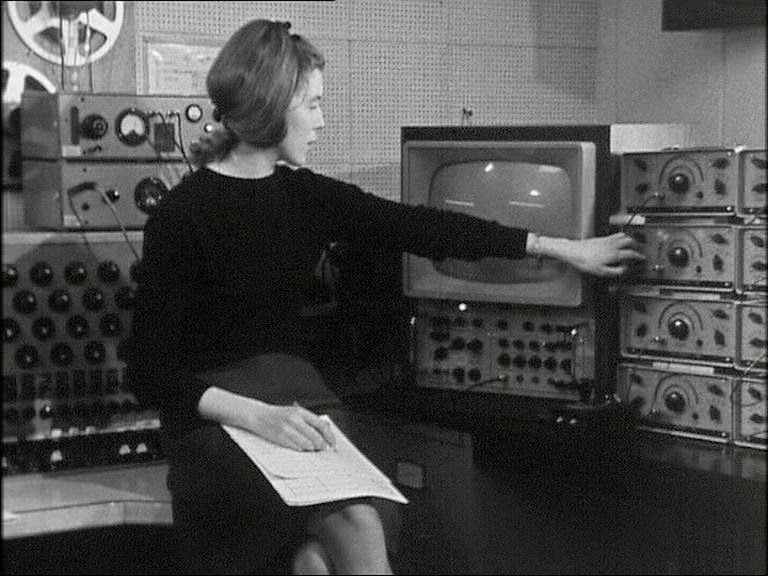
What this has also meant though, unfortunately, is that another chapter of the Workshop's history has been given almost as wide a berth by association. Perhaps understandably, a widespread belief seems to have taken hold that the only 'true' incarnation of the Radiophonic Workshop was when the likes of Delia Derbyshire, John Baker and David Cain were chopping up bits of backward tape with school geometry sets before whizzing off to the Roundhouse to listen to AMM melting a bin. There is certainly some mileage in this in theory, but in practice it just ends up excluding the second wave of prog-rock one-man-bands that took up residence in the mid-seventies with their Micro Moogs, vocoders and funny two-guitars-stuck-together things in the early seventies; the aforementioned likes of Paddy Kingsland, Roger Limb and Peter Howell, who were collectively responsible for all that stuff that sounded like Henry VIII playing with a pocket calculator that you used to get backing film of Russian Space Station experiments.
A pretty strong starting point, but where was it all leading? Well, that's as big a mystery as The Chem Lab Mystery (Maddalena Fagandini, 1963).
Subscribe to:
Posts (Atom)


![[INSERT IMPENETRABLE YET WILDLY INAPPROPRIATE JOKE ABOUT 'TURN HER OVER FOR MAGENTA COURT' OR SOMETHING HERE]](https://blogger.googleusercontent.com/img/b/R29vZ2xl/AVvXsEgpWhqbsowgUakdkrSbU8xv0MOZFDVj6fpowxT2ZRYAxE46MIwAS6vYsNMBPvxQmWEO2dv0XELvLhyJDDjewRtbVB-gHAkVmVD87D3uVx1bK4vhzFPTC76onLOKuvH490h4-RJrY-R_qgUF/s1600/glassdarkly.jpg)