Christmas With Children's BBC: Watch - The Nativity

Watch Continuity Slide

Watching TV in school was a week-brightening treat at any time of the year, but especially so in the run-up to Christmas. While in those days the gap between the first week of September and the last week of December could seem to stretch on into infinity, whenever the Schools' TV shows went into their oft-repeated Festive modules, you at least knew that it was now only a matter of weeks until you were able to spend your mornings watching The Red Hand Gang and finding that all of the Matchmakers had been eaten before you'd even got near them. And - more importantly - not having to go to school.

Although Music Time's lavish stop motion-animated adaptations of The Nutcracker and Lieutenant Kije probably make it a close run thing, it's a fair bet that the most fondly remembered of these Festive diversions is the two-part retelling of The Nativity by Watch. First seen on BBC1 in 1977, and repeated many times up to the early nineties - sometimes in a standalone omnibus format on or around Christmas Day itself - it's perhaps not surprising that so many erstwhile schoolchildren should look back on it with such affection. As well as tying in with memories of sitting cross-legged in front of those funny big televisions with shutters on them, it's also redolent - much like Blue Peter's more widely celebrated Advent Crown - of a time when cheap home-made decorations were not just tolerated but actively encouraged, and of a long-lost simpler and more exuberant way of making and indeed watching television. And of course with realising that the Christmas Holidays were only a matter of weeks away. It probably wouldn't do to understate that one.

So, in the first of a series of articles looking back to that simpler and more exuberant time in BBC Children's Television in particular (although, yes, this one was technically a BBC Schools production), today we're going to be taking a look at those two episodes of Watch and trying to work out what made them just so immovably lodged in the collective memory of a generation or two in a way that the Christmas modules of Going To Work or Mathshow sure never managed to. If indeed either of them ever actually had Christmas modules, and the fact that nobody's quite sure whether they did or not says a lot really. Anyway, it's time to watch Watch. A time of celebration. A time to clap your hands and be cheery...


The first episode of the Watch Nativity opens with that instantly familiar combination of jaunty jazzy flute theme music (as later shamelessly purloined by The Wonder Stuff for Welcome To The Cheap Seats) and shapeshifting title-spelling blobs of multicoloured modelling clay, which on this occasion set out their, erm, stall by morphing into a rough approximation of a crib. Instead of cutting straight to the studio, though, there's a dissolve into expensive-looking location footage of presenter Louise Hall-Taylor and her alarmingly expansive layered hairstyle sitting on a hillside in Jerusalem. Although Watch had been running since 1967, initially under the stewardship of the somewhat less with-it Rosanne Harvey, the former anchor of ITV lunchtime show Hickory House had come on board in 1976 as part of a more assertive relaunch of the well-established documentary strand to incorporate more interactivity and humour. Although Louise was also present for pretty much all of the other well-remembered Watch interludes, including the modules on Robinson Crusoe, David And Goliath, evolution and, erm, pancakes, this remains her definitive small-screen moment, and when you witness that opening shot it's not difficult to see why.

Pre-adolescent hearts might well have been a-flutter, but Watch is ostensibly here to engage their minds, and that's why Louise is keen to tell us her reason for lounging around on some rocks in a natty white dress and necktie - she's listening to some bells sounding from "not a very big town... but one of the most famous towns in the world". After some pretty impressive shots of Bethlehem and indeed those notably sonorous bells, she tells us that over the next two weeks they're going to be telling us a story, although it's actually going to be started off back in 'the studio' by her co-presenter James Earl Adair. If you'd been thinking that this was all starting to look impressively expensive for a schools television production, then the book-balancing is about to begin in earnest.


In fact, book-balancing is something of an understatement. James hasn't even finished making all of the props and puppets for the story before the cameras start rolling, and after introducing us to a model house ("it's not at all like the houses you live in, is it?") and the Mary and Joseph puppets, and filling in the details of how they came to have to head for Bethlehem in the first place, there's a quick cut to Louise walking along a dusty track and commenting on how the people of the past had to use donkeys instead of cars and motorways while he hastily fashions a donkey puppet on the spot; we rejoin James in the studio literally as he's stapling the pieces together. As he pushes the now donkey-equipped Mary and Joseph along and sings a soulful rendition of Little Donkey - of which more in a moment - there's also some location film of a couple actually riding a somewhat downcast-looking donkey along the dusty track that we saw a couple of minutes ago. While it's hardly Cannibal Ferox, you do have to wonder if this kind of ethically-iffy animal-exploiting footage would actually be allowed in a programme aimed at children now.


Although the donkey and its charges soon trot out of shot, we stay on location for the moment as Louise reiterates just how much Bethlehem has changed since Biblical times, the most significant manifestation of this apparently being that the rooves are now covered in television aerials. Thankfully, there's a somewhat less technologically advanced village nearby where she can give us some pointers towards what life and architecture might have been like in the days before houses were kitted out to facilitate easy viewing of Horses Galore. Bang on cue, we then see the stand-in live action Mary, Joseph and Donkey 'arriving', only to meet with an overlong and overstated montage of all-too-literal representations of doors being slammed in their faces.


And, taking care to remind us that "these houses aren't made of stone, they're made of old shoeboxes", James is about to make more or less the exact same point back at the studio. Guiding his own Mary and Joseph between said repurposed discarded cardboard, he treats us to his rendition of You Can't Come In, a haunting proggy number about their dejected trudging around the biblical streets; like all of the musical numbers in the Watch Nativity, this song originates from Follow The Star, a hit mid-seventies stage musical which the BBC would go on to present their own television version of - starring the once-ubiquitous Christopher Lillicrap - in 1979. Doctor Who fans might like to note that Follow The Star was written by Wally K. Daly, who is of course best known as the creator of TV 'Dwarf Mordant'. Anyway, perhaps betraying its external origins slightly, You Can't Come In is a surprisingly credible and effective number for a Schools Television production, particularly on the hushed repetition of the chorus. It's also accompanied by footage of the paper couple heading towards a suspiciously cave-resembling 'stable' and celebrating the arrival of Jesus (in the exact same crib as in the opening titles), which you can't help but notice is actually presented on rather blurry and scratchy film; an odd and jarring juxtaposition of visuals to rank with the occasions when Gabriel The Toad was a real hand puppet or Windy Miller appeared stock still whilst spraying some bees with smoke. Yes these things did happen. They weren't just hallucinations provoked by juvenile overexposure. No.


Louise isn't about to start explaining the technical whys and wherefores of this production decision - probably a wise idea given that she's only on marginally better film stock herself - but she is on hand to point out that back in Biblical times, 'stables' were indeed only glorified caves (and that's a pretty tenuous definition of 'glorified' there). Inside one such glorified cave, she meets a donkey and some fairly agressive sheep, and then there's some overlong and unneccesarily technically detailed film demonstrating how a baby is 'swaddled'. Thankfully this is just a temporary interruption to the business with the spectacularly arsey sheep, who we then see in tandem with their rather resigned-looking shepherd. There will be no prizes for guessing which part of the story we're about to move on to.


Yes, surprisingly enough, James is busy making his own sheep and shepherds - a process that appears to take twice as long as swaddling a newborn - along with a possibly non-canon and very alarming-looking wolf. Thankfully, some stock footage from Horizon startles the lupine interloper, who sidles off-screen in head-hung celestial chastisement, and the shepherds get their heavenly message delivered through the medium of another extract from Follow The Star. Arriving at the manger in glorious manky film stock-o-vision, they elect to spread the good news around the cardboard boxes, knocking on doors, opening windows and generally greeting fellow puppets to the accompaniment of There Must Be Room, a jubilant funked-up gospel-inflected variant of You Can't Come In exhorting all and sundry to 'clap your hands and be cheery'. This was, famously, the cause of much teacher-disconcerting classroom hilarity, when the line "there must be room" was accompanied by the sight of one shepherd attempting to enter a doorway he was a good inch too tall to get through...


"And that's how Jesus was born!" beams James. "But our Nativity story isn't over yet" adds Louise in quick-cut succession. Which is somewhat convenient, as we're about to move on to Part Two...


Suggesting that the BBC Schools department had scant concern about potential 'spoilers', the second part opens with the modelling clay turning into three camel-bound individuals bearing gifts. Back in Bethlehem, Louise duly gives us a quick recap of what was apparently "only half the story" - a little too convenient, given that they've split it into two - before moving straight on to introducing the Three Wise Men. And lo and behold, they (or at least close approximations thereof) actually appear in her field of vision, subtly accompanied both by an off-screen James singing the title number from Follow The Star and by a very poorly patched in, erm, 'star'.


Partway through, the three dimensional three wise men dissolve into their cardboard counterparts, and as James has only just been singing "gold for a crown, frankinsence fair, for the baby I shall take myrrh", it's only right and proper that he should take the time to explain what those oft-namechecked gifts actually were. After he's spent a ridiculous amount of time detailing how to make your own camels and attempting some kind of academically accurate introduction of Kaspar, Melchior and Balthazar (of whom he gamely admits "we don't really know very much about", whilst also conceding "strange names, aren't they?"), that is. 'Gold' of course needs little introduction, but some 'frankinsence' is brought on in a bowl and explained as coming from "the inside of trees" and "something that you burn to make the air smell nice", with James doing a somewhat suspicious blissed-out face as he inhales some suitably nice-smelling air, while myrrh - which "also comes from trees" - is shown in both its raw and medicinal state and its apparent usefulness for teething babies is spelt out in no uncertain terms. And then Melchior falls off his camel for accidental comic effect. 


As they trot off past paper palm trees to the accompaniment of yet another rendition of Follow The Star, it's over to Louise to show us the kind of real life desert that they might well have traversed, and offer some scientific facts about camels and how this combination of land and transport might actually have hampered the voyage of the Magi. This she then proceeds to illustrate by taking a ride on a camel called Leilla, looking somewhat green about the gills as she does so. Still, she manages to deliver her narration to camera without throwing up into the lens, although you do have to wonder how many takes were required. There's then a quick look at present day Bethlehem and its social and architectural parallels with ancient history, before James picks up the story with the Three Wise Men's decidedly unwise detour to the palace of King Herod.


In something approaching a dramatised section we get an inkling of Herod's intentions towards the metaphorical pretender to his throne - albeit without a song to rank with "that man David, he's a threat, catch him catch him in your net" - but the story judiciously moves straight on to the Wise Men's arrival at the stable and the timely Angel-issued alert about Herod's intentions, mercifully stopping short of a puppet depiction of The Slaughter Of The Innocents. Instead, as Louise advises, if you want to know what became of them all, "you'll have to ask your teacher about the rest of the story"; a comment that was doubtless greeted by a mass outbreak of frowns and folded arms. There is still room, however, for a closing comment from James about how Mary and Joseph "like all new parents, felt sure that their baby was the best baby in the world". A remark that was presumably not at all pointed in any what whatsoever.


Sidestepping the rather more complicated issue of whether an educational programme with such a singularly religious slant would even be made today - something that is complicated further by the fact that Watch more normally traded in cold hard scientific and historical fact and preferred to tackle such vexing questions as how post reaches the right address - it is still true to say that the two Nativity episodes belong to another age of television, when the presenters and producers weren't afraid to, appropriately enough for a Schools programme, show their working. And it was probably precisely that mismatched ramshackle charm that caught the attention and imagination of its intended audience at the time; well, that and the endless repeats. And the truncated version of the Nativity on the Watch album. It was also possibly the closest that Children's Television around this time got to recognising the 'real meaning' of Christmas, even if it did subject it to some degree of veracity-testing analytical rigour, which quite possibly helped it to stand out all the more. With most other shows, though, it was Yuletide entertainment all the way...


For a spot of pantomime with the Rentaghost cast, head here.

The Essential Saturday-Before-Christmas Survival Guide (In Eight Easy Steps!)


Round about now, you’ll start seeing newspaper columnists offering their own personal ‘tips’ for ‘surviving’ the Festive Season. Usually these will involve ingesting specific herbal remedies and particular blends of tea or coffee, turning off your router to get ‘headspace’, recommendations of some heavyweight thing on Netflix and what have you… and really, seriously, what use are any of these to any of us? When you’re haring around Primark on the last Saturday before Christmas trying to find that last elusive present for that difficult-to-buy-for relative, do you really want the organisationally precarious pointers of some iPad-toting metropolitan type reverberating round your head as your last hope for inner peace and quiet?

Of course you don’t. You need an alternative. So join us as we go back in time. Not half-heartedly back in time like those trendy berks who pretend that they think VHS is a ‘superior format’, but way back, properly back. Back to a time when Christmas seemed less frantic, even though it probably wasn’t. And how do you get into this tranquil yet lazily uncritically nostalgic thoughtzone? Easy – by following these eight simple steps!


1. PUT UP SOME OLD-SKOOL DECORATIONS


Forget those enormous mazes of sequenced flashing lights that provoke constant baffling questions from elderly relatives. Ignore that battery-operated poinsettia that rotates and glitters while playing O Come All Ye Faithful. And whatever you do, don’t stick any of those signs outside your house saying “SANTA – PLEASE STOP HERE”, “WORLD’S BEST CHRISTMAS DAD 2000 XTREEM” or “MY OTHER SEASONAL OBSESSION IS TAKING MY COUCH OUT ON THE PAVEMENT AT THE FIRST SIGN OF SUMMER LIKE I’M SOMEONE OUT OF THE WIRE”. It’s costly, it’s unnecessary, and it’ll get you into an arms race-esque battle with the van driving geezer across the road and his inexhaustible supply of eight foot inflatable Rudolphs.

Nope, if you want to show everyone how much you like Christmas, you’ve got to go seriously old-skool. If you’re about to start decking the halls, get yourself a load of multi-coloured gummed paper  and cover every room in the sort of lo-fi decorations that children used to carry home from school at odd angles on the last day before Christmas, which parents would then have to put up out of politeness while that expensive moulded glittery gold relief they got from John Lewis sat unused in a drawer telepathically reminding them of its disproportionate price tag.


2. REMAIN UNMOVED BY HI-TECH CHRISTMAS TREES


Never mind the debate about ‘real’ vs ‘artificial’ trees - your position on that really does depend on your capacity for coping with excessive vaccuming and visits to the vets as your cat/dog/toddler inevitably gets all pine-needles in their feet. The retailers want to push you though; what’s left of Habitat have something that looks like a party hat, and it glows and everything, AND it fits on your desk. Maybe you want one that looks like a marble-run, or a catheter tube with lights in it. Perhaps one that stands in something resembling a French urinal, while it plays music and actual snow falls around it. It probably spins as well. That’s what they tell you that you should get.

No. Make Christmas magical again. Dig out the PROPER tree. Yes, it’s artificial. Some of the fake needles have fallen off again, and the branches are increasingly brittle. That stand is still a nightmare to put together. And it’s wonky once assembled. Doesn’t matter. Just make sure that it’s a pre-lit one, where the LED lights are tastefully wrapped around the branches for you. You don’t want to fall into a lazy comedy trope, after all.


3. RESIST THE FESTIVE LATTE


It’s an unending risk for the modern Christmas Shopper – every last coffee chain, sandwich shop and whatever you generically call those places where they do pasties and stuff is forever trying to lure you in to sample their festive wares to a soundtrack of jazzy reworkings of something that sounds almost but not quite like Once In Royal David’s City. Usually starting from the second week of October if we’re being honest about it. Angularly-syruped lattes! Caramel and Sticky Toffee ‘Christmas Slices’! Turkey, cranberry, bacon, bread sauce and stuffing slip hazards in waiting! Some would doubtless have you believe that such fripperies are the very fuel on which the harassed Christmas Shopper runs. But not us.

Save yourself at least some of that three pounds twenty and make some instant coffee at home, taking care to ensure it’s weak, badly stirred, and overall the sort of quality you’d expect from a vending machine that has been meticulously programmed to poorly replicate the coffee-making facilities of another vending machine. Take it with you in a flask, then pour it into a cheap styrofoam cup as if purchased from a stall run by a bloke in a football hat. Add a Kit-Kat or some other equally no-frills chocolate bar purchased from whatever they have instead of station kiosks now, and you have the perfect culinary accompaniment to wondering how everyone’s going to fit on the next train, and where in the name of Railwatch it is anyway.


4. BUY ONE OF ‘THIS YEAR’S TOP TOYS’ FROM ANOTHER YEAR


The humble ‘Christmas List’ has come a long way from the days when kids would just write ‘LEGO’ on a piece of paper and leave it lying around somewhere they thought constituted subtle. The rise of online retailers and Wish Lists have left us in no doubt as to what anyone from six to sixty wants for Christmas. And yes, probably even Mariah Carey’s got one too. But should you give in and pre-order them that Limited Edition Steelbook of The Unbreakable Kimmy Schmidt and the twelve pack of interactive coffee pods or whatever it is?

No. They’ll get Boglins and they’ll like it. Admittedly you’ll often have to fork out a fair whack eBay for one of the REAL Top Toys of years gone by these days, but if you opt for something that was highly touted but never caught on, you’re pretty much quids in. Rock Lords, B.A.R.T., Wrinkles, Rubik’s Magic and so many other second division “oh… thanks” Christmas Morning Pillowcase mainstays of yesteryear make an ideal present for that easy-to-buy-for relative who needs reminding that a bit more gratitude every now and then might be a nice thing. Especially at Christmas.


5. SCOFF A RETRO SELECTION BOX


Celebrations. Miniature Heroes. Those Expensive Biscuits Where Everyone Takes The Foil-Wrapped Ones First. They’ve all long since come to dominate autopilot cursory Christmas Gift ubiquity to such an extent that they’ve even started to make Ferrero Rocher look like an infrequently-sighted and impossibly-exotic relic of better days. And does anyone even remember poor old Neapolitans now?

Doubtless you’ll have already acquired an EU Butter Mountain-rivalling stack of them from work – and that’s even before the extended family have chimed in – so take your mind off the endless repetitive choc-scoffage ahead by fashioning a close approximation of one of those old-style branded Selection Boxes that Mars, Cadbury and Rowntree Macintosh used to do. To do this you’ll need, say, a Mars, a Bounty and a Milky Way, plus Snickers and Starburst with replacement Marathon and Opal Fruit labels printed off from Google Images and glued over the top. You’ll just have to use your memory for Spangles, though. Then stick them in an only slightly bigger rectangular box, draw some thickly-lined snow and spiral-eyed reindeer on the front, and a rubbish game about helping Santa get to the Robin or something on the back, and, well, stuff your face before your siblings can get hold of it.


6. CIRCLE YOUR HIGHLIGHTS IN A VINTAGE TV LISTING


We’re not going to snipe at how technology has enhanced the modern viewing planning experience as, well, it’s actually quite a good thing.

Like us, though, you probably still miss the thrill of getting the actual physical double Radio Times and TV Times before the listings had been published anywhere else, having to wait impatiently for your ‘turn’ to look at it, then haphazardly circling anything you might have even the most microscopically remote interest in watching, blithely marking all kinds of non-festive Channel 4 documentaries and Radio 2 salutes to ‘the hits of the seventies’ as you went. There’s loads of scanned pages on the web now, so why not print one off and, in amongst the Coronation Streets and Bergeracs and Etics And Erns, see if you can find something where you’ll have no idea why you scribbled around it two weeks later.


7. DIG OUT NOW - THE CHRISTMAS ALBUM


Nothing says Christmas more than finally sitting down after you’ve done all your shopping, and realising that you have to wrap the presents now, and you really aren’t in the mood. There’s only one thing for it, chucking on the ultimate in mood-setting moneyspinning compilation albums that inexplicably get re-released with slightly different track orders every single year despite the fact that all of the good Christmas songs that people buy these for were released prior to 1990. You sit there trying to find the end of the sellotape while Noddy Holder vies with Roy Wood in the argument for the best of the party songs, but there’s more presents to wrap and it’s only a seventy minute CD. You’ll never get finished in time. Then a decision has to be made; it’s a double-CD album. Have you got one of the older ones full of old-standards? Bing without Bowie, Nat King Cole and Elvis with depressing ballads? Or is it one of the newer releases, all Robbie Williams singing Angels, and something by a fly-by night group hastily assembled on an ITV talent show two years ago. An earnest cover version from a John Lewis advert.

There’s only one sensible decision when faced with that choice. Stick on the original Now - The Christmas Album from 1985 again. Nobody wants to listen to Americans getting Christmas songs wrong, and you won't find Abba on there singing about having a Happy New Year. And don’t skip Another Rock And Roll Christmas by you know who.


8. JOIN THE TEAMS FOR ANOTHER ROUND... OF TELLY ADDICTS!


Given Noel usually turned up on Christmas Day most years, and the House Party famously saw off The Darling Buds of May on Boxing Day 1992, it's perhaps surprising that perhaps the Edmonds series we most associate with the festive season is Telly Addicts, but for some reason it's always been intertwined. Maybe this is because its presence in the schedules every September was the first marker on the long road to 25th December, knowing that it would run right up until Christmas. Which sadly doesn't happen any more, but Noel's ever hawk-like eye for the tie-in cash-in potential saw to it that you can recreate that thrill easily enough.

There were, we believe, two Telly Addicts games. The later one, a conventional board game going under the banner of Family Telly Addicts, we don't intend to dwell on (because we never had it), but the first was particularly exciting as it came with its own Hoofer Doofer! Alright, so it was basically a glorified calculator where you inputted the code number of the question and it gave you the numeric answer, then at the end calculated the score, but it seemed terrifically exciting thirty years ago, so much so that it didn't even need a board. The only other accompaniment was a series of books of questions covering all the rounds, including the Props round (not that exciting, you just read them out). But given you could supply your own sofas, this was probably the most accurate facsimile of a TV game show of them all. Those were halcyon days for Telly Addicts, before the show went shit and was axed, but then in 2003 came the Telly Addicts DVD Game! Recorded during Noel's lost weekend that lasted about five years at the turn of the century, we were delighted Noel introduced it by saying "We're back!", very much like ALF returning in pog form. This time we could actually see the clips, although the limited number and less-then-random sequencing rendered it a bit of a farce, and the only way you could stop the game was to physically eject it from the player as it overrode the stop button. Still, at least it served as a better ending that that awful running around revamp, so we all got a bit of closure.


The Essential Saturday-Before-Christmas Survival Guide (In Eight Easy Steps) written by Tim Worthington, Dan Thornton and Steve Williams. Models: Ruby Cunliffe, Garreth F. Hirons, Vikki Gregorich, Some Tinsel. And is Paul McCartney the real Santa Christmas?

How Do You Do!

How Do You Do! Title Card

Some of you, if you've been following my ramblings for a while, might well be aware that I have a keen interest in 'lost' programmes from the sixties, seventies and even the eighties. Most of you, however, won't be aware that I've actually found quite a few previously 'lost' programmes myself. That's because these have mostly been recoveries of missing radio shows, and they never really get the same sort of attention that wiped television does.

In fairness, most people probably don't even realise that there actually is any missing radio; and to be honest I didn't either until I started research for my books about Radio 1 comedy Fun At One, and discovered that there were a lot of surprising gaps in surprising places. Many of said gaps have since been plugged, and while I'm not that into blowing my own trumpet, it's fair to say that the schedule for Radio 4Extra's 'Comedy Controller' slot might be even more repetitive still without a couple of bits and pieces that I've tracked down and returned to the archives.

On a handful of occasions, I've also been involved to varying - and mostly tangential - extents with the recovery of lost TV shows. Rather than liberated from far-flung film libraries or spotted on a table at a car boot sale, however, these have all been recovered from early off-air recordings, usually made and kept by someone who had no idea of their rarity or value; sometimes even the people involved in the shows haven't been aware that they are in possession of potentially the only copy in existence. This has included a couple of notable comedy shows and one very notable pop music show indeed, but I've rarely ever discussed any of this as, seeing as I wasn't actually the person who negotiated a loan of the tapes and then spent hours painstakingly retrieving a watchable copy from the fragile recording on an obsolete format, I don't feel that I really deserve credit for their recovery.

However, this time it's a bit different...


One area of the BBC's archive where there are substantial gaps, though you may not necessarily be aware of this, is in late seventies and early eighties children's television. Cutting a very long story very short indeed, this was the result of a project to digitise the archives around the late eighties/early nineties, and a corresponding shortfall in funding that meant that not everything could be transferred. The tapes that had fallen outside the allocated budget were offered to the BFI, who took what they could but unfortunately had neither the space nor the resources to take everything. The upshot of this was that a difficult decision was taken to jettison huge swathes of formulaic shows with little percieved repeat value, where it was felt at the time that a couple of representative examples might be all that anyone ever needed. A definition that somehow didn't quite manage to extend to EastEnders.

As you can imagine, Children's Television was particularly badly affected by this decision, and large numbers of editions of the likes of Swap Shop, Cheggers Plays Pop, Ragtime and Jackanory Playhouse were consigned to archival oblivion. In fairness, however, a significant number were also kept, and if you want to start blaming anyone, look instead to the 'money men', the middle-managers, and that blue sky thinking-obsessed prat at the top of the bureaucracy-addled tree. Also, despite wild rumours to the contrary, this wasn't adopted as a long-term wipe-crazy policy, and no matter what Stewart Lee might vaguely suggest, all of This Morning With Richard Not Judy is still present and correct. It's not on DVD, though, but that's another story.

Anyway, since the realisation sank in that this might possibly have been something of an error of judgement, there have been a number of recoveries and often even in broadcast quality too; notably there are now complete runs of Rentaghost and the extended Alberto Frog-equipped editions of Bod in existence. But when it came to the more obscure and less well-remembered shows affected by the decision, was there any hope of ever finding any lost episodes? Would anyone really have kept any off-airs of long-forgotten science-for-under-fives show Over The Moon?


Well, that's a question that I've been keeping very much in mind while working on an ongoing project that has involved chatting to quite a few people who were involved with BBC Children's Television around this time. Wherever possible, I've taken the opportunity to ask cast and crew members if they might still have a couple of VHSes (or even Betamaxes) of their television appearances knocking around. Sadly most have drawn a blank, and a couple of others are sure they do but so far haven't been able to turn anything up; more often than not, any such tapes will be in boxes behind tons of other boxes in attics rather than neatly filed and proudly displayed on the mantelpiece. More recently, though, I turned my attention to a show called How Do You Do!.


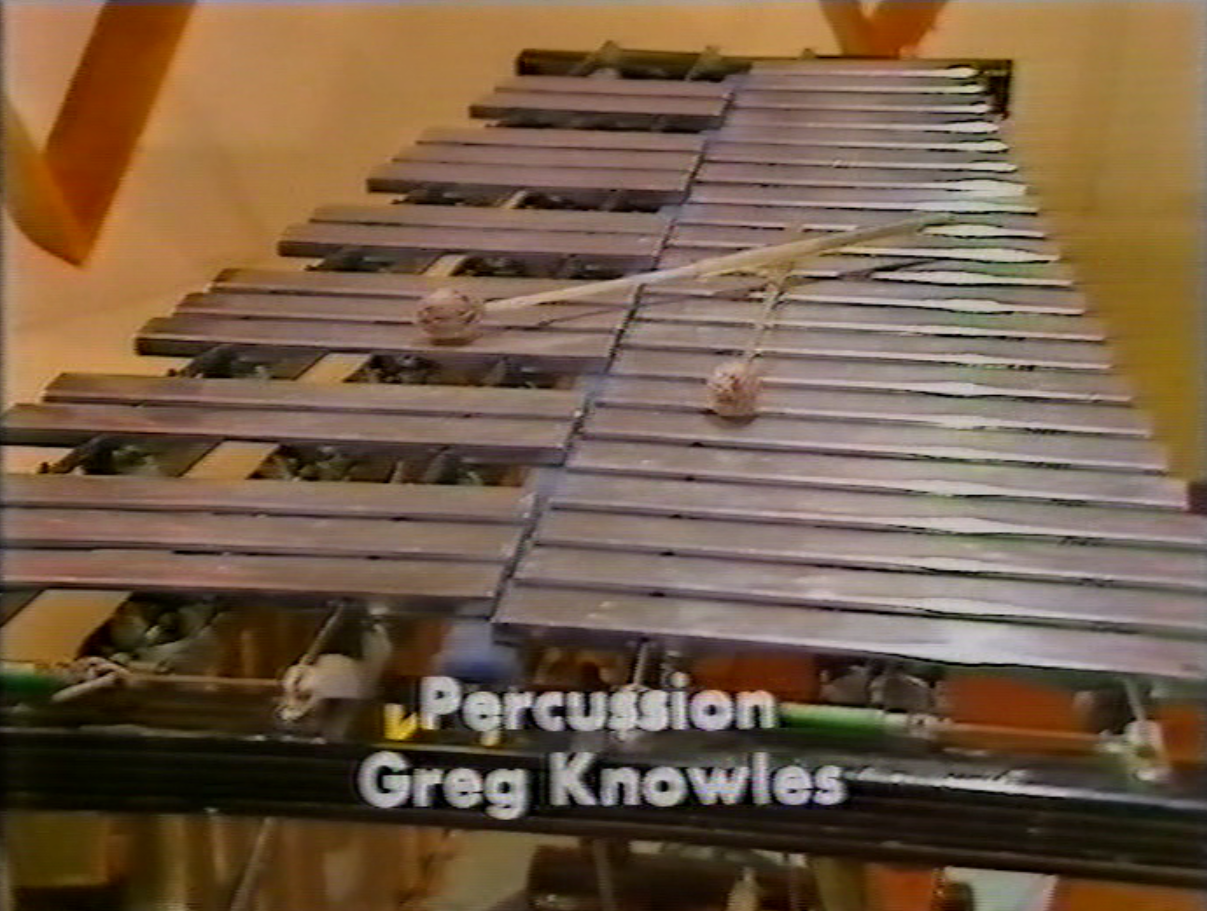
For the benefit of anyone who doesn't remember it - and I'd wager that's the vast majority of the people reading this - How Do You Do! made its debut in the BBC's traditional 'Watch With Mother' lunchtime slot in 1977. Created by Play School presenter Carole Ward, and representing an early and surprisingly subtle move to acknowledge multiculturalism, each edition featured presenters Carmen Munro and Greg Knowles playing counting and rhyming games, and a story - drawn by Joe creator Joan Hickson - about the hip and liberated pre-school teacher Miss King and her diverse class of charges; snooty Caroline, timid Mary, practical Tony, moody Scott, worryingly surreal twins Annie and Louise, outgoing George, quietly cheerful Kevin, tomboy space cadet Sandra, and Cheng, who didn't speak much English but was keen to learn. The thirteen episodes of How Do You Do! were repeated a staggering number of times up to 1981 - surviving for a while into the rebranding of the timeslot as 'See Saw' - but by the end of the decade there were only seven of them left.


Recently, I was lucky enough to be able have a bit of a chat with Greg Knowles, who aside from providing me with all manner of fascinating background details on the production of this little-documented show, also mentioned in passing that he still had quite a few episodes of How Do You Do! on video. Needless to say, I was somewhat excited by this; as indeed was Greg, who had no idea that the series was no longer intact in the archives. I quickly arranged for copies, and sat down to watch them, hoping that they wouldn't just be the seven extant ones. And, as luck would have it, three of them weren't, and copies of Counting Time, Finding Out and Baby Sitting in full and in surprisingly good quality are currently winging their way back to the archives. Suddenly we've gone from seven existing episodes to ten and it all feels a lot less incomplete. And I haven't even spoken to everyone involved in the show yet.


Some people are probably reading this and scoffing that this is a rather trivial find compared to, say, A Madhouse On Castle Street, Doctor Who And The Macra Terror or The Beatles on Juke Box Jury. Which is quite possibly true from a cultural or mass popularity point of view, but in its own way, this is every bit as important a find as anything more high profile. Like so many other unlikely recoveries in recent years of shows that were thought to be lost forever, it proves beyond all doubt that even the most obscure and unlikely programme shown after the arrival of home video might still be out there somewhere. So if you've got any more off-airs of How Do You Do!, please let me know. Or Playboard. Or Ragtime. Or Take Hart, Play School, Play Away, Why Don't You?, Over The Moon, Swap Shop, Saturday Superstore, Get Set For Summer, Cheggers Plays Pop, Ring-A-Ding, Lucky Numbers, Screen Test, Star Turn Challenge, Play Chess, Chock-A-Block, Animal Magic, The Adventure Game, Jackanory Playhouse...


You can find features on many more obscure and long-forgotten programmes, including my top ten of The TV That Time Forgot, in my book Not On Your Telly.