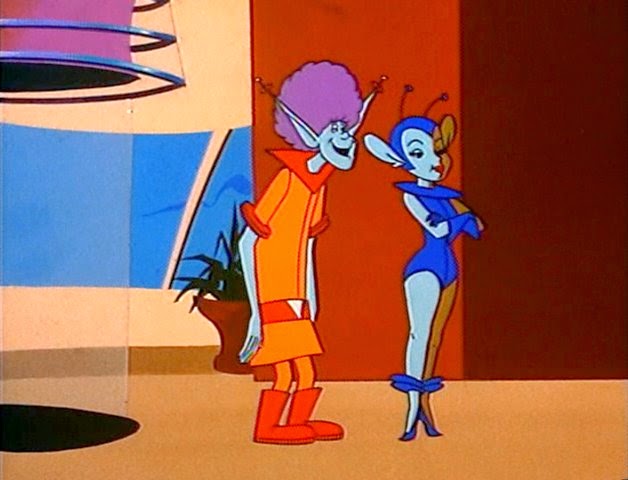
Showing posts with label battle of the planets. Show all posts

Looks Unfamiliar #13: Rae Earl – I Think It Was A Cerebral Cheggers Plays Pop


Looks Unfamiliar 13 - Rae Earl

Looks Unfamiliar is a podcast in which writer and occasional broadcaster Tim Worthington talks to a guest about some of the things that they remember that nobody else ever does. Joining Tim this time is writer Rae Earl, who insists that she’s not just making up the episodes of Battle Of The Planets where Zoltar was a woman, Rock’n’Bubble Bubble Gum, Gyles Brandreth quiz show Puzzle Party, Children’s BBC Cold War thriller Codename Icarus, cheap culinary filler The Home Cookery Club, and short-lived comedy sensation Cheese And Onion. Along the way we’ll be finding out which Europop duo based their image on extruded sugar, the commercial potential of a Panini Sticker Scented Candle, and what precautions you should take whilst within twelve thousand square feet of anywhere that may or may not have played host to agricultural pesticide at some indeterminate point in history. There’s also a bit of bonus chatter about the Channel 4 transmissions of The Gong Show, and if anyone else remembers The Yellow House, please get in touch!

DOWNLOAD IT HERE - SUBSCRIBE IN ITUNES - RSS


You can find more editions of Looks Unfamiliar here.


Looks Unfamiliar is hosted by Podnose.


Support Looks Unfamiliar by buying one of Tim's books! Not On Your Telly, is available in paperback here or from the Kindle Store here. And there's several other books to choose from here...

This Is The Camberwick Green Procrastination Society/Now On The Kindle Store For You To Add To Your Library!


The Camberwick Green Procrastination Society, a book collecting some of the ridiculously lengthy diversions I've gone on about archive TV and pop music when I really should have been working on something more substantial, is now available from the Amazon Kindle Store. Regular readers may be interested to know that it includes exclusive and previously unpublished pieces on Chigley, Wait 'Till Your Father Gets Home and David Bowie's early TV appearances. Elsewhere there are features on Doctor Who, The Monkees, Battle Of The Planets, Tin Machine, Skiboy, The Stone Roses, Glam Rock, Jimi Hendrix, Hardwicke House, Rubik's Magic, Blue Jam and Camberwick Green. There's quite a lot about that, in fact.

You can get The Camberwick Green Procrastination Society from the Kindle Store by clicking here. Or if you'd prefer, you can still get the paperback from here, or the original full-colour eBook from here.


The Sci-Fi That Time Forgot


If you’re a fan of Gene Roddenberry’s Dreamgate DSV - and there must be some out there, as indeed there must be such a series, probably - it’s no good moaning about the gap between ‘seasons’. If your withdrawal symptoms are really that bad, you’ve always got the spinoff series, the DVDs, the novels, the comics, the ‘webisodes’, the soundtrack albums, the coffee mugs, the dinner jackets and the submarine to fall back on. And if you’re really really stuck, you can start your own online fan forum and argue until you’re blue in the face with headcases who understand neither the programme nor how to formulate proper sentences.

But it wasn’t always like this. Not all that long ago, there was no Torchwood, no Heroes 360, and no Play Nick Cutter’s ‘Spot The Anomaly Game’ On Your Mobile Phone. Mainly because there was no Primeval, Heroes or revived Doctor Who, but that’s by the by. Before the home entertainment revolution, if your favourite show was off the air you just had to wait for it to come back. And wait. And, if it was The Tripods, wait some more.

If you were extremely lucky, there might be a handful of awkwardly-scheduled repeats, and if you were very rich you might even be able to buy two and a half scrappily-edited episodes on video, but mostly it was a case of trying to find something to fill the seemingly-endless gap. Which is where other completely unrelated examples of science fiction came in. No matter how much you may have been missing Kerr Avon and company, there was always something else around on television or radio (or indeed the cinema) if you looked hard enough. A stroll around your local library would reveal all manner of novels with lurid yet still laughable covers by writers with exotically American-sounding names and superfluous middle initials. And in a real emergency, there were always those books about Black Holes and Peter Davison’s Book Of Alien Planets that well-meaning relatives had bought you on being told you liked ‘space’.

Much of this Substitute Sci-Fi - and quite rightly in most cases - has been long since forgotten about. Everyone will still have their own fondly-remembered examples, though, and there’s a small amount that deserves to be remembered as more than simply what you did to while away time during that pesky eighteen-month Doctor Who ‘hiatus’. Maybe some of it’s even due a revival, possibly even with ‘webisodes’ of its own. Here are a couple of shows, books, films and, erm, card games that this particular writer would like to see dusted down and given some long overdue appreciation.


The Stainless Steel Rat


Before Red Dwarf, before Terry Pratchett, even before Douglas Adams, there was only one name in sci-fi/comedy crossover - Harry Harrison. His wickedly satirical tales of futuristic conman James Bolivar diGriz, the ‘Stainless Steel Rat’ of the title who commits his crimes in the name of entertainment, began with the first novel in 1961 and had clocked up an impressive ten instalments (not to mention a board game, a strip in 2000AD, and a totally unhinged parody of ‘Choose Your Own Adventure’ books) by the time of the most recent to date in 1999. Along the way he’s got married, overthrown a dictator, joined a circus, and been coerced into countless time-travelling alien-battling missions by his law enforcing arch-enemies The Special Corps. If you’re thinking all of this sounds familiar then you’re entirely right - The Rat, whether knowingly or not, is the template for all of the science fiction anti-heroes that have become so beloved of audiences since, from Zaphod Beeblebrox to Captain Jack Harkness and beyond (there’s even a suspicious amount of a certain Doctor detectable in there too). At one time libraries were absolutely heaving with the books, which were eagerly borrowed by withdrawal symptom-suffering fans once they were finally allowed in the ‘adult section’, and although their following has since dwindled and some aren’t currently in print, they sold in massive numbers at the time and aren’t hard to find second hand. Harry Harrison’s written countless other books worth checking out too, including the closely-related (if slightly more straight-faced) Deathworld novels, the military-baiting Bill The Galactic Hero series, overpopulation thriller Make Room! Make Room! (later loosely adapted for the big screen as Soylent Green), and the utterly absurd parodies of a certain secret agent show, The Man From P.I.G. and The Man From R.O.B.O.T..


Earthsearch


You’re probably racking your brains in total bafflement at the name, but time was when Radio 4’s enduring sci-fi serial Earthsearch was a very big deal indeed. So much so in fact that its fame spread beyond radio to encompass spinoff novels, cassette releases, a stage play and a frankly unlistenable sound effects album (though that Inner Airlock Door Open And Close is a real groover). James Follett’s tales of the crew of the starship Challenger and their quest to discover planets suitable for human colonisation have a suitably bleak and isolated atmosphere and were very much in the ‘intellectual sci-fi’ style that the BBC in particular favoured in the late seventies/early eighties (think Blake’s 7, only with slightly more gripping storylines), and while they may seem a little wordy for modern tastes and the crew may despite their non-visual nature be clearly over-bearded, like the contemporaneous Radio 4 adaptation of The Lord Of The Rings - in which many of the Earthsearch cast also appeared - they really did connect with their target audience at the time and are fondly remembered by a surprisingly large contingent of devotees. Follett also wrote a number of other similar serials for Radio 4 including Rules Of Asylum, Light Of A Thousand Suns and The Destruction Factor, and he wasn’t the only one - the station produced many other sci-fi serials and plays around this time, most notably Aliens In The Mind, written by legendary Doctor Who scribe Robert Holmes and starring the impressive pairing of Vincent Price and Peter Cushing.


Jeff Wayne’s Musical Version Of The War Of The Worlds


It started as a jingle composed for a Lego commercial, and ended up as one of the biggest-selling albums of the seventies. For all its apparent mass-marketed populism, Jeff Wayne’s Musical Version Of War Of The Worlds is effectively the then-recent and decidedly non-commercial trend towards concept albums and symphonic ‘soundscapes’ given a quick polish and taken to its most slickly commercial extreme; a kind of evil twin to Tubular Bells if you want to be poetic about it. And yet, despite all this, there was still something about the sonic retelling of HG Wells’ novel, ‘starring’ the likes of Richard Burton, David Essex, Phil Lynott and Julie Covington, that drew sci-fi starved genre devotees towards it long after it had finished its dominance of the album charts. Viewed as a whole it’s clearly a load of dreary prog-rock nonsense, but time has been kinder to this than it has been to most dreary prog-rock nonsense, and there’s an amused postmodern thrill to be had from the overambition of the project, not to mention a genuine musical thrill from some of the more inspired orchestral passages. Some may rightly point towards the superior Poe/Asimov-adapting efforts by The Alan Parsons project from which the whole idea was ‘borrowed’, and as such albums go this writer may infinitely prefer the more quirky and melodic tongue-in-cheek eco-thriller Consequences by Godley And Creme and Peter Cook, but Jeff Wayne’s moneyspinning take on the whole strange phenomenon is worth another listen. Well, one, maybe.


Low Budget Sci-Fi Films On Television


These days any old sci-fi film that comes along has one eye on the BAFTAs whilst amping up those scary-noise-and-discordant-orchestra-and-high-speed-jerky-camera-action-oh-look-it’s-gone-black-and-white bits, but time was when the entire genre could be broken up into two subdivisions - Star Wars and Everything Else. And the natural habitat for Everything Else was, of course, on television on a Bank Holiday afternoon. How about the endearingly ramshackle Battle Beyond The Stars, famously shot in five weeks on sets where the paint was still drying yet somehow as enjoyable as enjoyable hokum gets? Then there’s Hammer’s lone Julie Driscoll-soundtracked excursion into science fiction Moon Zero Two, Gerry and Sylvia Anderson’s live action-debuting dry run for UFO that was Doppelganger, Disney’s uncharacteristically downbeat killer robot-festooned The Black Hole, Ralph Bashki’s oddball post-apocalyptic animated comedy Wizards, the influential-for-about-three-minutes Tron, The Last Starfighter, Flight Of The Navigator, Hangar 18, The Philadelphia Experiment, *batteries not included, Short Circuit, The Adventures Of Buckaroo Banzai Across The 8th Dimension, that one about the first passenger flight to the moon, that other one about the alien that helps the high school nerd bag a date with the head cheerleader, and so many more that may not even have had names in the first place. Not one masterpiece between them, and yet they were always such a welcome sight when found sandwiched between some ice-dancing spectacular and that Guinness Book Of Records thing that David Frost used to do. You don’t see them much any more, sadly, but maybe that’s because they’re probably all available on DVD in those ‘All Films £1.99’ bins. And we haven’t even got started on those illicitly-sneaked from the video shop ‘adult’ treats like Inseminoid and My Science Project...


V


Keeping along roughly the same lines, how many people out there went to great lengths to sneakily record this briefly notorious American big-budget miniseries (or, more daringly still, surreptitiously stayed up to watch it on the black and white portable) in the knowledge that they would never ‘officially’ be allowed to watch it? As a basic story V was one of the most clichéd in the sci-fi book, little more than a not particularly major spin on the time-honoured Evil Aliens Disguised As Kindly Humans Invade By Stealth And Crusading Journalist Uncovers The Truth format. V, however, had serious money and a crack team of scriptwriters behind it - not to mention short-lived lust icon Jane Badler as the primary antagonist - and did everything with such flair and panache that it was hard not to become hooked. Surprisingly for an American TV series of its vintage, there was a good deal of subtle and genuinely funny humour too, not least the notorious scene in which one of the carnivorous invaders scoffed a lab rat. V was a big enough hit to give rise to a second miniseries, V: The Final Battle, which proved to be misleadingly titled as it was followed in turn by a full-blown weekly series, which surprisingly fell flat on its face and was never recomissioned. The whole lot is now available on DVD, which you can pretend to be watching illegally in the middle of the night if you want to recreate the full original viewing thrill.


The Boy From Space


One of those perennial ‘what was the name of that one where...?’ TV shows, this filmed serial about a stranded alien on Earth was shown (and indeed endlessly repeated) as part of the long-running BBC Schools language development-themed show Look And Read. And although trying to follow it involved what seemed like hours of sitting through smug letter-embossed orange puppet presenter Wordy and his even more tedious still human helper droning on in their space station about what happens when you place vowels next to each other, it was well worth the effort because this was scary and atmospheric stuff, with the hapless garbled bleep-spouting spaceboy unable to communicate to his young human discoverers that he was being relentlessly pursued by a sinister ‘Thin Man’ (played by regular Doctor Who guest actor John Woodnutt). Until they worked out a way of deciphering... well, that would be spoiling it, although Wordy was sufficiently impressed by the method to refuse to shut up about it for what seemed like a century. The Boy From Space was written by Richard Carpenter of Catweazle, Robin Of Sherwood and The Ghosts Of Motley Hall fame, and is all the more impressive given that he was asked specifically to use no more than a couple of hundred basic words throughout the ten-part serial.


Captain Zep - Space Detective


While its close associate The Adventure Game is rightly celebrated, this other post-Douglas Adams Children’s BBC sci-fi game show seems to have sadly been forgotten about. Every week Captain Zep – “a man of steel, a man of nerve” as the bafflingly New Wave-tinged theme song had it - would relate one of his outer space case histories to a studio audience of youngsters from the ‘SOLVE Academy’ via a series of crudely animated watercolour renditions of alien beings and alien planets, stopping the narrative at a key point to ask if the audience could solve the case from the clues already given (“So who was the saboteur? Why was Grazarax in the Munitions Bay?”). The studio audience got to write their answers down on those ‘Magic Writing Slate’ things that wiped clean when you ran the plastic bar along them, but more excitingly you, the viewer at home, got to write in with your answer, and if you were one of the fifty lucky winners picked out from the proverbial ‘hat’, you’d receive a SOLVE badge all of your own. As dull as that may sound on the printed page, this was compulsive viewing at one point. A special mention here for the unnervingly uniform futuristic fashions (slicked-back hair and orange and yellow jumpsuits with unwieldy collars seemed to be the order of the day here), and for the fact that the actor playing the Captain changed between series, leading to a heated exchange of opinions on the BBC’s junior viewer correspondence show Take Two.


Starships


So you’ve read all your books, there’s nothing on the radio or TV, and you couldn’t possibly bear to hear Justin Hayward bleating “the chances of anything coming from Mars” one more time... how about a nice game of cards? Union Jack-logoed game-makers Waddington’s have a not entirely undeserved reputation for cheapskate ‘second division’ efforts, not least on account of their apparently fondness for ‘worthy’ (i.e. dull) dice-based Ludo variants and the dreaded inevitable Christmas present The Games Compendium, but sometimes they managed to pull something spectacular out of the Scrabble bag and this insanely addictive Game Of Outer Space was a prime example. The premise was ridiculously simple - draw random cards from a pile to assemble a very long Space Cruiser out of individual parts. But throw in a derived element of Top Trumps which allowed those in possession of the correct armaments to pilfer vital components from other players’ vehicles, and you end up with something almost disproportionately fun, fast-moving and competitive. Complete and un-scuffed copies are in high demand on certain auction sites, and it’s also worth remarking on how several of the illustrated cards had a strangely photographic quality to them. Did someone out there build their own ‘Starship’ for real??


Star Trader


If you were feeling a bit more ‘space age’ than a mere card game could cater for, you could always leave Starships in its box and have a go at this futuristic strategy game for the 48k ZX Spectrum. The primary aim of Star Trader was to make as much money as possible whilst zooming between planets to barter with large-headed Portland Bill lookalikes, dodging intergalactic pirates along the way, and making the difficult choice between a continental breakfast and the more expensive and score-depleting Full English. Slow and reliant on mathematical skills it may have been, but it boasted one crucial element that most other early home computer strategy games lacked; it did actually involve some degree of interaction with the game player, unlike the likes of Football Manager and The Great Space Race which basically required you to sit back and watch them playing themselves. It is perhaps testament to the former high status of this long forgotten game that manufacturers Bug-Byte Software still have their own star on hometown Liverpool’s long-abandoned ‘Walk of Fame’.


Redubbed Japanese Anime


One of the forgotten facets of the pre-Home Video age was that there was literally no market for some sorts of films and shows. Never was this truer than in the case of cult Japanese animation; though massively popular and moneyspinningly merchandised in its homeland, and indeed often raved about in genre magazines over here, there was no real viable outlet for it and so it largely went unseen. That is, until, some enterprising Americans got their hands on certain long-running TV series and chopped and changed them around to make them more suited to the sensitivities of English-speaking audiences. Thus it was that Science Ninja Team Gatchaman, shorn of all references to transvestism, schizophrenia and guards lacerated by flying metal birds, and with two much-derided comedy robots inserted in their place and mental space-age disco music bolted on, became the phenomenally popular Battle Of The Planets. With their curiosity aroused by this rearranged glimpse of an exciting world of entertainment they knew nothing about, said audiences also took with great enthusiasm to Star Fleet (or Bomber-X in old, erm, yen), and Ulysses 31 (Ulysses 31, believe it or not) amongst others. Nowadays, with the shelves of the average high street music store positively heaving with Manga films about someone going ‘a-a-aaaa’ when a bird’s eye glints or something, you can get the original versions with handy subtitles, but when it comes down to it we all initially fell in love with the mangled versions and don’t you forget it. And anyway, G-Force aren’t half as much fun without 7-Zark-7 and 1-Rover-1.


This is an extract from Well At Least It's Free, a collection including features on Doctor Who, The Secret Service, Hardwicke House, Tales From Europe, Trumpton and many more. You can get it in paperback here or from the Kindle Store here.

Dedicated, Inseparable, Invincible (Except When Confronted With Carnivorous Plants): Part 4


When we last left The Fierce Flowers, Princess was still trapped inside a now-miniaturised Fierce Flower, and G-Force were wrestling with the moral complications of weighing up the need to set the malevolent plant life ablaze on a scale that would cause Bob Flowerdew to sink to his knees shouting "NOOOOOoooooooooooo" against the possibility that they might still be able to locate and rescue their teammate. Which it has to be said is something of a better recap than 7-Zark-7 manages at the start of the second episode. After consulting a computer, wittering about how the newly released spores "wait only for rain to bring them sporouting into menacing life" and informing all and sundry that he will be maintaining a Red Alert until further notice, he whizzes down a transporter tube thing into his usual command centre, indicating that - despite his solemn promise at the end of the previous episode - he did indeed leave his post before Princess was rescued.


As if to underline the fact that Princess hasn't been rescued yet, we see the rest of G-Force moping around at that sandwich place that she had been looking after in the previous episode. Jason and Tiny snark at each other over who's the most responsibe for the situation, Mark volunteers that "I never thought I could get so angry at a bunch of flowers", and Keyop indulges in an extended bout of a-a-aaaaaaaaaing, resulting in him shedding a lone splashing tear that shows Princess disco dancing in its reflection. "Mark's taking it harder than all of us", observes Tiny, "he and Princess, they had good vibes". Whether they were related to disco dancing is left to the viewer to decide.

Over at the laboratory, Chief Anderson has deduced that water acts as a catalyst for the plant growth - you don't say - and that they need to find a chemical that will permanently prevent this. He then goes off on some odd contextless free jazz improvisation about them thriving in the vicinity of volcanos and proliferating in swampland and even growing in the hottest deserts, all of which has about as much relevance to anything seen in either episode as a plot strand from Lost, and gives the impression that a significant amount has been cut from this episode too. Something that is only strengthened when G-Force react angrily to seemingly nothing, and slope off leaving Chief Anderson to mull over his findings while a flower in a tank rages behind him.


It's not the only one raging, either, as in an alarming sequence of quick cuts we see a small army of flowers parading through the sewers, smashing through concrete and so forth. "Luckily we had advance warning and had evacuated all people from the threatened cities", notes 7-Zark-7 in a handy distraction from the obvious snips made to the footage, though he doesn't see fit to offer any such explanation for the flower that suddenly emits a light beam thing that cracks open the ground; a property that is never referred to again. And as if all of that that wasn't enough, a TV news report implies that the flowers are now intentionally starting fires. Visually dazzling as all this may be, it's also highly bewildering and decidedly off-script, so perhaps it's fortunate that at that precise moment, Mark's communicator picks up a signal from Princess.

Yes, she's still alive inside that flower, and has worked out a way to send a distress call without her horticultural captor noticing. G-Force immediately set off to rescue her, and 7-Zark-7 notes that "she means a lot to me" and reiterates again that he won't leave his post until she's back, but there's a complication; the 'Federation Council' has voted to send in attack units in an attempt to eradicate the flowery menace. 7-Zark-7 bemoans that he warned them that this would only release more spores but that they didn't listen; we can only assume that he didn't actually try very hard at all. G-Force are going to have their work cut out for them, though, as without the aid of an explanatory scene, Zoltar and company have already located Princess and tied her up in a weird electronic bondage thing (perhaps the reason why we didn't get to see an explanatory scene), and are hoping to lead them into a trap.


Chief Anderson, meanwhile, is busy having a snarky one-sided conversation with the flower in the tank when he cuts his hand (on a... handrail?), and the drops of blood that consequently splash onto the bouquet-unfriendly specemin cause it first to throw an almighty tantrum, then to keel over and conk out. From this he deduces that they are unable to withstand exposure to haemoglobin, but the fact that they'd been merrily digesting females left right and centre gives another unpleasant suggestion that we're being redubbedly shielded from some less than enlightened overtones in the original.


Meanwhile, G-Force have tracked the signal to 'the city's old water plant', and after smashing through the wall in The Phoenix, they do some natty business with backflips, electric lasso/tightrope hybrids and - of course - metal bird things, and easily overpower Zoltar and company, who beg for mercy and... Mark lets them go because of 'morals'? There must have been a proper reason in the original. At the same time, Chief Anderson and 7-Zark-7 unleash a spray that they've synthesised from 'an iron molecule in haemoglobin combined with water', which puts paid to the flowers and they fizzle out en masse in an extraordinarily protracted sequence that puts the climax of The Evil Dead to shame.

There's just enough time for a couple of wisecracks and morals from the departing G-Force (no prizes for guessing who said what out of "it'll be a while before I buy flowers again", "they look so pretty and harmless" and "they should never have been taken from their home planet") and it's over to 7-Zark-7 and 1-Rover-1 for some rounding up; "Zoltar will have to come up with something else now, and of course he will, that's why I keep a twenty four hour watch... I don't think my trigatron(??!?) could have stood up to many more hours of pressure like that", and "[bark]" respectively. "I'll be alright as soon as my electrobank gets a quick one-hour recharge", muses the former, though it's clearly going to have to wait as this is indeed one of the episodes where a badly drawn rendition of one or more of G-Force comes to visit him. And on this occasion it's Princess, almost unrecognisable apart from her costume (and even that's a little debatable), who thanks her robotic associate and kisses him, causing the episode to end on a rather worrying 'BOING' sound. Ironically, the producers of Science Ninja Team Gatchaman would probably have cut that out of Battle Of The Planets.


So, that's The Fierce Flowers, and while it's some considerable distance from being a truly representative example of Battle Of The Planets - even aside from all the nearer-the-knuckle-than-usual content, there's no sign either of the Firey Phoenix or of Zoltar's grovel-inducing floating head thing superior 'O Luminous One' - it's not remotely difficult to see why it made such a lasting impression on everyone who saw it the first time around, many of whom probably couldn't even name a single other episode title (not even Attack Of The Space Terrapin). It's an uncomfortable collision of cosy action thrills and spills and dark futuristic-yet-primal terror - almost like a crossover between Castle and Ring - and was certainly far removed from the sort of troubles encountered by the well-spoken flat-capped youngsters that were prone to hanging around God's Wonderful Railway. Some may well now scoff at its chopped and changed sanitised nature, but you do have to ponder on how many people later got into other 'cooler' areas of film and TV and what have you precisely because of Battle Of The Planets, and in any case, there's a very strong sense that in some ways these episodes may actually have been made worse by the re-editing. There are a lot of gaps and leaps in logic that your mind is left to fill in, and the puzzling nature of the narrative jumps can sometimes leave you wondering if they'd left out something that was actually worse than it really was. Erm, if that makes any sense at all.

After the first episode's appearance as part of Buzzfax, according to the Radio Times billing, 'Buzz' was back along with 'Results of Back Page Puzzle'. And you can't really get a stronger underlining of just how different The Fierce Flowers was from anything else on offer than an immediate handover to some semi-animated bits of Ceefax smugly explaining how to decipher some Clive Doig-posed code. After all, it's not like there was some other imported entertainment on offer that morning to compare it favourably against...

Dedicated, Inseparable, Invincible (Except When Confronted With Carnivorous Plants): Part 3


Roger Finn thundering through the 'Broom Cupboard' and telling a departing Andy Crane live on air that he'd done a "bloody good job". Caron Keating more or less having an orgasm whilst getting a massage during a Blue Peter expedition to Russia. The Housemartins doing The People Who Grinned Themselves To Death on The Wide Awake Club, lyrics about The Queen throttling children and all. For no readily obvious reason, eighties children's television was seemingly full of blink-and-you'll-miss-them-and-then-refuse-to-believe-anyone-who-actually-did moments of unintentional unsuitability like these. And we haven't even started on the more widely acknowledged I'd Like To Ask Five Star Why Are You So Lego Man's Head Fell Off clip show-friendly side of things yet.

Yet there's one thing that all of the above, and so many more incidents like them, have in common. They were, to greater or lesser extents, random and spontaneous instances of something 'going wrong', and nobody planned for them even to take place, let alone to be transmitted. Less celebrated, yet in some ways more disturbing, were some others that were actually intentionally thought up, scripted, filmed, vetted, cleared, and shown to an audience who were in no way expecting anything like it to assault their Charles In Charge-anticipating critical faculties. The jarring sweariness of The December Rose and The Cuckoo Sister, the Bronski Beat-backed racially-fuelled punchups in Sticks And Stones, the infamous 'Gro-Bust'-flinging catfight in Aliens In The Family, Sophie Aldred's negligibly-necklined costumes in Knock Knock, the troubling and barely legally acceptable insistence of the producers of The Queen's Nose on using Melody as anything from a wet t-shirt model to a bukkake receptacle, and pretty much anything that ever happened in Grange Hill. Well, apart from when Ro-land stole some 'Minto' bars.

As we've already discussed at some length, the appearance of Princess' thinly concealed lady area in the opening titles of Battle Of The Planets would definitely fall very much into this category. But the two-part story The Fierce Flowers went off in a completely different direction and into what was at the time - and still now if we're being honest about it - totally uncharted territory for children's television. Without a word of exaggeration, it presented unsuspecting viewers with disturbing jolting hints of eco-horror, emotional brutality, and even worrying hints of proto-'torture porn', all of it only just about kept in check by the deft re-editing that Sandy Frank Entertainment had deployed to make the more adult-orientated Japanese original suitable for younger dubbed international audiences. You're probably not unreasonably thinking that this widely held opinion is actually just a collective hazily-recollected mass distortion of childhood thrills, and that closer and more recent examination would no doubt reveal The Fierce Flowers to be in fact rather tame. Well, I've examined it closely and more recently, and 'tame' it is most definitely not.


Admittedly, though, it does start in a deceptively tame fashion. Part 1 of The Fierce Flowers opens, somewhat inevitably, with an establishing shot of 'Centre Neptune', the underwater residence of those controversially-inserted sex-and-violence-replacing plot-hole-covering comedy robot narrators 7-Zark-7 and 1-Rover-1. The former, as is his chirpy C3P0-infringing wont, is busily informing the audience about how much he loves the thankless task of monitoring the entire galaxy for surprise attacks by alien domination-seekers SPECTRA, when he is suddenly interrupted by 'Susan', the Caramel Bunny-voiced flickery light-represented Artificial Intelligence housed in an Early Warning Station on - cough - 'Planet Pluto'. For technologically bewildering reasons, 7-Zark-7 has a 'crush' on Susan which causes him to blush - yes blush - uncontrollably whenever she compliments him. There's no time for any of this now, though, as she's calling to report that an unidentified flying object has apparently been launched by SPECTRA from the 'Crab Nebul-ay'. Which isn't a 'sultry' mispronounciation, as Zark immediately repeats it, and that's about as far from 'sultry' as you can get.


Aboard said Nebulay-flung unidentified flying object, birdy-faced Captain Morlok is reporting to SPECTRA head honcho Zoltar - whose gender, it should be noted, randomly alternated in the original Science Ninja Team Gatchaman, a complication that was averted in Battle Of The Planets by the pretence that he was periodically deputised for by his 'sister' - about his latest plan for conquering the Earth. He doesn't say too much about what it actually entails, though Zoltar's exclamation to nobody in particular "greetings Earth people, I am sending you flowers from Spectra", followed by what appears to be Richard Herring's laugh, does rather give the game away somewhat.


Hardly surprisingly, this is followed by a sinisterly surreal sequence of unsuspecting passers-by cooing at a huge swathe of blossom falling gently from the sky, which cuts to a downpour of torrential rain, upon which the fuckers start germinating with nasty-sounding rasping electronic burbles. Within minutes, they've self-cultivated into big spidery lotus things that look like they mean business. And if that wasn't unnerving enough, they suddenly get up on their hind tentrils and start walking, developing a really quite unpleasantly undertoned liking for cornering young women in alleyways. 7-Zark-7, not unreasonably, considers this an apposite moment to alert G-Force. From the look of it, he might also have saved us from things getting even more visually ugly.


At that moment, G-Force are all in their pre-'Transmute' off-duty proto-Britpop civvies, and are hanging out in a sandwich bar that, for no readily obvious reason, Princess is looking after for a friend; though, given that her name in the Japanese original was Jun and there's a great big letter 'J' outside, maybe it's actually technically her own translationally-inconvenient sandwich bar. Cheapo disco sounds play in the background while Tiny pulls a face about the lack of 'Spaceburgers', Keyop splutteringly helps out with the washing up on a promise of payment in 'apple pie', and Jason and Mark are already frowning over front page newspaper reports about the agressive floral proliferation. Yep, he's really on the ball is 7-Zark-7.


As the others set off to investigate the flowers, Princess stays behind for a moment to lock up, and - you guessed it - that's when we get a really creepy shot of an advancing flower reflected in the glass she's cleaning. Clearly unconcerned about the absence of 'Spaceburgers' from the menu, a couple of them have made their way into the sandwich shop, and even after 'transmuting', Princess find that she needs all the kung fu kicks and assistance from her trademark electrified yoyo thing that she can get. Eventually, after a lengthy fight, she manages to overpower all of the pollen-powered intruders, of whom there can be no debate about their rather audience-inappropriate allegorical properties...


Over at the research centre headed by their Mr. Benn's Neighbour-lookalike scientific advisor Chief Anderson, G-Force are being briefed on what he's been able to deduce about the flowers so far. Presumably filling in for a fair amount of snipped material, he informs the assembled Transmutees that the plants are carnivorous, and have been subjected to sufficient scientific analysis for 7-Zark-7 to have been able to devise a protective suit that will enable anyone swallowed by one to withstand their digestive effects. Which is handy, because he's also deduced that in order to be able to fully understand them, someone will have to be swallowed by a flower and survive. Princess, it transpires, has already been selected for the honour. Why not send Keyop, you might wonder, as he's smaller and we could do without him saying 'rou-boot-deet' every three seconds anyway? Oh, because the protective suit 'seems to work particularly well on females', apparently. This, coupled with the scenes of female commuters being chased and cornered by flowers and some clearly toned-down overtones elsewhere, suggests that something rather worryingly misogynistic has been lost in translation. Thank fuck, then, for 1-Rover-1.

In fairness Keyop does offer to go in her place, apparently not having paid the slightest bit of attention to what's just been said, but Princess insists on undertaking the mission herself, and heads off on her motorbike to the sound of yet more daft funk (which, amusingly, sounds not unlike Daft Punk). Keyop, against her wishes, tails her in his rubbish bug-like car thing, and witnesses her being swallowed by a flower in a really quite unnerving and quite unpleasantly sexualised manner. Needless to say, on seeing this he goes "a-a-aaaaaa" and flees the scene, only narrowly avoiding ending up as suit-deficient flower food himself. A pacing 7-Zark-7 observes that their plan seems to have 'backfired', which is a bit strange given that this was their exact plan all along, and 1-Rover-1 assists by 'barking'. He also tells us that the rain is 'unusual', and that he suspects that it may have been generated by SPECTRA. Yes, thanks for that, Columbo.


Meanwhile, the remaining members of G-Force are sitting around recapping all of that stuff about the protective suits working better on women. Fuck knows what they were actually saying in the original, as the action then cuts abruptly to a truly nausea-inducing weirdly tinted scene of Princess convulsing inside a flower. Back at the conversation, we find out that this is an even worse situation than it appeared on nauseatingly tinted face value, as in the drier weather the flowers have shrunk considerably. Yet it appears they can think of little to help their miniaturised petal-enclosed friend other than that they should wait and "let Zoltar play his hand". As luck would have it, Zoltar is indeed playing his hand, and after reflecting on the success of the plan so far and handily revealing that the rain was caused by his taking over of Earth's 'main reservoir', he sends a batallion of Armed Motorised SPECTRA Units to put G-Force out of action. Unfortunately, his uniformed bikers are easily averted by some deft highway manouvres from Mark and company. Yeah, it was worth waiting for him to play that hand, wasn't it.

With that little diversion out of the way, Chief Anderson outlines his plans to simply bomb the flowers out of Percy Throwerdom. Everyone agrees with this course of action apart from Jason, who angrily breaks ranks over the risk that indiscriminate flower-torching poses to the still-trapped Princess. He's overruled, though, as nobody can see that they have any other choice, and to the strains of what appears to the a distant relative of the theme from The Fall And Rise Of Reginald Perrin, Mark jets off in a sort of converted crop duster to set fire to huge swathes of flowers. As he does so, he's haunted by really quite freaky visions of Princess giggling whilst spinning round in front of a psychedelic backdrop. And after all that, it turns out that it was a totally pointless exercise anyway, as Zoltar scoffs that "fire cannot destroy them, you have only released more spores". Well, that's one way of setting up a second episode.


As the flowers set about repollinating themselves, 7-Zark-7 delivers an inappropriately chirpy episode-ending monologue about how his work defending the galaxy must go on, though he won't leave his post "until we've rescued Princess". They really ought to make their mind up what their actual gameplan is. Even allowing for the fact that the two wittering droids were introduced to give the programme a lighter edge, this is a very jarring way to close proceedings. And we've got another twenty five minutes of it left...


NEXT TIME: Princess gets drawn by someone with their eyes shut and their hands tied behind their back, Mark ghostwrites My Booky Wook, and 7-Zark-7 fails to be of any use whatsoever...

Dedicated, Inseparable, Invincible (Except When Confronted With Carnivorous Plants): Part 2

Watching The Fierce Flowers again - which isn't easy, as the DVDs have been out of print for quite some time - the first thing you notice is that each episode of Battle Of The Planets originally opened with a spoileriffic teaser with a silly bombastic voiceover, all of which were thankfully edited out by the BBC for transmission over here. Whether they made any other edits is difficult to determine from this distance, though it's quite feasible that they did, so potentially we're dealing here not just with a re-edited show in the style of The Monkees and The Banana Splits, but a re-edit of an already re-edited show. But before you start letting that possibility frazzle your mind too much, please rest assured that in a weird sort of double-negative way, in this scenario it doesn't actually matter. The Fierce Flowers had such an unsettling impact that no amount of reinstated snipped bits here and there could possibly amplify or intensify it in any way. It was as creepy as fuck and will always remain so.

Anyway, let's just quietly tiptoe past the jarringly ill-fitting teaser, as it's not only the one thing that was definitely not present in the BBC broadcasts, it's also structure-disruptingly liable to pre-empt some of the stuff we're most likely going to be covering later on, and above all is both annoying and rubbish. Instead, let's move straight on to the opening titles, and indeed to the two primary reasons why Battle Of The Planets seemed so dazzlingly, exotically and futuristically different from the norm. And from The Space Sentinels.


Ignoring the shameless typographic attempt at jumping on the slantily scrolling Star Wars bandwagon (or should that be Landspeeder?), if there's one thing that you can say about the Battle Of The Planets opening titles, it's that they were cut together by somebody who knew how to grab the target audience's attention. Spaceships shoot across the screen and we're introduced by a booming proto-Barrowman voiceover to G-Force, "five incredible young people with super powers", and - watching over them from Centre Neptune - 7-Zark-7. There's some edge-of-the-seat grandstanding about "surprise attacks by alien galaxies from beyond space", while Mark, Jason, Princess, Tiny and Keyop blast off in their signature multi-atmospheric transport The Phoenix, dodge an attack by SPECTRA's fighter pilots, and finally form a human pyramid and whirl around in a circle until they create a bad-guy walloping mini-vortex. And as they break away at its apex and tumble haphazardly through the clouds, there's an infamous glimpse of Princess' alarmingly detailed pants. "Always five, acting as one - dedicated, inseparable, invincible!" concludes Voiceover Man as The Phoenix pulsates into the legendary 'Firey Phoenix', and admit it, you're wanting to watch from that description alone, aren't you? And we haven't even started on THAT theme tune yet.


Hang on a minute, let's just rewind a couple of sentences there. It's the early eighties, it's the BBC, it's slap bang in the middle of children's television, and some animated eye candy's jaw-droppingly contoured scanties are taking up the lion's share of the TV screen. How in the name of every single letter to Points Of View about Grange Hill did that one manage to slip through?? Well, in all honesty, it was probably more to do with money than anything else. Although, as we have seen, the BBC were not exactly averse to going to the time and expense of making great big butterfingered cuts for a variety of reasons to the imported likes of The Monkees, The Banana Splits and Boss Cat (call it by its proper name), by this time their efforts were really starting to look a little bit embarrassing and a lot like battered and badly-edited film prints, yet purchasing shiny new replacement copies would have been well beyond their meagre means. It's more than likely that whichever newer broom was looking after their bought-in catalogue by then didn't want to pay for any more trims than were absolutely necessary, and certainly wouldn't have wanted a huge great Least Effectual Top Cat-style music-kilter-skewing jump-cut at a key moment, especially if it might have to be reverted a couple of years down the line, and so just left it in. As for how it got there in the first place, it's possible that Sandy Frank Entertainment may have seen it as a younger viewer 'excitement'-generating selling point, but it's more than likely that it just slipped the net when they were trying to eradicate every single other trace of unsuitability from the decidely more adult-aimed Japanese original. As we shall see, sometimes this 'adult' nature was just too strong to disguise with any amount of chopping and changing, and without wanting to put anyone off there are a couple of troubling hints to come that a quick flash of knicker might have been the least of Science Ninja Team Gatchaman's worries. Anyway, suffice it to say that this did not go unappreciated by a generation of pre-Internet youngsters who had to take their kicks where they could find them. And also the reason why if you Google for some combination of 'princess', 'battle of the planets', 'cosplay' and 'comic con', you might find yourself with some explaining to do.


Meanwhile, the aforementioned undisguisable origins of the show meant that the target audience were at least able to get another, very different sort of kick where they could find it. At that time, the lurid and vivid world of Japanese animation (and indeed 'suitmation') was something of a far-flung exotic mystery, barely known about even by those who 'know these things', and only infrequently and unrepresentatively glimpsed through clunkily repurposed monster movies, earlier TV cartoon manglings like Marine Boy, and the occasional awestruck whisper from someone whose older brother had read about something once. Along with the similarly Anglicised Star Fleet (or, in old yen, X-Bomber) and Ulysses 31 (erm, Space Legend Ulysses 31), it gave an exciting hint of a whole alternate universe of sci-fi-flavoured animated entertainment, although despite the iconographically recognisable design hallmarks few actually knew what it was, less still what it was called. Stuck for a genre name, some would simply resort to calling it 'A-a-aaaaaa', in reference to the downtrodden and enthusiasm-deficient sigh croaked by the inevitable Keyop-esque 'gawky non-human child' character as they were knocked to the floor by a guard, or, if raining, saw a bird's eye gleam or something. It wasn't until somewhere around the late eighties/early nineties, when home video became more widely and affordably available and Akira briefly became the underground cineaste's obscurity of choice before being taken up en masse by an army of grubby schoolboys in WASP t-shirts, that anyone really realised that it was actually a 'thing'. And even then they mistakenly referred to it as 'Manga' at first.


Of course, once 'Anime'-mania kicked in, news of Battle Of The Planets' true origins spread like SPECTRA-disseminated plant life, and almost overnight those chirpy linking droids went from being dimly recalled figurheads of childhood cartoon excitement to fandom-denounced hate figures, mounted on a virtual dartboard for over-furious proto-bloggers to throw uncensored Metal Bird Things at. Even sidestepping the humourlessness, the tedious purism and the undertones of smug 'I could do better at cartoons because I seened a cartoon once'-ism inherent in this kind of attitude, it's also one that should be challenged because, well, untampered-with Science Ninja Team Gatchaman was not the reason why we all fell in love with Battle Of The Planets to begin with. Viewers who didn't know any better enjoyed the episodes with 7-Zark-7 and 1-Rover-1 present and correct, not in spite of them, and that wasn't simply down to blinkered youthful inexperience as everyone detested Scrappy Doo and wished that they'd just go back to showing proper Scooby Doo, Where Are You?. They were as much part and parcel of the show's success and appeal as, on a similar note, Godzooky and Brock (who is provably 'canon') were to Hanna-Barbera's contemporaneous Americanisation of the similarly-sourced Godzilla franchise, and never let anyone tell you otherwise.

Of course, this partness and parceldom does mean that 7-Zark-7 and 1-Rover-1 are going to be featuring heavily in The Fierce Flowers, the two-part story that this has somehow managed to expand into a three-part review of, so maybe we should get on with talking about those actual two parts themselves...


NEXT TIME: 7-Zark-7 causes a new 'BBC Fakery' scandal, Zoltar forms a double-act with Stewart Lee, and we might actually get around to talking about those 'Spaceburgers' at last..

Dedicated, Inseparable, Invincible (Except When Confronted With Carnivorous Plants): Part 1


As we've already discussed at some considerable real-Nesmith-hatted length here, the BBC didn't in fact commence their early eighties repeats of The Monkees with the actual first episode, Royal Flush, preferring for no readily obvious reason to open proceedings with the more assured twenty fourth instalment Monkees A La Mode. Instead, Davy's rapier-wielding beachfront entanglement in a plot to overthrow Princess Bettina of Harmonica would have to wait until the repeats were temporarily shunted from their inaugural weekday slot to Saturday Mornings, where it was fortunate - well, we say fortunate - enough to form part of one of the weirdest TV schedules of all time. No, not just one of the weirdest Saturday Morning ones. One of the weirdest ones ever. Full stop.

For reasons best known to themselves and to whatever had apparently leaked into their collective cerebral cortex, on 22nd August 1981, the BBC saw fit to hand over the summer-replacement-for-Swap-Shop Saturday Morning presentational reins to one Buzzfax. And despite the seemingly straightforward embarrassing-attempt-at-being-down-with-the-kids implications of title, this was no ordinary summer replacement for Swap Shop (and let's face it, the majority of them were very ordinary indeed). It involved no clean-cut aspirant Blue Peter presenters gamely attempting to link tedious filmed inserts about 'improving' hobbies and interests with sufficient verve to prevent a mass switchover to ITV. No up-and-coming pop stars were seen struggling through the throwaway b-side of their hit single to mass disinterest in lieu of a proper 'second number'. Instead, Buzzfax saw the whole ninety minutes thrown open to the 'backroom boys', with the full morning's entertainment presented entirely 'by' Ceefax.


Yes, you did read that right. For one week only, The Monkees, Battle Of The Planets, long-forgotten Popeye-affiliated Hanna Barbera canine gigantism third-divisioner Dinky Dog, and the inexplicably revived yawn-inviting Chopsticks-heralded slow-motion black and white comedy escapades of Edgar Kennedy (this week apparently seen facing off against 'The Big Beef') were interspersed with blocky renditions of their primary characters and chirpy quiztacular interjections from 'Buzz', a Ceefax-derived post-Space Invaders Vectrex Gaming System-esque geometrically askew character who may or may not have been voiced by the same bloke as Jig from Jigsaw, and whom in an early excursion into primitive multiplatform interactivity also introduced some puzzles that volleyed back and forth with those set in the back pages of that week's Radio Times. No prizes for guessing, then, that Jigsaw supremeo, Radio Times puzzle-setter extraordinaire, and veteran 'backroom boy' in general Clive Doig was the main creative mover and shaker behind Buzzfax.

In some respects, Buzzfax was an attempt to roll back the post-Posh Paws clock to the lawless frontier days of Saturday Morning TV, when programmes were linked by terrifying splurges of electronic noise and psychedelic graphics courtesy of the over-exclamation marked likes of Zokko!, Outa-Space! and Ed And Zed!, all of which with their dustpan-and-brush-in-a-cupboard-with-cables-in-it ambience did little to counter the prevalent juvenile lack-of-in-vision-continuity-fuelled assumption that 'The BBC' was a big empty building that showed the programmes via some sort of sentient machines that worked of their own volition. But by that point, of course, Noel Edmonds had not only brought 'in vision' continuity right slap bang into the middle of the whole shebang, but had done it with the sort of sense of fun that you weren't really supposed to come across in the square-jawed, improving world of children's television, so no matter how much technological wizardry may have been involved, there was simply no going back and poor old Buzzfax felt the full weight of force; in fact, it's interesting to compare this with the last gasp I Have A Horsey Neigh Neigh flooding of the afternoon Children's BBC schedules with ropey linking BBC Micro-derived 'computer graphics' a couple of years later before Philip Schofield was brought in to perform his own particular riff on the Edmonds format. Well it would be interesting to do that, except that it would be straying a little too far onto the 'serious' side of things for what we're trying to do around here. We're talking about some talking Teletext, for 4-T's sake.

Zokko!'s name might have rung out from the corners back in the day, but we weren't back in the day no more. The week before Buzzfax, outdoor pursuit-obsessed Hazel O'Connor-themed Peter Powell-fronted deluge of irritating chipperness Get Set For Summer had come to the end of its somewhat more conventional six week run. The week after, the very same programmes that had been bookended by 'Buzz' were left to fend for themselves in the continuity wilderness. Buzzfax lasted for one solitary week and was an experiment that was never to be repeated, and yet was so bewilderingly, well, bewildering that it burned itself indelibly into the memory of anyone who witnessed it. And yet this memory-searing may not even have been entirely down to 'Buzz' and his 888-troubling antics, as within its scheduling walls fell possibly the most disturbing, disorientating, disquieting and just plain inappropriate twenty five minutes ever to find their way into children's television. And no, it wasn't Edgar Kennedy.


First shown by the BBC in September 1979, Battle Of The Planets was infamously a redubbed re-edit of the 1972 Japanese animated series Science Ninja Team Gatchaman, which it's probably fair to say, what with its cross-dressing villains, neck-twisting wallops, 'choice' language and what have you, was originally aimed at a slightly older audience. It had been purchased by the massively-credited Sandy Frank Entertainment to cash in on the first throes of post-Star Wars spacemania, and retooled for wider merchandise-friendly Stateside consumption by cutting out whopping great inappropriate chunks, replacing them with new explanation-heavy linking footage featuring R5D4-infringing fretbucket 7-Zark-7 and his comedy electro-canine sidekick 1-Rover-1, adding a big walloping disco soundtrack, and generally renaming everyone, everything and everywhere until it was, to all intents and purposes, a different series.

Most of the time, though back-of-the-mind question marks did still remain over such widely-spotted anomalies as why Mark's metal bird throwing star thing caused the Spectra guards to recoil in incapacitated 'astonishment' or indeed what in the name of all that was suitable for the target audience was going on with a certain bit in the opening titles that we'll be coming back to very soon indeed, this audacious gambit worked and little of Battle Of The Planets' origins was perceptible to the untrained eye. Sometimes, however, much like when the BBFC tried and failed to make The Texas Chain Saw Massacre suitable for an 'X' certificate around the same time, the source material was simply too strong for any amount of re-editing to prevent its true nature from seeping through. And nowhere was this more obvious than in shudderingly-recalled two-part story The Fierce Flowers.

When the first part of The Fierce Flowers rolled up as an accident-rather-than-design component of Buzzfax, it wasn't actually the first time that it had been seen by an unsuspecting audience; over the Christmas of 1980, as part of a mighty school holiday mornings schedule that actually extended into the afternoon, and impressively included Chigley, California Fever and The Red Hand Gang alongside the expected likes of Lassie, Play Chess and Why Don't You...?, a couple of new episodes of Battle Of The Planets had sneaked out more or less under the radar. As they were shown on consecutive mornings in the no-man's land between Christmas and New Year when officially nothing ever happens and TV viewing-depleting visits to distant relatives are the order of the day, it's likely that most juvenile fans of the show missed one or both episodes, with only the briefest of glimpses of its bio-horror hardcore weirdness to play on their minds until the repeats rolled around. And when they did roll around, in that more accessible and noticeable Saturday morning slot, it's fair to say that The Fierce Flowers was what the young people call a 'game-changer'. But more on that in good time...


NEXT TIME: Princess' Pants, The Great 'Spaceburger' Shortage, and what people called 'Anime' before they knew it had a name...

The Ten Most Non-Canonical Non-Canonical Cartoon Characters


As long as there've been animated spinoffs, there have been performers or writers that wouldn't play ball, rights complications that required an entire battallion of irons to iron out, interfering network executives who insisted that a cutesy semi-invisible lamb was essential for appealing to 'the kids', and many, many other factors that necessitated the removal of a popular established character and their replacement with someone - or, crucially, something - else. Here's ten of the most... well, they're just ten of them, aren't they?


Lieutenant M'Ress from Star Trek: The Animated Adventures


Often overlooked in the ever-expanding 'Trek Universe', this cartoon series was in fact the first follow-on of them all and was produced in the early seventies by Filmation (remember that name, you'll be hearing it a lot). Most of the original cast were reunited in the voiceover studio, but budgetary restrictions meant that they couldn't actually afford to have a full complement of Enterprise crew on board, and something have to give. That 'something' was the hapless Ensign Pavel Chekov, although Walter Koenig proved to be slightly less hapless when he arranged a deal that allowed him to write for the series instead (which, erm, presumably ended up costing them just as much). His replacement was the newly-invented Lieutenant M'Ress, an orange-skinned, yellow-eyed, purring-voiced Felis Sapiens from the conveniently named planet Caitia, who in a possibly Koening-precipitated spot of economic casting was voiced by doubling-up Nurse Christine Chapel actress Majel Barrett. Although occasionally called on to capitalise on her feline characteristics, for example calming the noisy cat-like fear-projecting Moauvian Waul or ripping open unattended binbags and then acting surprised when the contents spilled out all over her, M'Ress was normally to be found standing at the back doing very little. Though she was still more fortunate than her similarly invented contemporary Lieutenant Arex; a James Doohan-voiced six-limbed oddity who did even less. M'Ress would later appear in a couple of spin-off novels and in the long-running comic strip, where she was reinvented as green-skinned, less lion-faced and more attractive than her small screen equivalent, alongside a blonde Uhura and a black Sulu.


N'Kima from Tarzan, Lord Of The Jungle


It wasn't just humans that could cause headaches for animation studios. When Filmation turned their attention to Edgar Rice Burroughs' jungle-dwelling creation a year or two later, they had little trouble getting the rights to the vine-swinger himself, but getting his most famous sidekick to play ball was a different matter. Cheeta the Chimpanzee had not in fact been part of the original literary blueprint, but made his name as an integral part of the series of Tarzan films starring Johnny Weismuller (Tarzan 'yell': uninspired), and went on to secure a further starring role in the action-packed waste-paper-basket-title-sequenced late sixties television version starring Ron Ely (Tarzan 'yell': getting there). By the time that Filmation came calling, though, the superannuated supporting actor had retired from showbiz; quite how he could have been coaxed into a recording studio anyway is a matter of some debate, but intellectual property rights prevented Filmation from using Cheeta in any way, shape or form if the real one wasn't involved. Wary of invoking a lawsuit, producer Lou Schimer took the slightly less legally dubious course of using an equally intelligent monkey named N'Kima, loosely modelled on a similarly named simian that appeared in the original novels, and voiced by Schimer himself alongside star Robert Ridgely (Tarzan 'yell': much-imitated operatic yodel, seemingly fashioned so it would fit neatly over the bombastic closing theme without missing a beat). N'Kima's function was much like that of some sort of K9/Sonic Screwdriver hybrid, constantly alerting his human master to hidden dangers with a startled look and a high-pitched chirrup, and forever turning up in the nick of time, often accompanied by a cavalry-esque assortment of elephants and other 'hard mates', to save the day at the end of the latest logic-taxing skirmish with aliens, ice monsters and giant lizards.


H.E.R.B.I.E. The Robot from The Fantastic Four

 
Back at the height of post-Superman late seventies superhero excitement, a group of Hollywood bigwigs decided that The Human Torch, better known as one quarter of veteran Marvel comics combo The Fantastic Four, was ideal source material for a multi-million-moneyspinning-merchandise bonanza transfer to the silver screen. There was only one drawback to this plan - it wasn't until all the contracts had been signed that it emerged that Marvel were planning to make a Fantastic Four cartoon series in conjunction with DePatie-Freleng Enterprises. As a result they were unable to use The Human Torch in the series, and - ignoring the fact that many other Marvel characters such as She-Hulk, Medusa, Power Man and, erm, She-Thing had occasionally deputised for errant Fantastic Four-ers in the comic book - the producers devised instead a cutesy maintenance robot called Humanoid Experimental Robot, B-Type, Integrated Electronics, or H.E.R.B.I.E. for short, who did little bar operate equipment and perform mildly comic household tasks with his extendable limbs. H.E.R.B.I.E. was subsumed into 'proper' Fantastic Four shortly afterwards with an appearance in a comic strip storyline, which ended with him self-destructing in a noble bid both to save his human cohorts and to spare television viewers from any threatened revivals. And the Human Torch movie? It never got past the drawing board.


Firestar from Spider-Man And His Amazing Friends

 
Said movie was still supposedly 'in development' as late as 1981, scuppering plans for The Human Torch to feature in yet another animated series. Throwing decades worth of established Marvel continuity right out of the window, Spider-Man And His Amazing Friends purported to chronicle the college days of Peter Parker, when he attended the oddly named Empire State University and 'roomed' with The X-Men's Iceman Bobby Drake. The vacant room in their dorm was originally to have been occupied by none other than Johnny Storm, but as the rights to the character were unavailable he was hastily replaced with Firestar. Effectively a female Human Torch in all but name, Firestar had essentially the same powers except that she was able to retain her human appearance when Flaming On. Born plain old Angelica Jones, Firestar's powers derived from her ability to harness microwave radiation from the atmosphere, and - from the look of the transformation sequence seen in the shows - also allowed her to turn her her a vivid shade of red and undergo a substantial increase in bra size. There was also the occasional hint that she was enjoying some sort of romantic fling with Iceman, although we'd put money on the sex being lukewarm. Unlike most of the others on this list, Firestar did go on to enjoy a successful transition to comic book form and in time became a much-loved Marvel character. Also Spider-Man And His Amazing Friends had an ace squiggly synth-festooned theme tune. Stitch that, 'purists'!


Veenie And Marion from The Partridge Family 2200AD


The jury's still out on why anyone would have considered an animated Partridge Family spinoff to be something that the universe actually needed in the first place, but consider they did, and a handful of Hanna-Barbera sponsored episodes transplanting Shirley and her overfreckled singing clan into a never-explained Jetsons-esque World Of Tomorrow did limp out before being abruptly cancelled mid-season. David Cassidy and Shirley Jones declined to become involved with their cartoon incarnations, but 'the kids' all lent their variable performing talents to the soundtrack, and yet even with all of the original characters on board (including the dog), the producers still felt that there was something missing. Thankfully they didn't just reach straight for Ricky Segall, the irritating squeaky-voiced sheepdog-resembling brat brought in to 'enliven' the latterday episodes of the original sitcom, but instead opted to give Keith and Laurie a couple of alien school chums, Venusian Veenie and Martian Marion. As cartoon aliens go they were pretty nondescript-looking, resembling little more than recoloured human characters with antennae affixed, and indeed barring Marion's tendency to levitate when overemotional their actual characters were little different from those of the average cartoon teenager's pal. As such, they completely failed to add anything to a series that was in dire need of an added something, rendering the whole enterprise a pale shadow of the original. Just be glad that they never got to join in with the singing.


Batmite from The New Adventures Of Batman

 
This is a strange one. Batmite, a sort of Batman-costumed imp thing whose primary function was to try and help the Dynamic Duo out but invariably end up making things worse, and to blush when kissed by Batgirl (revealing a pair of heart-festooned boxer shorts in the process), was a prominent regular in Filmation's The New Adventures Of Batman and bore all the hallmarks of an ill-fitting oddity that had been thought up by the producers to add a bit of comic relief. Thorough investigation of Bat-Lore, though, reveals that he did in fact have a secure grounding in the Caped Crusader's comic strip adventures, being some sort of interdimensional Batman fan who occasionally popped up to watch his heroes at work. Thus it was that in the true tradition of Rupert Bear's child-frightening twig-fashioned cohort Raggerty, the producers simply spotted this minor character and decided that they would work well within the confines of this new adaptation. Nonetheless, it remains the case that most people's only contact with Batmite was through his cartoon-assisted moment in the spotlight. Whither Ace The Bat-Hound?


7-ZARK-7 AND 1-ROVER-1 from Battle Of The Planets

 
We've all heard the story a million times before. American distributor buys Japanese animated series originally aimed at adults and re-edits it to remove the more violent and explicit elements though you still saw Princess' knickers in the opening titles and to disguise the fact that the main villain was a hermaphrodite and that all the stories were actually set on Earth and that the metal bird thing that the main good guy threw originally inflicted nasty slashing wounds on enemy troops rather than just making them sort of just look upwards and go 'a-a-aaaaaa' and whacks on a theme tune that sounds like a seventies BBC Sports theme having a fight with a disco record and millions of Anime/Manga fans pull grimacing faces for ever more. Bored yet? Well, we are, and not least because most of those who spit and roll their eyes whenever Battle Of The Planets is mentioned didn't have the faintest idea that Ninja Gatchaman Special Team Lucky Best Bear or whatever it was called even existed when they watched and enjoyed the adventures of G-Force as youngsters. With that in mind, please join us as we afford some long overdue respect to the one original element that the Americans did introduce. To cover for the shortfall in running time caused by the re-editing, not to mention explain some of the gaping resultant plotholes, in came R2D2-aping robot advisor 7-ZARK-7 and his equally mechanical pet dog, 1-ROVER-1. Although their primary function was to sound suitably grim and concerned whilst reacting to Spectra's henchmen closing in on our heroes and knocking Keyop to the floor (occasioning him to yelp, as ever, 'a-a-aaaaaa'), they served a neat dual purpose by being permitted to indulge in the odd spot of comedy banter, much of this deriving from 1-ROVER-1's ability to propel himself through the air by wagging his tail very quickly. They also enjoyed the occasional visit from G-Force themselves, in a rarely-seen 'badly drawn' incarnation. You can keep your eighty-six volumes of the 'Akinakama Robot-Jei' series - along with the fabled 'Firey Phoenix' and the brief flash of Princess' knickers in the opening titles, the bolted-on robots were one of the main reasons for tuning in to the Buzzfax-bookended epic, and never let anyone tell you otherwise.


Orko from He-Man And The Masters Of The Universe


There were only about three or four figures seen in the original TV-am-straddling advert for Masters Of The Universe ("you'll never win!" - "oh yes I will!"), but within a very short space of time the range increased exponentially, to the point where there were sufficient characters to spill out of Castle Grayskull and into a half-hour animated advert of their very own. Beast-Man, Ram-Man, Aqua-Man, Man-E-Faces, they were all called into service to pad out the cast list, and even notorious 'blue He-Man' ripoff figure Faker put in the odd appearance here and there. But there was one character that had not in fact previously appeared in plastic form, and was created by Filmation to provide that all-important comedy element. A red-robed hovering wizard-type thing from the planet Trolla, Orko was gainfully employed as the resident court jester-stroke-not very good magician at Castle Grayskull, and was one of the few (along with The Sorceress and Man-At-Arms, fact fans) who knew of Prince Adam's secret identity as He-Man. Such was Orko's unusual level of popularity - despite breaking all the rules for seamless integration of a new not-from-the-original character, he somehow seemed to catch on - that Mattel eventually gave in to public demand and released an Orko figure. Back to Snake Mountain with the lot of you.


Mr Cool and Cupcake from Fonz And The Happy Days Gang

 
We'd be here all day listing all of the eight million spinoffs from Happy Days, but one of the most well-remembered was this peculiar Hanna-Barbera offering which reunited the voices of all of Richie Cunningham's diner-based gang bar Anson 'Potsie' Williams. For reasons best known to themselves, Arthur Fonzarelli and his pals embarked on a Wolfman Jack-narrated journey through time, trying to get back to 1950's Milwaukee with only newly-endowed psuedo-superpowers to assist them; The Fonz with an amped-up version of his 'click fingers to make things happen' schtick, Richie with an ability to charm any passing female into helping them, and Ralph Malph with, erm, an inexhaustible supply of smoke bombs. Accompanying them on their travels were Mr Cool, a gruff-voiced Comedy Dog with a limited vocabulary and speech impediment ("Right Ronzie!"), and a Girl From The Future(tm) named Cupcake. How anyone could slot them into established Happy Days canon is something that, frankly, we'd pay good money to see, but in fact, the peculiar series was actually quite enjoyable in its own way. Mr Cool went on to join Fonzie in jumping ship towards brain-hurting cartoon-spinoff-from-a-cartoon-spinoff-from-a-live-action-spinoff Laverne And Shirley In The Army With The Fonz. No, that's not a joke.


Stan and Ollie from Laurel And Hardy


Included in this list because 'Laurel' and 'Hardy' as seen the Hanna-Barbera cartoon series bear even less relation to their cinematic inspirations than The Robonic Stooges. Wags would contend that this was because the animated versions of the bowler-sporting duo were actually funny, yet not only did the plotlines of these shorts bear little relation to Lucky Dog or Hats Off, the voices didn't even sound like the real Stan and Ollie. Perhaps this is best exemplified by the opening titles - the screen splits into four and shows a variety of clips of vaguely authentic-seeming Laurel And Hardy-styled antics, such as 'Stan' opening a window and knocking 'Ollie' off a ladder, flying a collapsing biplane, being chased by a giant alligator and so on (well, that did say 'vaguely'), along with the decidedly less explicable sight of 'Laurel' looking alarmed whilst 'Hardy' flaps his arms and flies around the room. The cartoon's one saving grace is that its mere existence never fails to infuriate ironically humourless hardcore fans of the duo.