Showing posts with label camberwick green. Show all posts

Looks Unfamiliar Halloween Extra: "Last Play School House On The Left"

BBC Test Card F, as discussed by Tim Worthington, Ben Baker and Phil Catterall in the Halloween Special of Looks Unfamiliar.


Looks Unfamiliar Halloween Extra: “Last Play School House On The Left”

It’s time for a creepy treat from the archives as Tim Worthington, Ben Baker and Phil Catterall count down the Top Twenty Five Things That You Were Scared Of As A Youngster That Weren’t Supposed To Be Scary! Yes, it’s time to hide behind the sofa from Camberwick Green, Return To Oz, Test Card F, Picture Box, Raggerty, World In Action, Professor Yaffle, The Open University, Angie Baby, Ode To Billie Joe, Spitting Image, Vrillon Of Ashtar Galactic Command, The Blue Peter Boat and much, much, terrifyingly more. Along the way we’ll be waving cheerfully to some Video Nasties to avoid looking at the Children’s section, meeting Parky The Lion, learning why The Muppets aren’t frightening but their eyes are, finding out which family friendly cinematic icon was really a man who exploded and went inside out, and in a lighter moment recalling the classic scene where Terry Scott falls through a chair. And right at the end, there’s our very own scary broadcast intrusion featuring a dog dressed as an elephant… stitch that, ‘Pipes’!.

DOWNLOAD IT HERE - SUBSCRIBE IN ITUNES - RSS


You can hear Phil on Looks Unfamiliar here, and Ben here and here. There's also a special with Ben looking at Looks Familiar, the show that gave Looks Unfamiliar its name, here.

You can find more regular editions of Looks Unfamiliar here.


Looks Unfamiliar - the show about the things you remember that nobody else does

Looks Unfamiliar is hosted by Podnose.


Support Looks Unfamiliar by buying one of Tim's books! Can't Help Thinking About Me is brand new and features loads of brand new material, and you can get it in paperback here or from the Kindle store here.

Can't Help Thinking About Me


Can’t Help Thinking About Me is a new book by me, full of old features given a new twist. It’s part autobiography, part cultural history, part bewildering manifestos about ridiculous sixties pop records and terrifying television puppets. Inside its massive page count you’ll find…


– An introduction from Samira Ahmed

– Over a hundred pages – and over three hundred footnotes – with all new material on how and why I came to end up writing about such obscure and absurd subjects

– Previously unseen features on Sound Of The 60s, Michael Caine films, The Ghosts Of Motley Hall, Chorlton And The Wheelies, and why I prefer forgettable cinematic rubbish to ‘landmark’ movies

– Previously little-seen features on Wait Till Your Father Gets Home, Chigley, A Clockwork Orange and David Bowie’s lost early television appearances, as well as a series of philosophical meditations on the para-cerebral properties of dubbed television bear Barnaby

– New and updated versions of the features on The Beatles’ Carnival Of Light and the 1970 Christmas Eve edition of Play School, with newly-discovered extra behind-the-scenes detail; yes, I do know what presents Brian and Julie gave each other now…

– What happened after I found some lost episodes of a late seventies BBC children’s programme

- At long last, the full version of the epic tale of my spiritual quest to find a copy of Music From BBC Children’s Programmes

– features on Radio Times, Jimi Hendrix, That Was The Week That Was, Camberwick Green, Trumpton, Chigley, The Beatles, BBC Test Card F, The Stone Roses, Blur, The Beach Boys, The Monkees, Smash Hits, Battle Of The Planets, Captain Scarlet And The Mysterons, The Mersey Pirate, Hardwicke House, Blue Jam, Elvis Presley, Doctor Who, 1986’s Top Christmas Present Wish List, why I really hated Play Chess, and much much more. Yes, including Skiboy!


You can get Can’t Help Thinking About Me in paperback here or from the Kindle Store here.


Can't Help Thinking About Me is available in paperback here or from the Kindle store here.

The TV That Time Forgot: Rubovia


While Camberwick Green and Trumpton are widely-quoted cornerstones of any self-respecting conversation about old children's television, it's difficult enough to find anyone who remembers Chigley with a sufficient degree of certainty to be able to say which characters were in which. When it comes to Rubovia, you might as well not bother even asking them. In fact, it's not unusual to find yourself being accused of just having made it up.

It wasn’t made up, though, and in fact this wasn’t actually the first that viewers had seen of the magical medieval kingdom. In the late fifties and early sixties, Rubovia was a regular fixture at Saturday teatimes on the BBC, as a series of comic plays presented by the BBC Puppet Theatre. Rubovia creator Gordon Murray then moved into both independent production and stop-motion animation, and spent the rest of the decade working on the three shows set in the fictional yet very believable county of ‘Trumptonshire’. The BBC would continue repeating Camberwick Green, Trumpton and Chigley well into the eighties; Murray was keen to continue making new shows, however, and after a couple of false starts he was commissioned by the BBC in 1975 to produce a remake of Rubovia in his distinctive and now familiar animation style.

King Rufus XIV and Queen Caroline were the reigning monarchs of this decidedly offbeat kingdom, aided and abetted by the put-upon Lord Chamberlain, Farmer Bottle, Rubina the cat, Caroline’s pampered pet dragon Pongo, MacGregor the Chinese Native American 'businessman', card game-loving neighbouring monarch King Boris of Borsovia, and court magician - in addition to practically every other job title he could affix his name to - Albert Weatherspoon, whose utter ineptitude with all things sorcery-related was invariably the cause of whatever odd happenings with exploding wine and levitating noblemen were perplexing everyone that week. Brian Cant, who had narrated the earlier 'Trumptonshire' shows, was not available to resume his duties for Rubovia; the character voices were handled instead by Roy Skelton - who had contributed to the earlier Rubovia plays - with narration provided by Gordon Murray himself, and music from Murray’s longtime associate Freddie Phillips. 

Although Rubovia was exactly the sort of wacky surrealist stop-motion quasi-sitcom that all of this suggests, the BBC - for reasons best known to themselves - decided to air it in the lunchtime Watch With Mother timeslot aimed at pre-school viewers. Gordon Murray, who had intended it for the afternoon children’s schedules and a slightly older audience, was surprised at this and felt it was too sophisticated and dialogue-heavy for the Watch With Mother audience; the fact that it never really caught on and disappeared after only a couple of repeat runs would seem to suggest he was correct. Murray's subsequent shows, the equally if not even more humorous Skip & Fuffy and The Gublins, would find a far more suitable home as inserts in Noel Edmonds’ Multicoloured Swap Shop.

Surprisingly, despite its latterday obscurity, there was a large amount of Rubovia merchandise available at the time - including books, a record, jigsaws, a board game, a plasticine modelling set, and a strip in Pippin In Playland comic that ran into the early eighties - but even that wasn’t quite enough to prevent it from becoming the ‘forgotten’ fourth show, and little more than a troubling hazy memory for people who can’t quite work out how a dragon would have fitted in to Trumpton.


If you've enjoyed this, you might also like this feature on The Herbs.


This is an abridged excerpt from 'The TV That Time Forgot', a longer piece about many more obscure and forgotten TV shows in Not On Your Telly, which is available in paperback here or from the Kindle Store here.

This Is The Camberwick Green Procrastination Society/Now On The Kindle Store For You To Add To Your Library!


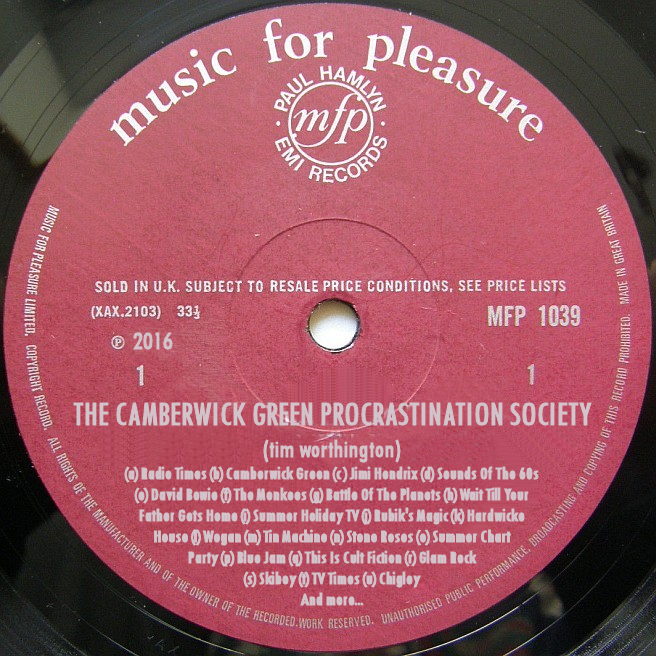
The Camberwick Green Procrastination Society, a book collecting some of the ridiculously lengthy diversions I've gone on about archive TV and pop music when I really should have been working on something more substantial, is now available from the Amazon Kindle Store. Regular readers may be interested to know that it includes exclusive and previously unpublished pieces on Chigley, Wait 'Till Your Father Gets Home and David Bowie's early TV appearances. Elsewhere there are features on Doctor Who, The Monkees, Battle Of The Planets, Tin Machine, Skiboy, The Stone Roses, Glam Rock, Jimi Hendrix, Hardwicke House, Rubik's Magic, Blue Jam and Camberwick Green. There's quite a lot about that, in fact.

You can get The Camberwick Green Procrastination Society from the Kindle Store by clicking here. Or if you'd prefer, you can still get the paperback from here, or the original full-colour eBook from here.

Gordon Murray's Multi-Coloured Swap Shop


This isn't going to be a 'tribute' to Gordon Murray as such, mainly because I feel that the various lengthy pieces I've written about his work stand up perfectly well as 'tributes' in their own right. If you're interested and haven't seen them, then let's just get them out of the way in a brisk Fire Brigade Roll Call style - first episode of Camberwick Green, last episode of Chigley, middle episode of Trumpton, how Radio Times covered the launch of Camberwick Green, where Jimi Hendrix got the idea for The Wind Cries Mary from, article on forgotten 'fourth' show Rubovia, review of the Camberwick Green LP, in-depth look at the making of all three series, Cuthbert, Dibble, Grubb. And indeed 'pheep'.

Instead, I'm going to be asking for your help in paying an even bigger and better tribute to Gordon Murray - helping to track down a long-lost bit of his television history...


On 20th October 1979, Gordon Murray was the main studio guest on BBC1's Saturday Morning show Noel Edmonds' Multi-Coloured Swap Shop. This came about largely as a result of his later puppet comedy shows aimed at an older audience, Skip And Fuffy and The Gublins, having been used as inserts in Swap Shop; a number of viewers had written in asking how they were made, and given that Noel and company were always enthusiastic about the idea of taking the audience 'behind the scenes', it made perfect sense to get him on to talk about them. He also brought along a number of puppets and props from Camberwick Green, Trumpton, Chigley, Rubovia and even some of his earlier productions, and gave away a Gublin as a prize in a write-in competition.

I remember watching this and being absolutely fascinated by the explanations and demonstrations of how stop motion animation worked, how he came up with characters and names, how Brian Cant ended up as the narrator and so forth. I didn't win the Gublin, though. Incidentally that week's show also featured an interview with Tommy Steele as well as a Debbie Harry lookalike contest, and a report on 'Trotting' as a potential new sport. Sadly, Gordon's views on any of the above are not recorded.

Literally not recorded in fact. Sadly, this is amongst the many editions of Swap Shop that were not retained by the BBC, and so far no off-air recording has surfaced. As far as I'm aware, this was the only occasion on which he was interviewed about the shows at this length and in this depth, so it would be nice for everyone to be able to see it again. If by some slim chance you've got a copy, please let me know and I'll make sure that the right people get hold of it. And now, if you'll excuse me, there's the Six O'Clock Whistle...


If you're interested in lost television, you might also like this feature on the 200th edition of Jackanory.


The Camberwick Green Procrastination Society, which includes features on Trumpton, Chigley and Camberwick Green, is available in paperback here, from the Kindle Store here, or as a full-colour eBook here.

Never Too Quickly, Never Too Slowly


If you still hadn’t recovered from the weekend’s celebrations on Tuesday 3rd January 1967, then you were in for a sharp wake-up call. At 13.30pm on BBC1, a shaky zoom in on a clock tower, followed by a riotous start-of-working-day burst of puppet activity, filled the nation’s television screens for the first time. Steadily, sensibly, never too quickly but never too slowly, Trumpton was here.

Gordon Murray had been commissioned by the BBC to make a second stop-motion series shortly after work on Camberwick Green had finished, but while it would be set in the same fictional locale and use the same production techniques and indeed narrator and musician, it was obvious from the outset that this would be a very different prospect to the laid-back working days of Farmer Bell and company. Set in a busy, bustling town centre, Trumpton was more colourful (though admittedly this was not obvious on the early black and white transmissions), energetic and – comparatively – noisy, set in an urban environment with a greater emphasis on transport, professions and machinery, and a large cast of characters constantly crossing each other’s paths in communal areas.

In order to achieve the right sort of pace and tone, Murray had co-written the scripts with Alison Prince, whose dangerously modern tales of transport café life in Joe had caused a minor stir amongst the Mothers doing the Watching With earlier in 1966. An entirely new cast of puppet characters was created, a number of short repeated sequences were inserted into each episode, and Freddie Phillips composed a set of decidedly more brisk and strident songs that in many cases would not have sounded out of place amongst David Bowie's Deram-era material. Ironically for a programme that would later start to look creaky and out of touch as attitudes and audience expectations evolved, back in 1967, Trumpton was probably about as modern as it got.


A couple of readers have asked why my book The Camberwick Green Procrastination Society includes articles about the first episode of Camberwick Green and the last episode of Chigley, but nothing whatsoever about Trumpton. Well, that's basically down to the hilariously tedious reason that it just wouldn't have fitted stylistically or thematically into the middle of the book (where it would have been wedged between features on Summer Chart Party and Blue Jam), and so you're getting it here instead. And if you've not already got The Camberwick Green Procrastination Society, you can get it from here. Anyway, keeping in mind what we were saying about never too quickly, never too slowly...

Telephone, the seventh and 'middle' episode of Trumpton, was first seen on BBC1 on 14th February 1967, and would continue to be constantly repeated right up to 9th May 1985. Like pretty much every episode of Trumpton, it revolved around the townsfolk encountering a practical and/or technical conundrum that had to be resolved with the assistance of the local Fire Brigade; quite possibly the reason why its storylines are now recalled more vividly than the looser and more travelogue-like counterparts seen in Camberwick Green and Chigley. On this particular occasion, the practical and/or technical conundrum was all down to a couple of GPO Engineers and some excessively nosey dogs.


Like every episode of Trumpton, Telephone opens with the familiar sight of the programme's name in white text on a black splodge on a deep blue background, and what appear to be the exact same first three notes as the opening theme from Camberwick Green, presumably incorporated as part of some sort of vague Clown-skewed cross-show continuity that we are probably best not questioning. There's that celebrated unsteady zoom as Brian Cant weighs in with his familiar introduction to the clock - "steadily, sensibly, never too quickly, never too slowly, telling the time... for Trumpton!" - and the figures of town founders Sir Rufus And Lady de Trompe emerge to strike the hour and announce the start of the working day. This they do to the accompaniment of one of Freddie Phillips' best compositions Chime And Clock Theme, which, as if to underline his precision-targeted home-made musical genius, features exactly nine chimes to tally with the clockface showing nine am. PC Potter (and not PC McGarry like you thought) takes a look around the town square, which immediately bursts into life as a milk float cruises by and everyone opens up shops, sets up selling pitches and looks out of windows to the jerky, frantically-paced sound of Busy Little Market Town, which fades out just as the Mayor comes out onto the Town Hall balcony to get some fresh air.


Looking down onto the Town Square, The Mayor catches sight of carpenter Chippy Minton and his son Nibs pulling up in their pickup truck, and initiates a shouted conversation about their respective daily itineraries. Chippy and Nibs, it transpires, are here to do something unspecified but presumably wood-related for Mr. Platt the clockmaker, while The Mayor has to head back into his office to look over some paperwork at the behest of his unnveringly David Steel-like Town Clerk Mr. Troop. Top of the pile are a handful of complaints about the streetlamps in the never-glimpsed but oft-referenced George Street, prompting Mr. Troop to place a call to never-glimpsed but oft-referenced borough engineer Mr. Bolt. Unfortunately, neither Mr. Bolt nor the Mayor can hear each other properly due to some loud crackling on the line; Mr. Troop reports that this has been happening all morning, upon which they abandon any pretence of continuing to care about the state of the street lights and telephone instead for a GPO Engineer. Quite how this was any more intelligible than any of the other referenced calls is never exactly explained.


Mr. Wantage and his apprentice Fred promptly show up in their oddly-shaped van, pull up a paving slab, and sing a catchy little number about their line of work, complete with ringing phone sound effects and Rex Harrison-style 'spoken-sung' interludes. It has to be said that it does seem rather odd and jarring now to hear so many references to the GPO and 'Post Office Telephones', and it might be worth clearing your throat and giving this song an airing the next time that a privatisation-crazy politician starts blethering on about how aspirational a view of life Trumptonshire represents. It might also be worth giving it an airing to Thom Yorke and telling him that this is how you write an actual proper song with a tune and everything, but anyway...

With cables and wires sufficiently exposed and untangled, the two engineers break for lunch, but Mr. Wantage finds to his alarm that his unwrapped sandwich parcel actually contains 'Granny's birthday present'. Far too ravenous to wait until they've finished the job, he heads off home to fetch his errant lunch and leaves Fred with strict instructions not to touch anything. And bang on cue, expansively over-dressed hatmaker Miss Lovelace arrives with her three yappy Pekingese Spaniels, Mitzi, Daphne and Lulu. The overenergetic canine chums are more often than not the cause of mishaps in and around Trumpton, and sure enough, they mob poor old Fred in a quest to make off with his sandwiches, ending up with Mitzi toppling nose-first into the manhole. Fred quickly pulls her back out, but dislodges some of the wires in the process; fearful of a dressing down from the himself hardly exactly attentive to detail Mr. Wantage, and encouraged by buck-passing flattery from Miss Lovelace, he elects to take matters into his own hands and shove them back in where it looks like they should go. You can probably take a reasonable guess at what happens next.


Over in his print shop, Mr. Munnings is hard at work setting up his ink and typeface - as we are told in seemingly unstoppably intricate detail over an instrumental version of his song - to knock out some branded paper bags for greengrocer Mr. Clamp; who, what with his own song exhorting all and sundry to "come buy, come buy, come buy them from me", never seems to have missed a promotional trick. Constable Potter sticks his head round the door for no obvious reason while the bags are printing, and then promptly disappears again, which was a tad inconvenient of him as he could easily have helped avert the chain of ridiculousness that followed. As a result of Fred's copper cabling chicanery, when Mr. Munnings telephones Mr. Clamp to inform him that the bags are ready, he gets through instead to Miss Lovelace, who is none too impressed at having her time wasted with paper bag-related blather.

To add to the mounting nonsense, an impatient Dora Minton telephones Mr. Platt to inform a tardy Chippy and Nibs that their dinner is at risk of burning. Only the message is relayed instead to Captain Flack at the Fire Station, who hears the flame-related terminology and inevitably sounds the alarm. Well, they never did seem to get to tackle an actual blaze, so you can understand them jumping the gun a bit. "There, that should fetch him!", muses a riled and long-suffering-sounding Dora, blissfully unaware that Captain Flack has already flicked the big massive switch next to what close inspection reveals to be - bewilderingly - a map of Florence. Freddie Phillips' slowed-down alarm clock standing in for a fire bell sounds, and Trumpton's single most famous sequence begins.


As anyone of a certain age will be able to recall with alarming clarity and detail, the impressively heavy-looking Fire Station doors clang open, Pugh, Pugh, Barney McGrew, Cuthbert, Dibble and Grubb slide down the pole and line up next to the engine, Captain Flack blows his whistle and conducts a quick inspection and they're off and away through the streets of Trumpton to the strains of the jaunty Firemen Bold, which you can't help but notice bears more than a passing resemblance to a certain Buffalo Springfield number. On arriving Chez Minton, they are surprised to be greeted by a placid Dora and a distinct lack of smoke. Chippy and Nibs promptly turn up, and calmly theorise that there must have been some kind of mixup with the GPO engineers, before dismissing all of this nonsense and heading indoors in search of their not yet burned dinner, in a tone that suggests an implied impatient "woman!" at the end. "Poor Captain Flack", muses Brian Cant as the picture momentarily fades to black, "he never has a proper fire to put out". No, but he gets all manner of other and probably more interesting stuff to do. AND makes Cuthbert fall in a pond.


Back in the Town Square, in a scenario that will be familiar to anyone who's ever been expected to fix a computer in their spare time, Fred is surrounded by a disgruntled mob (well, Mr. Platt, Mr. Munnings, Mr. Clamp and Mr. Troop) demanding that he dispense with the technical jargon and put everything right at once. To make matters worse, The Mayor then strolls up admonishing him for causing the Fire Brigade to be called out on a false alarm, conveniently sidestepping the fact that it wouldn't have happened if Captain Flack had elected to engage his ears, closely followed by his brain. The hapless Fred's bacon is saved by the arrival of the suspiciously late Mr. Wantage, and the intervention of Miss Lovelace, who confesses that her dogs were in fact responsible. Upon which The Mayor decides to dish out a bollocking to them instead. You would have to wonder how he ended up in high office, if it wasn't for the example set by certain real life mayors we're all too familiar with.

Anyway, everything is all sorted out quickly and easily enough and to everyone's satisfaction. So much so in fact that The Mayor invites Mr. Wantage and Fred to come along to the park and enjoy the Fire Brigade's daily band concert. Although this involves more or less the same footage as every episode of Trumpton, with the Fire Brigade bashing out their boisterous waltz on brass instruments that sound suspiciously like a double-tracked acoustic guitar, while the locals and a disconcerting influx of Camberwick Green puppets look on, we do get an additional cutaway shot showing Mr. Wantage and Fred arriving to lend an ear. Then it's back to Chime And Clock Theme, and more of those splodges carrying credits that seemed so mysterious and evocative to younger viewers (of which, it should be said, a significant number for the time are for female contributors), before fading out with not a single terrifying Clown in sight.


Even all this time later, Trumpton still resonates with an infectious energy and vibrancy. It would be more than a little misleading to adopt a default Guardian columnist position and indulge in some waffle about how this 'reflected its Swinging London origins' - no matter how fond Alison Prince may have been of loud shirts - but in a more realistic sense it was still very much a product of the background excitement of its time. Gordon Murray may not have been hanging out with Billy Nicholls at the Million Volt Rave, but all the same he was at the cutting edge of both television technology and independent film-making, and when combined with a lively contemporary setting and engaging real-world storylines - something that the actual scriptwriter seldom gets sufficient credit for - the overall effect was striking and, unsurprisingly, enduringly popular. Camberwick Green may have done the actual ground-breaking, but Trumpton built on this rather than just offering more of the same, which in a very vague and tenuous way was somewhat in line with what The Beatles and The Rolling Stones were up to with each successive single around then. Though thankfully Freddie Phillips never saw fit to enter into a public row with George Harrison and Brian Jones over who was best at 'sitars'.

So, that's Trumpton. And if you've been waiting outside for confirmation that it isn't the one with 'The Clown', then you've missed everything. You could have checked in Radio Times, you know.


If you've enjoyed this, but you haven't already got a copy of The Camberwick Green Procrastination Society - which features similar pieces on Camberwick Green and Chigley and lots more besides - then you can get it in paperback here, or from the Kindle Store here, or as a full-colour eBook here.

The Camberwick Green Procrastination Society

The Camberwick Green Procrastination Society by Tim Worthington

The Camberwick Green Procrastination Society is a book collecting some of my recent columns and articles, mostly in massively expanded form. And if you've already read them, there are brand new previously unseen features on Chigley and its role in the end of 'the sixties', Wait Till Your Father Gets Home and its role in the end of the hippy dream, and David Bowie's wiped early TV appearances and their role in being wiped. Also, if you get the paperback or eBook version, they're all in appropriate and painstakingly recreated magazine layout pastiches; you can see some examples of these below.

In The Camberwick Green Procrastination Society you can find out what Jimi Hendrix was really watching when he wrote The Wind Cries Mary, why old Glam Rock compilations are an ethical nightmare, and how time stood still in the middle of Summer Holiday mornings on BBC1, alongside in-depth features on Camberwick Green, Battle Of The Planets, Hardwicke House, Doctor Who, Blue Jam, The Monkees, The Stone Roses, Pink Floyd, the aural horror that is Summer Chart Party, and plenty more besides, including more detail than anybody ever wanted or needed about Skiboy. Even Skiboy himself.

You can get The Camberwick Green Procrastination Society as a paperback here, or as a full colour eBook here. Or, if you want it without the pictures but with an additional chapter on Trumpton, it's also available from the Kindle Store. And if all of that doesn't entice you, have a look at some of the pages...

The Camberwick Green Procrastination Society by Tim Worthington
Feature on Jimi Hendrix, Camberwick Green and The Test Card from The Camberwick Green Procrastination Society by Tim Worthington
Feature on David Bowie's lost early TV appearances from The Camberwick Green Procrastination Society by Tim Worthington
Feature on Hardwicke House from The Camberwick Green Procrastination Society by Tim Worthington
Feature on Tin Machine from The Camberwick Green Procrastination Society by Tim Worthington
Feature on Summer Chart Party from The Camberwick Green Procrastination Society by Tim Worthington
Feature on That 70s Show from The Camberwick Green Procrastination Society by Tim Worthington
Feature on Skiboy from The Camberwick Green Procrastination Society by Tim Worthington
Feature on Chigley from The Camberwick Green Procrastination Society by Tim Worthington
Feature on Radio Times, Doctor Who and Play School from The Camberwick Green Procrastination Society by Tim Worthington
Back cover of The Camberwick Green Procrastination Society by Tim Worthington


If you've already got The Camberwick Green Procrastination Society, you can find more books by me here.


The Camberwick Green Procrastination Society is available in paperback here, from the Kindle Store here, or as a full-colour eBook here.

Listen With TV 'Girl' (Test Card)

Bang On A Drum - Songs From Play School And Play Away

Between 1969 and 1973, BBC Records And Tapes released a couple of dozen LPs on their short-lived 'Roundabout' imprint. Specifically aimed towards younger listeners, and presumably named in honour of a certain animated show that would have been very much on their radar at the time, the Roundabout series of albums started out strange and got even stranger, with a short and unwarranted outburst of sensibility in the middle. Here, then, is a guide to what you might expect to find if you chance upon one of these decidedly odd records lurking at the back of the 'Soundtracks' section in one of the larger charity shops...


RBT1 Fun At The Zoo

BBC Records And Tapes - Fun At The Zoo

Leading naturalist Eric Simms invites us along on an All Back To Mine-style rifle through his personal collection of sound captures from zoos in That London. All immaculately recorded and sounding nice and nice and punchy in that mono field recording kind of a way, but it's debatable how much 'fun' this actually is for the young listeners, let alone the poor old elephants and tigers. You had to be there, I guess. Paul Simon's views on the album are not on record.


RBT2 Come To A Party


Perhaps indicating that they weren't quite ready to fork out for any actual actors or presenters to do the roundabouting duties just yet, BBC Radio producer Gordon Snell takes the frightfully well-spoken lead for a series of party games and songs, including quick Radiophonic Workshop-assisted rounds of Musical Bumps, Guess The Noise, O'Grady Says..., Polly Put The Kettle On, Oranges and Lemons, and, erm, 'Islands, Balloon and Parcel'. No, us neither. He also gets to read out one of his self-penned nonsense stories, 'How The Plonks Got Their Hair'. It's even weirder than you're thinking.


RBT3 Listen With Mother


Only three whole releases in, they've finally opted to put one out based on an actual recognisable children's programme, with the cast of long-running stories, songs and percussion radio hoedown Listen With Mother ushered into a recording booth to re-interpret some of their greatest hits for the listening masses. So basically the tambourine-thumped expected likes of Ring A Ring O' Roses, Little Bo Peep, This Is The Way The Ladies Ride and The Grand Old Duke Of York, alongside such slightly more esoteric fare as A Fishing Rod For Carlos, A Pig With A Wig, From The Cabbage Patch To Australia and, erm, Gay Go Up And Gay Go Down. Moving hastily on...


RBT4 Animal Magic


Still persisting with that off-putting generic front cover branding, but at least they've wheeled out a potentially interest-attracting big name this time around, in the form of veteran anthropomorphist and Public Enemy Number Fifty Three Million Johnny Morris, indulging in much the same sort of skidding-penguin-saying-"look-out-below-fellars!" antics as on the televisual version of Animal Magic, only this time without the televisuals. And what do you know, it works pretty much just as well. Plus, thankfully, he doesn't start warbling on about Gemini The Sealion here either.


RBT5 Jackanory


The BBC's kaleidoscope-fronted storytelling slot makes a hazardous book-TV-vinyl triple-jump with a quartet of readings of traditional folk tales - one each from England, Ireland, Scotland and Wales - culled from the show itself, complete with that never-explained 'hallucinogenic tree' iconography on the back cover. One-woman vaudeville act and pre-war TV mainstay Maureen Potter, Dempsey And Makepeace-botherer Ray Smith, Jackanory Week One helmsman Lee Montague, and Magnus Magnusson - with nary a 'started so I'll finish' gag in sight - do the royalty-free reading out honours. Distinctly short on grooves.


RBT6 Party Time


Gordon Snell's back, and this time he's armed with tongue-twisters, games of I-Spy and, well, more or less exactly the same as before, basically. The only real difference being that the generic cover art has undergone a less-than-subtle overhaul that might lead more suspicious minds to question exactly what refreshments were on offer at said party. Tizer, Caramac and blackcurrant jelly, obviously.


RBT7 The Wizard Of Oz


The optical cause for concern may well continue, but here for the first time ever the cover-mounted roundabout gets ditched in favour of some of the Hilary-Hayton-meets-Jelly-Tots interpretations of the lead characters from Jackanory's celebrated 1970 reading of Frank L. Baum's film-inspiring fantasy novel, as narrated (and indeed re-narrated for this release) by Bernard Cribbins with bits and pieces of hamfisted sound effects and loungey keyboard music. Nobody has tried syncing this up with The Dark Side Of The Moon as far as anyone knows.


RBT8 Magic Roundabout


Eric Thompson, the theme music, and straight-ahead no-nonsense re-recordings of ten original nonsense-crammed stories complete with obscure characters, incessantly-volumed boings, and Dylan and Brian apparently trying to play Rainy Day Women #12 And 35. Do you need any more qualification? Oh you do? Right, well, maybe somebody's been going on about The Magic Roundabout quite a bit recently...


RBT9 Listen With Mother No.2


The cover art experiments continue and everything's gone a bit E Arth Welcome, suggesting that we're about to be treated to a downbeat spoken word version of There's A Hole In My Bucket over a looped bit of Etienne de Crecy. Sadly, though, it's just a bunch of typical Listen With Mother stories with names like Mrs. Moppingdust And The Lettuce Thief and The Six Thin Brothers, though you do have to wonder if Thom Yorke was listening in for The Unhappy Computer.


RBT10 Play School


As the back cover photos which make the presenters look like they've just spilled out of a 'psychedelic' nightclub in a late sixties British spy thriller suggest, you'll find a far more far-out calibre of stories on here, including bleepy retro sci-fi tone poem The Moon Rocket, freestyle-inviting break-heavy animals-go-prog jolliness Fearless Fred's Amazing Animal Band, and the Radiophonic Workshop-assisted tale of everyday existentialism amongst the Splodges. Sampled by more than one dance artist, despite being a spoken word record. Stitch that, Gordon Snell!

It seems that there never was an RBT11, so instead it's straight on to... 


RBT12 The Adventures Of Sir Prancelot 


John Ryan's oft-forgotten post-Mary, Mungo And Midge middle ages tomfoolery steps into stereo for this epic-length crusade to the Holy Land, which would make this one of the highlights of the catalogue if it wasn't for one major drawback - while the sleeve makes a big deal of the inclusion of the bonkers electric sitar-led Jester-mimed what's-that-got-to-do-with-medieval theme music, it's actually only in heavily edited form and in one speaker. Tell those moogs funks breaks merchants on eBay where they can moog funk break it.


RBT13 Camberwick Green


A straight reissue of 1966's Welcome To Camberwick Green, giving listeners another chance to enjoy Peter Hazel and Windy Miller wandering aimlessly about in a flimsy pretext to cram in crisp clean mono versions of pretty much all of the songs from the show, some of them in vocal AND instrumental versions to boot. It's OK, you can come back now. 'The Clown' isn't on the cover.


RBT14 Music Time


In its original black and white 'Pie Chart'-heralded incarnation, Music Time was a very different show, and leaned very much towards the the Corn Riggs Are Bonnie end of the musical scale. Here letter-e-deficient duo Mari Griffith and Ian Humpris take us through some stark acoustic renditions of folk songs from around the world, including Deaf Woman's Courtship, Goodbye Old Paint, O Waly Waly and the ever so slightly dubious Man In The Wood. Cadet Rousselle was not available for comment. Other than to confirm that he has houses three.


RBT15 Bedtime Stories


Johnny Morris rattles through a selection of self-penned yawn-friendly yarns, apparently derived from 'The Post Office Dial-A-Bedtime-Story Service', and introducting us to the likes of Snapper The Crocodile, Snowdrop The Polar Bear, Tubthump The Gorilla (who presumably gets knocked down, but he gets up again), and... well, you get the picture. He doesn't tell one about that lamp, though.


RBT16 Mary, Mungo And Midge


TV's premier Girl/Dog/Mouse ensemble make it to vinyl with a handful of 'your favourite stories from BBCTV' (which doesn't include the one about the clock so that's false advertising for starters), which might lose something with the absence of the minimalist cardboard cutout animation but at least you get lovely medium-fi versions of the opening narration and closing music. There's also reputedly a 'break' hidden away on there somewhere, but even Spindarella hasn't been able to locate it.


RBT17 Bang On A Drum - Songs From Play School And Play Away


Oh yes, this is everything that cover promises. And so much more. Ridiculous Pickettywitch-meets-Mike-Westbrook Pop/Acid Folk/Brit-Jazz hybrid musical mismatch very much to the fore as various frustrated singer-songwriters who'd been reduced to presenting Play School to make ends meet get the opportunity to rework some of their back catalogue flops for younger listeners, going absolutely musically overboard on the way. Rammed from start to finish with hidden delights like Early In The Morning, Sunbeams Play, The Israeli Boat Song, I Like Peace I Like Quiet, and of course the much-sampled Bang On A Drum itself. Notice also how Hamble appears to just be attacking the air with her fists. Just adds to the mounting evidence, frankly.


RBT18 Adventures Of Parsley


Ten retold tales from the post-The Herbs excursion into free-form scattershot five-minute surrealism, with Parsley and Dill (who - controversially - 'narrates' a handful of them) joined by a procession of Guest Herbs and that Farfisa-blinking-in-and-out-of-dimensional-plane theme music in all of its bass speaker-blowing glory. Wonder if that geezer who was always looking for 'THE HERBS LP' in the Record Collector 'Wanted' listings ever found a copy?


RBT19 Play Away


A pretty good attempt at doing a full edition of Play Away in sound only, meaning that there's sketches, gags, poems and free-form parlour games in between all of the music. Famed combination of Blaxploitation funk and Dawkins-esque rationalism Superstition is the obvious standout, though the likes of The Party Is About To Begin, Words Words Words, Umbababarumba and an energetic rattle through If I Had A Hammer are also ever so slightly good, and then on the non-musical side there's the word-walloping playlet Captain Kipper's Clipper. Note also the use of Toni Arthur's arse as a selling point.

As there was no RBT20, let's give thanks to The Lord for...


RBT21 Songs Of Praise For Young Folk


They're all we need to lift our lift our lift our lift our hearts. BBC Records And Tapes' early output was full of these Pete Seeger-inspired 'making worship fun' efforts performed in cahoots with then-struggling now-collectable Acid Folkies - previous offerings had involved the likes of Heather Jones, Dana Stirk and The Crown Folk - and this collaboration between a load of caterwauling kids and the label's in-house psych-heads Trane was no exception, treating listeners to renditions of such oddly-titled God-botherings as There Is A God, O Ru-Ru-Ru, Fisherman Peter and, erm, Love Came A-Tricklin' Down. But while it may be talked about in hushed tones by pillocks with wonky hats nowadays, was it a turntable favourite with youngsters back then? More than likely not.


RBT101 Bobby Lamb And The Keymen


What happened to RBT's 22 to 100 is something we may never know, and sadly listeners would be denied the chance to hear albums based on On The Farm and Mandog, as we leap straight on to... um... Radio 2 favourites Bobby Lamb and his Hammond-hammering wah wah-peddling backing ensemble taking a psych-lounge stroll through a handful of recent top pop disc hits. From a modern day Exotica fan's point of view there's no arguing with the escalating mayhem of their take on The Fool On The Hill, or the slow-burning funk of Harlem Nocturne and Cinnamon And Cloves, and it's rounds of applause all round when Paddy Kingsland of the BBC Radiophonic Workshop shows up to splatter some elastic Moog all over Aquarius, but you really do have to feel for any child who might have been inadvertently bought this when they were hoping for a selection of songs from Hope And Keen's Crazy Bus or something.


RBT102 The Many Voices Of Peter Ustinov


Explorer! Fitness Instructor! Croupier! Lord Mayor's Croupier! It seems we're straying a bit from the original Roundabout brief here, as rather than showing off his best Frank Spencer, TV's That Bloke Where You Were Never Quite Sure Exactly What He Did spends an entire two sides of vinyl deep in 'After Supper Conversation' with those teen sensations all the kids were going crazy for, Cliff Michelmore, Kenneth Allsop and Derek Hart. The latter clearly having left The Bishop Of Woolwich and a Nude Man at home on this occasion.


RBT103 Girl On the Test Card 


Pete Winslow and his not-particularly-onomatopaeic 'King Size Brass' tootle their way through a selection of commercially-available renditions of the non-commercially-available instrumentals regularly heard behind BBC Test Card F; the sleeve notes suggest that this was due to overwhelming viewer interest, though it's more than possible that TV's Scariest Bastards simply marched on BBC Records And Tapes and demanded the release themselves. To be honest, from Take Your Time to Menorcan Mardi Gras, it's all rather jolly, perky and ultimately 'beat'-free fare - even the misleadingly promisingly-titled Six Two Five 405 - but hidden away right at the end you'll find the nigh-on seven minute intergalactic groove of Space Chariots. How come it suddenly gets so interesting? You are not entitled to ask.


RBT104 S'Wonderful


You must remember that huge seventies craze for big band swing, when all the kids downed spacehoppers in favour of dusty old wax cylinders of The Edison Concert Band? No? Well it clearly happened, as here's BBC Records And Tapes' attempt to cash in on the phenomenon with a handful of lively toe-tappers cobbled together from other previous non-Roundabout releases and a distinctly un-childfriendly cover. Either that, or 'Girl' and 'Clown' really did manage to get their feet under the musical table - indeed, as if to underline this, there's a track from Girl On The Test Card included here - and this change of direction was taken merely in the desperate hope of keeping them happy. In which case we would like to categorically state that this is all jolly good, and well done everyone involved, and now please move on as there is nothing more to see here.


RBT106 Jumping To Fame - The Story Of Showjumping Today


At least some semblance of an acknowledgement of what young people like here - well, a certain percentage of them won't shut up about wanting to own a horse - with a cut-down version of a Radio 4 series featuring Jeanine McMullen chatting to equestrians great and small about their Square Oxer shenanigans. It also clearly jumped RBT105 too, as there's no record of that ever having been released.


RBT 107 With Brass And Strings 


Another collection of stuff culled from other extant Big Band-friendly releases, including renditions of the themes from those top children's favourites Softly Softly, Owen M.D., Van Der Valk and the Shipping Forecast (and another tip of the blue triangular hat to TV 'Clown' and 'Girl'). And with that, the Roundabout experiment was quietly retired. Or, if you will, stopped rotating. Sorry.


Top Of The Box, the story behind every single released by BBC Records And Tapes (including more from 'Girl' and 'Clown', but don't let that scare you away), is available here.