Showing posts with label chris morris. Show all posts

The Larks Ascending


The Larks Ascending is a complete guide to comedy, humour and downright oddness on BBC Radio 3, from Kenneth Williams’ archival documentaries about strolling players who never existed, through Rowan Atkinson’s academic profiles of public figures who never existed, right up to Armando Iannucci’s interval talks about composers who did exist, but they’re fitting around him and his using his ears whether they like it or not. There’s Chris Morris interviewing Peter Cook (and getting in trouble), BBC Radiophonic Workshop hi-jinks, the first ever proper staging of Joe Orton’s unused film script for The Beatles, some sitcoms that definitely wouldn’t appeal to viewers waiting for Coronation Street, satire, silliness, and a couple of plays about cricket. And if that’s just not highbrow enough for you, then you could always enrol at The Half-Open University…

Featuring in-depth looks at little-known and little-heard works by Peter Cook, Sue Townsend, Ivor Cutler, Kenneth Williams, N.F. Simpson, Peter Tinniswood, Chris Morris, Armando Iannucci, Malcolm Bradbury, John Sessions, Joe Orton, David Renwick And Andrew Marshall, Rowan Atkinson, Toby Hadoke, The National Theatre Of Brent, The BBC Radiophonic Workshop and more, The Larks Ascending is the full history of silliness and satire on the channel that Dr. Hans Keller called a 'daytime music station'. Priced at just a few pence*!


(*Please direct all complaints about actual price to Peter Weevil and John Throgmorton, Polyphonica Neasdeniensis)

Paperback - Kindle


You can hear me talking about the book and some of the shows featured in it here:


Box Set: Loungecore


A collection of some of my recent features on mid to late nineties loungey indie dance music...

It looks as though some of you aren't aware that I now have a new website (which you can find here), and are still hanging around here wondering where all the new 'content' is. Well it's over there, obviously. To give you all some idea of where to start, though, I'm adding some new posts here with themed collections of links, and this time it's some of my recent features and podcasts about the long-forgotten Britpop spin-off Loungecore...

Come On And Love Me Now - the enduring appeal of Life by The Cardigans

Amongst Them Trevor The Sheep - what really happened when Chris Morris' Blue Jam got taken off-air halfway through a show?

I Love The Gentle People - how did a kitschy lounge/dance act come to be all over daytime television and 'lad' mags?

Food Processors Are Great! - why I still find Modern Life Is Rubbish by Blur inspiring and exciting, and why the nonsense about it 'inventing' Brexit should be slung into the nearest burning bin.

Looks Unfamiliar: Emma Burnell - Emma shares her memories of nineties Easy Listening radio station Melody Radio.

Looks Unfamiliar: Jenny Morrill - Jenny talks us through her attempts at looking like Justine from Elastica.

I'm Leaner, I'm Meaner, I Ain't No Inbetweener - late nineties Post-Diana moody trip-hop and the bewildeirng rise of unlikely chart star Jimmy Ray.

Je Suis Perdue Dans La Nuit, Dans Cette Ville Où Je Vis- how I discovered 1968 by France Gall.


Not On Your Telly is available in paperback here or from the Kindle Store here. And there's several other books to choose from here...

E Arth Welcome... In Blue Jam


Since his last appearance on the station on Boxing Day 1994, there had been an open invitation of sorts for Chris Morris to do some more work for Radio 1.

The following two years had been taken up with work on Brass Eye, a six-part television series for Channel 4 that took his concepts of spoofing hoaxing news and current affairs to their logical conclusion, presenting a series of hard-hitting documentaries based around entirely fictitious subjects. Brass Eye was nothing if not provocative television, operating on a far more powerful level than practically any other comedy show ever transmitted, and an incident in which a hoax over the fabricated recreational drug ‘cake’ had spiralled out of control, and found itself the subject of a parliamentary discussion, caused enough concern within Channel 4 for station controller Michael Grade to postpone the series from its intended transmission while he verified whether or not it had transgressed broadcasting guidelines.


Brass Eye did indeed resurface, albeit in a substantially edited form, running from 29th January to 5th March 1997. Even in this slightly tamed incarnation the series was still strong stuff, but by this point the months of setbacks had taken their toll and Morris was thoroughly fed up with Brass Eye and keen to move on to something new. Rumours of a forthcoming new radio series had begun to circulate while Brass Eye was still airing, and over the summer of 1997 Morris recorded a pilot for Radio 1 under the working title Plankton Jam. It is perhaps telling that while the subsequent rash of inferior post-Brass Eye emulators were still little more than vague proposals, the man who inspired it all was making moves to distance himself completely from ‘news parody’.

Blue Jam, as the new Radio 1 series would eventually be renamed, did not even start out as a comedy show. Morris, who had always appreciated the woozy world of late-night radio where laid-back music tracks are linked by presenters talking in hushed tones that give a sense of the isolation of broadcasting from a largely empty building in the middle of the night, originally intended to create a more experimental take on this sort of show, a “3am lug lube” with an appropriate musical backdrop behind “first person stories that slowly went off the rails, from the point of view of the presenter”. While this would almost certainly have been diverting listening, it is interesting to ponder on whether or not they would actually have constituted ‘comedy’ as such; in effect, it would only have been a slightly exaggerated and distorted version of what could be found elsewhere on the radio dial at that time of night[1].

As work on the show progressed, sketch material began to find its way in through a somewhat roundabout route. According to Morris, the original concept of first person narratives evolved into “framing those narratives as ‘found sound’ as well, like bits of documentary actuality, and then dramatising bits of all of the scenarios”. This effectively grew out of a mocked-up ‘fly on the wall’ documentary in the pilot about a doctor who treated his patients with kisses and other displays of affection; this was considered by all who heard it to be the most effective item by far, occasioning a change of direction and a move towards outright sketch material with no DJ element. The doctor himself, caught up in increasingly bizarre scenarios but remaining unflappably by-the-book throughout, would go on to become the most heavily recurring character in the show.

Blue Jam was quite unlike anything that had been heard before in the name of radio comedy. The familiar presentational style, fabricated news stories and love of subverting pop music were all gone, replaced by a hazy montage of music over which fragments of monologue and conversation, alternately whimsical and disturbing, drifted in and out seemingly at random. The word ‘dreamlike’ has often been used to describe Blue Jam – and indeed an early pre-series trailer featured references to 'The 1FM Dreamline' – but not in the traditional sense. Instead, Blue Jam effectively evokes the disquieting, half-formed thoughts that pass through the semi-conscious mind in the early hours of the morning[2]. Although many have suggested that the nightmarish, otherworldly ambience of Blue Jam was influenced by the effects of hallucinogenic drugs, the reality of the situation is far more mundane and unpretentious. The original press release for the series included a list of the stylistic cues that had informed the show, which included Vivian Stanshall’s long-running Radio 1 tales of life at Rawlinson End, the ambient dance music act The KLF, and the effects of influenza, alongside the expected world of late-night radio; all indicative of a blurry and indistinct state, but one that is reached naturally rather than through any kind of chemical stimulation. Blue Jam was more effective in creating its own abstract ambience than any boring slab of drug-fuelled meandering could ever hope to be.

The first run of six hour-long instalments of Blue Jam went out on Radio 1 at midnight on Friday mornings, during November and December 1997. The most immediately striking feature, not to mention the most important in terms of setting the required tone, was the music. On a simplistic level, the shows could be divided down into the established ‘music show’ format, interspersing speech material with tracks played in full. However, the speech material was surrounded by looped sections of music tracks, which flowed in and out of the longer selections in one long pulsating soundtrack that ebbed and flowed with the mood of the material; so neat and seamless that it was difficult to determine where the music and comedy ended and started. This soundtrack was made up of excerpts from a selection of music tracks that were markedly diverse yet also strangely aligned, ranging from ambient dance music to spectral ballads, 1960s European pop numbers, and even a scratchy old blues record that claimed to be “dreamin’ ‘bout a reefer five feet long”. The KLF, Brigitte Bardot, Bjork, David Byrne, The Chemical Brothers, Stereolab, The Cardigans, Sly And The Family Stone, The Beach Boys, Beck and even the middle-of-the-road duo The Alessi Brothers were just a handful of the artists that found themselves absorbed into the first series of Blue Jam.

Each edition of Blue Jam opened and closed with a warped approximation of ‘beat’ poetry, conjuring up surreal juxtapositions and disturbing imagery and delivered in an obscure patois, conveying a feeling of distorted reality with a bleakly comic twist. Each edition also contained a lengthy monologue delivered by Morris, and written jointly with Robert Katz. These had their roots in ‘Temporary Open Space’, Katz’s contributions to Morris’ Greater London Radio shows (indeed, some of the monologues were adapted from earlier ‘Temporary Open Space’ pieces); these monologues probably give the clearest indication of what Morris had originally intended for Blue Jam. In the eventual transmitted shows they were surrounded by shorter sketches, written variously by Morris, Peter Baynham, David Quantick, Jane Bussmann, Graham Linehan and Arthur Matthews, and performed by a regular cast that included David Cann, Amelia Bulmore, Julia Davis, Kevin Eldon, Mark Heap, and on occasion Sally Phillips, Lewis MacLeod, Melanie Hudson and Phil Cornwell.

The sketch structure was to say the least unconventional, lacking deliberate start and end points (it was not unusual for a sketch to ‘end’ simply by fading into the distance on an echoed word), and divided between dialogue, monologue and a quasi-documentary approach. Twistedly humorous concepts introduced to listeners over the course of Blue Jam included an American couple who enter their baby in vicious fighting contests, a landlord who persuades his tenants to leave by slicing imperceptible slivers of skin from their feet as they sleep, a four year old girl with a secret double life as a ruthless gangland killer, a disease nicknamed “The Gush” that causes porn stars to literally ejaculate themselves to death, and an eyewitness account of a man who, lacking an available high window to throw himself out of, simply opted to commit suicide by repeatedly jumping from a first floor window.

While certainly highly amusing, such sketches have given rise to a belief that Blue Jam concerned itself solely with bleak humour based around shock tactic themes. This could not be further from the truth; the majority of sketches featured in the series are merely surreal, disorientating whimsy that are as light as the darker material is disturbing. Memorable examples included an angry man in search of the “owner” of the birds that annoyed him with their dawn chorus, an agency that hires out thick people to annoy customer service staff, a plot to joyride Professor Stephen Hawking around a racetrack, and David Bowie’s little-known side career as a relationship guidance counsellor. Meanwhile, Morris’ old standby of cutting and pasting of recorded speech resurfaced in a mangling of Radio 1’s Newsbeat (“police in Northumberland have sex with schoolgirls, and it’s all legal”), while an unsavoury backwards message was discovered in Elton John’s tribute to Diana, Princess Of Wales, Candle In The Wind ‘97.

The latter item, along with an interview with royal biographer Andrew Morton – quizzed on his attitude to non-existent internet-based games based on the crash, and how he would feel if a signed copy of his book was presented to Princes William and Harry by a Diana lookalike – formed part of an extraordinary run of material spread throughout the first run of Blue Jam, inspired by the outpourings of emotion that had followed Diana’s death. At no point was this material ever in any way cruel or insensitive about the situation itself, nor indeed about the people who felt affected by the tragedy; it simply reflected the feelings of someone who, like many others, had grown tired of the disproportionate public displays of grief, and the attendant media hysteria and hypocrisy, and their apparent refusal to abate even some months later. Blue Jam suffered from very little interference or censorship throughout its existence, but an item that was originally planned for the last show of the first series pushed Radio 1’s tolerance too far.

Around fifteen minutes into the original edit of show six, the following re-edit of the Archbishop Of Canterbury’s sermon from Diana’s memorial service appeared:

“We give thanks to God for those maimed through the evil of Mother Theresa, whose death we treasure. We pray for those most closely affected by her death, among them Trevor the sheep. Lord, we thank you for the precious gift of the sick, the maimed, and all whose lives are damaged, and for the strength we draw from all who are weak, poor and powerless, in this country and throughout the world. Lord, we commend to you Elizabeth, our Queen, whose death may serve the common good. We give thanks above all for her readiness to identify with God almighty, and for the way she gave sauce to so many people. Her mother, her brother, Dodi Fayed, and many, many, many more. We pray for the Royal Family as they discharge their members in Trevor Rhys Jones. Give them AIDS. Lord of landmines, hear our prayer. And now abideth faith, hope, love, these three… but the greatest of these is tortoise”

Morris was aware that this was likely to be problematic, and to that end recorded a deliberately obscene ‘Doctor’ sketch containing libel, blasphemy and an intentionally unsavoury remark about Diana, which was never seriously intended for broadcast (and not particularly funny either) and could be excised as a bargaining counter to argue for the Archbishop edit to remain uncut. Radio 1 seemed happy with this; the contentious sketch was duly removed from show four (which ran correspondingly short as result, with an extra music track added after the outro to make up the time[3]), and the full edit was cleared for broadcast as part of show six. However, when the sequence actually went to air, Radio 1’s duty manager insisted that the episode should be faded out and replaced for the rest of its duration with a repeat of show one. It is reputed that the engineer charged with the task of swapping the broadcast was a fan of the show and deliberately took his time, resulting in the offending item going out pretty much in its entirety, with only a single line of inoffensive material left unbroadcast. Quite why this came about is uncertain. Some of those who worked on the show claim that the sketch was mistaken for the excised ‘Doctor’ sketch by the inattentive duty manager, and faded out for that reason, while Radio 1 claimed at the time that they had changed their minds over the suitability of the Archbishop edit and had requested an alternate edit that never arrived[4].

Whatever the circumstances, Radio 1 subsequently became very unhappy about the item. When Morris tried to get the full version of show six broadcast, still with 45 minutes of unheard material, as part of a repeat run early in 1998, Radio 1 refused and in the absence of an alternate edit put out show one – its fourth airing in three months – in its place. Eventually, when it became clear that they were not prepared to give way, Morris relented and provided an edited version, which went out as the first of a new six-show run between March and May 1998 .

By now, Blue Jam was gaining both critical approval – it won the Sony Gold award for Best Radio Comedy for two consecutive years – and a small, but intensely loyal, audience. A third set of six shows running between January and February 1999 showed some signs of fatigue, particularly in the choices of music, but the material was generally of the same exceptionally high quality, and there could be little doubt that Blue Jam was an experiment that had succeeded beyond expectations.


[1] In fact, it may well have ended up somewhat reminiscent of Mark Radcliffe’s Radio 1 show Out On Blue Six, which achieved a similar detached ambience through judicious manipulation of the traditional music radio format with laid-back music and surreal interjections. Morris professes to have enjoyed Out On Blue Six greatly.
[2] Morris reinforced this point to me when he claimed that “the material generally came from a sense of wanting to make things hypnotic and unignorable”.
[3] This was Best Bit by Beth Orton; despite assumptions to the contrary, this actually appears on the broadcast master of the episode.
[4] More confusingly still, Radio 1 denied all knowledge of the incident to several listeners who called in during the broadcast to ask what was going on. Complicating matters still further, Radio 1’s then-Controller Matthew Bannister claimed in BBC Radio 4 Extra’s Morris retrospective Raw Meat Radio in 2014 that the entire incident had never happened and that all supposed off-air recordings were a hoax perpetrated by a fan. All I can say is that, hand on heart, my off-air recording is genuine. Numerous listeners will attest that this actually happened and it was reported on by a couple of newspapers at the time. Matthew Bannister politely declined to be interviewed for Fun At One, feeling not unreasonably that he had expressed his point of view definitively on several previous occasions.
[5] The item was first heard in full as part of a Blue Jam ‘Live’ event at the Battersea Arts Centre in 1998. A video version, prepared for the TV transfer jam but not actually used in the series, was later made available at www.bishopslips.com – this effectively comprised the 22nd track of the Blue Jam compilation CD released by Warp in 2000. It was also included on the limited edition Blue Jam Extras CD.


This is an abridged excerpt from Fun At One - The Story Of Comedy At BBC Radio 1, which is available in paperback here or from the Kindle Store here.

Twelve Radio Programmes That Need To Be Given A Proper Release

Amazingly, there are still some well-known - or at least well-regarded - radio programmes that are not available to buy either on CD or as downloads. Here are twelve that I think deserve a wider audience...

The Psychedelic Spy (BBC Radio 4, 1990)


Writer Andrew Rissik was responsible for this witty, action-packed pastiche of every last military-jacketed secret agent from lurid late sixties pulp paperbacks and equally lurid mind-hurting lava lamp-drenched late sixties post-Bond cinematic knock-offs, following reluctant globetrotting spy Billy Hindle as he wrestles with the end of the sixties - Rissik deliberately set it in 1968 as "by then the whole thing had turned sour" - and the constant demands of his superiors to take on 'just one last job'. The impressive cast includes such pop art-hued espionage drama veterans as James Aubrey, Joanna Lumley, Gerald Harper and Ed Bishop. The Psychedelic Spy occasionally shows up on Radio 4 Extra, but really is crying out for a proper release in suitable pastiche packaging.


Black Cinderella Two Goes East, Or Confessions Of A Glass Slipper Tryer-Onner (BBC Radio 2, 1978)


A decidedly non-family friendly pantomime as the comedy stars of the sixties - Peter Cook, John Cleese, David Hatch, Bill Oddie, Graeme Garden, Tim Brooke-Taylor and Jo Kendall - join forces with their late seventies counterparts Douglas Adams, John Lloyd, Clive Anderson and Rory McGrath for a half-satirical half-silly sendup of standard issue oh-no-he-isn't clichés with a side order of sarcastic comment about rampant strike-mania. Also making slightly more incongruous appearances are wartime radio laughtermaker Richard Murdoch, Ragtime presenter Maggie Henderson, and self-mocking real-life Lib Dem MP - for about another five minutes - John Pardoe. The overall effect is essentially an I'm Sorry I'll Read That Again sketch run nightmarishly beyond control, which is every bit as fantastic as that sounds. Black Cinderella Two Goes East is widely circulated amongst collectors, but otherwise is a noticeable omission from the available works of certain performers whose every last other recorded moment has been repackaged again and again and again.


The Chris Morris Music Show (BBC Radio 1, 1994)


Still seeing himself as very much a pop radio DJ rather than a television comedian, Chris Morris followed the success of The Day Today with a high-profile, much-coveted and long-promised slot on Radio 1. What followed can best be described as barely controlled mayhem, with a suspension partway through the run and the show pulled off air shortly before broadcast on more than one occasion; and yet every single second of it was achingly, genuinely side-splittingly funny. And of course you can find the full story of that in my book Fun At One - The Story Of Comedy At BBC Radio 1. From caustic tearing apart of the mechanics of journalism and surreally humiliating celebrity interviews to simply making fun of records he actually liked, Chris Morris hit Radio 1 like nothing before and arguably nothing after it. Inevitably his reign of terror (or, as he preferred, 'playing records and shouting') didn't last very long - as much because of fresh television offers as any nervousness over the content - but it disappeared as quietly as it arrived loudly; a sole promised BBC Radio Collection compilation, Newshound From Hell, ran into clearance problems and was never released. Possibly the single most important and influential radio comedy show of the nineties, and you can't buy a single second of it.


Lee & Herring (BBC Radio 1, 1994-95)


While not quite as problematic as their old comedy cohort Chris Morris, Stewart Lee and Richard Herring also enjoyed a significantly longer stint as 'proper' Radio 1 DJs, their popularity underlined by their briefly joining the roster of Top Of The Pops presenters. In addition to playing weird and wonderful records that may well have never been heard on any other radio show ever, they also spent their time trying out new comic ideas and encouraging the audience to indulge in situationist pranks such as paying to advertise their show in newsagents' windows; indeed, many of their most famous characters and routines including the lists of ridiculous pun sitcom titles, Ian News, Mr. Kennedy and Mr. Harris and The Fake Rod Hull made their first appearances here. Yet despite the rabidly obsessive nature of their still considerable fanbase, little of the Radio 1 shows has been heard from that day to this. A couple of sketches escaped as extras on the Fist Of Fun DVDs, but apart from that, nothing. There's a couple of good compilations in them at least. And I said good compilations, not those rubbish ones Radio 1 did after they left. Incidentally, those compilations are covered along with the actual proper shows in Fun At One...


Room 101 (BBC Radio 5, 1992-94)


Room 101 was much better in the early Nick Hancock-presented days, but even better still in its original Nick Hancock-presented radio incarnation. With no audience and on the whole a more interesting selection of guests, they had to rely more on actual reasons and often hilarious anecdotage to get their choices in - and Hancock in turn had to argue harder to keep them out - and it was a far more esoteric and cerebral show than you might understandably expect. A handful of editions were repeated on Radio 1 and later on Radio 4 Extra, but most remain unheard from that day to this; the impressive roster of guests included Paul Merton, Jo Brand, Danny Baker, David Baddiel, Steve Punt, John Walters, Frank Skinner, Trevor And Simon and Donna McPhail. Clip clearance and the sheer number of choices that would prove 'problematic' post-Yewtree probably mean that compilations are the best we'll get, but if you've never heard of O! Punchinello, 'This Train Has Failed' or Golfiana, or indeed heard Danny Baker explaining why he hates Pete Sinfield of King Crimson's solo album so much, you'll probably agree that we need some.


Orbiter X (BBC Light Programme, 1959)


You can read a lot more about this fantastic Cold War-allegorising tale of space station subterfuge here; what's surprising is that despite the enduring popularity of the long-running Journey Into Space, the BBC have never really done very much with the various serials that followed in its wake, such as Orbiter X, Orbit One Zero, The Lost Planet and Nicholas Quinn - Anonymous. They have all spent far too long gathering cosmic dust and it would be nice to see them given the exposure and recognition they deserve. Preferably with booklets featuring rare photos and archive material.


Patterson (BBC Radio 3, 1981)


Radio 3 went through a very odd phase of trying to score a hit highbrow sitcom in the eighties, including such angular and intellectual takes on the genre as Such Rotten Luck and Blood And Bruises; the closest they came to scoring an actual success with audiences and critics alike was with the genuinely brilliant Patterson. Written by Malcolm Bradbury and Christopher Bigsby - not exactly your average sitcom scriptwriter pairing - the series was a loose thematic follow-on from the former's celebrated novel The History Man, and followed hapless University lecturer Andrew Patterson through a chain of absurdist happenings on campus; as you are probably imagining, it does bear some strong - though apparently genuinely coincidental - similarities to A Very Peculiar Practice. Repeated once by Radio 2 in a new Radio 2-friendly re-edit, it still inspires a significant online following, which makes its failure to resurface all the more like Prof. Misty has been put in charge of remembering it.


The Mary Whitehouse Experience (BBC Radio 1, 1989-90)


Staggeringly, apart from The Mary Whitehouse Experience Encyclopedia and a couple of bits on individual live videos (oh, and Minutes Of The Parish Council Meeting, if you insist), nothing from any incarnation of The Mary Whitehouse Experience has ever been made commercially available. This is astonishing when you consider both how popular and influential it was; rumours have long flown around that this was in fact down to one of the team blocking it, but while I was researching Fun At One all four confirmed to me that this wasn't the case (as, for that matter, did Mark Thomas, Jo Brand and one of Skint Video) so we can discount that right now. A couple of people associated with the show indicated that the issue had been raised with BBC Worldwide who felt that it was 'too topical', which if true indicates that nobody working there had ever actually heard any of it. Newman, Baddiel, Punt and Dennis are all still hugely successful - more so than ever in some cases - and enough time has elapsed for the original long-sleeve-t-shirt-sporting listeners to become genuinely nostalgic for it, so why isn't any of it available to buy? Conclusion: Ken Dodd Is Innocent.


Collins And Maconie's Hit Parade (BBC Radio 1, 1994-97)


Andrew Collins and Stuart Maconie - and resident weekly 'guest' David Quantick - were Radio 1's in-house acerbic music critics with a proper music show during some very interesting times for pop music, which amongst many highlights saw them delivering arguably the definitive take on the Blur/Oasis chart battle, and reacting live to Jarvis Cocker's stage invasion at the Brit Awards. There were plenty of discussions worth revisiting, numerous 'guset critics' who have gone on to enjoy greater prominence, and the weekly 'Quantick's World' rants, which as good as deserve an entire release on their own; not that Morrissey or Paul Weller would be too happy about that, mind. There are tons of contributions to other shows worth considering too, including their 'Eyewitness Reports' for The Evening Session, and the absurd bit of 'walking across the BBC' business they did when guest-hosting the following show. All of which, incidentally, is covered in a certain book...


The Graveyard Shift (BBC Radio 1, 1993-97)


If one show exemplified Radio 1's superb and much-needed early nineties reinvention, it was the late-night shenanigans of Mark Radcliffe, Marc Riley and their various friends, wellwishers and hangers-on. Promising "poetry, comedy, live music and a boy called Lard", it delivered all of this and more, day in day out, with the playlist of promising indie singles - effectively an unofficial testing ground for what might work on daytime radio, and a few major mid-nineties hits got their first play here - interspersed with lengthy and freewheeling chats on any given subject from whether Lady Chatterley's Lover needed 'spicing up' to an argument over what prog rock track was used as the theme music for Weekend World, with interjections from comedians and critics, notably Andrew Collins' diary readings, Stuart Maconie's 'veritable smorgasbord', Mark Kermode's Cult Film Corner and John Shuttleworth's rambling updates on his promising musical career. Oh and not forgetting 'Slippers, Please!'. Just imagine if there was a book covering all of this. A CD compilation of some of the regular sketches was released at the time, but we really could do with something more representative of the shu-, which after all was always full of loads of quality items. And him, Boy Lard.


Kremmen Of The Star Corps (Capital Radio, 1976-80)


One of the few commercial radio shows that would ever warrant a commercial release, Kenny Everett recorded dozens upon dozens of episodes of tongue-in-cheek cliffhanging sci-fi serial adventures of Captain Elvis Brandenburg Kremmen for Capital Radio during the seventies, some of which were later adapted for the animated version in his ITV sketch show. In fact, Captain Kremmen was just one of several ideas Everett developed for a London-only audience that ended up attracting national attention, which just serves to underline what a true one-off genius he was. One full story was released as the The Greatest Adventure Yet From Captain Kremmen LP in 1979, and a couple of others escaped on Capital promo singles and prize giveaways, but surprisingly nobody seems to have thought of stringing the rest of them together in box set form yet. The Thargoids have probably drained the idea from our collective intelligence.


Rawlinson End (BBC Radio 1, 1971-91)


English as tuppence, changing and changeless as canal water, nestling in green nowhere, Viv Stanshall's tales of life - or at least what passed for it - in and around Rawlinson End were one of the most popular features of John Peel's show, and used to provoke a flood of calls and letters asking if they were available to buy. And yet, one single album of rearranged and rerecorded early episodes aside, they never have been. The original unexpurgated exploits of Sir Henry, Aunt Florrie and unwilling company should be held up as a triumph of the language to rank with Dickens, Wodehouse and Adams, but instead they are just sort of sat on a shelf somewhere like disregarded souvenirs from military service in some far flung corner of the Empire. Perfectly in keeping with Rawlinson End itself, maybe, but an entirely ridiculous situation. Mrs. E, we do know what we want and we want it now! And if you want to know more? Now read on, dot dot dot dot dot...


And while we're all waiting, you can read more about Rawlinson End, Kenny Everett, Lee And Herring, Chris Morris, The Graveyard Shift and Collins And Maconie in Fun At One - The Story Of Comedy At BBC Radio 1, available in paperback here or from the Kindle Store here.

Fun At One At The Kindle Store


Fun At One, the story of comedy at BBC Radio 1, is now available on the Kindle Store. It's a complete history of all things amusing on the BBC's pop station, all the way from Kenny Everett messing about with tape loops in the late sixties, right up to Dan And Phil and their 'Internet Takeover'. And along the way there's plenty on Chris Morris, The Mary Whitehouse Experience, Lee & Herring, Viv Stanshall, Collins & Maconie, Armando Iannucci, Vic Reeves, Victor Lewis-Smith, John Shuttleworth, Mark & Lard and many, many more. Yes, even Smashie & Nicey.

What's more, it's been very very slightly updated, with a show I missed the first time around, and even more details of commercial releases of Radio 1 comedy. Yes, Hector Spankfield is at large again...

You can get Fun At One from the Kindle Store by clicking here. Or, if you'd rather get the paperback to sit alongside The Mary Whitehouse Experience Encyclopedia and Hmmm Baby, then you can find that here.

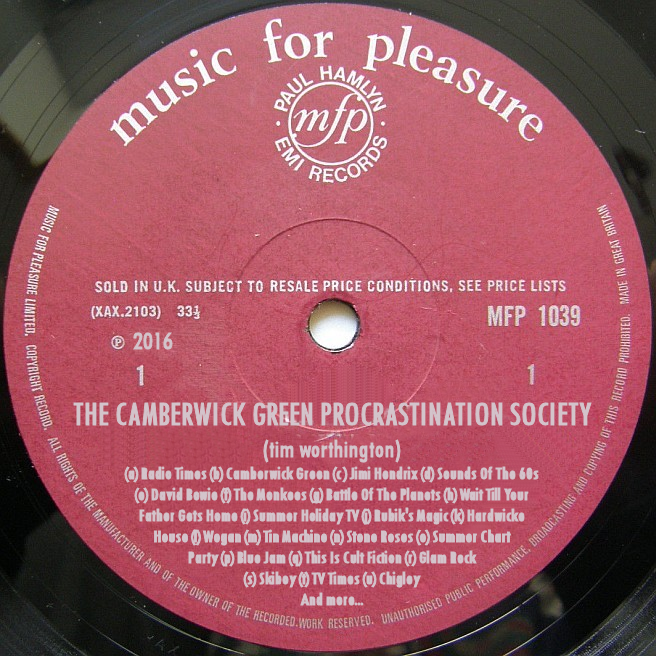
The Camberwick Green Procrastination Society

The Camberwick Green Procrastination Society by Tim Worthington

The Camberwick Green Procrastination Society is a book collecting some of my recent columns and articles, mostly in massively expanded form. And if you've already read them, there are brand new previously unseen features on Chigley and its role in the end of 'the sixties', Wait Till Your Father Gets Home and its role in the end of the hippy dream, and David Bowie's wiped early TV appearances and their role in being wiped. Also, if you get the paperback or eBook version, they're all in appropriate and painstakingly recreated magazine layout pastiches; you can see some examples of these below.

In The Camberwick Green Procrastination Society you can find out what Jimi Hendrix was really watching when he wrote The Wind Cries Mary, why old Glam Rock compilations are an ethical nightmare, and how time stood still in the middle of Summer Holiday mornings on BBC1, alongside in-depth features on Camberwick Green, Battle Of The Planets, Hardwicke House, Doctor Who, Blue Jam, The Monkees, The Stone Roses, Pink Floyd, the aural horror that is Summer Chart Party, and plenty more besides, including more detail than anybody ever wanted or needed about Skiboy. Even Skiboy himself.

You can get The Camberwick Green Procrastination Society as a paperback here, or as a full colour eBook here. Or, if you want it without the pictures but with an additional chapter on Trumpton, it's also available from the Kindle Store. And if all of that doesn't entice you, have a look at some of the pages...

The Camberwick Green Procrastination Society by Tim Worthington
Feature on Jimi Hendrix, Camberwick Green and The Test Card from The Camberwick Green Procrastination Society by Tim Worthington
Feature on David Bowie's lost early TV appearances from The Camberwick Green Procrastination Society by Tim Worthington
Feature on Hardwicke House from The Camberwick Green Procrastination Society by Tim Worthington
Feature on Tin Machine from The Camberwick Green Procrastination Society by Tim Worthington
Feature on Summer Chart Party from The Camberwick Green Procrastination Society by Tim Worthington
Feature on That 70s Show from The Camberwick Green Procrastination Society by Tim Worthington
Feature on Skiboy from The Camberwick Green Procrastination Society by Tim Worthington
Feature on Chigley from The Camberwick Green Procrastination Society by Tim Worthington
Feature on Radio Times, Doctor Who and Play School from The Camberwick Green Procrastination Society by Tim Worthington
Back cover of The Camberwick Green Procrastination Society by Tim Worthington


If you've already got The Camberwick Green Procrastination Society, you can find more books by me here.


The Camberwick Green Procrastination Society is available in paperback here, from the Kindle Store here, or as a full-colour eBook here.

The Top Ten Radio 1 Comedy Rarities


If you've read my book Fun At One - The Story Of Comedy At BBC Radio 1, you may have spotted a few interesting little-heard shows and wondered how you might get to hear them. Well, here are ten of the most interesting little-heard shows, featuring a couple of very familiar names...


The Chris Morris Christmas Show (1990)


Chris Morris' little-heard debut appearance on Radio 1 from Christmas Day 1990, proving a little too strong for nervous 'suits' who neglected to invite him back in the New Year.


Rob And Dave's Comedy Phone-In (1990)


Rob Newman and David Baddiel try their hand at being DJs. Some of the musical choices are amusingly at odds with the image that they tried to project only a year or two later.


Steve 'More Music' Nage (1988)


Victor Lewis-Smith poses as Radio 1's hot new signing fresh from in-store radio, but does he manage to fool anyone...?


John Peel With Stewart Lee, Richard Herring and Stuart Maconie (1996)


Standing in for Mark Radcliffe on The Graveyard Shift, John Peel and a fantastic line-up of guests discuss the 'Swedish Elvis', which of The Goodies is the best at fighting, when Noel Edmonds did and didn't have a beard, and the true horror of Radio's 'Spam Fritter Man'.


Sound Bites With David Baddiel (1991)


David Baddiel and Armando Iannucci sift through cassettes of music and comedy sent in by talented listeners, including the legendary demo tape from one Cameron Ingrams.


Skyman (1993)


Mark Radcliffe's little-remembered sci-fi sketch and music show, broadcast alongside Out On Blue Six and making up the most mind-melting ninety minutes ever heard on Radio 1.


Jools Holland (1993)


It's widely forgotten now but the post-The Tube Jools Holland fancied himself as a bit of a comic, and was pretty good at it too. Here's an episode of his Madcap Ealing-esque globetrotting sitcom, which sees him in search of the lyrics to an old blues record with a little help from Vic Reeves.


Newsbanger (1992)


The little-heard Radio 1 special of Radio 4's rockarama newsbanana, with a priceless introduction from Simon Bates, and a touching heartfelt message from Armando Iannucci at the end.


John Shuttleworth Presents Alan's Big 1FM (1994)


When Alan Davies goes on holiday for two weeks in the middle of a running storyline on his own show, it's up to John to try and make sense of things.


The Chris Morris Music Show - 'Heseltine' (1994)


And finally, yes, it's THAT one... and in full!


Fun At One - The Story Of Comedy At BBC Radio 1, which covers all of the above and more, is available in paperback here or from the Kindle Store here.

Fun At One - The Story Of Comedy At BBC Radio 1


Fun At One is a book about comedy on BBC Radio 1.

Launched in 1967, the BBC’s pop music station often provided an outlet for comics who struggled to get exposure elsewhere, from humorous disc jockeys of the late sixties and early seventies, through to edgy standup comedians in the late eighties, and more than one whose act defies description even today. Noel Edmonds, Kenny Everett, John Peel and Steve Wright all came to attention on Radio 1, while the station would also provide early exposure for Chris Morris, Armando Iannucci, Stephen Fry and Stewart Lee amongst many others.

Fun At One traces the story of comedy on Radio 1 from its launch – when a team of former Pirate Radio DJs tried their hardest to live up to the claim that ‘Radio One Is One-derful’ – to more recent experiments with podcasting and streaming video, and covers everything from guest spots and interviews to full-on speech comedy shows. Along the way it covers Kenny Everett, Viv Stanshall, Adrian Juste, Lenny Henry, Victor Lewis-Smith, The Mary Whitehouse Experience, Lee & Herring’s Fist Of Fun, The Chris Morris Music Show, Mark & Lard, Blue Jam and much more besides, not to mention such unexpected figures as Eric Idle, Ivor Cutler, Keith Moon, Roger McGough, Jonathan Ross, Vic Reeves, Danny Baker, Jools Holland, John Shuttleworth and – of course – Smashie & Nicey.

With a foreword by TV Cream founder Phil Norman, Fun At One includes transmission details for all of the shows covered, and new interviews with many of the major figures, from late sixties veterans to the station’s newest signings, as well as the first ever first-hand account of one of the most notorious incidents in Radio 1′s history. Fun At One is an essential addition to any library, but particularly one that’s had a large shotgun hole blasted in it by Sir Henry Rawlinson.

You can get Fun At One in paperback here, or from the Kindle Store here.


If you've already got Fun At One, you can find more books by me here.


Fun At One - The Story Of Comedy At BBC Radio 1 is available in paperback here or from the Kindle Store here.

The Nation's Not-Quite-As-Favourite


Some time ago, I had an idea for a book about comedy on Radio 1.

Well, it wasn't really a book at first. Initially it was just a list of transmission dates for all those Radio 1 comedy shows I'd once listened to religiously - somewhat ironic, considering the religion-baiting themes that many of them had mined for their humour - such as The Mary Whitehouse Experience, Blue Jam, Victor Lewis-Smith, The Chris Morris Music Show, Lee & Herring's Fist Of Fun and, erm, Intimate Contact With Julian Clary, really more for my own amusement than anything else. Then I started to get curious about all of those shows that I hadn't liked. And then the ones that I'd never even heard of. And what about all of those magazine, documentary and even DJ shows that were essentially 'comedy' in all but name? Needless to say, that list would soon expand into something far more substantial, so come with me now into the swirling mists of human inadeq...

Anyway, eventually, after long hours spent scouring randomly through Radio Times listings and attempting to negotiate copies of off-air recordings of the little-heard likes of Songlines, Windbags and Z Magazine from surprisingly cautious collectors, the time came to try and pester a couple of erstwhile performers and producers into answering a couple of questions, clearing up a couple of obscure details, and generally reminiscing about their days spent trying to fit jokes around Bomb The Bass records. And, surprisingly, nearly all of them were prepared to have a bit of a chat with the self-publishing nobody with the bizarre open-ended research project. From Mark Radcliffe and David Baddiel to Dave Cash and Danisnotonfire and even zany old Chris Morris, they were all more than happy to spend half an hour or so nattering about mostly long-forgotten shows that they clearly all still held a great deal of affection for, and seemingly everyone that I spoke to had an almost inexhaustible supply of amusing behind-the-scenes anecdotes or recollections of sketches and routines that had given them a rarely-recaptured professional thrill. Needless to say, there were plenty of exciting moments in all this, from The Mary Whitehouse Experience's original producer Bill Dare breathlessly recounting virtually word for word his experiences both encouraging and bruising with BBC 'suits', to The Ginger Prince from Radio Tip Top suddenly breaking into character on the phone when I managed to track him down after months of effort, to Adrian Juste's extraordinary rant about how "it's very unhealthy to let politicians, and this preponderance of celebrity nonentities we have now, get away with the crap they spout uncontested... they are so up their own arse, and getting worse, if you don't stop them by pricking their little bubbles of pomposity... we all need a good laugh now and again - at their overpaid, mollycoddled expense". But, just occasionally, there were slightly more uncomfortable moments.

Sometimes, in the progression of the conversation, the names of some of the more comedy-averse (usually in both senses) 'old guard' of daytime DJs would come up, and that was the point at which many of the older contributors, from both in front and behind the microphone, would suddenly go a bit quieter. Often this went no further than moving rapidly on to the next question, but once or twice, one or two of them tried to subtly drop hints that there was some sort of potential minefield here that should be avoided at all costs. Without wishing to give too much away, one individual who was involved in an on-air prank at the expense of a now-discredited DJ darkly hinted that they weren't just sending him up as an affectionate in-joke, and virtually spat out every word when having to actually talk about him as a person. Meanwhile, one Radio 1 veteran went even further and, without even hinting at details, named names, warning against featuring them in any detail or even in any context because it wasn't likely to be long before "some stuff will come out about them and nobody will want anything to do with your book". What this 'stuff' might have been, I had no idea, and looking back now I'm glad that I didn't.


In the meantime, work on what would eventually become Fun At One continued apace and its scope increased dramatically, extending to cover not just such nominally non-comedy shows as In Concert, Collins And Maconie's Hit Parade and The Antiques Record Roadshow, but all kinds of other rarely acknowledged cornerstones of Radio 1's output like Newsbeat, live sessions and late night dance music shows; sorry, but you'll have to buy the book to find out exactly how and when they collided with the world of comedy. And, on top of all that, every time that I thought I'd finally managed to find the whole lot of them, the list of actual proper comedy shows kept on increasing too. The happily accidental upshot of all this was that, with a couple of notable (and thankfully all still respectable) exceptions, there was literally no room nor indeed need to mention any of the self-styled 'Welly Boot Mafia' as anything more than passing references. Which was handy as, frankly, none of them were ever that amusing, or even likeable, and in short there are few things less funny than someone who thinks that they are.

Eventually, after what seemed like endless amounts of research, writing and rewriting, not to mention a last minute change to the entire final chapter when Radio 1 decided to actually start making comedy shows again, Fun At One was finally ready to hit the virtual presses. Graham and Jack Kibble-White helped out with some amazing design work, Ben Baker came up with some great promotional ideas, and the few people who had read it in advance of publication all seemed to be confident that it would be a huge success. And then... well, you all know what happened next.


In fairness, quite a few people were very generous in their attempts to help plug Fun At One - I'm particularly grateful to Richard Herring - but, well, it really was just the wrong book at the wrong time. Regrettably, that cautious interviewee had been proved right; nobody was saying as much, but by then it really wasn't the done thing to be seen to be celebrating Radio 1 in any way, and, well, it seems that it still isn't the done thing. At the time of writing, Fun At One has been outsold three times over by my anthology of pieces on neglected TV Not On Your Telly, a good third of which had already seen print in one form or another. Even fan forums that I'd assumed would go wild for the book seemed to be giving it a wide berth. This isn't a whinge or a complaint by the way - it would be crass to intimate that a couple of pages about Sound Bites With David Baddiel was somehow more important than the vexing questions of how and why those scrawny old bastards got away with what they did for so long, let alone use it as an excuse for a sales pitch (though doubtless some prats on Twitter will accuse me of doing just that) - and sometimes it's just the way these things turn out. In fact, in moments of sharing the unease, I've actually considered withdrawing Fun At One from sale once or twice, though more sensible people have always talked me out of that.

What this is a plea for, though, is for an end to this tainting of the whole of Radio 1 by association. As Fun At One arguably demonstrates, there was - and is - so much more to the station and its staggeringly broad output than the off-air antics of a handful of presenters who were only there for a fraction of its existence anyway, and all of it deserves celebration and appreciation that now seems to be roundly denied. Which is understandable, but has to stop some time. So go out and listen to a BBC Sessions album by The Beatles, Belle & Sebastian, The Jimi Hendrix Experience or whoever takes your fancy. Catch the imminent repeats of series two of Blue Jam on Radio 4 Extra. In short, remember what you liked about Radio 1, and start liking it all over again. Because, let's be honest about it, nothing would have hurt those talentless egomaniacs more than being overshadowed by something that was actually good.


Fun At One - The Story Of Comedy At BBC Radio 1 is available in paperback here or from the Kindle Store here.

ITV 59 - All Your ITV Favourites (And Are You Awake Yet?) Part Seven: The News

BONG Let's be absolutely blunt about this from the outset - nobody knows why we're doing an entry on the ITV News. It's no more a Bit Between The Programmes than the BBC News, which scarcely warranted a even so much as a cameo in the Four Hundred And Fifty Six Millionth Academy Salute To Fourteen Thousand Years Of The BBC, and even the most casual of readers who's wondering what's happened to all the stuff about Eve Myles and 'Belouis' 'Some' or maybe even the lone Russian reader who checks in from time to time will surely be musing to themselves already that there was hardly sufficient visual depth or variety in the commercial channel's news branding to warrant a full entry.

And you know what? They're probably right. And as this blog's sole existential imperative is to do what isn't right, we're charging right on ahead and doing it. Move up, move down, move round, move side...


ITV's resident headline-brandisher has always been ITN, which as every Chris Morris fan knows stands for 'It's The News'. And, well, they've used that hollowed-out-gold-bullion lettering, or at least subtle variations thereupon, for pretty much their entire news-whittling existence. So not much to remark on there really, aside from the blunt scissor-afflicted show-opening photo montages they deployed in the pre-digital age, such as this one from when Ronald Reagan said "well" a lot about a plane, and the unintentionally amusingly perfunctory end captions, which cynics will not be able to help but notice was rendered in more or less the same colour scheme as the mid-late seventies BBC Weather 'Cat' and 'Dog'.


And speaking of shamelessly opportunistic 'borrowing' of established BBC ident iconography, in no way whatsoever was the green globe at the start of News At One influenced by the green globe that whizzed around between BBC programming. And if you say otherwise those scary green typing hands would like a 'word'.


If ITN ever put on its comfortable slacks and slip-on shoes and got a bit informal, then it was - ironically - with the 5.45 bulletin, whose chummy 'Top News For Super-Pals' approach will have been of scant reassurance to those post-Children's ITV youngsters spooked by reports about gorillas holding Venezuelan MPs to ransom. Above we can see both variants of its 'Chill, Newsies!' chunky lettering overload, first the standard gold variant atop the feet up-inviting beige on beige desk area, and secondly the quasi-hallucinatory slip-inside-this-house-as-you-pass-by-and-if-you-can-be-bothered-doesn't-make-much-difference-one-way-or-the-other-really Blue Jam-predicting logo repetition. Note also the corresponding alternating colour variants in Leonard Parkin's identically designed far-out ties.


BONG Inspiration-depleted writer makes tediously predictable gag about News At BONG Ten in lieu of having anything even halfway amusing to say about the nondescript BONG bombastic film-bisecting typeface and Trevor Mc BONG Donald's glasses ha ha they are glasses or something and it doesn't even sound BONG like 'bong' anyway BONG erm... how do you turn this thing off? BONG oh right, it's going to be like that is it? BONG Hang on a minute... Parky? What's he d BONG oh fuck this is serious - even that's not worki BONG oh alright then you win BONG TV Puppet Hopes It's Chips For Tea - a spokesman for TV Puppet's Human Sidekick says "Shut It You" BONG Eve Myles Tits mentioned in hope it will lead millions of unwitting sci-fi pervs to click on this post by mistake BONG and it's Back To School for TV's Hardwicke House BONG The Grimleys Is On


Well, that's been a bit of an underwhelming bulletin in this salute to ITV's extra-programme visual ephemera of days gone by and no mistake. It's a pity we never had a Brass Eye Special to shake those complacent Current Affairs people up a bit!!3 By way of consolation, here's a rare example of what used to happen in the days before they were allowed cameras in parliament, when they needed to show Thatcher saying something smug then being drowned out by a chorus of harrumphs and then saying it again only slightly angrily. Let's hope for more thrills next time when we tackle Programmes For Schools And Colleges. If 'Maggie' hasn't closed them all, that is!