Showing posts with label loungecore. Show all posts
Box Set: Loungecore
A collection of some of my recent features on mid to late nineties loungey indie dance music...
It looks as though some of you aren't aware that I now have a new website (which you can find here), and are still hanging around here wondering where all the new 'content' is. Well it's over there, obviously. To give you all some idea of where to start, though, I'm adding some new posts here with themed collections of links, and this time it's some of my recent features and podcasts about the long-forgotten Britpop spin-off Loungecore...
Come On And Love Me Now - the enduring appeal of Life by The Cardigans
Amongst Them Trevor The Sheep - what really happened when Chris Morris' Blue Jam got taken off-air halfway through a show?
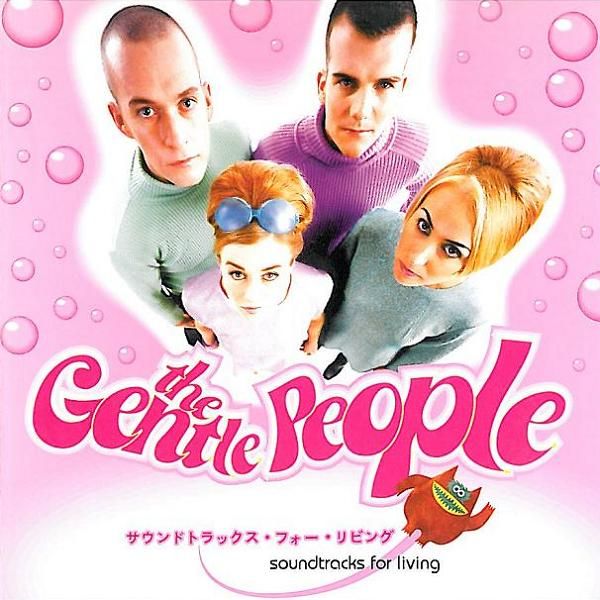
I Love The Gentle People - how did a kitschy lounge/dance act come to be all over daytime television and 'lad' mags?
Food Processors Are Great! - why I still find Modern Life Is Rubbish by Blur inspiring and exciting, and why the nonsense about it 'inventing' Brexit should be slung into the nearest burning bin.
Looks Unfamiliar: Emma Burnell - Emma shares her memories of nineties Easy Listening radio station Melody Radio.
Looks Unfamiliar: Jenny Morrill - Jenny talks us through her attempts at looking like Justine from Elastica.
I'm Leaner, I'm Meaner, I Ain't No Inbetweener - late nineties Post-Diana moody trip-hop and the bewildeirng rise of unlikely chart star Jimmy Ray.
Je Suis Perdue Dans La Nuit, Dans Cette Ville Où Je Vis- how I discovered 1968 by France Gall.
Not On Your Telly is available in paperback here or from the Kindle Store here. And there's several other books to choose from here...
Labels:
1993,
1996,
1997,
blue jam,
blur,
box set,
chris morris,
emma burnell,
france gall,
jenny morrill,
looks unfamiliar,
loungecore,
modern life is rubbish,
the cardigans,
the gentle people
Moogs Funks Breaks 2: I Love The Gentle People
This is what would have been the second post on the never-launched Moogs Funks Breaks blog - you can find the first one here - and it's about the now-little remembered mid-nineties loungey dance act The Gentle People, and how odd it is to contrast their present-day obscurity with how much exposure they got at the time. It ends with a rather weak off-the-peg argument that I probably wouldn't even make now, but let's not go about rewriting unpublished history. Anyway, if you want to know more about the build-up to Britpop and how the way that it gets remembered is decidedly at odds with its actual roots, you'll be wanting a copy of my scholarly study of the subject Higher Than The Sun. And now, we're off on a journey...
Recently I've been listening quite a bit to The Gentle People, a retro-electronica act that emerged from the Loungecore-Acid-Jazz-Easy-Listening-Big-Beat Madwoman In The Attic of Britpop that people try to avoid mentioning now (primarily if they're writing career histories of Noel Gallagher), inspired in no small part by that big new Corduroy box set that's just come out, complete with a previously unreleased two-fingers-to-Britpop-as-they-come cover of the Sesame Street theme.
Anyway, while enjoying their gloriously of-its-time combination of futuristic dance music sounds with an overall What Time's Issi Noho On? vibe, it's difficult to avoid reflecting on just how prominent they were for such a wilfully niche-marketed band. Only a couple of years earlier, they'd have been the sort of outfit that John Peel played apologetically in the last twenty minutes of his show, and then got complaints from miserable Grunge-worshipping dullards asking him never to play them again. In the mid-nineties, however, they were everywhere, from daytime TV to daytime radio, and the subject of countless multi-page colour spreads in magazines. And not just in the likes of Select or Vox either, but everything from Stuff to Loaded as well.
Yes, alright, so the latter sort of magazine might well have been drawn towards them by the fact that they had two attractive female members - though it's difficult to convince people these days that Loaded was actually a pretty good magazine for the first couple of years, placing articles on the likes of Peter Cook and Lancelot Link Secret Chimp in amongst all the Nicola Charles In Her Pants Again stuff, and heavily championing the likes of The League Of Gentlemen and Super Furry Animals way before they actually got anywhere, and that it was only finally consumed by the monster it accidentally created after Harry Hill featured on the last regular male-only cover in 1997 (although as I briefly appeared in a feature some two years after that - no, not telling you which, sorry - I can't really fingerwag as much as I'd like to), but that's an argument for another article - yet all the same there's no getting away from the fact that they weren't the sort of band that would have been considered potential mainstream fodder only a couple of years earlier, or indeed only a couple of years later. They were, after all, a gaggle of flourescently-dyed-in-the-wool confirmed retroheads like the similar headcases behind Radio Tip Top - themselves a regular sighting in these sort of unlikely avenues, and similarly pushed towards the mainstream to the extent that they nearly landed a daytime show on Radio 1 (and if you want to know more about that, you'll have to read my book Fun At One) - and hardly of a piece with bacon sandwiches, football tribalism or children's TV presenter 'babes'.
So what happened? Why was there that curious moment in the mid-nineties where the mainstream and the non-mainstream suddenly collided and everything seemed on a level playing field for the briefest of times (well, unless you were poor old Luke Haines)? A large part of it is obviously down to the success of the likes of Blur, Pulp and Supergrass, who waved their more angular influences in people's faces but at the same time had found a way to make them eyecatching, earcatching and marketable, and given that to the average punter it must have seemed like all these amazing bands were suddenly tumbling out of nowhere (whereas the average NME reader would doubtless have seen things a bit differently), it was inevitable that people would feel mildly curious about what else was 'out there'. Clearly that can't have been the entire cause, as it seemingly got through to people who wouldn't know Sofa (Of My Lethargy) if it pitched up in the middle of a Shine compilation and refused to budge until they had heard it so many times that their head exploded, but that's for some crazy futuristic Space Dominic Sandbrook to speculate on.
Anyway, for the briefest of moments - yet still one which in the heat of the moment seemed like it was stretching on into infinity in a sort of weird time distortion event of the sort that they used to use technobabble to describe before all this 'wibbly wobbly timey wimey' business started - it seemed like the 'outsiders' could take on the mainstream and, if not win, then at least co-exist in a more receptive plane of popular cultural existence. But of course, Simon Cowell wasn't having any of that...
If you've enjoyed this, you might also like this feature on 'Loungecore' favourite France Gall.
If you've enjoyed this, you might enjoy my book The Camberwick Green Procrastination Society, available in paperback here, from the Kindle Store here, and as a full-colour eBook here.
This Was... Cult Fiction Part 5: 'This Is... Eurovision'
What's actually quite good about when all things popular and cultural get a bit serious and stoneyfaced and stop-smiling-you're-spoiling-my-thesis is that an infectiously grinning backlash can never be far away. Spend too long insisting that everyone show due reverence, and all you achieve is them showing due irreverence, pointing and smirking at the silly sub-Perkin Flump cloud-over-head 'sensitive' troubadours and their songs about home computers causing emotional disenfranchisement and a bird that fell in a bin.
How they opt to show this is usually by latching on to a style of music, old or new, that flies in the face of purported 'depth' and 'meaning' by actually being quite, well, tuneful. Not, it has to be emphasised, in a Peter Hatface-esque babble of drivel about Abba, Take That and 'pure pop', but through something that consciously rejects the prevailing leaning towards worthiness and virtuosity by being fun, uncomplicated and unarguably ever so slightly good. From Punk to Northern Soul, from Rare Groove to Alt-Hip Hop, to, well, Britpop and Loungecore, it's happened time and time again, and while many would elect to react to the Richard Ashcroft-fuelled long-facedness by embracing the Embrace-opposing dancefloor sounds of Big Beat and its more laid-back counterpart Trip-Hop, others would defiantly and two-fingeredly retreat further into the forgotten corners of popular music than even the Easy Listening boom had dared venture. And this, as you've probably already worked out, was where the next volume of Cult Fiction came in.
Even by these well-established esoteric standards, The Eurovision Song Contest may well seem like an unlikely area to have diverted into, but it's worth emphasising from the outset that, popularity-wise, The Eurovision Song Contest was adrift by entire continents when this album came out. Mainstream popularity and pop chart acceptance had long since trailed off, and ironic loltastic drinking-game-friendly reacceptance was still some way away, and as a result the Contest was lumbering on like some weird anachronism that was quite possibly too out of step with time, space and volcanic strata for anyone to even think about cancelling; it was just there because it was there, and as a consequence it would soon find some unlikely friends. Although the first stirrings of a resurgence in popularity were just about detectable, not least with the episodes of The High Life and Father Ted devoted to the Contest and indeed the following year's bizarre one-off special A Song For Eurotrash which saw the likes of Kenickie and Dubstar take on Eurovision-trouncing songs of yesterear, if anything its long history of weird and wonderful pop waxings and even weirder performers was at that point finding favour with the same sort of proto-Freakzone adherents of alternative universe musical oddities as, well, the previous instalments of the Cult Fiction series. How quickly and decisively all that would change.
Meanwhile, in addition to all those fearless sonic voyagers discovering that Video Video by Brixx was really quite good after all, there was a corresponding attempt by the UK at least to take this lull in stature as an opportunity to take it more seriously as an actual contest, fielding proper songs and proper performers for the first time in many years in an attempt to finally come somewhere other than third from last. The year before This Is... Eurovision came out, Gina G had restored some much-needed credibility with the filthtastic Ooh Aah... Just A Little Bit, and shortly after its release Katrina & The Waves would score a near-unprecedented landslide victory with Love Shine A Light, making it all the more bewildering that since then the UK has adhered unswervingly to the vote-oblivious format of blander than bland charisma-free nobodies casually mumbling in-one-ear-out-of-the-other witterings that sound as though someone has aspired to turn the middle eight from Taste Of Your Tears by King into an entire song. Anyway, the upshot of all of this is that while This Is... Eurovision might well seem like a bafflingly off-message choice for a fifth volume from this distance, at the time it really couldn't have made more sense.
What is surprising is that, the odd scattered compilation of recent winners and anniversary-prompted 'souvenir' album aside, this genuinely appears to have been the first ever attempt at putting together a proper Eurovision Song Contest retrospective. This does mean that there's slightly more of an imperative to chart a history than to reflect a scene, and as such, there are a disproportionate amount of 'big hitters' for a Cult Fiction compilation. The only problem with this is that far too many of these are erstwhile UK entries, and that not many of them are really all that good. Congratulations, Power To All Our Friends, Puppet On A String, Long Live Love, Let Me Be The One and Boom Bang A Bang - all of which not-so-coincidentally share the same sort of faux-'Swinging London' oompah arrangement - do not deserve to be placed up there with the best of their respective artists' non-Eurovision material (and yes that does include Cliff; and if you're going to pipe up with some nonsense about Power To All Our Friends being his 'Flower Power' phase, then I not-so-respectfully refer you to Throw Down A Line), though in fairness this sort of fare was par for the course in an era when most pop performers - including The Beatles - could envisage no greater aspiration than to be accepted as 'all-round entertainers'.
Instead - and surprisingly - you'll find more substance in the offerings from homegrown Eurovision heavyweights that aspired towards nothing greater than to be accepted as 'all-round entertainers' full stop. Despite what automatic knee-jerk memory might lead you to believe, Making Your Mind Up and Save Your Kisses For Me are actually perfectly listenable songs with surprisingly robust arrangements (and eagle-eared listeners who 'know these things' might well detect the handiwork of certain prominent session musicians), although The New Seekers' Beg, Steal Or Borrow still sounds simultaneously both twee and dreary, and its polished phased harmonies are pretty much Exhibit 'A' in The Crown Vs. The Horrible Cabareted-Up Mangling That Psychedelia Had Undergone By 1972; something that is all the more ironic when you consider that lead belt-out-ers Eve Graham and Lyn Paul had previously trod the boards with the now highly collectable The Nocturnes. Meanwhile, nobody has ever yet been able to reach a conclusion one way or the other about Lynsey De Paul and Mike Moran's wry-looks-across-opposing-pianos opus Rock Bottom.
When it comes to the non-UK Keynote Eurovisioneers, once again it's a largely positive state of affairs. Nicole's idealistic plea for world harmony A Little Peace still sounds exceptionally drippy, and indeed is impossible to hear without thinking of Syd Little in a wig singing "just like a taxi/with nowhere to park", but proves to be a good deal easier on the ear than it did back when it sat at the top of the charts for approximately three thousand years. Similarly, Celine Dion's Ne Partez Pas Sans Moi is actually quite enjoyable compared to her later overwrought helicopter-bound outpourings, and Johnny Logan's What's Another Year is bland but charmingly so; compare it to the hitting-self-with-tin-tray histrionics of his subsequent Eurovision winner Hold Me Now (also included here, worse luck), and indeed the contributions of his contemporaries Linda Martin and Paul Harrington & Charlie McGettigan, and it's easy to see exactly what went wrong in the post-Live Aid latter half of the eighties. In fact there's a lot of this sort of torch-song-goes-stadium-rock emoting on offer here, mainly because of how doggedly the UK in particular once adhered to this winning formula that never actually did much winning, and if truth be told it ultimately does little bar drag proceedings down.
It's when we finally get deeper into the rest of Europe and indeed deeper into the more obscure and cult-friendly areas of the Contest's considerable back catalogue that This Is... Eurovision really starts to get interesting. There's the vaguely melancholy and existentialist singalongs exemplified by the likes of Vicky Leandros, Anne-Marie David, Massiel, Severine and Milk & Honey (whose Hallelujah scores extra points for its potential to infuriate inattentive uptight Jeff Buckley fans), the blasts of high camp from Sandra Kim, Marie Myriam, Izhar Cohen, Belle & The Devotions and Baccara, and ancient Beatle-eradicated UK-proferred contributions from Matt Monro, Kathy Kirby and Mao Zedong's favourites Pearl Carr & Teddy Johnson, all of which still prove to be surprisingly enjoyable, doubtless due to the fact that they were clearly concieved as good songs first and foremost and then punted Eurovisionwards at a later date. Further unintentional Python evocation - who, lest we forget, were sufficiently comically infatuated with The Eurovision Song Contest to do an entire sketch based on it - comes courtesy of Clodagh Rogers' gloriously nonsensical ode to Zebedee Jack In The Box, and additional esoteric delights are to be found in Eimaer Quinn's full-on hardcore Robin-The-Hooded-Man-evoking 1996 winner The Voice, in Niamh Kavanagh's PWL-goes-schmaltz antics, and in an impressive smattering of underachieving UK entrants that takes in the pre-acting Samantha Janus, Medusa-haired Frances Ruffelle, and Cheryl Baker-essaying late seventies ad-hoc ensemble Co-Co, whose The Bad Old Days may have bombed on the actual evening but has since come to be regarded as one of the definitive Eurovision waxings. Sadly, this doesn't extend as far as including famously chart-averse 1990 teen wonder 'Emma' and her plea to Give A Little Love Back To The World (which, lest we forget, had pride of place on legendary-for-all-the-wrong-reasons compilation Summer Chart Party), but on the other hand it does mean we get to swerve 1995's Love City Groove by Love City Groove, an outfit who presumably set out intending to copy Freakpower but somehow ended up accidentally copying Beats International instead, so it's not all bad news.
For all that it might have been mocked in Father Ted, even in the episodes that weren't about The Eurovision Song Contest, Dana's unique collision of psych, folk and bit in the middle of The Two Ronnies that makes up All Kinds Of Everything is one of the best songs on this entire collection, but in all honesty it's a bit too obvious to count as one of those trademark listener-wrongfooting surprises that the compilers of Cult Fiction were wont to pull out of the bag. Instead, that honour must go to three absolute belters that you're decidedly unlikely to hear at your average cheese-and-pineapple-swamped 'ironic' Eurovision house party where everyone has to dress as a voting card or something. There's One Step Further by Bardo, a post-Dollar haziest-fringes-of-New-Romanticism boy-girl synth-pop duo that represented the UK in 1982, which surprisingly failed to win but was genuinely inescapable at the time, and led Smash Hits to tip the hapless twosome for great things that never quite happened. Then there's France Gall with Poupee De Cire, Poupee De Son, the galloping sound of Serge Gainsbourg waving the less savoury aspects of the pop industry back in its own face, which had then recently become something of a cult favourite on Loungecore-favouring dancefloors. And, best of all, the truly orbiting-in-its-own-universe Ding-A-Dong by Teach-In, the haunting other side of the coin to Beg, Steal Or Borrow's sludgy post-psych glossy meanderings, whose textbook tee-hee-hee-the-foreign-contestants-don't-stand-a-chance-on-Going-For-Gold-except-when-they-always-win Eurogibberish title cunningly conceals what is quite possibly the weirdest song ever written and recorded in the name of vote-driven technically-overambitious EEC-linking displays of televisual tunesmithery. 'Nul Points' to Trackspotting, frankly.
In some respects, This Is... Eurovision is the most difficult of the Cult Fiction albums to listen to straight through in a single sitting, as there is so little musical variance and so much upbeat banality that it can become incredibly wearing incredibly quickly, like being involuntarily serenaded by a relay team of John Barrowmans. As a wide-ranging overview of Eurovision as a 'genre', driven by enthusiast interest rather than statistics, however, it takes some beating, and is highly entertaining for dipping in and out of and indeed a great way of discovering some songs that you otherwise might not even have come across. Whether the UK will buck a longstanding trend and rocket to Eurovision victory on the 10th May remains to be seen at the time of writing, but on the basis of the actual song it doesn't seem likely. The Cult Fiction series, on the other hand, had one last bit of expectation-confounding to do...
If you've enjoyed this, you can find an article about France Gall's post-Eurovision 'psychedelic' phase here.
You can find more exotic seventies musical fun in The Camberwick Green Procrastination Society, available in paperback here, from the Kindle Store here, or as a full-colour eBook here.
This Was... Cult Fiction: Part 2 'This Is Easy'
Imagine, if you will - or indeed if you can bear to - an alternate universe where everything's backwards and Nathan Petrelli has slightly different hair and Trackspotting proved so popular that the compilers got to do a second volume. There'd be more Tarantino barrel-scraping, probably with that one by Tha Dogg Pound from Natural Born Killers wedged awkwardly between all the tune-averting rock'n'roll stuff. There'd be the entire eighteen million minute version of A Final Hit by Leftfield. And there'd be The Passenger by Iggy Pop, doubtless crowbarred in on the back of a spuriously generic claim that it had been used in 'an advert' (or even - shudder - as 'the theme from Channel 4's Passengers').
Thankfully, though, we don't need the time-bending shenanigans of one Peter Petrelli to correct the dimensional alignment on this occasion, and in reality it was, sensibly, the compilers of This Is Cult Fiction who got to do the compilation lap of honour. The first volume had of course diverted from its Tarantino-centric brief in all manner of interesting if vaguely related directions, but even so it would have been reasonable to assume that any follow-up would have basically just included more of the same. Well, how wrong we all were. And that's 'we' as in 'anyone who actually bothered guessing at the potential contents of a purely hypothetical follow-up that probably nobody had even had the slightest thought about'.
While This Is Cult Fiction was busy doing the rounds of the card-mounted counter-top record store display racks, a very strange offshoot of the Britpop phenomenon had been rapidly gathering mainstream-bound momentum. A world away from the 'Noelrock'-toting 'lad'-espousing flag-rehabilitating dullards that the scene would later come to be tarnished by association with, the original adherents of what probably wasn't really known as 'Britpop' at that point had - more through a lack of sufficient suitable sounds than anything else - invested a good deal of time and energy into mining the past for new pop favourites; not just the expected likes of The Who, Northern Soul and Julie Driscoll, Brian Auger & The Trinity but also further-afield esoterica culled from European pop exotica, Swinging Sixties film soundtracks and the groovier excursions of Light Entertainment superstars. Known as 'Loungecore' to its devotees, and 'a sort of Easy Listening revival thing' to the world at large, whatever it was, it had picked up its pace and started to find its way into the charts and onto the TV, with The Mike Flowers Pops' much-better-than-the-original cover of Wonderwall only narrowly missing out on the Christmas Number One slot late in 1995.
Of course, people would eventually miss the point with all this just as they did with Britpop, ignoring the fact that it was originally about the music first and foremost and indulging in all manner of ghastly 'irony' with crooners and safari suits, and the age of Funtastian Retrololz was upon us. Before that happened, though, a couple of pre-ironists managed to get in there with some pretty dazzling pre-irony compilations of music that had previously been obscurer than obscure; Martin Green's definitive library music trawl The Sound Gallery and its more cerebral spinoff The Sound Spectrum (which you can hear more about here); London-based DJ team The Karminsky Experience and their globe-spanning mock-soundtrack In-Flight Entertainment (and its sequel that took the 'flight' into space); The Easy Project which looked more towards the groovy Marine Offences Act-contravening sound of Pirate Radio; and, less impressively, the sound of a point starting to be missed on K-Tel's Nice'n'Easy. And then, with impeccable timing, came the one that would show them all how it's done - This Is Easy.
The first thing that you notice from a look back at This Is Easy is that, contrary to popular belief, it didn't quite perform a total musical volte-face on the first volume in the series and the more Speeding On The Needlebliss-inclined percentage of its potential audience need not have felt any more alienated than they routinely pretended to in an attempt to show that they 'got' their favoured films. With a whole extra disc to play around with, there's plenty of room for movie and TV themes that are, for the most part, at the very least distant relatives of the ones that ended up on This Is Cult Fiction. Indeed, Midnight Cowboy puts in a return appearance here, albeit in a carefully chosen schmaltz-tastic orchestral reworking of the title theme by John Barry himself, and there's a cunning redeployment of Misirlou as almost unrecognisably reimagined by birdsong-bonkers 'exotica' bandleader Martin Denny, while the not-that-'easy' electric harpsichord jangles of more recent (and, at least compared to a lot of films that ended up on the first album, more deserving) sneaker-in-through-the-back-door-of-cult Get Carter turn up for the first but by no means last time in the series (though more about that - you guessed it - later), albeit most likely more than a little 'influenced' by its recent appearance on The Sound Spectrum, and if we're bending the rules to accomodate 'gritty' Westerns (as opposed to all those ones set in antiseptically clean municipal boroughs) there's the chant-tastic chart-troubling cover of the theme from The Good, The Bad And The Ugly by Hugo Montenegro, and for a touch of King Cone-scoffing authenticity the original Pearl & Dean jingle is thrown in for good measure. Even the Burt Bacharach number chosen to open the set, Bond Street, originates from the soundtrack of the original - and some would say only scientifically recognised - Casino Royale.
In fact there's a lot of Bacharach & David to be found on This Is Easy - hardly surprising really, given that Noel Gallagher was at that point continually dropping the former's name as an 'inspiration' in the hope that it would deflect attention away from the fact that he was actually just purloining old Milltown Brothers songs and replacing the lyrics with something even more clumsy (and that's no mean feat) - but that's not actually as much of a good thing as you might reasonably assume. For while Raindrops Keep Falling On My Head shows up as the definitive BJ Thomas original, complete with the weird jerky Stereolab-inspiring stop-start outro, and Dionne Warwick, Aretha Franklin and Matt Monro are on hand to handle Walk On By, I Say A Little Prayer and (They Long To Be) Close To You respectively (as, regrettably, is Jack Jones for Wives And Lovers), and light music maestro Ron Goodwin at least has a charming melting-trumpet whirl through Do You Know The Way To San Jose? and What The World Needs Now Is Love, several other key compositions are drawn from an album where Bacharach himself elected to recast them in drippy orchestral instrumental arrangements with just the odd random line sung here and there, which wasn't what anyone wanted or needed. Probably not even Noel Gallagher.
Meanwhile, hailing somewhat slightly less from the same genre universe as the movie-skewed contents of This Is Cult Fiction come Un Homme Et Une Femme (the lift-door-opening-alike title theme AND the Panorama-purloined Aujourd'hui, C'est Toi, both in their rarely heard vocal versions), the maudlin, self-repeating and misleadingly tagged variance-free 'Theme And Variations For Two Pianos And Orchestra' from The Go-Between, and perhaps inevitably The Windmills Of Your Mind from The Thomas Crown Affair, upon which the jury will forever be out as to whether it's really good or a little bit annoying. But just before those groups of seven individuals (including the token 'girl one') dressed as Mr. Pink larking around in the foyer before a late-night cinema showing of the still-banned-on-video Reservoir Dogs start to feel so utterly left out of proceedings that they briefly consider purchasing The Cult Files: Reopened instead, a fair smattering of faintly hip-to-the-zeitgeist TV themes come screeching up in their E-Types. The Champions, Strange Report, The New Avengers, Man In A Suitcase, Tony Christie's earwax-shifting yodelling from the end credits of The Protectors, and of course The Pink Panther, who makes his way onto this list by virtue of having a snazzy car in the opening titles. No? How about because The Inspector was sort of like a jetsetting sixties detective if you bend the rules a bit, then bend the rules a lot, then just pretend that he was? Oh alright, please yourselves then.
Joining everyone's favourite anthropomorphic feline antagonist of Man With The Triangle Nose on an equally sizeable list of TV themes that (mostly) fit the bill musically, but pose something of an image problem for someone attempting to recast themselves as Patrick Mower on a spacehopper, are a couple of sporting-themed selections that at least evoke the image of retro Adidas gear, namely soccer-heralding Hammond undisciplinedness The Big Match, and the none-more-loungetastic Superstars, that bizarre BBC effort that strove to determine which sporting giant was best at standing on a school assembly bench over a paddling pool. And sounding great but presenting logistical headaches for all but the most 'ironic' of easy scenesters there's The New Adventures Of Black Beauty, Crossroads, Animal Magic and This Is Your Life, the latter two in heavily if barely perceptibly truncated space-saving edits, which is something that as we shall see would later become the lone blot in the copybook for the This Is... series.
Elsewhere, popular bandleader Ray Conniff is given the chance to show off some of his stereo test disc-ready instrumental readings of seventies MOR pop hits, and actual literal sixties non-MOR pop hits come courtesy of Aretha Franklin (I Say A Little Prayer), Dionne Warwick (Walk On By), Chris Montez (Call Me), Sergio Mendes (Chelsea Morning), Honeybus (I Can't Let Maggie Go), Fifth Dimension (Up Up And Away), Nancy Sinatra (As Tears Go By) and Sandie Shaw (There Is Always Something There To Remind Me, unfortunately in 're-recorded by the original artists' form), and a couple of full-on lounge legends show up to show everyone who's boss; everyone's favourite pal of Bear Asking For 'Cookies' Andy Williams with the Blur-purloined ode to Music To Watch Girls By, Bert Kaempfert's naggingly catchy Daktari-goes-mod silliness A Swingin' Safari, and best of all the wonky whistling and outer space backing vocal effects that make up Esquivel's interpretation of something that may at one point have vaguely resembled Sentimental Journey.
In acknowledgement of The Sound Gallery's library-scouring efforts there's also room for The Riviera Affair and Girl In A Sportscar, two tunes that are probably stuck in your head already if you ever watched any post-Loaded BBC2 magazine show, and there's that trademark This Is... touch of where-the-fuck-did-that-come-from? courtesy of Mason Williams' Classical Gas (a tune that had probably previously been mainly associated with those damn crazy hippies, or at the very least with Lord Winstanley urging you to claim that thirty seven and a half pence water rates rebate on This Is Your Right), some Herb Alpert numbers as hurriedly reworked for cash by 'The Mexicans' for the long-lost Decca album The World Of Tijuana, and modern-day walking embodiment of all things lounge Count Indigo, whose My Unknown Love as recorded in cahoots with The Mike Flowers Pops is probably the second greatest track to be found on here.
So, you're no doubt wondering, what IS the greatest? Well, that honour has to go to one of the few artists to appear on both this and the first volume - Isaac Hayes, whose brilliantly yet hilariously elongated take on The Look Of Love frankly ticks off every last item on the list of what a good 'loungecore' track should be; funky, schmaltzy, Bacharach-penned (with an extra point for having been originally penned for Casino Royale), full of extemporising flutey nonsense, virtually unrecognisable as the song it's supposed to be, positioned somewhere between Easy Listening and 'proper' music, and actually genuinely really, really good. So, um, a bit like Theme From Shaft, then.
As a whole, This Is Easy more than meets all of those criteria too. Trying to define a genuine subculture for the purposes of raking in the megabucks is a risky and rarely-attempted gambit - for a comparison, consider how nobody dared to do a Hey Hey It's Yer Grunge Rock Superpals! type compilation only a couple of years earlier - but this impressively broad and knowledgeable sweep of the sounds that were being frugged to by the big-trainered girls and boys in clubs that they thought only they knew about pulled it off in style, and there's probably some truth to the suggestion that its success led directly to the genre-led actually-quite-good compilation market as we know it today. The compilers weren't about to start resting - or indeed lounging - on their laurels, though. There was a complete change of direction to be getting on with...
The Memorex Years: The Cardigans 'Life'
More from the short-lived blog The Memorex Years, this time taking a look at an album that was a very big deal for me in the mid-nineties, Life by The Cardigans. I'm actually very proud of this as a light-hearted yet intense look at a band that are often mistakenly written off as throwaway bubblegum pop timewasters when there's a lot more substance to both their music and their lyrics.
"She will not get bothered at all, she's just watching the water at fall"
It's perhaps an indication of how much the media's attitude to what constitutes 'pop' music has changed in recent times that, in the mid-nineties, a sudden deluge of really rather good Scandinavian bands that were perfectly suited to mainstream audiences found themselves shunted to the sidelines and made to stand in the corner marked 'indie'. Despite sounding not unlike A-ha had done ten years previously, none of them were to enjoy quite the same sort of radio and press support that Morten 'Horten Forten' Harket and his semi-animated bandmates had benefitted from, and as a result never quite managed to make the same kind of chart breakthrough.
The Wannadies and Whale both had their moments (well, to be strictly accurate, Whale had their moment), but it was clear from the outset that The Cardigans were the leaders of this particular pack. Somewhere between girlie bedsit indie, loungey jazz and stereotypical Scandinavian pop music, they also had a seemingly inexhaustible supply of very good songs and by a stroke of good fortune their UK launch couldn't have been better timed. The Cardigans' music sat perfectly alongside both so-called 'Britpop' (which, although the 'history books' seem keen to forget this, had a far wider pan-European slant before Oasis came along and started messing everything up) and its curious offshoot, the easy listening-fixated 'Loungecore' movement. Having a sensitive, bookish, extremely easy-on-the-eye lead singer didn't exactly hinder their cause either.
Life, the 1995 album that brought them to the attention of the UK's record-buying public, was promoted as their first offering but that wasn't strictly true. Life was in fact an amalgamation of the best tracks from the two albums they had already released in their native Sweden, Life and the previous year's curiously-titled Emmerdale. Even though the resultant 'new' album was somewhat overmanned, some tracks had to be lost along the way and were consigned to back catalogue oblivion. A lot of this was slighter fare including In The Afternoon, Cloudy Sky, Our Space, Seems Hard, Last Song, Pikebubbles, Sunday Circus Song, Closing Time and the endearingly silly Over The Water (although some of these did feature as bonus tracks in other territories); a more surprising omission was Black Letter Day, a strong and catchy number that had previously been released as a single in Sweden. Meanwhile, if anyone can shed any light on what the elusive Happy Meal (presumably an earlier version of Happy Meal II, as featured on their 'second' - ie third - album First Band On The Moon) was exactly, then please do. [Update! It was just an early mix of Happy Meal]
A bit of a myth has grown up in recent years, particularly after The Cardigans' brief dalliance with heavy rotation on MTV, that Life was largely twee and cloying and generally unlistenable to anyone bar particularly fey indie kids who were scared of loud guitars. This, it can be safely said, is nonsense; the album does admittedly have one foot in a studied form of what might be termed tweeness, but this is tempered by mellow jazzy tones and touches of mock-abrasiveness, and by the fact that the songwriting is garnished with the sort of frost-dusted ambience that might reasonably be expected of a band who had grown up amid excessive quantities of snow. This was - perhaps unintentionally - mirrored by the sleeve design, where subdued light blues and turquoises rubbed shoulders with a photo of vocalist Nina Persson dressed up as a cutesy fluffy-jacketed ice skater. This was in fact part of an 'interchangeable cover design' conceit that also featured the floppy fringed Boy Cardigans dressed up as acrobats, submarine commanders and the like, but it's a fair bet that the pretty girl in skates remained steadfastly rooted to the front of most copies.
Life opens with a swirling organ flitting from speaker to speaker, and the sound of Nina fumbling with some matches, clearing her throat and lighting a firework, which explodes in a hilariously muted fashion just as the music kicks in. This is the intro to Carnival, the first track to be released as a single from this reshuffled version of the album. It also manages to put paid to all this 'twee' nonsense straight away; not just with the funky colourful-lights-on-a-dark-wintry-night backing that shuffles around like a barrel organ caught between two bumper cars (and also has some weird stretchy guitar sounds hidden away in the mix), but with the lyrics as well. Carnival is an everyday story of boy-meets-girl on the way to see the "bright lights from giant wheels", but they're both too shy to do anything about it and just end up going on the bumpy slide for a bit. For obvious reasons it's presented from the female protagonist's point of view, bemoaning the fact that she'd intended to "take you down there just to make you mine in a Merry-Go-Round" but has resigned herself to the fact that "I will never know 'cause you will never show". Her frustration - both at the non-move making indie boy and at herself - is cleverly signposted through occasional repetitions of the chorus line "come on and love me now" being growled with an impatience that suggests she wishes one or the other of them would just get on with it and make said 'move' before they have to go home and watch Den Olaf Prott Utställning (Inlemmande Moose Omväxling Timme) on Sveriges TV.
Carnival is a fine way to start any album, which is why it's strange to find Gordon's Gardenparty straight after it. Not that there's anything particularly wrong with this prettified laid-back piano and flute-driven bossanova about being told you have a cute dress whilst drinking "bubbly pink champagne on ice" at a party also attended by, erm, Inspector Clouseau, just that it's a lot closer to the wrong end of the Twee-o-meter than the opening track and sounds a little out of place next to it. That said, it does boast a rather impressive non-twee instrumental break featuring an Isley-Brothers-meet-Edwyn-Collins guitar solo and handclaps.
Daddy's Car, on the other hand, is much more like it. A world away from the boneheaded, risibly 'debauchery'-fuelled road trips depicted in the average (in both senses of the word) Hollywood movie, this is a chronicle of some polite and civilised European youngsters borrowing the titular parental vehicle for a jaunt "from Luxembourg to Rome, from Berlin to the moon, from Paris to Lausanne, from Athens to the sun", burning the candle at both ends in a whirl of hotel bars and finding a card to send from wherever they went. It's by far the best composition on here - no mean feat in this impressive showcase of songwriting skills - and serves up yet another challenge to the lazy critical assumption by throwing in a lot of jerky distorted guitar work over the expected mannered jangling.
Sick & Tired was the second single to be lifted from the album, and possibly the only chart-troubler in history to make prominent use of a bassoon. Although the band were far from being 'Sixties Revivalists' or any such nonsense, there were certainly some retro tinges to Life and this minor key jangler was heavily rooted in them, containing as it does an anachronistic woodwind arrangement, 'Beat Boom'-era strumming and a Hank Marvin-esque guitar solo. However, the sixties they were harking back to was a very different one (or should that be 'were very different ones'???) to that which their unimaginative UK-based post-Oasis 'Noelrock' dullards believed themselves to be mining. This was an altogether different vision of that over-eulogised decade, and probably a much colder one too, refracted through a land where chilly Moomin-fixated winds blew as The Hootenanny Singers were held up as the last word in far-out psychedelia. Perhaps betraying Cultural Imperialism in full effect, the idea that 'The Sixties' might have been subject to slight cultural variations is generally a mystery to those who are force-fed the legacy of Swinging London, only ever vaguely and tantalisingly hinted at by European films, literature and indeed pop records. Its influence is all over Life, though, and not just in the music itself; the promo videos for Rise & Shine and Black Letter Day leaned heavily on the grainy European art film semi-genre (particularly the latter, which was built around black and white footage of Nina miming to the song on a couch in a threadbare studenty 'pad'), while Carnival saw them decked out as a sixties cabaret band.
Despite containing the lone English-as-a-second-language slipup of the entire album ("tired of being weightless, for all these looking-good boys", and it's still not clear whether the narrator was trying to get attention by starving herself or simply ejecting herself into space), the downbeat lyrics of Sick & Tired are a real highlight and point towards the band's obsession with darker themes of emotional anguish, which were also lurking just below the surface of a couple of other tracks on Life and would be given an alarming full-blown exploration on First Band On The Moon. It's basically the sound of a moping attic-flat-dwelling girl putting on a brave face after rejection and/or humiliation, feigning contempt for transparent excuses ("you can always say you did no major harm, oh spare me if you please"), but at the same time admitting to being "sick, tired and sleepless, with no-one else to shine for, sick of all my distress, but I won't show I'm still poor"). Just in case there was any doubt, the coda spells it out in no uncertain terms: "symptoms are so deep, something here's so wrong, nothing is complete, nowhere to belong, I think I'd better stay here on my own". Turned out nice again, eh?
Just as the listener is starting to get a bit worried about the narrator of Sick & Tired, and wondering how to make sure that all sharp objects and Sylvia Plath books are put out of her way on a high shelf, along comes the altogether brighter Tomorrow. An Obvious Third Single That Never Actually Was, this cod-Motown number with a cheerful brass accompaniment is one of the slighter offerings but not really for musical reasons; rather that the third person lyrics about someone missing a girl who's a full "fifteen hour trip away" don't have the same impact as the more confessional overtones of other numbers. Still, it's well worth it for the great guitar breakdown section towards the end.
Rise & Shine, The Obvious Third Single That Actually Was, is generally considered to be Exhibit 'A' in the case of Sweeping Rock Generalisms vs. The Cardigans Being A Bit Twee. It has to be admitted that, on face value, this criticism holds a certain amount of weight, but Rise & Shine is a good deal more sophisticated than the average annoyingly chirpily-chorused pop song. The rising and shining suggested by the title is not some Rod, Jane & Freddy-esque celebration of the fact that when the sun comes up it's morning, but a futile exhortation by the presumably now slightly less distraught narrator of Sick & Tired to herself to cheer up a bit. Although she claims that "I want to be alone for a while, I want the Earth to breathe to me, I want the waves to grow loud, and I want the sun to bleed down", she's also getting a bit tired of her own miserablism and so has taken to raising her head and whispering "rise and shine". Whether or not this did ultimately put paid to her desire to see the wounded moon is sadly unrecorded. Meanwhile, as far as gradations on the scale of tweeness are concerned, it's worth noting that the ringing one-note guitar line is a remnant from the decidedly un-chirpy original Sweden-only recording, which was somewhat angular and jagged in its minimalist arrangement and barely recognisable as the same song.
The delicate, arpeggiated Beautiful One happily sees a further upturn in mood, sung from the perspective of a girl watching her "beautiful wonderboy" dozing as the daybreak pokes through the curtains, casting "soft beams from an early sun on my truly beautiful one". More descriptive than much of the rest of the album, the lyrics take a poetic slant and speak warmly of "an envelope filled up with words for you", being "lost in the blankets", and "tasting like roses and candy bars, coffee and old cigars". Which doesn't sound very flattering, although some early promo photos of The Cardigans suggested that they were rather taken with unlit Cuban air-pollutants.
Travelling With Charley veers off at an altogether different tangent, opting for a surprisingly convincing pastiche of Cold War thriller soundtrack jazz to accompany a song about being the glamorous sidekick of some sort of psychic secret agent. By the sound of it ("my agent hasn't solved a case, my agent never finds a trace"), he's certainly no John Steed and she's the brains of the outfit; when things are left to the hapless Charley, who once had his memory wiped and walked straight into a tree, they invariably find that "once we're getting to the place, someone else has solved the case". Even going as far as to end on a 'mystery' chord, Travelling With Charley could have made a great theme for an off-the-wall detective series about the two mismatched characters. Instead, Nina Persson later ended up singing on the theme tune for a miserable remake of an off-the-wall detective series that didn't need remaking in the first place, but that's another story.
Though still far from sounding like Black Flag, Fine is a lot heavier than the rest of the album, featuring a comparatively hard sound with thumping drums and squealing guitars. Harking back to the obsessions and indeed obsession of Carnival, the protagonist here is irked that her boyfriend won't ask her to marry him, despite the fact that she already wears his "golden ring inside" ("suits me very fine"). It seems it doesn't matter whether they're upon a roof below the moon, nearby a park bench in the sun or upon the stairway to your room, she's always left pleading "why won't you wrap your life around those certain words I just found?". Despite its relative rocking-ness, Fine ends with some pretty harmonies and a fadeout flourish on the organ (not to mention Nina adding an off-mic "ooh"), and segues neatly into the jazzy waltz-time Celia Inside.
The lush arrangements of the rest of the album give way to a stripped-down sound here, with most of the song built around some improv-friendly acoustic guitar jamming and soft drumming, the odd electric piano tinkle and burst of loungey trumpet adding that bright-sunshine-on-an-icy-day feel that mirrors the mood of the lyrics. Yet another tale of moping around in a bedroom, albeit a third-person one ("you don't want the sun to shine in, so you turn the curtains down... and you don't feel it's sunny outside"), it turns out that the titular Celia is the cause of all this misery as "she won't care one way or the other" about the feelings of her jilted suitor. That jilted suitor - and it's (presumably deliberately) ambiguous over whether they are male or female - certainly does care both one way and the other, utterly crushed by her heartlessness ("you don't want no joy for a while, but you stay up late at night, it hurts you that she's still alive") and immersing themselves in poetry for comfort, but still in awe of her beauty and her purity (erm, considering the apparent situation, what 'purity' would that be exactly?).
Hey! Get Out Of My Way is another sort-of rocker, 'sort of' in the sense that the band's sturdy arrangement is counterpointed by a stereotypical Nordic flute and the reappearance of that celebrated bassoon. It appears to find the overemotional young lady sketched out in previous songs finally discovering a bit of self-confidence and telling a useless boyfriend to sling his hook in no uncertain terms ("I'm sick and tired of your dramatic ways, and when I think of all those wasted days, I shake loose of your laces"). As the song progresses this self-confidence only builds, with her first becoming blunt ("I'm not in love with you") and finally threatening "I'll be good to you if you stay gone, far out of my view".
Self-confidence is not, however, in much evidence during After All.... A piano and husky voice duet recorded in such intimacy that you can almost see Nina leaning against a grand piano in a nightclub scene in a film, it's an unremittingly bleak offering and even the brief guitar solo sounds as though it's being played by someone so haunted by the song that they give up after a couple of seconds. The opening line states "after all you were perfectly right, but I'm scaring close to insanity, though our relation just split me in two", and that 'scaring close' becomes just plain scaring when it degenerates into a long list of how on a night like this nothing stays the same, nothing looks the same, pieces fall apart, visions fall apart and finally nothing could be worse. Like The Smiths' Asleep, this is so frighteningly close to a suicide note in song that it almost makes you want to reach for an international phone directory and try and convince the young lady that life isn't so bad after all. There's something of an attempt at lightening the mood by closing with a 'nice' piano chord, but that chord really is fighting a battle that's already been lost.
Fortunately, there's a little bit of humour on hand to lift proceedings in time for the end of the album. Sabbath Bloody Sabbath is, as the title rather obviously suggests, the old Black Sabbath number transposed into Cardiganland to fantastic effect, with the monster riffs of Tony Iommi and Geezer Butler replaced by jangly guitars and electric pianos, and Ozzy Osborne's bizarre Peter-Cetera-With-A-Peg-On-His-Nose singing replaced by girly whisperings. Some critics expressed bafflement at the choice of cover version and decided it must have been deliberately 'ironic', but it's worth remembering that the band were after all Euroteens and therefore no doubt not averse to punching the air to Van Halen's Jump just before chucking-out time at Club Rok Diner; indeed, they would later go on to cover Sabbath's Mr Crowley and Iron Man and Thin Lizzy's The Boys Are Back In Town, with barely a knowing smirk on their faces. Meanwhile, 'proper' heavy metal fans just got a bit shirty and humourless about it all, ignoring the fact that hearing the apocalyptic lyrics delivered in the manner of sweet nothings actually makes them even more sinister in a way.
Life is not, as so many would have us believe, the sound of overgrown toddlers resenting the fact that they advanced past the age where they could legitimately have jelly and ice cream at their birthday parties, and whose one aim in life is to metamorphose into a huge pile of that crystallised sugar from inside flying saucer sweets. Instead, it's pretty much what Nick Drake would have sounded like if he'd been Swedish, a girl, and noticeably less haunted by indefinable inner demons. For an album that actively pursues the path of the lightweight pop melody it's surprisingly deep and moody, and not for nothing did Chris Morris repeatedly plunder its contents when looking for music to back the disturbing sketches in his radio show Blue Jam.
No doubt to the annoyance of those who spent several frustrating weeks in 1995 searching for a surprisingly elusive copy after hearing Mark Radcliffe and Lard playing Sick & Tired on their in-studio Bontempi organ, Life is still widely available. No doubt with the 'Nina' cover still firmly in place.
Higher Than The Sun, the story of Screamadelica, Foxbase Alpha, Loveless and Bandwagonesque (and much more besides), is available in paperback here or from the Kindle Store here.
"She will not get bothered at all, she's just watching the water at fall"
It's perhaps an indication of how much the media's attitude to what constitutes 'pop' music has changed in recent times that, in the mid-nineties, a sudden deluge of really rather good Scandinavian bands that were perfectly suited to mainstream audiences found themselves shunted to the sidelines and made to stand in the corner marked 'indie'. Despite sounding not unlike A-ha had done ten years previously, none of them were to enjoy quite the same sort of radio and press support that Morten 'Horten Forten' Harket and his semi-animated bandmates had benefitted from, and as a result never quite managed to make the same kind of chart breakthrough.
The Wannadies and Whale both had their moments (well, to be strictly accurate, Whale had their moment), but it was clear from the outset that The Cardigans were the leaders of this particular pack. Somewhere between girlie bedsit indie, loungey jazz and stereotypical Scandinavian pop music, they also had a seemingly inexhaustible supply of very good songs and by a stroke of good fortune their UK launch couldn't have been better timed. The Cardigans' music sat perfectly alongside both so-called 'Britpop' (which, although the 'history books' seem keen to forget this, had a far wider pan-European slant before Oasis came along and started messing everything up) and its curious offshoot, the easy listening-fixated 'Loungecore' movement. Having a sensitive, bookish, extremely easy-on-the-eye lead singer didn't exactly hinder their cause either.
Life, the 1995 album that brought them to the attention of the UK's record-buying public, was promoted as their first offering but that wasn't strictly true. Life was in fact an amalgamation of the best tracks from the two albums they had already released in their native Sweden, Life and the previous year's curiously-titled Emmerdale. Even though the resultant 'new' album was somewhat overmanned, some tracks had to be lost along the way and were consigned to back catalogue oblivion. A lot of this was slighter fare including In The Afternoon, Cloudy Sky, Our Space, Seems Hard, Last Song, Pikebubbles, Sunday Circus Song, Closing Time and the endearingly silly Over The Water (although some of these did feature as bonus tracks in other territories); a more surprising omission was Black Letter Day, a strong and catchy number that had previously been released as a single in Sweden. Meanwhile, if anyone can shed any light on what the elusive Happy Meal (presumably an earlier version of Happy Meal II, as featured on their 'second' - ie third - album First Band On The Moon) was exactly, then please do. [Update! It was just an early mix of Happy Meal]
Life opens with a swirling organ flitting from speaker to speaker, and the sound of Nina fumbling with some matches, clearing her throat and lighting a firework, which explodes in a hilariously muted fashion just as the music kicks in. This is the intro to Carnival, the first track to be released as a single from this reshuffled version of the album. It also manages to put paid to all this 'twee' nonsense straight away; not just with the funky colourful-lights-on-a-dark-wintry-night backing that shuffles around like a barrel organ caught between two bumper cars (and also has some weird stretchy guitar sounds hidden away in the mix), but with the lyrics as well. Carnival is an everyday story of boy-meets-girl on the way to see the "bright lights from giant wheels", but they're both too shy to do anything about it and just end up going on the bumpy slide for a bit. For obvious reasons it's presented from the female protagonist's point of view, bemoaning the fact that she'd intended to "take you down there just to make you mine in a Merry-Go-Round" but has resigned herself to the fact that "I will never know 'cause you will never show". Her frustration - both at the non-move making indie boy and at herself - is cleverly signposted through occasional repetitions of the chorus line "come on and love me now" being growled with an impatience that suggests she wishes one or the other of them would just get on with it and make said 'move' before they have to go home and watch Den Olaf Prott Utställning (Inlemmande Moose Omväxling Timme) on Sveriges TV.
Carnival is a fine way to start any album, which is why it's strange to find Gordon's Gardenparty straight after it. Not that there's anything particularly wrong with this prettified laid-back piano and flute-driven bossanova about being told you have a cute dress whilst drinking "bubbly pink champagne on ice" at a party also attended by, erm, Inspector Clouseau, just that it's a lot closer to the wrong end of the Twee-o-meter than the opening track and sounds a little out of place next to it. That said, it does boast a rather impressive non-twee instrumental break featuring an Isley-Brothers-meet-Edwyn-Collins guitar solo and handclaps.
Daddy's Car, on the other hand, is much more like it. A world away from the boneheaded, risibly 'debauchery'-fuelled road trips depicted in the average (in both senses of the word) Hollywood movie, this is a chronicle of some polite and civilised European youngsters borrowing the titular parental vehicle for a jaunt "from Luxembourg to Rome, from Berlin to the moon, from Paris to Lausanne, from Athens to the sun", burning the candle at both ends in a whirl of hotel bars and finding a card to send from wherever they went. It's by far the best composition on here - no mean feat in this impressive showcase of songwriting skills - and serves up yet another challenge to the lazy critical assumption by throwing in a lot of jerky distorted guitar work over the expected mannered jangling.
Sick & Tired was the second single to be lifted from the album, and possibly the only chart-troubler in history to make prominent use of a bassoon. Although the band were far from being 'Sixties Revivalists' or any such nonsense, there were certainly some retro tinges to Life and this minor key jangler was heavily rooted in them, containing as it does an anachronistic woodwind arrangement, 'Beat Boom'-era strumming and a Hank Marvin-esque guitar solo. However, the sixties they were harking back to was a very different one (or should that be 'were very different ones'???) to that which their unimaginative UK-based post-Oasis 'Noelrock' dullards believed themselves to be mining. This was an altogether different vision of that over-eulogised decade, and probably a much colder one too, refracted through a land where chilly Moomin-fixated winds blew as The Hootenanny Singers were held up as the last word in far-out psychedelia. Perhaps betraying Cultural Imperialism in full effect, the idea that 'The Sixties' might have been subject to slight cultural variations is generally a mystery to those who are force-fed the legacy of Swinging London, only ever vaguely and tantalisingly hinted at by European films, literature and indeed pop records. Its influence is all over Life, though, and not just in the music itself; the promo videos for Rise & Shine and Black Letter Day leaned heavily on the grainy European art film semi-genre (particularly the latter, which was built around black and white footage of Nina miming to the song on a couch in a threadbare studenty 'pad'), while Carnival saw them decked out as a sixties cabaret band.
Despite containing the lone English-as-a-second-language slipup of the entire album ("tired of being weightless, for all these looking-good boys", and it's still not clear whether the narrator was trying to get attention by starving herself or simply ejecting herself into space), the downbeat lyrics of Sick & Tired are a real highlight and point towards the band's obsession with darker themes of emotional anguish, which were also lurking just below the surface of a couple of other tracks on Life and would be given an alarming full-blown exploration on First Band On The Moon. It's basically the sound of a moping attic-flat-dwelling girl putting on a brave face after rejection and/or humiliation, feigning contempt for transparent excuses ("you can always say you did no major harm, oh spare me if you please"), but at the same time admitting to being "sick, tired and sleepless, with no-one else to shine for, sick of all my distress, but I won't show I'm still poor"). Just in case there was any doubt, the coda spells it out in no uncertain terms: "symptoms are so deep, something here's so wrong, nothing is complete, nowhere to belong, I think I'd better stay here on my own". Turned out nice again, eh?
Just as the listener is starting to get a bit worried about the narrator of Sick & Tired, and wondering how to make sure that all sharp objects and Sylvia Plath books are put out of her way on a high shelf, along comes the altogether brighter Tomorrow. An Obvious Third Single That Never Actually Was, this cod-Motown number with a cheerful brass accompaniment is one of the slighter offerings but not really for musical reasons; rather that the third person lyrics about someone missing a girl who's a full "fifteen hour trip away" don't have the same impact as the more confessional overtones of other numbers. Still, it's well worth it for the great guitar breakdown section towards the end.
Rise & Shine, The Obvious Third Single That Actually Was, is generally considered to be Exhibit 'A' in the case of Sweeping Rock Generalisms vs. The Cardigans Being A Bit Twee. It has to be admitted that, on face value, this criticism holds a certain amount of weight, but Rise & Shine is a good deal more sophisticated than the average annoyingly chirpily-chorused pop song. The rising and shining suggested by the title is not some Rod, Jane & Freddy-esque celebration of the fact that when the sun comes up it's morning, but a futile exhortation by the presumably now slightly less distraught narrator of Sick & Tired to herself to cheer up a bit. Although she claims that "I want to be alone for a while, I want the Earth to breathe to me, I want the waves to grow loud, and I want the sun to bleed down", she's also getting a bit tired of her own miserablism and so has taken to raising her head and whispering "rise and shine". Whether or not this did ultimately put paid to her desire to see the wounded moon is sadly unrecorded. Meanwhile, as far as gradations on the scale of tweeness are concerned, it's worth noting that the ringing one-note guitar line is a remnant from the decidedly un-chirpy original Sweden-only recording, which was somewhat angular and jagged in its minimalist arrangement and barely recognisable as the same song.
The delicate, arpeggiated Beautiful One happily sees a further upturn in mood, sung from the perspective of a girl watching her "beautiful wonderboy" dozing as the daybreak pokes through the curtains, casting "soft beams from an early sun on my truly beautiful one". More descriptive than much of the rest of the album, the lyrics take a poetic slant and speak warmly of "an envelope filled up with words for you", being "lost in the blankets", and "tasting like roses and candy bars, coffee and old cigars". Which doesn't sound very flattering, although some early promo photos of The Cardigans suggested that they were rather taken with unlit Cuban air-pollutants.
Travelling With Charley veers off at an altogether different tangent, opting for a surprisingly convincing pastiche of Cold War thriller soundtrack jazz to accompany a song about being the glamorous sidekick of some sort of psychic secret agent. By the sound of it ("my agent hasn't solved a case, my agent never finds a trace"), he's certainly no John Steed and she's the brains of the outfit; when things are left to the hapless Charley, who once had his memory wiped and walked straight into a tree, they invariably find that "once we're getting to the place, someone else has solved the case". Even going as far as to end on a 'mystery' chord, Travelling With Charley could have made a great theme for an off-the-wall detective series about the two mismatched characters. Instead, Nina Persson later ended up singing on the theme tune for a miserable remake of an off-the-wall detective series that didn't need remaking in the first place, but that's another story.
Though still far from sounding like Black Flag, Fine is a lot heavier than the rest of the album, featuring a comparatively hard sound with thumping drums and squealing guitars. Harking back to the obsessions and indeed obsession of Carnival, the protagonist here is irked that her boyfriend won't ask her to marry him, despite the fact that she already wears his "golden ring inside" ("suits me very fine"). It seems it doesn't matter whether they're upon a roof below the moon, nearby a park bench in the sun or upon the stairway to your room, she's always left pleading "why won't you wrap your life around those certain words I just found?". Despite its relative rocking-ness, Fine ends with some pretty harmonies and a fadeout flourish on the organ (not to mention Nina adding an off-mic "ooh"), and segues neatly into the jazzy waltz-time Celia Inside.
The lush arrangements of the rest of the album give way to a stripped-down sound here, with most of the song built around some improv-friendly acoustic guitar jamming and soft drumming, the odd electric piano tinkle and burst of loungey trumpet adding that bright-sunshine-on-an-icy-day feel that mirrors the mood of the lyrics. Yet another tale of moping around in a bedroom, albeit a third-person one ("you don't want the sun to shine in, so you turn the curtains down... and you don't feel it's sunny outside"), it turns out that the titular Celia is the cause of all this misery as "she won't care one way or the other" about the feelings of her jilted suitor. That jilted suitor - and it's (presumably deliberately) ambiguous over whether they are male or female - certainly does care both one way and the other, utterly crushed by her heartlessness ("you don't want no joy for a while, but you stay up late at night, it hurts you that she's still alive") and immersing themselves in poetry for comfort, but still in awe of her beauty and her purity (erm, considering the apparent situation, what 'purity' would that be exactly?).
Hey! Get Out Of My Way is another sort-of rocker, 'sort of' in the sense that the band's sturdy arrangement is counterpointed by a stereotypical Nordic flute and the reappearance of that celebrated bassoon. It appears to find the overemotional young lady sketched out in previous songs finally discovering a bit of self-confidence and telling a useless boyfriend to sling his hook in no uncertain terms ("I'm sick and tired of your dramatic ways, and when I think of all those wasted days, I shake loose of your laces"). As the song progresses this self-confidence only builds, with her first becoming blunt ("I'm not in love with you") and finally threatening "I'll be good to you if you stay gone, far out of my view".
Self-confidence is not, however, in much evidence during After All.... A piano and husky voice duet recorded in such intimacy that you can almost see Nina leaning against a grand piano in a nightclub scene in a film, it's an unremittingly bleak offering and even the brief guitar solo sounds as though it's being played by someone so haunted by the song that they give up after a couple of seconds. The opening line states "after all you were perfectly right, but I'm scaring close to insanity, though our relation just split me in two", and that 'scaring close' becomes just plain scaring when it degenerates into a long list of how on a night like this nothing stays the same, nothing looks the same, pieces fall apart, visions fall apart and finally nothing could be worse. Like The Smiths' Asleep, this is so frighteningly close to a suicide note in song that it almost makes you want to reach for an international phone directory and try and convince the young lady that life isn't so bad after all. There's something of an attempt at lightening the mood by closing with a 'nice' piano chord, but that chord really is fighting a battle that's already been lost.
Fortunately, there's a little bit of humour on hand to lift proceedings in time for the end of the album. Sabbath Bloody Sabbath is, as the title rather obviously suggests, the old Black Sabbath number transposed into Cardiganland to fantastic effect, with the monster riffs of Tony Iommi and Geezer Butler replaced by jangly guitars and electric pianos, and Ozzy Osborne's bizarre Peter-Cetera-With-A-Peg-On-His-Nose singing replaced by girly whisperings. Some critics expressed bafflement at the choice of cover version and decided it must have been deliberately 'ironic', but it's worth remembering that the band were after all Euroteens and therefore no doubt not averse to punching the air to Van Halen's Jump just before chucking-out time at Club Rok Diner; indeed, they would later go on to cover Sabbath's Mr Crowley and Iron Man and Thin Lizzy's The Boys Are Back In Town, with barely a knowing smirk on their faces. Meanwhile, 'proper' heavy metal fans just got a bit shirty and humourless about it all, ignoring the fact that hearing the apocalyptic lyrics delivered in the manner of sweet nothings actually makes them even more sinister in a way.
Life is not, as so many would have us believe, the sound of overgrown toddlers resenting the fact that they advanced past the age where they could legitimately have jelly and ice cream at their birthday parties, and whose one aim in life is to metamorphose into a huge pile of that crystallised sugar from inside flying saucer sweets. Instead, it's pretty much what Nick Drake would have sounded like if he'd been Swedish, a girl, and noticeably less haunted by indefinable inner demons. For an album that actively pursues the path of the lightweight pop melody it's surprisingly deep and moody, and not for nothing did Chris Morris repeatedly plunder its contents when looking for music to back the disturbing sketches in his radio show Blue Jam.
No doubt to the annoyance of those who spent several frustrating weeks in 1995 searching for a surprisingly elusive copy after hearing Mark Radcliffe and Lard playing Sick & Tired on their in-studio Bontempi organ, Life is still widely available. No doubt with the 'Nina' cover still firmly in place.
Higher Than The Sun, the story of Screamadelica, Foxbase Alpha, Loveless and Bandwagonesque (and much more besides), is available in paperback here or from the Kindle Store here.
Subscribe to:
Posts (Atom)


!["[BOLT DRAWS] [TORCH FLASHES] Hellloooo...? What's... oh here we go. 'Filth'.](https://blogger.googleusercontent.com/img/b/R29vZ2xl/AVvXsEhUdSZXtyw8rHdwiNAbYiHTuXQ_wWCT46iLrnjf0Vu_E4PEy2ibs_OYuSfDPoDGxfjucb8bsL64cFOMuaMqpMNnspunR89Or-7av4ee3-X1BmVqqtIET2nMSj340wFQk877OusgO7VkQ-EE/s1600/carnival.jpg)