A look through Emily's shop window at a couple of things you might have missed if you haven't been following my main site (which you can find here)...
And You And I Would Call Them Dragonflies
The story of my long search for the original recordings of the music from Bagpuss, with all manner of diversions about 'Acid Folk' and making tapes from off-air VHS recordings of Cable TV repeats, and a look at the new Bagpuss soundtrack CD. Which is handy. You can read it here.
Shindig! Issue #85
I've got a feature in the latest issue of Shindig! about the hidden beat, psych and folk highlights in the BBC Records And Tapes catalogue, featuring everyone from the BBC Radiophonic Workshop to the Play Away team, and even TV 'Girl' and 'Clown' (Test Card). Find out more about it here.
I've Heard Of Politics, But This Is Ridiculous
Now that charity shops are better organised and make more money for
charity with sensible prices, it's a lot less fun rooting through them.
Although they do smell slightly less of damp cardboard.
Back in
the days when everything was stacked together in haphazard piles without
any thought for genre, media or even size, though, you could chance
upon something that literally changed the way you thought about
everything. Well, that or fifteen copies of that The Adriatic Formula book.
This is the story of how I found an early sixties book based on a then
long-forgotten television satire show, and how that changed everything
for me. Read all about it here.
You can find more tales of record collecting in dingy charity shops
and hunting for obscure television soundtrack music in my book Can’t Help Thinking About Me, available in paperback here or from the Kindle Store here.
Looks Unfamiliar is a podcast in which writer and occasional broadcaster Tim Worthington talks to a guest about some of the things that they remember that nobody else ever seems to. Joining Tim this time is animator and writer Phil Norman, who’s fairly confident that very few people will recall S-S-S-Single Bed by Fox, terrifying ITV schools show Leapfrog, The Country Life Christmas Box, Humrush by KMD, rock musical drama Body Contact, Oscar The Rabbit In Rubbidge, Erasmus Microman and jaw-dropping Anthony Newley film Can Heironymus Merkin Ever Forget Mercy Humpe And Find True Happiness?. Along the way we’ll also be speculating on what went on in the Chock-A-Block factory, revealing Fred Harris’ secret Video Nasty links, chronicling the rival warring factions of the ‘puppets on a black background’ phenomenon (none of whom were responsible for an Off-The-Peg Ian Paisley), and trying our hardest to avoid talking about a cannibalistic emulsified cross between Last Tango In Paris and Straw Dogs. And if you can help in finding three seconds of Sylvester McCoy being hit with planks of wood, please let us know!
You can get Tim's new book, Can’t Help Thinking About Me, from here.
Support Looks Unfamiliar by buying one of Tim's books! Can't Help Thinking About Me is brand new and features loads of brand new material, and you can get it in paperback here or from the Kindle store here.
I'm quite often asked how and when I cultivated my obsession with sixties jazz. I'm equally often asked why I did, and how come nobody staged an intervention. Well, as bewildering as it might sound, it all started with an album called Music From BBC Children's Programmes.
Technically, and notably less bewilderingly, it actually started when I was trying to find a copy of that particular album. For reasons that we'll be going into over the next couple of posts - and believe me, we'll be going into them alright - I had become ever so slightly fixated on finding a copy. The only problem, albeit something of a serious one, was that this apparent Noah And Nelly In The Skylark Of
The Covenant wasn't exactly easy to track down. BBC Records
And Tapes had deleted it from their catalogue many years beforehand, so
simply walking into a shop and buying it was out. It wasn't really the
sort of thing that second hand record shops bothered touching with a
bargepole at that point either, so simply walking into a second
hand record shop and buying it was out as well.
The only hope, it
seemed, was endless rooting around in charity shops. But these were the days before fund-raising joints wised up
to the financial potential of a copy of Bringing It All Back Home
with a huge coffee mug ring on the cover, and all 'Long Players' tended
to be flung haphazardly into the sort of shabby corner-shoved cardboard box that required
anyone who'd been within ten feet of it to be treated for trichodermic mould
inhalation. And even if you had managed to circumnavigate the weird characters
standing at awkward angles whilst perusing the same Decca Stereo Sampler
tracklisting for hours on end and got to flip through the contents, whilst carefully avoiding the urge to punch Mario
Lanza in his irritatingly recurring cardboard face, there was no guarantee
that you'd actually find an album that hadn't been smeared with peanut butter and
used as a makeshift trouser press by its previous one careful owner. What you did sometimes
find, though, in amongst the miles
upon miles of James Last, Bert Kaempfert, Ray Conniff, Johnny Mann, Nina
And Frederik, Nana Mouskouri, Johnny Mathis, Manuel And His Music Of
The Mountains, Mario Lanza, Mario Lanza, Mario Lanza and Mario Lanza,
was an unusually high proportion of sixties jazz records. Presumably
the genre afficionados hadn't quite got around to appreciating the
merits of vibe-heavy breathy-lady-voiced Modern Jazz with world music
inflections and touches of sitar-and-backward-tape experimentalness yet,
because this stuff really did just used to sit there untouched, with the
intriguing-looking tinted sleeves and elongated typefaces seeming to
become more and more appealing as Barnaby's Heavy Concept Album seemed
to become more and more elusive. After a while, it seemed churlish not
to give a couple a try.
This was, it turned out, an entry into a
very different sort of secret world to the quasi-psychedelic retro-heavy
nirvana seemingly and tantalisingly promised by Music From BBC Children's Programmes.
It was similar how you'd always thought jazz sounded as a youngster - albeit in the mould of those piano-syncopating characters that showed
up in the middle of chat shows, rather than
stripy-blazered 'ragtime' loons like those planks who did the music for Harold Lloyd's World Of Comedy and indeed exhorted us all to "laugh a while", "dig that style" and surrender to the comic value of "a pair of glasses and a smile" -
but spiralling off in all manner of unexpected directions, with vibraphones and electric organs to the fore and full of smooth
instrumental textures, modal chord changes and wild improvisation that evoked some lost
Beatle-John-Lennon-Meets-Dalek-era world of arty sophisticates slipping
into hip modernist joints serving terrifyingly strong coffee. Even beyond the expected likes of Georgie Fame, Gerry Mulligan, Johnny Dankworth And Cleo Laine and Julie Driscoll, Brian Auger And The Trinity, and half-familiar names like Mike Westbrook and Michael Garrick, there was a whole alternate musical universe of just-out-of-view sounds to explore. There was Blossom Dearie, who sounded on her That's Just The Way I Want To Be
album at least like some hip Kohl-eyed psychedelian that the cover
photo confirmed she was most definitely not. There was the entertainingly-named Tubby Hayes, whose frantic impressionistic 'sound pictures'
seemed almost too fast for the vinyl to keep up with. There was The
London Jazz Four, whose underappreciated Take A New Look At The Beatles succeeded in making even the overfamiliar likes of Michelle and I Feel Fine sound like totally fresh compositions.
More exotically, there were the bossanova-toting likes of Stan Getz and
Astrud Gilberto, and the deeply hallucinogenic raga experiments of Wolfgang Dauner, The Dave Pike
Set and, of course, The Joe Harriott And John Mayer Double Quintet.
All very exciting, but in the words of another charity shop find from around the same time, "nice though this be, I seek yet further kicks". And where soft drugs and soft porn lead some on to harder
drugs and harder porn, the hapless jazz addict will find themselves
drawn towards ever lengthier and more abstract ventures until they arrive at that point of no
musical return - 'free jazz'. No, this doesn't have anything to
do with Jools Holland And His Boogie Woogie Big Brigade playing for the
benefit of non-paying passers by. It's a style of jazz where
improvisation takes precedence over melody and structure, and the
players dispense with such trivialities as chord sequences and tempo and
literally 'play how they feel'. It's complex, it's challenging, it's
intellectual and it gives you an air of depth and sophistication. The
only problem is that a good deal of it is basically an unlistenable
racket. And yet even that sounds like Mantovani covering Take That's most commercial single next to the... well, you can't really call it 'music' of a certain band responsible for a certain album with a certain yellow lorry on the cover.
You may struggle to pick out a discernible tune in the wilder works of Sun Ra, Ornette Coleman and Charles Mingus, but AMM pretty much
dispensed with the whole notion of a 'tune' altogether. This fluid
collective were regulars on London's
mid-sixties 'psychedelic underground' circuit, where they donned lab
coats and turned the scoffing that free jazz was 'just noise' to their
advantage, recruiting someone to 'play' the transistor radio alongside
conventional instruments and doing away with anything resembling riffs
or melody to concentrate on creating evocative soundscapes with names
like Later During A Flaming Riviera Sunset and After Rapidly Circling The Plaza.
Yes, there are moments when the screeching and scraping can all get a
bit too much. Yes, there are moments when it sounds like a BBC Sound Effects One Hundred Best Parking Buses With Knackered Brakes album has been
dropped on the floor and smashed and then haphazardly glued back
together. And yes, there are moments that can only be described as
sounding like a goose, browbeaten and exhausted by the relentless
cacophony, is weakly pleading to be allowed out of the room. But if
you're in the right mood, it can be quite an entertaining listen. Although it's not exactly one to break out as 'mood music' for a first date.
Free Jazz -
it may be 'clever', but it's not big. And what's more, as the
spectre-at-the-feast that was Derek Griffiths yelling "doo dk'n dk'n doo da dooda dadooda, do do do do do d'doooo!"
kept naggingly reminding me, it was an improvisation too far from the
real musical holy grail; as indeed the above overlong and overcomplex
write-how-you-feel free-form shenanigans have been from the point that I'm supposed to be getting to.
As Sun Ra And His Arkestra jetted off further into some kind of
sax-wailing cosmos, Bod And His Friends were wandering into a
horizonless green void. And I was somewhere in the middle, still rifling
through those hazardous cardboard boxes in search of Music From BBC Children's Programmes.
Top Of The Box, The Complete Guide To BBC Records And Tapes Singles, is available as a paperback here or an eBook here; a sequel covering the albums is coming soon! And as a special bonus treat, here's myself and Ben Baker talking about Take A New Look At The Beatles:
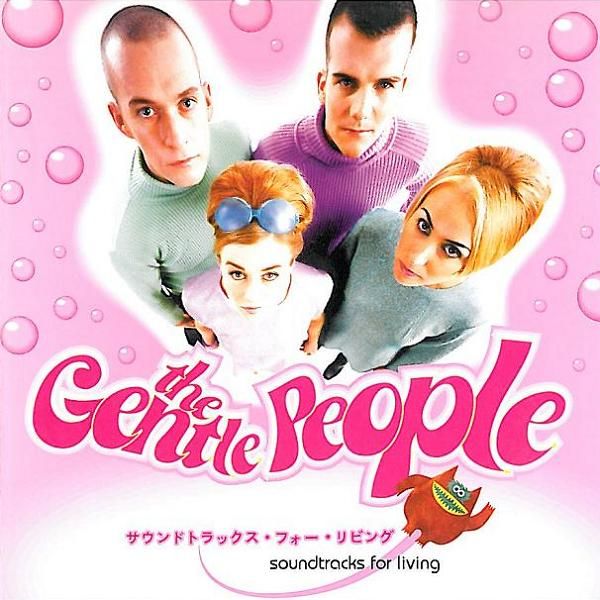
This is what would have been the second post on the never-launched Moogs Funks Breaks blog - you can find the first one here - and it's about the now-little remembered mid-nineties loungey dance act The Gentle People, and how odd it is to contrast their present-day obscurity with how much exposure they got at the time. It ends with a rather weak off-the-peg argument that I probably wouldn't even make now, but let's not go about rewriting unpublished history. Anyway, if you want to know more about the build-up to Britpop and how the way that it gets remembered is decidedly at odds with its actual roots, you'll be wanting a copy of my scholarly study of the subject Higher Than The Sun. And now, we're off on a journey...
Recently I've been listening quite a bit to The Gentle People, a retro-electronica act that emerged from the Loungecore-Acid-Jazz-Easy-Listening-Big-Beat Madwoman In The Attic of Britpop that people try to avoid mentioning now (primarily if they're writing career histories of Noel Gallagher), inspired in no small part by that big new Corduroy box set that's just come out, complete with a previously unreleased two-fingers-to-Britpop-as-they-come cover of the Sesame Street theme.
Anyway, while enjoying their gloriously of-its-time combination of futuristic dance music sounds with an overall What Time's Issi Noho On? vibe, it's difficult to avoid reflecting on just how prominent they were for such a wilfully niche-marketed band. Only a couple of years earlier, they'd have been the sort of outfit that John Peel played apologetically in the last twenty minutes of his show, and then got complaints from miserable Grunge-worshipping dullards asking him never to play them again. In the mid-nineties, however, they were everywhere, from daytime TV to daytime radio, and the subject of countless multi-page colour spreads in magazines. And not just in the likes of Select or Vox either, but everything from Stuff to Loaded as well.
Yes, alright, so the latter sort of magazine might well have been drawn towards them by the fact that they had two attractive female members - though it's difficult to convince people these days that Loaded was actually a pretty good magazine for the first couple of years, placing articles on the likes of Peter Cook and Lancelot Link Secret Chimp in amongst all the Nicola Charles In Her Pants Again stuff, and heavily championing the likes of The League Of Gentlemen and Super Furry Animals way before they actually got anywhere, and that it was only finally consumed by the monster it accidentally created after Harry Hill featured on the last regular male-only cover in 1997 (although as I briefly appeared in a feature some two years after that - no, not telling you which, sorry - I can't really fingerwag as much as I'd like to), but that's an argument for another article - yet all the same there's no getting away from the fact that they weren't the sort of band that would have been considered potential mainstream fodder only a couple of years earlier, or indeed only a couple of years later. They were, after all, a gaggle of flourescently-dyed-in-the-wool confirmed retroheads like the similar headcases behind Radio Tip Top - themselves a regular sighting in these sort of unlikely avenues, and similarly pushed towards the mainstream to the extent that they nearly landed a daytime show on Radio 1 (and if you want to know more about that, you'll have to read my book Fun At One) - and hardly of a piece with bacon sandwiches, football tribalism or children's TV presenter 'babes'.
So what happened? Why was there that curious moment in the mid-nineties where the mainstream and the non-mainstream suddenly collided and everything seemed on a level playing field for the briefest of times (well, unless you were poor old Luke Haines)? A large part of it is obviously down to the success of the likes of Blur, Pulp and Supergrass, who waved their more angular influences in people's faces but at the same time had found a way to make them eyecatching, earcatching and marketable, and given that to the average punter it must have seemed like all these amazing bands were suddenly tumbling out of nowhere (whereas the average NME reader would doubtless have seen things a bit differently), it was inevitable that people would feel mildly curious about what else was 'out there'. Clearly that can't have been the entire cause, as it seemingly got through to people who wouldn't know Sofa (Of My Lethargy) if it pitched up in the middle of a Shine compilation and refused to budge until they had heard it so many times that their head exploded, but that's for some crazy futuristic Space Dominic Sandbrook to speculate on.
Anyway, for the briefest of moments - yet still one which in the heat of the moment seemed like it was stretching on into infinity in a sort of weird time distortion event of the sort that they used to use technobabble to describe before all this 'wibbly wobbly timey wimey' business started - it seemed like the 'outsiders' could take on the mainstream and, if not win, then at least co-exist in a more receptive plane of popular cultural existence. But of course, Simon Cowell wasn't having any of that...
If you've enjoyed this, you might enjoy my book The Camberwick Green Procrastination Society, available in paperback here, from the Kindle Store here, and as a full-colour eBook here.
This was one of only two posts that I put together for an abandoned blog idea called Moogs Funks Breaks. This would basically just have been a series of short impressionistic posts aimed at highlighting various overlooked songs that I'd been listening to recently, which as you can see below would have been a good deal more interesting than that description sounds. Anyway, here's what would have been the first post on Moogs Funks Breaks, looking at what happens when your MP3 player clocks up more than one song of the same name without you actually noticing...
One of the possibly unwelcome innovations of the MP3 age, and indeed one that Stewart Lee would presumably be both fascinated and alarmed by, is that it's now possible look through the list of tracks on your personal audio player and see just how many different versions of one song it's possible to have accumulated without realising. Seven of All Along The Watchtower. Fourteen of Mas Que Nada. And, somewhat less expectedly, three completely different songs all called The Garden Of Earthly Delights.
Presumably 'borrowing' their title from Hieronymous Bosch's fifteen and sixteenth century straddling series of Bible-depicting oil-on-canvas artworks - or, if raining, from somewhere where they'd seen it being used - the three Gardens Of Earthly Delights in question could not be further removed from each other musically, chronologically, or ideologically. Well, not exactly 'could not be', as none of them are by Skinned Teen, Bela Bartok or The All-New Nick Griffin Big Band, but you get the general idea.
The first of them, working on an arbitrarily chronological basis, is by late sixties early electronic act The United States Of America, a sarcastically-named outfit who were part of the same 'Hate Generation' as The Stooges, Frank Zappa and the equally ironically-monickered Love. Their lone self-titled album duly does away with the peace and love obsessions of the era in favour of songs about animal cruelty, middle-class sexual deviance, 'bad trip' flashbacks, Hiroshima, and an aggressive female vocalist roaring out a 'fuck you, I'm in charge here' ode to the joys of, erm, Hard Coming Love. As you can probably imagine, their The Garden Of Earthly Delights is rather light on the 'Delights', consisting mainly of a nightmarish botany lesson about venomous blossoms, blackening mushrooms, and - yikes - 'omniverous orchids'. It's safe to say Percy Thrower wasn't on their Christmas Card list.
Then it's a leap forward to the late eighties, when XTC opted to open their superlative defining moment of neo-psychedelia Oranges And Lemons with their own personal The Garden Of Earthly Delights. As you'd expect from Andy Partridge, this particular plea for human tolerance and co-operation is made up of a ridiculous volume of line-cramming words delivered at a frenetic pace, and comes with about seventeen thousand sub-clauses, but it's a mighty fine way to open one of the mightiest and finest albums ever made. And it's not even the best expression of that basic sentiment on there; if you've never heard Scarecrow People, Poor Skeleton Steps Out, Here Comes President Kill Again or The Loving, then you need to rectify that straight away.
Then, finally, it's off to the early nineties and overmanned Acid Jazz collective D*Note, of Now Is The Time near-hit infamy. This was the point at which the yellow sunglasses-wearing types started to break away from their more straight ahead raving contemporaries, substituting the Ecstasy-driven vision of a world united by one of those plinky three-chord piano riffs for a more globally-aware plea to take heed of history, ecology and ethnic tradition, which of course would pay off very handsomely for a certain gentleman in an oversized hat. Delivered over a furious modal jazz riff apparently sampled from the soundtrack of legendary big screen religious hokum The Cross And The Switchblade (bang goes my long-held assumption that it was purloined from Mike Westbrook's Metropolis (Part IX), then), guest vocalist Pamela 'Not That One' Anderson combines an urging for mankind to look to its own metaphorical 'garden' with wistful romantic whisperings to someone apparently obliviously scoffing a picnic. And they wonder why Reel II Reel Featuring The Mad Stuntman had the big hits.
And that, ladies and gentlemen, is why it can sometimes be fun to have different songs with the same name. Except when it's Twist And Shout.
In 1986, I won a competition in Smash Hits. Though I'm not really quite sure of how and why I did.
Rather than the can of Citrus Spring autographed by Phil Cool that you might well be expecting, the prize in question was a copy of Streetsounds 17. As the name suggests, this was the the seventeenth instalment in the Streetsounds label's lengthy series of compilations of hot new electro, hip-hop and breakbeat tracks. Despite having more than a passing interest in the genre, and being the proud owner of K-Tel's surprisingly strong if slightly dubiously promoted Rap It Up collection, I don't recall ever being particularly desperate to get hold of this or indeed any other edition of Streetsounds. Scanning the lists of winners of other competitions in the same issue, I suspect that I may actually have been after the 12" of Rockin' With Rita by Vindaloo Summer Special, and had just entered the Streetsounds 17 one on a whim due to having a spare stamp.
In order to win a copy, you were challenged to explain, in an essay lasting no longer than five words, why Prince was so short. "The effects of Purple Rain" was my aaaaahhh-tastic pseudo-satirical response, which clearly amused Sylvia Patterson and company sufficiently for them to send me one of the fifty copies on offer. It arrived before the issue with the list of winners came out, in fact, and once it did hit the 'newsstands' I became something of a minor celebrity in school for a week or so. We had to make our own 'trending' in those days.
Anyway, I was reminded of this recently while I was scouring 1986 issues of Smash Hits as research for an article about Now - The Summer Album; which none of you actually read, clearly on account of the MSM bias against me. Sadly, I don't actually have the issue itself any more - a shame as it was the one with the brilliant feature on where the money that you spent on records actually went - but thanks to the fantastic Like Punk Never Happened, here's that list of winners in full. It's particularly interesting to see that the other winners included one 'Scott Walker'. There was such a prominent electro influence on Tilt after all.
However, while that issue of Smash Hits may have long since disappeared into the great magazine-based Bermuda Triangle of the rest of your family denying all knowledge of what might have happened to it, I do still have Streetsounds 17 itself. Not that I really remember very much about it - like all of the Streetsounds label's billions of releases, it was aimed primarily at hip DJs and people playing at being hip DJs, and intended as a way of getting hold of hot new tracks cheaply and easily rather than an actual coherent listening experience. So there's really not much of an excuse for not giving it another spin, is there?
Streetsounds 17 has an indistinct photo of an anonymous street funkateer in a long mac on the cover, and this sense of anonymity also extends to its contents. Many of the featured acts are so low-profile and little-remembered that it's virtually impossible to find an actual photo of them, and only three of the featured tracks resemble even anything approaching a hit single. Janet Jackson's oft-overlooked second hit Nasty might seem a surprising inclusion for such a radically urban and cutting edge series, but it was also a good deal harsher sounding than her usual fare; which is probably the reason why it's oft-overlooked, in fact. This is even more true of the 12" Extended Version included here, which strips it down to some suitably nasty-sounding beats that feel a lot closer to mid-eighties hardcore rap than mid-eighties Motown slickness.
Plenty of slickness can nonetheless be found on Step By Step by T.C. Curtis, the Jheri Curl-sporting synth-funk polymath who somehow failed to break through to mainstream success, despite appearing at the end of side two of every below-par Now! That's What I Call Music rip-off in existence. Step By Step may be presented here in an exclusive 'Streetsounds Remix', but it's still true to say that if you did ever catch one of those end-of-side-two tracks, then you'll have a fair idea of what this likeable but undistinguished mid-paced hoarse-voiced workout sounds like. It's worth noting that a now somewhat unfortunate yodel starts to creep in towards the end, though.
If we're being honest about it, though, most of you will probably have no idea of who T.C. Curtis even was, and if we're positing him as the third most famous artist featured on Streetsounds 17 (we'll get to the second later) then you've got some sense of just how obscure the others actually are. Sharp-suited Oran 'Juice' Jones-alike Michael Jonzun, who throws a hefty helping of vogueish Nu Shooz-esque 'barking dog' voice samples into Can't Fool Us, and Give Me Up non-hitmaker Beau Williams, whose primary gimmick was to fool you into thinking he was singing about a girl when he was actually singing about God, do at least have something approaching a traceable career path. As do Skipworth And Turner, the duo behind the energetic 'Streetsounds Exclusive Edit' of Children's ITV Game Show-friendly-synth-festooned Can't Give Her Up, whose main contribution to musical history was giving Kenny Thomas another hit nobody asked for by writing Thinking About Your Love. Actually, apparently they're different songs, but I couldn't be bothered checking and anyway, there's no point allowing the opportunity for a good Kenny Thomas gag to go by.
Above and beyond that, though, we're adrift in a fathomless factual void of sequinned jackets and Yamaha DX7s. Colors, the unimaginatively-named outfit responsible for the Mario Kart backing music-like Pay Me Back My Love, may possibly have featured veteran session singer Vaneese Thomas but nobody seems to be quite sure about that. Given that it opens with the same sort of over-extemporising saxaphone as any given mid-eighties US TV show, and continues in a suitably mediocre sub-Al Jarreau style, you'd be forgiven for assuming that Cargo, whose Love You So (Without You) is yet another 'Streetsounds Exclusive Mix' ('featuring Dave Collins'), were as American as they came. Yet, bafflingly, the credits seem to indicate they were not just UK-based but actually led by veteran beardy jazzers Mike Carr and Dick Morrissey. Meanwhile, Sleeque have fallen so far off the factual radar that they might as well not have even existed, which is a shame as their sturdy proto-Acid Jazz stomper One For The Money, with its amusing interpolation of the lyrics from Blue Suede Shoes, is the best track on here by some considerable distance.
Former disco ensemble who'd moved with the times Zapp, whose Computer Love (Extended Version) was presumably not a tribute to Zzap!64, sit uneasily somewhere between the two as they seem to have been around for several thousand years without anyone actually noticing them. On the evidence of this 'dreamy' soundscape that clocks in at nearly ten minutes without offering a single robot voice, this is hardly surprising. It's doubtful that it would even have appealed to nominally music-averse sci-fi fans because 'space'.
Right at the end, however, comes the 'Special Extended Remix' of Set Me Free by Birmingham's own Jaki Graham. Seemingly hovering around the charts for the entirety of 1986, even the regular version of Set Me Free was already a touch overlong and repetitive, so making it even longer still seems like an act of wilful obnoxiousness verging on madness. That's how they did 'remixes' back then, though, and frankly it's exactly what we want here. Turning a likeable if lightweight spot of full-throated jazz-funk into something approaching art terrorism exemplifies both everything that was wrong and everything that was right about mid-eighties pop music at the same time, and stands out way more than any of the seemingly endless procession of seemingly endless pleasant enough in-one-ear-and-out-of-the-other exhortations for swanky types in Midnight Starr-inspired clobber to get on down on the dancefloor that you'll find elsewhere on the album.
The regular version of Set Me Free did of course appear on Now! That's What I Call Music 7, which in addition to being a hugely listenable vivid and vibrant snapshot of the diversity of the mid-eighties pop charts, is also the very best Now! album bar none. Yes it is. Stop arguing. Yet for all their wilful angularness, we should be glad that the likes of Streetsounds and the Indie Top 20 series (which you can find Dave Bryant's excellent album-by-album review of here) existed, as they're probably the only way of really accurately measuring what went on beyond the Top Forty short of inventing a time machine and posing as Eugene Wilde. A pose that no doubt involved reclining forward into the camera lens with a satin jacket and a huge grin.
So, that's how I ended up with Streetsounds 17 instead of Rockin' With Rita. But can you guess which one of them I later ended up mentioning in a book?
If you want to read more of my Smash Hits memories, you can find them here.
If you've enjoyed this article, you might enjoy my book The Camberwick Green Procrastination Society in paperback here, on the Kindle Store here, or as a full-colour eBook here.
George Martin. Joe Meek. The BBC Radiophonic Workshop. Nowadays you'll find cheerleaders for just about every once-overlooked Brit-based sonic pioneer of the pre-Rubber Soul era, and rightly so. Even Freddie Phillips and his Trumptonshire-traversing hammer-ons, though in fairness you'll probably actually have to read something written by me to find that.
But who's singing - doubtless with over-elaborate vocal extemporisation - the praises of Johnny Dankworth and Cleo Laine? Well, given that the general public's entire image of them seems to be based on The Two Ronnies impersonating them every single week with jokes seemingly based on two other performers altogether, probably very few people. So it's time to put a stop to that nonsense. Before they settled comfortably and deservedly into middle-bit-of-Pebble-Mill-At-One ubiquity, Johnny and Cleo were amongst the first to mess around with concept albums, global rhythms, pre-synthesiser electronic keyboards, sound effects, multimedia, reverb, spoken word comedy bits and much more besides, most of it in glorious mono to boot. So join me as we take a stroll through some of the highlights of their jaw-droppingly prolific early output, all of which is almost as exciting as The Exciting Mr. Fitch himself...
Experiments With Mice (1956)
One of George Martin's first productions, as Johnny reads out his absurdist Beat Poetry reworking of the saga of the Three Blind Mice, relocated to a recording studio and zigzagging in and out of different Modern and Trad Jazz styles as they try to avoid being assailed by a 'cat'. Packed with sound-effects and verbal and musical in-jokes, and it's not hard to see how George got from here to being so creatively efficient in the studio with those Beatle Boys. Back in the days when putting together a good 7" single was an infinitely bigger deal than even thinking about releasing an album, this climbed to Number Seven. Stitch that, 'Murs'.
Soundtrack Music From 'The Criminal' (1960)
A no-holds-barred look at prison life starring Stanley Baker as an inveterate pilferer with a penchant for racecourse cash boxes should usually call for frenetic Crime Jazz, and that's exactly what we get here with the likes of the swaggering Riverside Stomp and the alarmingly haphazard Freedom Walk. Those in search of the full experience will also be wanting Cleo's moody theme song Thieving Boy, with remorse-lust lyrics co-penned by none other than Alun Owen, which was released as a standalone single backed by Let's Slip Away, her more wistful and optimistic curtain-raiser for the same year's big-screen version of Saturday Night And Sunday Morning. It's also worth noting that this soundtrack dates from Dudley Moore's brief spell with the Johnny Dankworth Big Band, which doubtless proved a source of great amusement to Peter Cook.
African Waltz (1961)
The EP of the Big Pop Hit, featuring not just the shrill 3/4 foot-twisting top ten smash title track, but also percussion-hefty Mod dancefloor filler Chano, swaggering Soul Jazz slow-groover Moanin', and the original version of the original theme tune from Honor Blackman era The Avengers. Although it's hardly on the same level as Laurie Johnson's subsequent more celebrated Steed-accompaniment (though, to be fair, few TV themes actually are), only the most blinkeredly cloth-eared of Popular Beat Music-averse Archive TV obsessives could realistically deride it as a load of old rubbish. And unfortunately, there are a lot of them out there. Still, some decidedly more funky types clearly thought it was something approaching lost fabness...
What The Dickens! (1963)
With the aid of an all-star horn-honkin' line-up including Tubby Hayes and Ronnie Scott, Johnny takes an impressionistic instrumental trip through the collected works of Charles Dickens, improvising across the pages of The Pickwick Papers, The Old Curiosity Shop, Nicholas Nickleby, Oliver Twist, A Christmas Carol and David Copperfield, though sadly there was no accompanying EP based on Sketches By Boz. Inspired by the 'feel' of the source novels, it's like the soundtrack to some sadly non-existent Swinging Sixties-era Dickens biopic, with highlights including catchy street-saunter Little Nell, and Pickwick Club, which is so warm and quirky that you can just imagine Tupman and Snodgrass taking their boots off in front of a roaring fire with hilarious social faux pas consequences. It's probably more useful than the average A-Level Study Guide too.
Shakespeare And All That Jazz (1964)
Not to be outdone, Cleo also turned her hand to the exciting new world of Literary-Jazz crossover, and came up with an entire album's worth of adaptations of Iambic Pentameter into Iam-bee-ba-ba-doo-bah-be-dah-dic Penta-mah-da-doo-da-de-dam-eter. The Bard may only have been the fifth greatest wordsmith of history (after Dickens, Douglas Adams, PG Wodehouse and Richard 'Skinhead Escapes' Allen), but this is every bit a worthy companion piece to What The Dickens!, with highlights including the surprisingly riqsue (well, by 1964 standards) It Was A Lover And Her Lass, Scottish Play-summarising breathy Jazz Cellar epic Dunsinane Blues, and the suitably chilly Blow, Blow Thou Winter Wind. Much beloved of English teachers desperate to prove to their charges that they were still 'with it'.
Beefeaters (1964)
Originally composed and recorded as the theme for long-forgotten ITV X Factor template Search For A Star, a talent show that reportedly discovered future Doctor Who companion Wendy Padbury, this wild jazz stomper was later picked up as theme music by a certain Pirate Radio DJ, and - with the judicious addition of 'barks' from Arnold The Dog - subsequently became, as over-literal hern-ing bores will never tire of pointing out to you, technically the actual first record heard on Radio 1. Which makes it something of a weird coincidence that the not-that-dissimilar b-side was entitled Down A Tone.
Sands Of The Kalahari (1965)
Only two tracks were released from the soundtrack to cinema's most edge-of-the-seat baboon-plagued desert trek, but what tracks they were. The massive-sounding yet inappropriately jaunty title theme waltz is pretty much the musical embodiment of a time when British Cinema could do no wrong, while the moodier and more reflective flip Night Thoughts showed up in a key scene but was perhaps still, erm, a little too jaunty for the on-screen action. You'll find the movie itself on Film4 every couple of minutes, but unfortunately there's still no sign of a release for the full score.
Little Boat (1965)
More 45-only action (though the a-side later appeared on the fabulously 'Pipe Down, Blokes'-themed album Woman Talk, which you can see the fantastic cover of below); Cleo's chart-scraping translation of Bossa Nova favourite O Barquinho is fab enough, but it's the b-side you should really look out for, with its percussion-rattling piano-smashing ode to the charms of some heart-fluttering cocktail-swilling ski-jumping Jeff Winger-esque aesthete who apparently has his own personal brass band to fanfare his entrance, but not any tangible hint of a first name. All in all, not altogether surprising that this didn't make it to the album...
The Zodiac Variations (1965)
While Cleo was musing on gender-politic rumblings, Johnny got a bit cosmic with this set of twelve impressionistic Late Night BBC2-friendly instrumentals based on the purported characteristics of the dozen chronological subdivisions of everyone's favourite dupe-fleecing hokum. From his musical findings, we can deduce that while Librans like to chill out with a hefty book and a good strong coffee, Aquarians are rather more fond of doing a dance in front of a mirror with a glittery top hat and cane. Though I would say that, being a Taurus. TV's Catweazle will mayhap be pleased to hear that this rotating plastic demon also includes a 'thirteenth' star sign sign in the form of ecliptic-straddling medley Way With The Stars.
The Idol (1966)
We're heading into the sadly all-too-brief Golden Age of Dankworth/Laine film soundtracks now, with this obscure number starring Michael Parks as a pranksterism-friendly hip'n'happenin' art student with a 'thing' for whatever they called MILFs in 'old money', and John Leyton as a disapproving best friend/son. Not quite the lost classic that it might sound, if we're being honest about it, but the frug-tastic party scene-friendly musical contributions deserve a bit more exposure than the film itself.
Modesty Blaise (1966)
She'll turn your head, though she might use a judo hold! One of cinema's most glorious psychedelic messes scorches the projector when Monica Vitti puts in an impenetrably-accented turn as the pulp paperback spy as she shags, hallucinates and assassinates her way across Europe, in pursuit of some stolen diamonds that haven't actually been stolen yet. Nosebleed-inducing pop-art mayhem with a soundtrack to match, from the ridiculously camp and overblown title song featuring the vocal talents of long-forgotten pop hopefuls David And Jonathan, to the overdriven wasp-trapped-in-Farfisa thrills of The Willie Waltz. The sort of film that can nowadays get you No-Platformed for liking it, though in mitigation the b-side of the single version of the main theme features the more politically acceptable strains of the swaggering vibe-heavy blare that introduced The Frost Report, the perfect accompaniment to David Frost holding up a microphone to a Keep Left sign and doing a 'sceptical' face.
Fathom (1967)
And if you weren't quite tutting enough yet, get a load of Raquel Welch as a military skydiver in an impressively cantilevered lime green bikini, trying to recover a stolen nuclear detonator whilst dodging a bull intent on stealing her bra, and Richard Briers occasionally saying some lines in the background. This all a tad more subdued, sultry and samba-tinged than the walloping Modesty Blaise score, but somehow you get the impression that the music wasn't really one of the most prominent points here.
The $1,000,000 Collection (1967)
It wasn't just pop that went a bit psychedelic over the summer of 1967, and here Johnny treats us to a series of Prog Jazz-anticipating 'sound paintings' inspired by his favourite pieces of pricey modern art. It's a strangely under-acknowledged fact that the UK Jazz community were the most enthusiastic and profligate patrons of the pop artists, op artists and photorealists, and Johnny and Cleo actually owned Derrick Greaves' Two Piece Flower, as seen on the album's cover and sketched out here in a catchy experiment with plucked strings. Also well worthy of their purported price tag are the kaleidoscopic sleighbell-underpinned frost-on-the-windows salute to Thomas Kinkade's greetings card-esque Winter Scene, and a Late Night Line-Up-evoking beatnik jive rumination on Modigliani's Little Girl In Blue, which is certainly more cheerful than her miseryguts expression should warrant.
Off Duty! (1969)
The Prog Jazz leanings continue with an album of covers of recent genre favourites including Charlie Barnett's Skyliner and Gerry Mulligan's Bernie's Tune, alongside an alarming reworking of African Waltz and the blaring Dankworth-composed American sitcom theme-esque mini-suite title track. Also on board is a seriously funky reworking of Holloway House, an early effort from little-known piano-pounding jazz trio leader Laurie Holloway, later to furnish many an ITV Saturday Night Light Entertainment show with a near-identical theme boasting the exact same eight-note ending as each other.
Portrait (1971)
Cleo treats us to interpretations of a handful of her recent soul and jazz favourites, amongst them a soaring rampage through Aquarius, a peculiar bit of architectural satire on Model Cities Programme, a reworking of Bossa Palma Nova from the Fathom soundtrack, and best of all, a rip-roaring blast through Northern Soul stomper Night Owl. Snorted at by purists, apparently, presumably while spinning round and not having much imagination.
Lifeline (1973)
We're now in proper full-on Test Card Funk territory as wah-wah guitars and slap bass wallop their way across the stereo mix, and the entire second side taken up with some sort of suprious Journey To The Shopping Centre Of The Earth-style musical narrative, which is really just an excuse to indulge in some seriously heavy extended grooves. Meanwhile, over on the first side you'll find Johnny's legendary theme for Tomorrow's World, a tune so aware of its own brilliance that it takes an entire three opening fanfares and a Hammond Organ voluntary before it sees fit to properly get going. Also worthy of note is the accompanying non-LP single Bitter Lemons, featuring a wonky Sly Stone-inspired groove underpinning some abrasive trumpet that appears to be being played underwater.
Movies 'N Me (1974)
An updated re-recorded rifle through Johnny's soundtrack back catalogue, taking in extracts from deleriously obscure sixties Brit Movies like Darling, The Servant, Return From The Ashes and more, including the first ever outing for his main title for controversial gorilla suit-facilitated mental breakdown comedy Morgan: A Suitable Case For Treatment, sadly still not available in its original form (though the contemporaneous cover by Manfred Mann's Mike Vickers is well worth checking out). The break-festooned whipped-up-tempo take on Modesty Blaise was later sampled by Gorillaz, but the real highlight is Look Stranger, his inappropriately funky theme for BBC2's long series of grainy ruralist-pluralist documentary films about beardy blokes in coastal towns lamenting how they don't make them new-fangled fishing nets like they used to or something. Who'd have thought it? For a similar discrepancy between theme music and on-screen action, see Telford's Change, released as a single by BBC Records And Tapes around this time (and also covered in Top Of The Box!).
MISSING IN ACTION...
Johnny's utterly bonkers theme from early seventies ITV children's show The Enchanted House, a maddeningly catchy yet disconcertingly topsy-turvy tune welded to a wall of tuned percussion. You can read more about The Enchanted House in my book Not On Your Telly, but the show itself hasn't been seen anywhere since the early eighties, and even the trebly recording of the theme that was on YouTube seems to have disappeared now...
While Time And The Rani was being broadcast, Children's BBC how-it-works show for under-tens Corners suddenly picked up a couple of million extra viewers. This was largely down to the fact that the show's new presenter Sophie Aldred was also set to become the next Doctor Who companion, and as well as the usual standard issue obsessive fan that has to watch every last appearance by every last actor connected with it, there were also a significant number of smitten teenagers who just couldn't get enough of their latest TV crush. While they would have to wait until 1989 to see Sophie dressed as Cleopatra and wearing a Victorian ballgown with a plunging neckline on Children's BBC game show Knock Knock, anyone who was still watching Corners in December 1987 would nonetheless have got a nice surprise of a very different kind.
During an edition devoted to 'Music', Sophie visited Keff McCulloch in a weirdly dingy cellar-based studio for a look at how he put that contentious new arrangement of the Doctor Who theme together. In a fun little interview, he explains how a synthesiser works, and essays not altogether convincing 'flute' and 'organ' tones before breaking out the somewhat less conventional sounds used in the theme, which it has to be said sounded little short of amazing when tearing out of your TV speaker in isolation. Sophie then gets to play the bassline and edit it into shape using a sequencer; she observes that 'you'd need about twenty hands to play all that', upon which Keff launches into a guided tour of the 24 Track Mixing Console, pushing the faders up and down in a way that seems barely noteworthy now but was the sort of thing that you normally didn't get to see or indeed hear back then.
You may speculate, of course, that this feature was originally intended to tie in with the abandoned single release of the Keff McCulloch version of the theme. Which I would normally use as an opportunity to plug my book about BBC Records And Tapes Top Of The Box, except for the fact that Ian Shazam and all the wacky japesters on the Charter Review committee have just announced that promoting anything to do with The BBC is very bad and wrong. Which I'm happy to comply with, as long as they are similarly happy to dodge an incessant hail of sharpened copies of Come To My Party by Keith Harris And Orville.
Anyway, one thing that surprisingly didn't put in an appearance in his actual arrangement of the theme music, but was all over his incidental music as if it was vying for prominence with that pesky banjo, was the dreaded 'orchestra hit'. For those of you who aren't familiar with it... well, let's face it, you are familiar with it. It's a blanket name for those sampler-derived bits of angular and slightly off-key punches of massed musical emphasis that you'll find roughly every three seconds in any given Pet Shop Boys single. It was an effect that had started to creep in during the early eighties, primarily via Trevor Horn, and by the end of the decade was everywhere, from Debbie Gibson's Electric Youth, through Express Yourself by NWA, all the way to that preposterous Sun-Pat 'P-P-P-Peanutritious' advert. Keff McCulloch had no searing expletive-strewn message to deliver about Black America needing to stop fighting itself before it could fight White America, though, nor indeed any phatic air-punching sentiments about how youngsters hold the 'key' if only the grown-ups would listen to them. Not even any reason to extol the nutritional virtues of a spread made from ninety three percent peanuts. He was there, purely and simply, to punctuate Gavrok thumping his fist through a flimsy paper 'loudspeaker', and didn't we know it.
First essayed in Time And The Rani, Keff McCulloch's approach to incidental music has since become one of the most widely derided aspects of the original run of Doctor Who, and in some regards it's not difficult to see why. Heavily indebted to the MIDI-er-than-thou computer-controlled samplings of The Art Of Noise - whose contemporaneous theme for The Krypton Factor would not have sounded out of place in a McCoy story - his contributions rely far too often on clinical and sterile 'funky' motifs driven by all-too-obviously synth-derived brass and piano sounds, with orchestra hits thrown in for good measure whenever a character does something dramatic like sit completely still doing absolutely nothing whatsoever. They are loud, they are mechanical, they are precise, and they are very much of their time. However, they were also perfectly good in their time, succeeding in making Doctor Who at least sound more modern than it had done since, well, ever really, and scoffing at them for having had the temerity to wear a bit badly is a bit like castigating Coldcut Featuring Yazz And The Plastic Population for not being Rich Homie Quan.
Admittedly, even allowing for this, Time And The Rani does not exactly find the beleaguered synth wizard at his best, seemingly weighed down by the need to make a good first impression, and with high-speed atmospherics careering about the place like a copy of Galactic Nightmare had burst all over the soundtrack. There are also way too many 'clever' variations on the basic theme tune melody; you can hear the first stirrings of his notorious 'Latin Version' here, if you're unhinged enough to actually want to. Ironically Keff McCulloch would do a much better job with a much shorter time to work in on the following story Paradise Towers, then really hit his stride when called on to throw in elements of fifties pastiche when they went back to 1959 - The Rock'n'Roll Years! - for Delta And The Bannermen.
There are plenty of decent moments in his Time And The Rani score, though, and the entire soundtrack does at least exemplify the one virtue that Keff McCulloch never gets anywhere near enough credit for - brevity. Unlike Murray Gold and his ceaseless attempts to shoehorn an entire symphony into every single close-up, there is invariably just enough music to make a point or set a mood and then they get on with the controversial business of actually allowing the audience to hear some of the dialogue. So much so that when some of his music was included on The Doctor Who 25th Anniversary Album the following year, full-length tracks had to be made up from bizarre ill-matching cut'n'shuts of much shorter pieces of music. Although, that said, the two extracts from Time And The Rani were actual full-length pieces, albeit only heard as brief background edits onscreen. Erm, as you were.
More to the point, the alarming modernity of Keff McCulloch's DX7-derived sounds were enough to lull hapless fans into a deluded notion that their 'cool' friends might start to see Doctor Who as 'cool' again. They'd probably deny it now, much like they'd deny that they ever purposefully ate McCoy's crisps in a misguided act of 'solidarity', but the truth of the matter is that every fan went through a stage of believing that the hip fashion-followers in their class could be converted to the cause if only the right 'in' could be found. And now Doctor Who had music that sounded a little bit like what was in the charts; was this the moment they'd all been waiting for? No it wasn't. It would take more than a couple of orchestra hits to tempt juvenile trend-surfers away from The Lost Boys and paisley waistcoats. It was about as liable to connect with them as that dreadful Italio House-themed Vimto ad, and the only time fans would be hearing the Doctor Who theme around school playgrounds was when the 'zany' kid sniggered and sang "OOOOOO-weeeee-oooooOOOOO" at them in a sort of out of tune sarcastic voice. The Beatmasters did not see fit to drag Roberta Tovey out of retirement for a chart-topping collaboration. There would be no We Sing In Praise Of Total War '88 by Eric B & Rakim feat. Robert Moubert.
Nonetheless, there remains a small but significant faction of fans out there who actually quite like Keff McCulloch's incidental music, and in the pre-DVD Extra age many of them would come to treasure that snippet of Corners that they'd hastily recorded between the omnibus repeats of Dick Spanner. Many would also 'treasure' off-airs of Never Kiss Frogs and Melvin And Maureen's Music-A-Grams, but perhaps we'd better not go into that. But of course, Sophie Aldred wasn't in Time And The Rani, and mentioning her so heavily in this context would be a bit like if an earlier draft of this piece had suggested that some of the additional Corners viewers "had turned on too early for Droids", when in fact the BBC didn't start showing the animated adventures of R2D2 and C3P0 until the following year. It's time to turn our attention back to what Ikona and company are up to.
Meanwhile, in a freak coincidence, there actually was a credible crossover between Doctor Who and new-fangled dance music the following year, and it would have wider and longer-lasting implications than anyone expected at the time... but that's another story.