Showing posts with label bbc. Show all posts
Stop Getting 'Clown' Wrong!
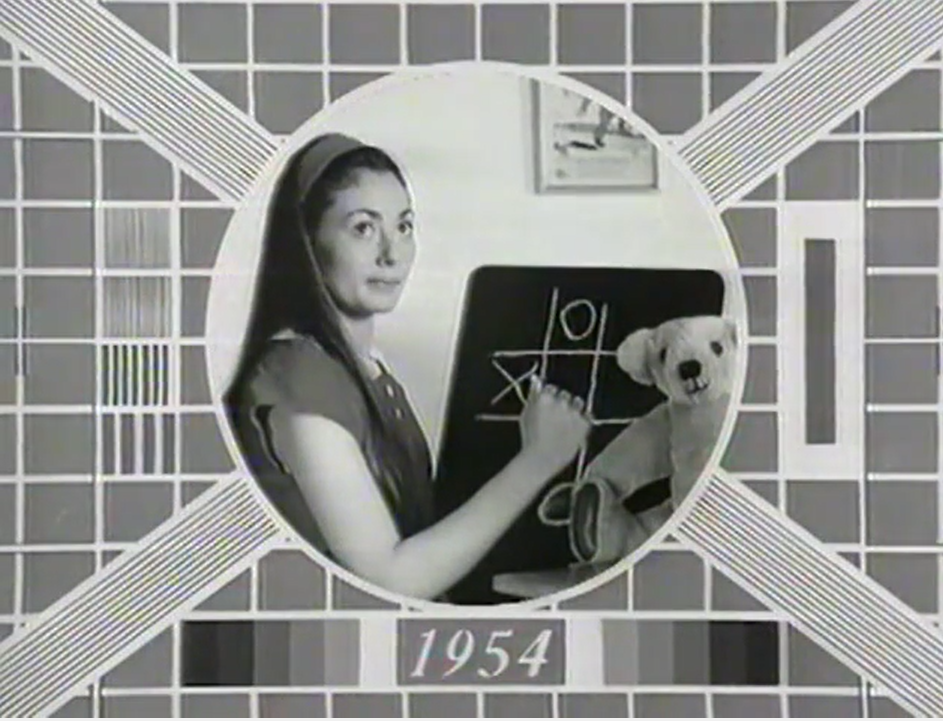
Early in 1967, BBC Engineer George Hersee unwittingly created a modern design icon. Back in the days when anyone who owned a television would have owned an analogue set that relied on a cathode ray tube, and would only have been able to choose from a handful of channels that conveniently shut down both overnight and for the majority of the daytime anyway, the Test Cards that showed up for half an hour or so at the start and close of broadcasting hours were not only a common sight but also served a crucial technical purpose. Carefully designed with appropriate geometrically precise uses of shapes and shades, not only did they give the ‘backroom boys’ at the television stations themselves an opportunity to check that everything was working correctly ahead of the actual programmes going out, they also allowed the owners of television shops to ensure that their display models were giving the best possible output, and served a similar purpose for television engineers called out to attend to sets that had gone ‘on the blink’.
With colour test transmissions due to begin imminently, Hersee – a BBC engineer since the late forties – had been charged with producing a new card that could be used for testing colour equipment. His innovation was to fill the central circle with a colourful photographic image in lieu of yet more gradations; after considering and rejecting prototypes using a fashion model, on the grounds that the Test Card was expected to have a long shelf life in the way that fashions do not, he opted instead for a photograph of his eight year old daughter Carole, dressed in a red top and hairband and a tartan skirt, and locked in the middle of a game of noughts and crosses on a blackboard against her home-made toy clown Bubbles. Not only did Test Card F become convenient and universally-deployed visual shorthand both for technical issues and for ‘television’ in general, it also struck terror into several generations of uncomprehending youngsters unnerved by the fixed grins of the unmoving duo - who, as everyone knew, might suddenly move at any minute - while jaunty non-copyright big band music played underneath.
Needless to say, Test Card F also became a widely-adopted and much-loved target for parody. And almost every single one of those parodies fell down on one small but crucial detail - none of them could ever quite get the Clown right. Take, for example, the noughts and crosses enthusiasts' appearance in legendary BBC time travel drama Life On Mars, spooking the adult Sam Tyler with memories of their spooking the young Sam Tyler whilst viewers laboured under the misapprehension that there might actually be a proper ending to all of this after all. As you can see, Bubbles had clearly spent the intervening years taking full advantage of every fast food restaurant offer shoved through his door, having already inexplicably expanded by one foot in size.
Well, you could be forgiven for thinking, that's quite a recent example, and maybe they were largely working from memory. After all, it isn't even on that much these days, is it? True, but if anything, contemporaneous parodies of Test Card F were even further wide of the 'nought'. For example...
1989, and Spitting Image decides for no readily obvious reason to run a sketch about 'Clown' going on strike because he is a football hooligan and being replaced by Nicholas Witchell or something. Quite how this gave a show renowned for its cruelly latex lampooningly accurate attention to facial and physical detail license to depict him as having a huge spherical head and disproportionately frame-hogging body will have to remain a mystery. Still, in fairness, this was around the time that Spitting Image was getting a bit experimental and trying their hand at other animation styles and indeed featuring human actors, the very first of whom was one Nick Hancock. Who at that point was arguably best known for this bit of prop-based mayhem...
Hancock And Mullarkey's celebrated 'TV Themes' routine saw them rapidly change into costumes and throw around props while a medley of small-screen signature tunes played behind them, from cardboard flames with dancing on a chair to sausage-on-a-fork-and-shooting-up shenanigans. It was an extremely funny piece that never failed to have studio audiences in worryingly excessive hysterics, and right in the middle they threw in a quick Test Card F gag, which scored high marks by featuring a suitably schmaltzy reading of All My Loving. Examine it too closely, though, and you can't help but notice that Nick Hancock has simply reached for the nearest 'clown' wig and is shamelessly relying on a quick spot of cognitive association from the LWT-bound shriekers. Nice how accurately Neil Mullarkey has captured the 'Girl's tie as well. But what if Ben Kingsley, Test Card F Parody Union is behind door?
The normally devastatingly spot-on children's sketch show that was more adult than most adult sketch shows End Of Part One lowers its batting average here a bit by not even bothering to mock up a vague approximation of Bubbles, opting instead for a nondescript doll attached to some balloons that must have made it pretty hard to get a game of noughts and crosses underway. No wonder Fred Harris looks alarmed.
And finally for now, here's an early nineties advert for Granada Television Rentals, which not only gets the launch date of Test Card F wildly wrong but also goes to the vast and thoroughly salary-justifying expense of replacing the clown with a teddy bear. Because they are exactly the same thing, aren't they? Anyway, we're now returning you to the proper Test Card and some music, but if you know of any other examples boasting similarly high levels of devotion to accuracy, do get in touch. You may even want to tell me on Twitter that The Boosh dressed up as 'Girl' and 'Clown' once. I was not aware of that!!4
If you've enjoyed this article, you can find more about Test Card F, Radio Times and other items of old-skool BBC iconography - not all of it entirely respectful - in my book The Camberwick Green Procrastination Society, available in paperback here, from the Kindle Store here, or as a full-colour eBook here.
The Great British Bake-Away
Hit BBC shows - and stars - being snatched away by commercial rivals is nothing new, and neither are indignance and outrage at it happening. Back at the very dawn of ITV, there was an episode of The Goon Show in which all of the characters defected to the flashier new advertising-funded service one by one, leaving just the ever-loyal Bluebottle to man the entire BBC by himself. In the early nineties, Chris Morris launched into a ferocious rant against his former colleagues from GLR who'd upped and offed to the newly-launched Virgin Radio the second that Ian Virgin waved a huge cheque under their noses. And it's worth stressing that it has sometimes worked in the other direction too, as anyone who has made it through an edition of H&P@BBC will tell you. If such people actually exist, that is.
So it's not really any surprise that the makers of The Great British Bake Off should have taken the bait and airlifted the entire show to Channel 4. In fairness they really had the BBC over a barrel with this one, and the extra TEN MILLION they were demanding for the right to keep hold of the rights to the show would have provoked all manner of mouth-foaming and collapsing in the gutter about RA RA LICENCE FEE, so the BBC just couldn't win. Not that we should have expected any better from the production company behind Why Don't You Speak English? but that's by the by. This is the Brave New World of broadcasting that Rupert Murdoch has been promising us in badly punctuated lower-case tweets for a while now, and with the BBC on the back foot and unable to do right for doing wrong we're probably going to be seeing a lot more of this kind of thing in the near future. In fact, the only BBC Stars we can be certain won't defect to commercial channels are TV 'Girl' and 'Clown', and that's probably just because everyone's too scared to ask them.
In amongst all the controversy and debate and GIFs of Paul Hollywood having his cake and eating it, though, there's one important detail that's been missed - it almost certainly will not work. The Great British Bake Off is a show that has caught the imagination of viewers precisely because of how it had to fit around the restrictions, resources and general 'house style' of BBC television, becoming distinctive and engaging viewing almost by accident. Over on commercial television, much like David Dickinson not so long ago, it will almost certainly get lost amongst the hours and hours and hours of similar fare, and its character - which, let's be honest about it, was what drew viewers in rather than the actual format itself - will be gone. Chances are it will fall flat on its face and they will only have their own greedy selves to blame. In the meantime, the BBC - if they have any sense - will have found a new unlikely subject area to successfully shoehorn into their schedules.
Why am I so certain of this? Because there is a long history of performers, presenters, writers, producers and even entire programmes moving from the BBC to commercial television and vice versa, seemingly unaware that their creative niche and indeed their audience had derived entirely from the structure and atmosphere that they were working in, and losing both almost before the ink had dried on the contract. But I'm not going to bore you by going on about them. At least not as part of this article. Instead, here's me on the radio a while back, talking to Mark Thompson about the notable and notorious failures (and the count-them-on-one-hand successes) of the Great TV Defections, from The World According To Smith And Jones to Bruce Forsyth's Big Night, and of course a certain Mr. Parkinson. After which I will be signing an exclusive contract with Channel 5.
If you've enjoyed this article, you my book The Camberwick Green Procrastination Society in paperback here, on the Kindle Store here, or as a full-colour eBook here.
TV Tea
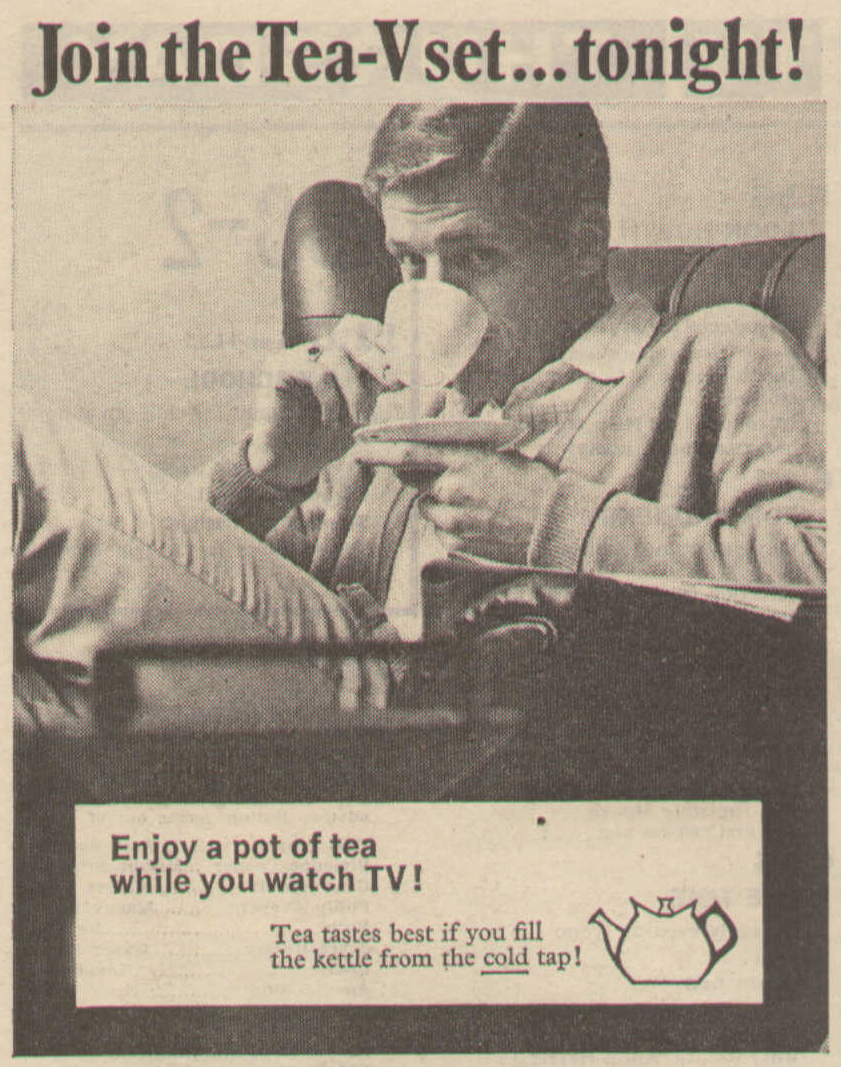
It's not normally the done thing around here to just post a load of photos with very little context or explanation, as, frankly, we're more about Buzzfax than Buzzfeed. But just recently I've come across this frankly bizarre running ad campaign in some old issues Radio Times, and I thought that it deserved a bit of a wider audience.
It's one of those ads for a generic product rather than an individual brand of the sort that you don't really see any more, in this case an attempt by the Tea Marketing Board to extend their 'Join The Tea Set' campaign - once so widely known as a slogan that it was namechecked in a single by mod/psych band The Eyes - to anyone who'd plonked themselves down in front of the telly for a good old watch of Quick Before They Catch Us. What's more, on at least one occasion, it explicitly references the BBC as the best accompaniment to a quick bit of tannin-slurping.
Quite what link they're trying to make between TV and Tea here is spectacularly unclear. There are some vague hints about how it might help to pass the time while TV 'Clown' and 'Girl' are pissing about for eight million years while you wait for your programme to start, or that drinking it might provide a sufficiently tranquilising dosage to prevent you from becoming too scandalised by the latest taboo-challenging instalment of The Wednesday Play, but in all honesty you could equally have placed an advert about how whiskey in general will enhance your ability to figure out what in the name of superfluous full stops was going on in the average episode of R.3. Or, as some wag is no doubt chortling to themselves by now, a sub-Rutles advert for drugs to take so you are all drugs when The Magic Roundabout is drugs on drugs, lol. And anyway, Blur might not have had quite so much success with a song called Tea And TV.
There have of course been many TV shows that tried punning on 'tea' as a titular gambit, from Dee Time and Rich Tea And Sympathy to Teetime And Claudia and Children's ITV's enduring sci-fantasy sitcom T-Bag And The Many Changes Of Title. Then there was of course TTV, which started as an insert in the disastrous early eighties Here Come The Zanies-era Play School reboot with a load of sub-Guy Smiley puppets parodying the recently-launched Breakfast Time, and subsequently inexplicably mutated into a programme in its own right featuring rancid puppet cat Scragtag introducing filmed inserts from on top of a bin. Yeah, so thanks for reminding me of that, Don Draper.
Anyway, here are all of the members of the purported 'Tea-V' set that I've been able to find so far, so why not stick the kettle on, put your feet up, and watch the tel... have yourself a read of some of the fine articles on this here site? You will, you will, you will, you will...
UPDATE! More examples of the ad campaign have now come to light, both of them with a bizarrely unrealistic 'tannins and Telegoons will get you in her pants' vibe...
And finally, as a bit of a bonus, here's a letter to Radio Times about the tea-drinking habits of your Top TV Pals:
You can find a lot more about a lot more obscure and forgotten TV shows in Not On Your Telly, which is available in paperback here or from the Kindle Store here.
Take A Giant Step
Over the years, without anyone ever asking or probably even wanting me to, I've no doubt given several wildly conflicting accounts of where and how my interest in sixties music started. If you listen to this interview here, you'll hear me talking about how it all really started when I got hold of a ropey C90 of legendary garage punk compilation Nuggets, and heard the terrifying juddering buzzsaw guitar opening of I Had Too Much To Dream Last Night for the first time. At various other times, I've gone on record and in print with similar recollections - 'anecdotes' would be erroneously suggesting that they were stories that actually went somewhere - about similar inaugural encounters with Shapes Of Things, The Tears Of A Clown, Alone Again Or, See Emily Play and doubtless several dozen others that I can't remember right now. Then there's that feature I wrote about Sounds Of The Sixties. I've probably even tried to pin the blame on the poor old Walham Green East Wapping Carpet Cleaning Rodent And Boggit Extermination Association before now.
The problem with all of these versions of events, though, is that they're all pretty much dependent on a pre-existing fascination with the hilariously amorphous concept of 'sixties' pop music. They're all ever so slightly similar accounts of where the story really started, rather than where it actually started. And if we're going to get anywhere near that - and indeed if anyone reading actually wants me to get anywhere near that - we're going to have to go back, give or take the odd Beatles film and/or cartoon, to when the BBC decided for no readily obvious or apparent reason to start repeating a TV series from almost two decades previously as part of their afternoon children's schedules.
Yes, I have tried and tried and tried to determine how and why The Monkees shored up in that post-school timeslot, but the reasons - if indeed there were any - have proved predictably elusive, so for now we'll just have to conclude that the BBC simply felt like showing them again. But shore up it did, and immediately caused a shockwave of baffled excitement as playground speculation ran rampant over whether those four identically shirted moptops that had achieved near-Rentaghost levels of laugh-inducement were 'new' or 'from them days'. As is only right and proper, Micky, Mike, Davy and Peter's antics and music quickly caught on in a way that probably nobody would really have expected of a fairly ancient imported TV show flung out as a bit of cheap filler. Birthday parties were momentarily suspended so that the assembled cake-crazed revellers could watch the episode with Stan Freberg as the toy factory owner, with howls of laughter greeting the scene where The Monkees accidentally invented a boomerang-esque toy that couldn't be thrown away - especially when Peter closed a window on it - that were quite possibly louder and more raucous than any actual party events. Reader's Digest's fortuitously-timed compilation Here Come The Monkees, which in line with their collectably esoteric wont placed hits alongside a handful of fairly obscure album tracks, proved a handy Christmas Present option for otherwise stumped relatives and gave their new-found fans the opportunity to enjoy the music without being distracted by speeded-up footage of chases on weirdly elongated bike-kart things. Those same after-the-event converts would quickly draw in their even younger siblings, giving rise to shared reminscences about how 'clever' they thought the lyric "Mr Green, he's so serene, he's got a TV in every room" was, or how weird that fast song with all the different coloured trumpets where Micky sang about them finding him in the morning wet and drowned was, or just how entertainingly re-enactable and generally sidesplittingly hilarious the 'Chaperone' episode was, in the same sort of circumstances where others would rightly elect to look jointly back on landmark family holidays. In truth, given their subsequent ubiquity in the Summer morning schedules, for some The Monkees actually were their holidays.
Many, if not most, would move on to other more modern thrills soon enough, but for some - like, you guessed it, me - this was an obsession that stuck. And, more importantly, led directly into other obsessions. Fascination at the fact that, as became apparent shortly afterwards during a brief spell of Monkee-free scheduling, someone had decided to copy it only more weirdly and with more cartoons about families who had a shrinking car and renamed it The Banana Splits Adventure Hour was one of the mundane yet intriguing things that got me wondering about the history of this television whatnot, and how it all fitted together and responded to changing fashions and values and advertising demands and what have you. And also, The Banana Splits Adventure Hour was mindblowingly off-the-wall and had even better songs still... but that's a subject for another post. A constantly thwarted desire to see The Monkees' elusive and rarely-discussed big-screen outing Head, which finally showed up on Channel 4 in the late eighties (and let's not even get started on the long, long hunt for 33 1/3 Revolutions Per Monkee), and the quest for tiny scraps of information in whopping great oversized books in the Film And TV section of the local library, was instrumental in instituting a fascination with other neglected and forgotten corners of cinema history. Later, I would have enormous fun disproving the longstanding myth that Head was never shown in the UK at the time of release, but again, that's another story. More significantly, the search after seeing Head for a copy of The Porpoise Song - you would not believe the prices that the not-yet-reissued soundtrack album commanded in those days - led me to an obscure import-only American psychedelic compilation that also featured the likes of Love, The Turtles, The Seeds, Strawberry Alarm Clock, Vanilla Fudge and Kenny Rogers And The First Edition. Whilst in that record shop, I also picked up a VHS bootleg of episodes of the TV series, which included the one where their old mucker Tim Buckley strummed and yodelled a really rather startling song at the end whilst sat on a smashed-up old car. It is safe to say that I was being ever so slightly lured in a certain musical direction.
It's also safe to say that we're also being inadvertently ever so slightly lured in that certain musical direction again now, which isn't so much addressing the conundrum outlined in the opening paragraph as replicating it entirely. So before we get irretrievably diverted and caught up in endless recollections about hunting down copies of Super K's Bubblegum Explosion, let's get back to what this outbreak of rambling originally set out intending to do, and take another look at that episode of The Monkees that so captured all those imaginations all that time ago. As it made such an indelible impression, we won't be needing BBC Genome to tell us that the episode in question was Monkees A La Mode - which, incidentally and astonishingly, still isn't available on DVD over here - so let's just put down the Tommy James And The Shondells 'Original Album Series' box set and get on with it, shall we?
Despite what you might not unreasonably assume, Monkees A La Mode was not actually the first episode of The Monkees but the twenty fourth (though we might also have reason to similarly revisit the actual first episode, A Royal Flush, very soon indeed... but more about that later); predictably there is no discernible rhyme, reason or logic to them, but all the same we're playing by the BBC's idiosyncratic rules here, and that's something that will come very much to the fore in a couple of paragraphs' time. Equally surprisingly, Monkees A La Mode doesn't open with a trademark display of four-handed Beatle-resenting social satire quickfire japsesmithery, but with one of those 'cold opens' that are all the rage now (or at least since Lost did one and everyone copied them), featuring an icy behatted career woman, a mod-attired groovy chick, and a camp psychedelic dandy getting up to all manner of Ugly Betty-prefuguring fashion industry-lampoonery in a Pop Art-styled publishing office as they rifle through pics of up-and-coming celebrities to feature in a forthcoming spread, alighting on some black and white glossies of The Monkees and summarily announcing plans to make over the long haired weirdos 'in our own image'. Then the action flips over - literally - to the long-awaited Monkee hangout, where the invitation to appear in Chic magazine is greeted with no little disdain, with Davy volunteering the style tip "why not take little metal bottle tops and nail them to your living room floor? It gives you the impression that you're walking... on... little metal bottle tops". Peter, however, is impressed that it features a 'serial' every month - "this month it's cornflakes", he adds whilst decanting some from the magazine into his bowl.
Then it's straight into the opening titles, but not the opening titles as anyone who watched those repeat broadcasts would know them. In the years since The Monkees had first been shown, the BBC had made all manner of 'improvements' to their purchased prints of the show, from removing flashframe cutaways and onscreen caption gags - you can bet the quick burst of that end credits montage of them trying on trendsetting hats that appeared during this episode's opening sequence had gone, for starters - to removing entire songs for no readily obvious reason. The Monkees was, of course, far from the only show to be subjected to this often blunt-scissored reappropriation, and not too far from it in the repeat schedules you would often find The Banana Splits (as it was renamed in ad-free BBC-land due to no longer lasting an hour), which had somehow mislaid the live action Danger Island serial along the way, and the famously doctored prints of Boss Cat (we'll call it by its proper name around here, thanks) which had been hamfistedly whittled to remove any trace of inadvertent free advertising for a certain pet food manufacturer, with the truncated opening titles cutting mid-Dibble-disobedience to an infamously shoddy title caption card, and a whopping great mid-lyric jump cut as he prepared for bedtime in a bin in the closing credits. Quite when and why this happened in the case of The Monkees is anyone's guess, but at some point the BBC's prints all had the series two opening titles edited onto them, which is why most viewers would probably be expecting the Wild West/Foreign Legion/Live Performance/Running Away From The Tide antics and the Peter? Peter! gag, but instead get an entirely different load of clips with the Monkeemobile surprisingly very much to the fore. And, erm, Mike sitting on a skateboard. What's more, it's followed by a Kellogg's sponsor bumper with its own Monkee jingle and box-hoisting comedy antics, which would doubtless have been binned before this episode got anywhere near the BBC. Then at last there's the familiar Four Faces On Orange Background caption card and brief harpischord reprise of the theme, but it's already obvious that this is, in some respects, going to be a slightly different experience to that of those edit-unaware youngsters watching way back when. But are we going to put this feature on hold for several months while we track down a possibly non-extant copy of that bizarre BBC-mangled version? Are we Mijacogeo.
Instead, it's straight back to the Monkees' joint, where a quick burst of polo-necked cod-Shakespearianism gets derailed by the arrival of the put-upon fashionistas - Tobi Willis and Robroy Fingerhead to give them their full names - wondering aloud how they are going to whip these long-haired scruffians into photoshoot-friendly shape. Their suggestion is that they should show the world "what you are and the way you live", to which Davy responds with alarm "you want to get us arrested?", and earns a Snorky-esque timpani-accompanied elbow in the ribs from Mike for his troubles; in an amusing bit of postmodernism, it appears that Davy has actually made this noise himself, and he sternly reminds Mike "don't do that". Some journalistic rifling through the band's bric-a-brac - including that never-explained Gerald Campion-alike ventriloquist's dummy - ensues, all of it hampered by a manically flailing Peter and sarcastically sceptical Mike, though it's actually the surprisingly touchy Davy who takes passionate exception to the shorthand-happy twosome's snobby dismissals. Micky just stands on the sidelines smirking, as though he's waiting for the right moment to deliver a scene-flattening one-liner, and sure enough it's him who delivers the spurious historical-one-line-cutaway-accompanied claims that the the various items of junk dotted about the place were in fact handed down a Monkee line of succession by the likes of George Washington and Paul Revere. Robroy remains cattily unimpressed, but Tobi is more sympathetic and asks them to come to the office at 9am the following morning. "What have we got to lose, fellers?" asks an unconvinced Davy. "Our shirts" is the group reply. You can guess the cutaway.
The following morning the Wilhelmina-Slater-Meets-Helen-A-esque Madame Quagmeyer is ruminating on "the worst looking dummy I've ever seen" when, bang on cue, Peter ambles into the studio. After being introduced to some haughty society gal-type researchers, occasioning Mike to 'introduce' himself to the other Monkees, Micky to try and seduce one by posing as a Chinese-born French-talker, Davy to remark that what he looks for in a girl "depends on what I've lost", and Peter to strike up a conversation with a lamp, they are ushered before the camera, where Robroy attempts to get himself on the Olympic bitching team with exasperation at their posture and lack of colour-coordination (not to mention Micky's incessant drumming), before it all degenerates into a performance of Davy-sung second album filler Laugh, accompanied by all manner of high-speed photo session diorama slapstick ranging from Micky wrestling with a stuffed tiger to Peter larking about with giant scissors and pencils and Davy being pursued by an alarmingly realistic-looking toy chimp. In a gleeful note of subversion, even some audience-pleasing shots of them actually smouldering for the camera get the rug pulled from underneath by the unexpected addition of comedy 'arrow-thru-head' props and what have you, simultaneously both acknowledging and refusing to take seriously the main reasons for the band's popularity.
Madame Quagmeyer is so pleased with the results of the photo session that she screws up the pasted-up pages without reading them and flings them binwards in front of Tobi's astonished face, and duly commissions Robroy to make a second attempt at it; in true media creep fashion (and indeed fashion), he's already got one ready in his jacket pocket. Meanwhile, back at the pad, the boys are busying themselves in, erm, feeding a toy giraffe when a procession of angry girls turn up at the door to slap them and a note around a brick comes through the window (which Davy presumes is "an advert for a glass factory"), before Tobi finally turns up with the long-awaited copy of Chic - "we haven't read it, but we've a feeling some of our friends have", muses Mike. Indeed, Robroy's hatchet job repositioning them as cultured aesthetes and overall snobs is so denigratingly effective that it has caused Tobi to quit her job in a fit of ethical pique. Flushed with success, Madame Quagmeyer sends them a telegram demanding that they represent her at The Young American People Trophy Award Thing later that evening, but while Davy and Micky propose replying with 'Monkee Telegram 26a' ("you can take your trophy and..."), they inevitably elect instead to turn up to the awards with a plan to create mayhem.
What follows is a description-defying frenetic madcap explosion of mime, sabotage, vandalism, snoring, babbling, pratfalls, bizarre accents, loose-limbed tomfoolery and close harmony barbershop caterwauling, striking terror into the very cultural sensibilities of the assembled 'suits', and culminating in them dedicating the award to Robroy, whose attempts to sneak out with his reputation intact are thwarted by more choreographed Monkee antics. Instead it's the boys who flee the building, performing conjuring tricks and building towers of teacups as they go. The next morning, they turn up at the Chic offices demanding a retraction, only to find that Tobi is now editor, with Robroy and Madam Quagmire as her meek and terrified assistants, and that despite this apparent game of musical office chairs basically nothing has actually changed. Rather a strong note of social satire for a sitcom widely derided as inconsequential trend-surfing zaniness-heavy appearing-and-disappearing-on-top-of-hills-fixated Beatle-plagiarising fluff to end on, you might think.
Except it's not quite the end of the episode itself, as there's still a mimed performance of then-as-yet-unreleased corker You Just May Be The One - written by Mike, and with most of them contributing to the instrumental backing, so stick that in your Not Even Mike Nesmith's Real Hat and smoke it - followed by the familiar end credits only with Variety-sized Kelloggs boxes troubling their faces. And, well, that's Monkees A La Mode, the very same episode that brought their getting the funniest looks from everyone they meet to a whole new audience way back when, and in its own small way did a large amount to introduce the idea that the pop music of the past could be resold to those outside of the more nostalgic members of their original target audience. Whether that was a good or a bad thing is something that you will need to take up with your nearest Fourteen Thousand Hits Of The Sixties - The Era That Defined An Era (Some Tracks Have Been Recreated Using As Many Of The Original Artists As Possible) box set.
So, how does Monkees A La Mode measure up to the reaction that it unexpectedly caused back then? Well, that's something that's very difficult to gauge, mainly on account of the fact that the entire attitude towards, and availablity of, archive media of all forms has so fundamentally shifted since then (and in a way that is most definitely a good thing). Despite the juvenile confusion over whether it was 'new' or not - in itself an indication of just how little archive material you'd find on television in those days - it was a garish film stock-facilitated window into the sound and style of another age at a time when ninety nine percent of anything that wasn't one hundred percent current was locked away in a big box labelled 'the past', and even something like Ragtime could seem like a hazy memory only a year or two after they stopped showing it. Or, if you prefer something a bit culturally, chronologically and geographically closer to The Monkees itself, the original Scooby Doo, Where Are You? did after it disappeared for a couple of years to be replaced by wall to wall Scooby Doo And Scrappy Doo. Even though, as noted earlier, this episode is bafflingly not commercially available, it only took me a couple of seconds to find and start watching it (yeah, and what are you going to do about that, Ian Screen Gems?; bring it out to buy and I'll buy it), and that couldn't be further removed from the days when you were lucky if you saw twenty seconds of Peter And Gordon during a local news report on someone 'bringing back' the 'swinging sixties'. And that's not even taking into account the fact that this is a substantially different cut of the episode to the one that went out at the point we're harking back to. These things do make a difference you know. As you'd know if you'd heard the album edit of The Porpoise Song.
What it is easy to conclude, however, is that it's a good deal more sophisticated than zinger-and-camera-trickery-festooned memory and columnist prats who scoff that they weren't any good until Head might suggest, and certainly streets ahead of the likes of The Ghost And Mrs Muir that some would appear to want to retrospectively relegate it alongside. The satire of the fashion industry is much more barbed and disdainful than might perhaps be expected - something that was also very much true of the subjects tackled in other episodes - and in that sense, with all the music and film tinkering taken into account too, it's a lot closer to The Goodies than to The Mothers In Law. On a side note, it's also surprising to see just how involved as a character Davy was; often misrembered as a perma-chipper ludicrously-accented number-maker-up whose primary purpose was to fall inconveniently in love - an misconception that he admittedly did little to help with his self-parody bits in Head - here he's actually shown to be the most cynical and at times even most surreal of the four (which is no mean feat), though perhaps that kind of sardonic wit is easily lost on younger viewers. Even so, it's precisely that kind of hidden depth that caused it to become precisely the kind of renewed success it was; practically every other fondly-remembered comedy from the children's schedules around the same time, from Seaview and Maggie to Educating Marmalade and Behind The Bike Sheds to Smith And Goody and Luna, credited its audience with an intelligence and sophistication that was rarely to be found in any of the rest of the output aimed at them, which is perhaps why we're talking about them now and not sodding Brendon Chase.
So that's why The Monkees are still watched, listened to, enjoyed and indeed talked about now in a way that certain of their self-aggrandising contemporaries only ever have been in their own heads. Also, I would like an award for resisting the temptation to call this article 'Monkee Business'. I thank you.
I'm Proud Of The BBC
Yes, it's Election Time again! And you can bet your last packet of Mint Rolos that over the coming months, politicians of every hue, stripe, and angle of fatuous side parting will be taking every available opportunity to voice their concern about the 'biased' BBC and its biased bias in favour of everyone who isn't them personally, whilst Nigel Farage will doubtless go one better and complain live, on primetime BBC1, and in the middle of Nigel Farage's All-New Nigel Farage Hour With Special Guest Nigel Farage, that the biased BBC are refusing to give him adequate airtime because 'bias'.
Even aside from the fact that in reality the BBC is only scientifically provably biased in favour of John Barrowman, this has all got a little bit tedious now, and it's time to tell them - to borrow a phrase from one of the greatest ever achievements in the entire history of art and culture and which would simply have never existed without the BBC - to go stick their head in a pig.
But we won't be doing this with anything so obvious as a straightforward repeat of my alarming rant about how you should defend the BBC "with your bare hands if you have to" (though if any of you would like to print said rant out on a Dymo labeller, and stick the resultant labels to a photo of Danny Alexander's face, or better still to his real face, please be my guest). Or even by giving a fresh outing to the previous General Election's list of Things You May Wish To Enjoy More Than Politics (which included such Cameron-trouncing totems as The Branded ‘Counterfeit-Proof’ Leader Tape On Genuine Non-Pirated Copies Of ZX Spectrum Game Saboteur, That Issue Of Doctor Who Magazine With A Cover Featuring A Dejected-Looking Sylvester McCoy Below The Headline ‘Waiting In The Wings – What Does The Doctor Do Next?', Michael Parkinson’s ‘Smokin’ Joe’ T-Shirt From The Cover Of Sporting Mad!, The Line “But We’re Very Rich Leeks” From Roland Rat Serial Operation F.O.G.I., The Scrawly ‘Reveal’ Font The Answers Were Displayed In On Telly Addicts, and The Panel That Didn’t ‘Work’ In Eagle’s 3D Strip Scorpio). No, instead we'll be rejecting the snidings of any and every here today and - if I may say so - gone tomorrow politician by telling them that we actually quite like our BBC, thanks, that a lot of their programmes are quite good and that, and that it's an entity that exists for the purposes of entertaining of the general public, not to service the dreary careerist self-in-face-hitting of a bunch of pillocks that none of us ever asked for our viewing to be intruded on by in the first place, 'bias' or no 'bias'. And what better way to do that than by having a good old read of some much-loved articles in which I've celebrated, or in some cases just been confused by, some of the programming and even non-programming that could never ever have come about under the advertising and sponsorship-driven free market model that Rupert Murdoch keeps telling us is best on Twitter because it is freedom of choice to choose should all be free not like license fee bbc results would speak for themself public choice would? No, there isn't a better way of doing it. Shut up. Now. Thanks.
Anyway, you could choose from...
The story of how I came to write a book about comedy on BBC Radio 1, and how nobody ended up buying it...
A detailed scientific assessment of how the BBC's summer holiday morning schedules broke the laws of space and time...
The strange tale of the time when lots of people got annoyed because I said I thought that Stewart Lee was quite good...
Some harrumphing about how even when Doctor Who isn't that good, it's still preferable to the likes of Jimmy McGovern trying to 'better' us all...
On why Camberwick Green remains one of the small screen's finest ever achievements...
The joys of scouring old issues of the Radio Times...
A plan to improve the global condition by making Mary, Mungo & Midge compulsory Sunday Morning viewing...
A celebration of spooky BBC children's serials, from The Box Of Delights to The Children Of Green Knowe and beyond...
My longstanding love of Chris Morris' late-night Radio 1 show Blue Jam...
The god-bothering escapades of Sunday Morning sermon-profferers The Sunday Gang...
A history of Children's BBC presentation, from 'Computer Graphics' to the Broom Cupboard and beyond (no beyond)...
...and my book Not On Your Telly, featuring pieces about the little-celebrated BBC-sponsored likes of Play School, Fist Of Fun, Kelly Monteith, Rubovia, The 8:15 From Manchester, Bizzy Lizzy, R.3 and many more besides!
And in the interests of balance, and so Grant Shapps doesn't cry, here's a piece about ITV being a bunch of miserable cowards who won't allow the DVD release of a twenty five year old 'controversial' sitcom.
This post is dedicated to Philip Davies MP (1972 - 'Jimmy' 'Greaves')
ITV 59 - All Your ITV Favourites (And Unicorn Tales) Part One: Startups
Last year, you may remember, we ran a series looking back at the visual ephemera that used to appear between BBC programmes. This was hugely successful, but also led to accusations of bias; apparently these days you can't take a disgruntled sarcastic tongue-in-cheek pro-License Fee anti-Murdoch stance without someone thinking you've got a hidden agenda.
Anyway, to redress the supposedly unbalanced balance, and indeed to get around David Cameron's 'family friendly' filters (not to mention preventing Boris Johnson from falling off his bike in anger, Iain Duncan Smith from throwing himself into a meat grinder in anger, and some bloke in the comments box from getting an ear infection), it's time to get all upbeat and positive and bring you a new series celebrating fifty nine years of ITV - the commercially-funded market-driven BBC-rivalling enterprise that would ultimately give us TV 'Spatz'.
And what better way to kick off proceedings than by taking a stroll down memory lane with those fondly-remembered day-heralding Startup sequences...?
Normally, the first thing you would see in any ITV region would be this handy list of transmitter frequencies for your local area, just in case your reception was on the blink and you had some bolt cutters, earth-moving equipment and triangulation monitors to hand with which to correct the wobbly picture before Secret Valley came on. It's also worth noting here that some viewers claim to have found transmitter information every bit as terrifying as TV 'Clown' (Test Card), for reasons that can never be satisfactorily explained.
Most regions would then just opt for running their ident in full - most infamously the 12" Extended Remix of the Anglia Knight - but a couple of them put a bit more thought, effort and indeed money (well, about three pence) into it, occasionally giving rise to such warm-hearted welcomes as this cheery top-of-the-morning salutation from Lew Grade himself.
Even in the early eighties, ATV's regional usurpers Central were still sticking to this tried and tested format; anyone who tuned in before their daily diet of unlisted Hardwicke House showings commenced would have seen this eye-assaulting tribute to the thing at the start of Volume Three of Heroes where the world split in two because of something Peter Petrelli did wrong with 'time' but then they forgot about it and did all that nonsense about his dad trying to synthesise Gino Ginelli and Mohinder falling over or whatever it was instead. Whither the Hurley Bird?
Some of them even went to the bother of putting together a nice bit of film of local 'colour'. Take, for example, this effort from little-heard-from appropriately-named Channel Islands-servicer Channel, which presented a slow zoom in on their studio headquarters to show viewers where the action was. The 'action' in this case being, erm, um... some episodes of Highway every now and then?
Meanwhile, Yorkshire went one better and gave us a Chevron-tastic look inside the building, starting with the Yorkshire Van pulling up at Yorkshire TV (which George Osborne would probably still see as an example of 'BBC bias'), then showing some technicians hard at work wiping episodes of Animal Kwackers, and finally the handy Cold War-esque alarm light used to warn viewers that another instalment of Flambards was imminent.
Hang on a minute... Parky? What's he doing here?! Don't start adjusting your set just yet - unfortunately, despite extensive research, it's proved impossible to locate an image of the Granada startup board that Julian Cope claims to have imperceptibly written 'fuck' on in the dust, so Mr. Parkinson has generously agreed to appear as an illustration in its place. Anyway, that's the last we'll be seeing of him.
Then, with all of the fanfaring introductory hoo-ha out of the way, it's straight on to a rundown of the morning's programming. Here we can see a typical example of God Slot-era Sunday Morning programming, including the notorious washed-out-film maker of learning fun Max The 2000 Year Old Mouse, but which breaks with convention by actually putting something halfway watchable on before 10pm. Surely they should have gone for The Secret Service, though?
And, finally, it's time for ITV proper to kick in, usually with a warm welcome from one of your regional in-vision continuity announcers. Here's Granada's celebrated 'Beardy Man' Jim Pope, fresh from creating an unlabelled 'mock' of a fifteen minute 'junction' into Santa Barbara. Anyway, join us again next time, when we'll be taking a look at just what that mysterious 'G' thing in the upper right hand corner actually was...
Subscribe to:
Posts (Atom)