Showing posts with label itc. Show all posts

TV's Newest Series


One thing that those big walloping housebrick-sized books about the 'end' of 'the sixties' never get round to mentioning is the decline of ITC. Once ITV's in-house powerhouse of dynamic fashion-driven action serials, when everything started sliding towards loudly-patterened curtains and mirror-disc top hats and all the hippies jumped in a bin to hide from the BBC Schools Diamond or something, ITC lost their small-screen hitmaking direction in a way that their Jaguar-swerving lead characters sure would never have done.

Perhaps reflecting the more street-level politicised nature of the times, as the seventies rolled on audiences were increasingly looking for something grittier and grimier featuring detectives who wrestled with real 'issues' rather than billionaire supervillains and dangerous new inventions, which ITC seemingly took as their cue to move in completely the opposite direction. They may have seen in the decade strongly with UFO, Jason King and The Persuaders! - all of which at least technically began production in 1969 - but within a couple of years they'd moved on to such unmemorable fare as Millicent Martin-starring swinging air hostess solving crimes in her spare time effort From A Bird's Eye View, a vision of jet-setting glamour that was already jarringly several years out of step with the times, and bizarre co-production funding-driven Gerry Anderson-helmed detective series The Protectors, which even the cast and crew later admitted that they never quite understood. They also cut the average running time of their shows from an hour to thirty minutes, presumably in pursuit of some unfathomable Stateside 'syndication' deal, which hardly even gave them the chance to develop properly as action-driven television shows, let alone catch on with audiences. All in all, ITC's single biggest success of the time was The Adventures Of Rupert Bear, a long way and yet only a few years from their triumphantly lording it over the Saturday Night schedules with Captain Scarlet And The Mysterons and The Prisoner.

Times change, though, and nowadays even the biggest and boringest of TV flops of yesteryear has a reasonably profitable degree of cult appeal. Good, bad and The Adventurer alike, you'll now find every last ITC series on DVD, on Bluray, and on repeat channels on an unending loop. With one very glaring exception. First seen in 1974 (though some sources insist that the two-part pilot The Mountain Witch was shown as a one-parter in an hour-long slot in 1973), Skiboy starred seventeen year old Steve Hudis - son of Carry On films creator Norman - as Bobbie Noel, a skiing instructor who solved crimes, mounted daring rescue missions and defused wartime bombs in the Swiss Alps in his spare time. And that was literally the only skill and advantage he had at his disposal - skiing. In crimefighting terms, that makes him about as useful as Nathan Petrelli.

One area where young Bobby's quaterpiping skills should have proved an advantage, though, was in attracting viewers. At the time, fuelled by spectacular Olympic displays, glossy glamorous books like Stein Eriksen's Come Ski With Me, and World Of Sport's need to fill fifteen billion hours every Saturday with stuff that they could actually get the rights to, skiing was seen as pretty much the high altitude of thrill-packed glamour and sophistication. Ski chases and Alpine romances were a regular feature in James Bond films, while the Milk Tray man wouldn't even have considered delivering a single Strawberry Temptation without getting in a spot of downhill carving along the way. 'Action' comics like Tiger and Hotspur were crammed with storylines about their stunt plane pilot/record-breaking sportsman characters making emergency landings in hazardous off-piste areas, and their readers also thrilled to the endless procession of ski-themed Fisher Price Adventure People playsets. Toblerone was still the classy 'expensive chocolate' gift of choice, and it was unusual to see a European-made soft porn film that didn't feature a spot of hot Ski Lodge lovin'. Erm, apparently.


There was more than enough behind the scenes ambition to pull this off too. Skiboy was masterminded by producer Derrick Sherwin, who had recently pulled off a successful full colour relaunch of the floundering Doctor Who - including casting Jon Pertwee - and cameraman Charles de Jaeger, who had worked on some of the early Quatermass serials and was also primarily responsible for the infamous Panorama Spaghetti Harvest hoax. Under the letterhead-friendly auspices of 'Skiboy Productions', they were basically handed a huge wodge of co-production cash and told to go off and make a series on location to capitalise on this most intangible of crazes; only a couple of years later, they'd doubtless have done it as a martial-arts themed show called 'Dragonboy', which just goes to show what a huge potential audience they had. And they were given all this on the basis of what Sherwin recalls as a two-paragraph pitch, and the belief that a combination of their experience and the sheer glamour and exoticness of the setting would make for a winning formula. It was like Heaven's Gate, Neither Fish Nor Flesh and The Contrabulous Fabtraption Of Professor Horatio Hufnagel all rolled into one. And about as successful as any of them too.

Is this really fair though? Does Skiboy really deserve its... well, it doesn't even really have a reputation, does it. Does Skiboy deserve its obscurity? There's only one way to find out - to do something that possibly nobody at all has done since the scattered repeats finally took an Eddie 'The Eagle' Edwards-style jump into oblivion in the late eighties, and actually watch an episode...

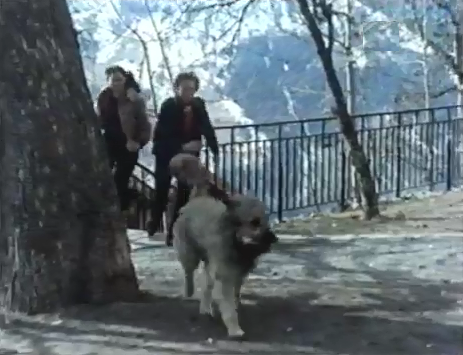
Written by Derrick Sherwin himself, Hot Ice opens with a pair of standard issue big-coated seventies 'heavies' more or less shouting "BLAH BLAH SECRET PLAN" as they approach the ski lodge - to the accompaniment of some fancy wah-wah guitar and electric piano - in search of someone to guide them up a nearby mountain. While they do so, Bobbie and his winsome fellow instructor stroke love interest Sadie pass by unwittingly in the background, chasing their bone-pursuing pet dog Gruff and uttering some conveniently foreshadowing dialogue about how "thieves always bury their loot". Resort head honcho Claire is reluctant to assign any of her staff to guide them up what turns out to be called Monk's Fall, pointing out that it's completely inaccessible in winter, but clearly has some suspicions about their motives for wanting to visit the 'beautiful' Chalet Blanc; and not without good reason, as once they're back outside, the flatter-nosed 'heavy' announces that he'll find someone to take them "even if I have to use some... persuasion", adding rather obvious-statingly that he'll "kill anyone who tries to stop us".


Anyone who knows their ITC will be aware that this is usually the moment when the opening titles kick in, and lo and behold we're promptly treated to some startling footage of Bobbie skidding down slopes and hurtling through the air, to the accompaniment of the truly unhinged theme song. Written by Anthony Isaac, who was not exactly noted for his subtlety and restraint in the art of small screen show-openers, this features a brass-led disco-funk combo whipping up a storm whilst a string section play as if running on an overload of adrenaline and some harmonising girls belt out "SKI-BOY! SKI-I-I-I-I-YEE-BOY" at appropriate intervals. If nothing else, the series is worth revisiting for this thrillingly alarming piece of music alone, which is uncannily close to the sound that Air would later turn into a global sensation; and as the series was actually rather popular in France, where it was broadcast as A Skis Redoubles! -  a more or less untranslatable title which basically means nobody skis more than him - it's not beyond the bounds of possibility that they might have been tuning in.


The 'heavies' take their coats off menacingly and approach Peter Stringfellow-esque ski instructor Jean, who rejects their substantial offers of money and sternly informs them of the story of how Monk's Fall got its name. It's exactly how you suspect it got it. Back outside, there's some more conspicuous exposition about how they have to get there before a fellow criminal is released from prison and "we can't wait... and we won't". With a menacing growl of slap bass, this is followed by some lengthy footage of them skiing and arguing, more or less confirming the suspicion that the pair are played by stuntmen rather than full-time actors. Bobbie and Sadie, watching from the top of a nearby slope, are also suspicious of them, but for very different reasons; they've noticed the ne'er-do-wells watching them, though not closely enough to get wind of the plot to kidnap Gruff to ensure their assistance. And sure enough, once they've gone for a nice sit down in the lodge, the hapless mutt is tempted away with a rather inflexible-looking chop and bundled into the boot of a car.


Bobbie and Sadie head out to look for the errant pooch, and split up after about eight seconds, upon which Bobbie is promptly approached by the suspicious characters, who persuade him to help them in exchange for Gruff's safety in the manner of Dino and Luigi Vercotti. Early the next morning, Sadie can't find her dashing chum, and that's because he's already headed out to help guide the crooks on their treacherous journey, which takes in some genuinely hazardous-looking ice-climbing, occasioning the nervier of the 'heavies' to throw a momentary panic and refuse to move any further; "then stay there", adds his more menacing chum, "you'll either fall off, or freeze to death".


Back at the lodge, Claire, Sadie and Jean are busily comparing notes about Bobbie's disappearance, Gruff's disappearance and their encounters with the two sinister interlopers, but bewilderingly manage to conclude that none of them are in any way linked. They're in for a surprise, though, as Gruff has somehow managed to tunnel his way out of the hut where the villains had stashed him, and bounds up to them like some snow-drenched Lassie trying to alert them to the situation. It's only at this point that Claire realises that she recognises the men and that they're actually dangerous criminals who'd been up to no good in the area a couple of years previously; surely you'd actually have to make an effort not to remember that?! A lengthy display of skiing across Monk's Fall follows before the trio arrive at the Chateau, with the bad guys electing to shoot the padlock off the door when they find it's frozen shut. "That was no hunting rifle!", exclaims Jean from some considerable distance away, informing Sadie to call the authorities as he races off in his car.


After Bobbie is unconvincingly thrown to the floor, the 'heavies' start chiselling open the wall and find a cache of stolen diamonds - "the only ice on this mountain that's hot!" - but while they're babbling some rubbish about the ghosts of the old monks hiding it, Bobbie makes his escape and deftly skies not only around their gunshots but with sufficient verve to cause the snivelling smuggler to tumble down the mountainside. Every action series from around this time was required by law to have a scene featuring a helicopter, and sure enough, that's how Jean, Sadie and a snow-copper in a furry hat arrive on the scene; the less easily dissuaded bad guy tries firing on them but they zoom in close enough to make him lose his balance, upon which Bobbie races up and literally skis the gun out of his hand. You don't get that in Sons Of Anarchy.


Back at the lodge, Gruff and Bobbie are both eagerly tucking into breakfast when Claire suggests that he's likely to receive a reward; like some slalom-friendly Alberto Frog, Bobbie announces that he wants the biggest ice cream sundae Sadie's ever seen, and - in as standard issue an ITC closing gag as it's possible to get - as a special treat he's going to let her watch him eat it. Then there's some really rather thrilling closing titles, in which Bobbie races down a slope, slicing up huge clouds of snow and zigzagging through what look like real-life skiiers, before pausing, grinning at the camera in close-up, and whizzing off across the horizon into the invisible distance... and that's Skiboy.


Never exactly the star of the TV slopes - some regions would hastily shunt it into their weekday children's schedules, while all that Look-In could find to say to promote it was that it was 'TV's Newest Series' - poor old Skiboy never quite made the jump to a second series. Before long it had become TV's Forgottenest Series, to the extent that only just over a decade later, the famously exhaustive fanzine Time Screen overlooked it entirely in a massive retrospective of ITC scriptwriter Dennis Spooner's career. ITC looked as though they were finding their feet again afterwards, with Space: 1999 and Return Of The Saint, but other ITV companies had stolen their thunder with the likes of The Professionals and The Sweeney. ITC's response to this was a significant and ambitious change of direction, turning their attention towards grittier and harder-hitting feature films; a plan which was derailed by their washing their hands of the already-completed The Long Good Friday, and then sunk completely by Raise The Titanic.

Given that it's quite possibly the first thing that anyone has said about it from that day to this, the first thing to say about Skiboy is that it's not actually a bad series. In fact it's actually rather charming and enjoyable, and certainly a lot more fun than Spyder's Web or The Zoo Gang to name a couple of contemporaneous ITC offerings. True, it's hardly The Singing Detective, and the all-too-obvious desire to make it as 'family friendly' as possible leaves it feeling a bit on the lightweight side, but it looks amazing and zips along at a fair old pace, and sometimes, that's all you want from a television programme. Viewers at the time might not have wanted it, but that's not really a good enough reason to leave it languishing on the archive shelves; after all, they didn't want The Strange World Of Gurney Slade either.

Skiboy isn't just a half-decent not-even-half-remembered action series from a lost age of television, though; it's also a fascinating snapshot of that lost age of television, and indeed in some ways of the world around it. It's a textbook example of how shows were commissioned and made in the days before focus groups and tone meetings, when anyone with a proven track record could pitch a basic idea, and more than likely be handed a wodge of cash and told to go off and bring home the televisual bacon; which admittedly Skiboy didn't exactly manage to do but they were at least allowed to try before failing. It's also a vivid depiction of the last gasp of that sixties and seventies fascination with jet-setting Eurocentric glamour, before harsh economic realities and The Sex Pistols saying 'BARSTARD' at Bill Grundy moved the sociolcultural goalposts and the entire world went on to washed-out 16mm ITN newsfilm. On top of all that, thanks to the combination of dazzling location footage and equally dazzling fluorescent Alpine fashions captured on garish oversaturated film stock, it doesn't even look like any other TV show of the same vintage; if anything, it looks closer to those films that you'd stumble across on SAT1 and Bravo at a million o'clock in the morning like Modesty Blaise, Vampyros Lesbos and that German one about the three girls who stole a speedboat and a cine camera and... um... sorry, you were saying? Anyway, the cold hard fact remains that no matter how many column inches of ecstatic raving-over the latest HBO/AMC/Showtime/They're Just Making These Up Now heavyweight drama might inspire, none of them will ever be as inadvertently redolent a document of their time as Skiboy.

So, there you have it. Skiboy may not be the greatest television series ever made, but nor does it deserve to be languishing at the back of a cupboard where it's been for so long that it's probably gone mad and thinks it's actually zigzagging between Melbourne House Software and Hardware lorries on the way to the nearest ski hire shop. Given that even Stainless Steel And The Star Spies has been dusted down for reassessment, it's high time that TV's Newest Series got an opportunity to be TV's Newest Old Series. Just don't ask me to reassess The Adventurer.


You can read more about Skiboy, and other examples of The TV That Time Forgot, in my book Not On Your Telly.

ITV 59 - All Your ITV Favourites (And Unicorn Tales) Part One: Startups

The Anglia Knight

Last year, you may remember, we ran a series looking back at the visual ephemera that used to appear between BBC programmes. This was hugely successful, but also led to accusations of bias; apparently these days you can't take a disgruntled sarcastic tongue-in-cheek pro-License Fee anti-Murdoch stance without someone thinking you've got a hidden agenda.

Anyway, to redress the supposedly unbalanced balance, and indeed to get around David Cameron's 'family friendly' filters (not to mention preventing Boris Johnson from falling off his bike in anger, Iain Duncan Smith from throwing himself into a meat grinder in anger, and some bloke in the comments box from getting an ear infection), it's time to get all upbeat and positive and bring you a new series celebrating fifty nine years of ITV - the commercially-funded market-driven BBC-rivalling enterprise that would ultimately give us TV 'Spatz'.

And what better way to kick off proceedings than by taking a stroll down memory lane with those fondly-remembered day-heralding Startup sequences...?

IBA Transmitter Information

Normally, the first thing you would see in any ITV region would be this handy list of transmitter frequencies for your local area, just in case your reception was on the blink and you had some bolt cutters, earth-moving equipment and triangulation monitors to hand with which to correct the wobbly picture before Secret Valley came on. It's also worth noting here that some viewers claim to have found transmitter information every bit as terrifying as TV 'Clown' (Test Card), for reasons that can never be satisfactorily explained.

ATV Startup - Good Morning

Most regions would then just opt for running their ident in full - most infamously the 12" Extended Remix of the Anglia Knight - but a couple of them put a bit more thought, effort and indeed money (well, about three pence) into it, occasionally giving rise to such warm-hearted welcomes as this cheery top-of-the-morning salutation from Lew Grade himself.

Central Startup - Exploding Globe

Even in the early eighties, ATV's regional usurpers Central were still sticking to this tried and tested format; anyone who tuned in before their daily diet of unlisted Hardwicke House showings commenced would have seen this eye-assaulting tribute to the thing at the start of Volume Three of Heroes where the world split in two because of something Peter Petrelli did wrong with 'time' but then they forgot about it and did all that nonsense about his dad trying to synthesise Gino Ginelli and Mohinder falling over or whatever it was instead. Whither the Hurley Bird?

Channel TV Transmitter
Channel TV Studios

Some of them even went to the bother of putting together a nice bit of film of local 'colour'. Take, for example, this effort from little-heard-from appropriately-named Channel Islands-servicer Channel, which presented a slow zoom in on their studio headquarters to show viewers where the action was. The 'action' in this case being, erm, um... some episodes of Highway every now and then?

Yorkshire TV Broadcast Van
Yorkshire TV Film Library
Yorkshire TV Broadcast Light

Meanwhile, Yorkshire went one better and gave us a Chevron-tastic look inside the building, starting with the Yorkshire Van pulling up at Yorkshire TV (which George Osborne would probably still see as an example of 'BBC bias'), then showing some technicians hard at work wiping episodes of Animal Kwackers, and finally the handy Cold War-esque alarm light used to warn viewers that another instalment of Flambards was imminent.

Parky

Hang on a minute... Parky? What's he doing here?! Don't start adjusting your set just yet - unfortunately, despite extensive research, it's proved impossible to locate an image of the Granada startup board that Julian Cope claims to have imperceptibly written 'fuck' on in the dust, so Mr. Parkinson has generously agreed to appear as an illustration in its place. Anyway, that's the last we'll be seeing of him.

HTV Sunday Morning Schedule

Then, with all of the fanfaring introductory hoo-ha out of the way, it's straight on to a rundown of the morning's programming. Here we can see a typical example of God Slot-era Sunday Morning programming, including the notorious washed-out-film maker of learning fun Max The 2000 Year Old Mouse, but which breaks with convention by actually putting something halfway watchable on before 10pm. Surely they should have gone for The Secret Service, though?

Granada Presenter Jim Pope

And, finally, it's time for ITV proper to kick in, usually with a warm welcome from one of your regional in-vision continuity announcers. Here's Granada's celebrated 'Beardy Man' Jim Pope, fresh from creating an unlabelled 'mock' of a fifteen minute 'junction' into Santa Barbara. Anyway, join us again next time, when we'll be taking a look at just what that mysterious 'G' thing in the upper right hand corner actually was...

This Was... Cult Fiction Part 6: 'This Is... Cult Fiction Royale'


One of the big frustrations for soundtrack collectors of yore - and TV soundtrack collectors in particular - was that the commercially released versions of your top favourite theme tunes never quite matched up with what was heard on screen. The odd ill-advised funked-up abberation aside, they were by and large very close approximations, but were always sufficiently 'different' to cause the sort of frustration that could never be sensibly explained to anyone else; the guitar that came in just that bit further away from the beat, the shrill exotic wind instrument replaced with a more Pye Records-friendly session flautist, the abrupt ending jettisoned in favour of a repetitive and overlong fadeout, and so on and so on and so on and living in harmony they're the friendly enemies living in harmony they're the friendly enemies living in harmonOH JUST STOP. In some extreme cases, like that of Randall And Hopkirk (Deceased), the hapless punters wouldn't even have got any kind of variation on the original recording at all, with the few - and even in some cases lone - commercially available versions being shunted out by the yard by one of the many and unvaried faceless big bands and orchestras that specialised in such cheap and not always especially cheerful cash-ins.

One such cheap and not especially cheerful cash-in was the long-forgotten ramble through the theme from Randall And Hopkirk (Deceased) released as a latterly-dizzying-sum-fetching single by Norrie Paramor & His Orchestra. This alone was enough of a holy grail for collectors (don't bother, though, it's rubbish); the spectral harpsichord tingling of Edwin Astley's original on-screen version was so far beyond the realms of availablity that people didn't even bother wishing that it would come out, and instead just contented themselves with muffled and hissy recordings they'd made from VHS tapes. Like so many other similarly great yet elusive pieces of soundtrack music, it was destined to gather dust on a shelf in some archive where nobody actually knew where it was, tantalisingly just on the edge of continuity-announcer-hijacked consciousness but seemingly destined never to find its way onto CD.

Late in 1996, however, some enterprising soundtrack collector decided they'd had quite enough of this nonsense, and wrote to 'QAnswers', Q Magazine's authoritative rock itch-scratcher extraordinaire, asking the intrepid ask-arounders if there was any way in which the original recording could ever be made commercially available. Surprisingly, the answer came back that the compilers of the Cult Fiction series were looking into whether the original Edwin Astley recording of Randall And Hopkirk (Deceased), spectral harpsichord tingling and all, could be incorporated into a collection of TV detective themes pencilled in for the New Year. Needless to say, the mere suggestion that they were looking into the possibility of licensing otherwise unavailable original original original soundtrack recordings led to all manner of excitement and speculation. By the twin laws of averages and diminishing returns any compilation series onto its sixth volume should have long since started to run the already flimsy concept into the ground - and Trackspotting of course couldn't even manage a single volume without doing so - but this news suggested that they were all set to outdo all of their previous and indeed not inconsiderable achievements. Whatever the next Cult Fiction album ended up being called, it looked likely to be the album that a great many of the series' fans had always wished existed.

When This Is... Cult Fiction Royale duly appeared late in 1997, it wasn't exactly a 'detective themes' album as such, but neither was it the throwback to now-badly-outmoded Tarantino-worship that the continentally-skewed burger-scoffing title suggested. So... what exactly was it, then? Well, the cover artwork, showing an old-skool petrol-guzzler, a foxy chick in a Paloma Faith-esque wallpaper-pattern jumpsuit, and what experts believe to be Matthew McConaughey's character from Dazed And Confused as rendered by a court artist who'd just been fired for being slightly too accurate, was giving nothing away, and the tracklisting appeared, on first glance at least, to be bewilderingly all over the place. The 'theme', if there could be said to be anything resembling a tangible 'theme' at all, appeared simply to be 'being the best Cult Fiction compilation of the lot', and it's fair to say that this ambitious benchmark was one that they ended up vaulting with ease. Whether by accident or design - well, come on, it's going to be 'design' isn't it - they had managed to gather together just about everything that a Cult Fiction devotee might concievably still want in the one place. Well, technically two places, given it was a double CD set, but you get the general idea.

In fact, This Is... Cult Fiction Royale was such a mighty collection of tracks that it was easy to miss the fact that a good thirty percent of them had already appeared on previous Cult Fiction compilations. And indeed sufficiently mighty that even when you did notice this, it hardly seemed to matter, though admittedly the fact that many were also appearing in full this time around did help a bit. Joe 90 (with 'wow' reassuringly intact), Hill Street Blues, The Return Of The Saint, The Professionals, Man In A Suitcase, Get Carter, The Champions, Avenues And Alleyways from The Protectors, Mission Impossible, Danger Man, The Man From UNCLE, Strange Report, The New Avengers and Tales Of The Unexpected (the only one of them still to be suffering from early-fade-out-itis) all show up for a repeat performance, but they're all such great pieces of music that you really don't mind hearing them again in a new context. On top of which, there's a couple of welcome surprises amongst their fellow returnees; the James Bond Theme is in its original Connery-era single-version guise as credited to (cough) 'Monty Norman', there's a thundering funked-up take on The Sweeney as recorded for mysteriously undiscernible purposes by library music mainstay Simon Wallace and alternative comedy's own piano-pounder Simon Brint (and yes, the alarming drumming may well be courtesy of Rowland Rivron), and as an entertaining white elephant there's the 12" extended version of a partially successful 'Big Beat' reworking of the original The Professionals theme by Blue Boy, which as you're probably suspecting by was indeed the less successful follow-up to the still-fantastic earlier-in-the-year hit Remember Me.


And what of that much-vaunted 'new stuff' that allowed for this equally much-vaunted 'new context'? Well, the two-disc set gets off to a barnstorming start with two previously-neglected instrumentals that had then recently been dusted off for renewed advert-fuelled popularity, Lalo Schifrin's car-bigging-up main title theme from Bullitt and Jean-Jacques Perrey's Lucozade-proffering early Moog gurgle-out E.V.A., alongside - more impressively still - the single version of John Barry's oddly ill-fittingly Cold War-evoking theme from ITC's most entertainingly ludicrous series of the lot, The Persuaders, which up until then had been eluding compilers on account of headache-inducing rights complications, with many a collection having to opt to use a dreary orchestral rendering in its stead. Yer Schifrin also makes everyone's day with Dirty Harry's scorching opening title accompaniment, which rumbles on ominously far longer than it has any right to before losing control and going wildly overboard with the blaring brass, yodelling backing vocal ladies and wah-wah disobedience, along with the more subdued On The Way To San Mateo from further along in the Bullitt soundtrack, while John Barry performs much the same honours with his oft-overlooked recurring Bond incidental instrumental 007. On the more obscure and televisual side, there's not only the shrill flute-driven funk workout that introduced a corduroy-clad post-Doctor Who Jon Pertwee grilling a team of b-list celebrities about an extended ripoff of Cluedo in Whodunnit?, Laurie Johnson's close-but-no-final-verse-trumpet-voluntary single-length reading of The Avengers, the surprisingly tuneful 'gritty' urban eighties orchestra-hit-driven intro from Dempsey & Makepeace, and The Les Reed Brass' top drawer cover of The Saint, there's also the Simon Park Orchestra's it's-a-lager-not-a-tune-tastic theme from Van Der Valk - probably one of the most frequently forgotten chart-toppers in top forty history - and even better still its even more regularly overlooked b-side; Distant Hills, better known to school-averse perusers of pre-daytime TV daytime TV schedules as the closing theme from Crown Court, and which is arguably worth the price of admission alone.

Yet amazingly, if we're extending the 'price of admission' analogy still further and indeed beyond the point where it really makes any logical or cogent sense, all of this above-alluded to musical fantasticness is really only sitting in those dusty display cases in the foyer that people just sort of wander past without taking much notice of, and what everyone really wants to see (or, erm, hear) is the main attraction; or, in less ridiculous terms, those excitement-arousing themes taken directly from the soundtracks of TV episodes. And they really are 'taken directly' - in the absence of easily sourceable master tapes, a deal was struck with the then-present rights holders of ATV/ITC's televisual output whereby they were literally dubbed from master copies taken directly from the archive, with the opening and closing themes as heard on screen bolted together into something at least approximating 'full length'. While this does mean that they're unavoidably presented here in trebly flat mono and there are some jarringly shoddy bits of editing on display - someone was clearly labouring under the misapprehension that Gerry Anderson's 'Century 21' ident was actually part of the UFO theme, whilst a butterfingered fragment of the sponsor message from the US broadcasts somehow found its way into the theme from The Baron - mere words alone cannot adequately express how much of a thrill it was to finally have high quality as-heard-on-TV copies of those two along with The Prisoner, Randall And Hopkirk (Deceased), Department S, Jason King, Stingray, Fireball XL5, Supercar, Space: 1999, Tiswas and Sapphire & Steel (or, as the back cover tracklisting has it, 'Steele'), complete with chattering teleprinters, screeching car u-turns and Patrick McGoohan thumping a desk crudely sellotaped over the top. Of course, dilligent detective work has since led to a great many compilations using the original tapes of all these and many more besides and in glorious properly mastered stereo to boot (yes, alright, and mono in quite a few cases too, but you get the general idea), with the result that in retrospect they make This Is... Cult Fiction Royale feel like a bit of a disjointed listen as a whole, but at the time it was a massive step up and indeed step forwards from the home-made cassettes that hapless soundtrack fans had been trying and failing to put together to their satisfaction for far too long.

Inevitably, with a compilation and indeed an archive-scouring endeavour on this scale, there are a couple of moments where This Is... Cult Fiction Royale doesn't quite hit the Century 21 Productions target. The perfectly decent but all-too-familiar single versions of Thunderbirds and Captain Scarlet And The Mysterons show up instead of their superior on-screen readings - quite why they didn't take the opportunity to include the much-sought-after mock-bubblegum-psych oh-no-some-boxes-are-falling-quite-near-me closing song from the latter really is a mystery - although on the other hand we should be grateful they averted the weedier onscreen original of the Joe 90 theme in favour of the hefty Northern Soul-favoured single version, 'wow' or otherwise. Presumably because the rights were then owned by the same people as the erstwhile ATV/ITC shows, we get the horrendous beefing-up of the theme from The Magic Roundabout from the now quietly forgotten Nigel Planer-narrated episodes, though the most jarring plot-straying is saved for right at the end, when listeners get to 'enjoy' all seven bastard minutes of the the are-they-still-going-on-about-that-am-I-still-on-that-fecking-island moping-sax main theme from the show they could never quite stop trying to convince you that you liked, Twin Peaks, and more incongruously still Vangelis' complete and unedited Blade Runner Blues, which may very well be an astonishing piece of music but is not really one that should be taking up several decades at the end of two discs' worth of walloping drums and swaggering brass. Though if you did give up halfway through, then you'll have missed the suspiciously prolonged blast of silence at the end; 'hidden tracks' at the beginning and end of CDs were all the rage back then - indeed, it's quite possible that some have still never even been stumbled across - and what better way to end this collection than with the inattentive-listener-alarming actual literal binging and indeed bonging ATV 'zoom' jingle, blaring out as if an episode of Pipkins is about to start? Actually, why wasn't the theme from Pipkins on here? Yes, alright, moving on...

Although whether they were actually that good at going out on a high as individual compilations is open to question, This Is... Cult Fiction Royale really did end the Cult Fiction series on a high; presumably it was a commercial rather than artistic decision to finish the series here, but even so it drew a pretty satisfying line under two years and nine discs' worth of expertly-chosen tracks that most of the target audience had probably never even imagined they'd get to own on CD. And that wasn't even the end of the story; in 2004, Virgin saw fit to release The Best Of Cult Fiction, which collapsed highlights from the earlier volumes (though frustratingly no Eurovision stuff) onto two discs alongside a handful of newcomers and a couple of selections from Tarantino's later offerings, and a revised This Is Easy, replacing a couple of the original's more obscure selections with contributions from the likes of Serge Gainsbourg and Mike Flowers (and yes, they did take the opportunity to upgrade those horrendous re-recorded Burt Bacharach and Sandie Shaw tracks). Meanwhile, there was no updated Trackspotting.

So, This Was... Cult Fiction. A series of compilations that may not have had the era-defining cultural cachet of Now That's What I Call Music, the slick combination of chart hit crowd-drawing and collector-friendly obscure 12" mixes of Anthems: Electronic 80s, or the sheer FOR THE SAKE OF ALL THAT IS DECENT AND HUMANE HIT IT WITH A BIN of Summer Chart Party, but which still make for interesting and enjoyable listening today, and which more importantly went very well with your Britpop, your Loungecore, your unironic love of Eurovision, your alcopops, your liking for the sort of films that the 'cineastes' seldom enthused over, your back issues of Loaded that you couldn't bear to throw away, and your falling off a chair while attempting to impress 'That Becky'. Significantly, the exotic jazzy stylings and tendency towards chilled-out extended album-closers also went surprisingly well with an unexpected various-reasons-prompted shift in musical mood that happened shortly after This Is... Cult Fiction Royale came out... but that's another story.

This Was... Cult Fiction: Part 2 'This Is Easy'


Imagine, if you will - or indeed if you can bear to - an alternate universe where everything's backwards and Nathan Petrelli has slightly different hair and Trackspotting proved so popular that the compilers got to do a second volume. There'd be more Tarantino barrel-scraping, probably with that one by Tha Dogg Pound from Natural Born Killers wedged awkwardly between all the tune-averting rock'n'roll stuff. There'd be the entire eighteen million minute version of A Final Hit by Leftfield. And there'd be The Passenger by Iggy Pop, doubtless crowbarred in on the back of a spuriously generic claim that it had been used in 'an advert' (or even - shudder - as 'the theme from Channel 4's Passengers').

Thankfully, though, we don't need the time-bending shenanigans of one Peter Petrelli to correct the dimensional alignment on this occasion, and in reality it was, sensibly, the compilers of This Is Cult Fiction who got to do the compilation lap of honour. The first volume had of course diverted from its Tarantino-centric brief in all manner of interesting if vaguely related directions, but even so it would have been reasonable to assume that any follow-up would have basically just included more of the same. Well, how wrong we all were. And that's 'we' as in 'anyone who actually bothered guessing at the potential contents of a purely hypothetical follow-up that probably nobody had even had the slightest thought about'.

While This Is Cult Fiction was busy doing the rounds of the card-mounted counter-top record store display racks, a very strange offshoot of the Britpop phenomenon had been rapidly gathering mainstream-bound momentum. A world away from the 'Noelrock'-toting 'lad'-espousing flag-rehabilitating dullards that the scene would later come to be tarnished by association with, the original adherents of what probably wasn't really known as 'Britpop' at that point had - more through a lack of sufficient suitable sounds than anything else - invested a good deal of time and energy into mining the past for new pop favourites; not just the expected likes of The Who, Northern Soul and Julie Driscoll, Brian Auger & The Trinity but also further-afield esoterica culled from European pop exotica, Swinging Sixties film soundtracks and the groovier excursions of Light Entertainment superstars. Known as 'Loungecore' to its devotees, and 'a sort of Easy Listening revival thing' to the world at large, whatever it was, it had picked up its pace and started to find its way into the charts and onto the TV, with The Mike Flowers Pops' much-better-than-the-original cover of Wonderwall only narrowly missing out on the Christmas Number One slot late in 1995.


Of course, people would eventually miss the point with all this just as they did with Britpop, ignoring the fact that it was originally about the music first and foremost and indulging in all manner of ghastly 'irony' with crooners and safari suits, and the age of Funtastian Retrololz was upon us. Before that happened, though, a couple of pre-ironists managed to get in there with some pretty dazzling pre-irony compilations of music that had previously been obscurer than obscure; Martin Green's definitive library music trawl The Sound Gallery and its more cerebral spinoff The Sound Spectrum (which you can hear more about here); London-based DJ team The Karminsky Experience and their globe-spanning mock-soundtrack In-Flight Entertainment (and its sequel that took the 'flight' into space); The Easy Project which looked more towards the groovy Marine Offences Act-contravening sound of Pirate Radio; and, less impressively, the sound of a point starting to be missed on K-Tel's Nice'n'Easy. And then, with impeccable timing, came the one that would show them all how it's done - This Is Easy.

The first thing that you notice from a look back at This Is Easy is that, contrary to popular belief, it didn't quite perform a total musical volte-face on the first volume in the series and the more Speeding On The Needlebliss-inclined percentage of its potential audience need not have felt any more alienated than they routinely pretended to in an attempt to show that they 'got' their favoured films. With a whole extra disc to play around with, there's plenty of room for movie and TV themes that are, for the most part, at the very least distant relatives of the ones that ended up on This Is Cult Fiction. Indeed, Midnight Cowboy puts in a return appearance here, albeit in a carefully chosen schmaltz-tastic orchestral reworking of the title theme by John Barry himself, and there's a cunning redeployment of Misirlou as almost unrecognisably reimagined by birdsong-bonkers 'exotica' bandleader Martin Denny, while the not-that-'easy' electric harpsichord jangles of more recent (and, at least compared to a lot of films that ended up on the first album, more deserving) sneaker-in-through-the-back-door-of-cult Get Carter turn up for the first but by no means last time in the series (though more about that - you guessed it - later), albeit most likely more than a little 'influenced' by its recent appearance on The Sound Spectrum, and if we're bending the rules to accomodate 'gritty' Westerns (as opposed to all those ones set in antiseptically clean municipal boroughs) there's the chant-tastic chart-troubling cover of the theme from The Good, The Bad And The Ugly by Hugo Montenegro, and for a touch of King Cone-scoffing authenticity the original Pearl & Dean jingle is thrown in for good measure. Even the Burt Bacharach number chosen to open the set, Bond Street, originates from the soundtrack of the original - and some would say only scientifically recognised - Casino Royale.


In fact there's a lot of Bacharach & David to be found on This Is Easy - hardly surprising really, given that Noel Gallagher was at that point continually dropping the former's name as an 'inspiration' in the hope that it would deflect attention away from the fact that he was actually just purloining old Milltown Brothers songs and replacing the lyrics with something even more clumsy (and that's no mean feat) - but that's not actually as much of a good thing as you might reasonably assume. For while Raindrops Keep Falling On My Head shows up as the definitive BJ Thomas original, complete with the weird jerky Stereolab-inspiring stop-start outro, and Dionne Warwick, Aretha Franklin and Matt Monro are on hand to handle Walk On By, I Say A Little Prayer and (They Long To Be) Close To You respectively (as, regrettably, is Jack Jones for Wives And Lovers), and light music maestro Ron Goodwin at least has a charming melting-trumpet whirl through Do You Know The Way To San Jose? and What The World Needs Now Is Love, several other key compositions are drawn from an album where Bacharach himself elected to recast them in drippy orchestral instrumental arrangements with just the odd random line sung here and there, which wasn't what anyone wanted or needed. Probably not even Noel Gallagher.

Meanwhile, hailing somewhat slightly less from the same genre universe as the movie-skewed contents of This Is Cult Fiction come Un Homme Et Une Femme (the lift-door-opening-alike title theme AND the Panorama-purloined Aujourd'hui, C'est Toi, both in their rarely heard vocal versions), the maudlin, self-repeating and misleadingly tagged variance-free 'Theme And Variations For Two Pianos And Orchestra' from The Go-Between, and perhaps inevitably The Windmills Of Your Mind from The Thomas Crown Affair, upon which the jury will forever be out as to whether it's really good or a little bit annoying. But just before those groups of seven individuals (including the token 'girl one') dressed as Mr. Pink larking around in the foyer before a late-night cinema showing of the still-banned-on-video Reservoir Dogs start to feel so utterly left out of proceedings that they briefly consider purchasing The Cult Files: Reopened instead, a fair smattering of faintly hip-to-the-zeitgeist TV themes come screeching up in their E-Types. The Champions, Strange Report, The New Avengers, Man In A Suitcase, Tony Christie's earwax-shifting yodelling from the end credits of The Protectors, and of course The Pink Panther, who makes his way onto this list by virtue of having a snazzy car in the opening titles. No? How about because The Inspector was sort of like a jetsetting sixties detective if you bend the rules a bit, then bend the rules a lot, then just pretend that he was? Oh alright, please yourselves then.

Joining everyone's favourite anthropomorphic feline antagonist of Man With The Triangle Nose on an equally sizeable list of TV themes that (mostly) fit the bill musically, but pose something of an image problem for someone attempting to recast themselves as Patrick Mower on a spacehopper, are a couple of sporting-themed selections that at least evoke the image of retro Adidas gear, namely soccer-heralding Hammond undisciplinedness The Big Match, and the none-more-loungetastic Superstars, that bizarre BBC effort that strove to determine which sporting giant was best at standing on a school assembly bench over a paddling pool. And sounding great but presenting logistical headaches for all but the most 'ironic' of easy scenesters there's The New Adventures Of Black Beauty, Crossroads, Animal Magic and This Is Your Life, the latter two in heavily if barely perceptibly truncated space-saving edits, which is something that as we shall see would later become the lone blot in the copybook for the This Is... series.

Elsewhere, popular bandleader Ray Conniff is given the chance to show off some of his stereo test disc-ready instrumental readings of seventies MOR pop hits, and actual literal sixties non-MOR pop hits come courtesy of Aretha Franklin (I Say A Little Prayer), Dionne Warwick (Walk On By), Chris Montez (Call Me), Sergio Mendes (Chelsea Morning), Honeybus (I Can't Let Maggie Go), Fifth Dimension (Up Up And Away), Nancy Sinatra (As Tears Go By) and Sandie Shaw (There Is Always Something There To Remind Me, unfortunately in 're-recorded by the original artists' form), and a couple of full-on lounge legends show up to show everyone who's boss; everyone's favourite pal of Bear Asking For 'Cookies' Andy Williams with the Blur-purloined ode to Music To Watch Girls By, Bert Kaempfert's naggingly catchy Daktari-goes-mod silliness A Swingin' Safari, and best of all the wonky whistling and outer space backing vocal effects that make up Esquivel's interpretation of something that may at one point have vaguely resembled Sentimental Journey.

In acknowledgement of The Sound Gallery's library-scouring efforts there's also room for The Riviera Affair and Girl In A Sportscar, two tunes that are probably stuck in your head already if you ever watched any post-Loaded BBC2 magazine show, and there's that trademark This Is... touch of where-the-fuck-did-that-come-from? courtesy of Mason Williams' Classical Gas (a tune that had probably previously been mainly associated with those damn crazy hippies, or at the very least with Lord Winstanley urging you to claim that thirty seven and a half pence water rates rebate on This Is Your Right), some Herb Alpert numbers as hurriedly reworked for cash by 'The Mexicans' for the long-lost Decca album The World Of Tijuana, and modern-day walking embodiment of all things lounge Count Indigo, whose My Unknown Love as recorded in cahoots with The Mike Flowers Pops is probably the second greatest track to be found on here.

So, you're no doubt wondering, what IS the greatest? Well, that honour has to go to one of the few artists to appear on both this and the first volume - Isaac Hayes, whose brilliantly yet hilariously elongated take on The Look Of Love frankly ticks off every last item on the list of what a good 'loungecore' track should be; funky, schmaltzy, Bacharach-penned (with an extra point for having been originally penned for Casino Royale), full of extemporising flutey nonsense, virtually unrecognisable as the song it's supposed to be, positioned somewhere between Easy Listening and 'proper' music, and actually genuinely really, really good. So, um, a bit like Theme From Shaft, then.

As a whole, This Is Easy more than meets all of those criteria too. Trying to define a genuine subculture for the purposes of raking in the megabucks is a risky and rarely-attempted gambit - for a comparison, consider how nobody dared to do a Hey Hey It's Yer Grunge Rock Superpals! type compilation only a couple of years earlier - but this impressively broad and knowledgeable sweep of the sounds that were being frugged to by the big-trainered girls and boys in clubs that they thought only they knew about pulled it off in style, and there's probably some truth to the suggestion that its success led directly to the genre-led actually-quite-good compilation market as we know it today. The compilers weren't about to start resting - or indeed lounging - on their laurels, though. There was a complete change of direction to be getting on with...

This Was... Cult Fiction: Part 1 'This Is Cult Fiction'

If only Quentin Tarantino had known what he was starting.

Think back, if you will, to a time before cinema's Jimmy Dimmick was a millionaire megastar director who prefers to spend most of his time making the same film again and again but with different hats interspersed with getting a bit shirty on What The Papers Say, and when he was, quite simply, potentially the most exciting movie-maker ever. He was someone who - not unlike certain figures in the independent music scene around that time - appeared to have seen the good, the bad and the just plain weird in any and every area of 'underground' cinema from the forties onwards, and had decided that the time had come to put a nice new shirt on it and send it 'overground'. At a time when the concept of postmodernism itself was the stuff of postmodernity, Reservoir Dogs, Pulp Fiction, True Romance and Natural Born Killers arrived like a pop cultural call to arms (well, maybe not Natural Born Killers), simultaneously pointing the way into cinema's future and into the more weird and wonderful (though mostly just plain weird) corridors of its past.

Part of the reason for this, of course, was his revolutionary approach to soundtracks; ignoring the tradition of the Oscar-courting original orchestral score in favour of employing a similar sort of pop culture archaeology to his visuals, which was probably more inspired by American Graffiti than by any Polish art film with a stop-motion goose tapdancing to a slowed-down-then-speeded-up version of The Night Has A Thousand Eyes, and using the parade of non-stop half-remembered hits to actually emphasise something about the characters or setting; the tacky seventies pop radio sounds in Reservoir Dogs, for example, give an indefinable extra sense of definition to the sharp-suited career criminals addicted to oldies stations, while the sparse and trebly forgotten pre-Beatles chart smashes in Pulp Fiction do much to underscore the empty fringe-of-society netherworlds in which its various protagonists variously operate. Hardly surprising, then, that both films should have inspired soundtrack albums that bothered the upper reaches of the chart for years on end, to the extent that it's now impossible to venture into a charity shop without spotting one or the other of them. And then there's True Romance with its tongue-in-cheek reuse of existing film scores, and the blues-hollerin'-driven original script of Natural Born Killers. By the time of Kill Bill he really was just playing back-of-the-bargain-bin Top Trumps, though.

Needless to say, those top-selling soundtrack albums inspired a brief but prolific outburst of me-too soundtrack albums, and indeed me-too themed soundtrack compilations, all of which spectacularly missed the point of why those Tarantino efforts had been so popular in the first place (and of course Trackspotting, which missed the point of just about everything ever). Most of these efforts, as you can imagine, or indeed may well have been trying to forget, simply bolted together a couple of blatant borrows from Tarantino and Tarantino-affiliated (seriously, remember when we were supposed to regard Killing Zoe and Threesome as somehow relevant?) soundtracks with a handful of de facto Britpop-era hits and some seventies rock stuff that Loaded had said it was OK to like, which is why you'll now find them all lurking in their hundreds in the 58 CDs For £1 section at That's Entertainment.

There was one album, however - well, series of albums to be strictly accurate - that somehow managed to get this least get-right-able of approaches right, and would then subsequently go off on all manner of obscure and esoteric tangents that would have caused all those people whooping at Stuck In The Middle With You at the student union to shudder like they'd been forced to watch a single minute of The Magic Fountain on a loop for forty eight hours. It started off with both feet planted firmly in Tarantino-land, yet six volumes later it had taken in Count Indigo, Bardo, the 'wrong' Magic Roundabout, and plenty more besides. And, what do you know, they all still stand up well today. So join us, if you will, as we take an album-by-album relisten to... the Cult Fiction series! Beginning with...


This Is... Cult Fiction (1995)


As the Pulp Fiction-riffing title suggests - though as we shall see, within a very short time 'Cult Fiction' seemed almost to become an original name in its own right - this inaugural offering came very much in the slipstream of the initial outbreak of Tarantino-mania; something that was in turn very much reflected in the cover art, featuring as it does a stocking'n'suspendered and unfeasibly-chested blonde in a bleak motel having recently discarded a wine glass and the world's smallest record. Meanwhile, lord alone knows that that TV show's supposed to be. Doubtless this was intended as some sort of non-copyright-troubling homage to Uma Thurman's iconic pose from the Pulp Fiction poster, only commissioned from an artist that was briefed to not to watch the film, nor to learn anything at all whatsoever about what might possibly happen in it. If anything, it's closer to being a homage to the cover of Tony Hancock's favoured page-turner Lady Don't Fall Backwards, although sadly you won't find Spying Tonight anywhere on this tracklisting.

Needless to say, said Hancock-deficient tracklisting leans very heavily towards the Tarantino-weighted end of the scale, and yet somehow, rather than seeming like yet another cash-in stroke rip-off, it manages to hit all the right notes and throws in a few impressive suprises to boot. The opening double whammy of film-openers Little Green Bag and Misirlou still sounds amazing, the over-familiar but still great Stuck In The Middle With You rubs shoulders with the lesser-heard Jungle Boogie and You Never Can Tell, and the compilers have also found room for Rumble, the menacing crumbly-toned Link Wray instrumental that was inexplicably left off the Pulp Fiction soundtrack album in favour of Maria McKee whistling about a sodding dress for twelve years.

As you might well be deducing from that rather left-field inclusion (well, relatively), the compilers of This Is... Cult Fiction seem to have been keen - as would rapidly become a trademark of theirs - to put that extra bit of effort in and come up with something that would both warrant and withstand repeated listening; no mean feat when you consider that many of the similar efforts it was jostling for space with in the HMV Soundtracks rack were a slog to get through even just the once. The only problem is, when you've exhausted the Tarantino soundtracks and incorporated as much of them as you feasibly can without your target audience feeling royally ripped off, where do you go next?

And this is where This Is... Cult Fiction starts to get interesting. Initially they seem to have opted to reach for the nearest recent films with similar (if far lesser) 'cult' credentials, meaning that we get Bjork's still-astonishing theme from Young Americans and the original Lalo Schifrin version of Mission Impossible (as opposed to that miserable angle-grinding reworking by Larry Mullen and a bin, which was virtually inescapable at the time but thankfully barely heard now), though on the less appealing side we also get Here Comes The Hotstepper from Pret A Porter, a film that the media appeared to decide appealed to the 'Tarantino set' without actually canvassing any of them for their opinion on the matter, and - stetching the definition of 'recent' slightly - the never-entertaining Blue Velvet by Bobby Vinton. The latter had in fact been a barely explicable Twin Peaks-affiliated reissued top ten hit late in 1990 (and that's not the last that we'll be hearing from Dale Cooper and company), and indeed room is made for a couple of further then-recent Revived 45 chart-vaulters; Perez Prado's Guaglione, as featured in the first of several thousand Guinness adverts that apparently 'everyone' thought was amazing apart from anyone at all that you actually knew, and the similarly beer-propelled We Have All The Time In The World by Louis Armstrong.

The latter's James Bond associations provides a convenient route in for the James Bond Theme, here in one of its later elaborated-up John Barry re-recordings rather than the twisted beat boom twangings of the original (though - spoiler alert - that's something we may well end up touching on at some point in the future), and while there aren't really that many big name big screen big themed spies or detectives worthy of a place alongside him on such a commercially minded compilation, there are nonetheless many of a more televisual persuasion who are eminently suitable for the task, and indeed that's the next major port of musical call. Laurie Johnson's single version of The Avengers is joined by a couple of judiciously chosen top-drawer covers, The Les Reed Brass' take on The Saint and The Bob Leaper Orchestra's frantic rattle through Danger Man (which was then also doing a stint as the theme music for Mark Radcliffe's 'Graveyard Shift' Radio 1 show - which you can read all about in my book Fun At One), while from across the 'pond' come the barnstorming original black-and-white-era arrangement of The Man From UNCLE and, rather less impressively, a pedestrian trot through Hawaii Five-O by a struggling post-psychedelia The Ventures, twanging politely through an arrangement that does neither them nor the tune any favours.


Then there's a bit of a lurch forward into seventies urban funk hipness, with Theme From Shaft (which, weirdly, sounds like an inferior re-recorded version even though it isn't), The Harder They Come, the overquoted monologue-enhanced All The Animals Come Out At Night from Taxi Driver, and - letting the urban funk quotient down slightly - Everybody's Talkin' from Midnight Cowboy, as then recently pushed back into the charts by The Beautiful South though anyone with even the slightest bit of sense should prefer this reading by indie nearly-men Moose. And once again there's some small screen contemporaries for this lot, with a reading of The Sweeney by the dreaded Power Pack Orchestra (an eighties studio ensemble that specialised in microscopically close approximations of original film and TV themes, virtually indistinguishable from the genuine article but just about mechanical and workmanlike enough to be detectable, which in a way is actually worse than a ludicrously inauthentic bash-it-out-after-lunch job), and the throw-some-notes-at-the-wall funk-jazz of The Streets Of San Francisco, a show that has blithely ignored repeated attempts to artificially build up any kind of cult following around it. Meanwhile, from completely the other end of the seventies comes Francis Monkman's alarming theme from The Long Good Friday, a suitably nasty-sounding reminder of the days when library music started to get just that bit unsettlingly antiseptic in a slap-bass-and-sequencer reflection of the dockland redevelopments that the in-character Bob Hoskins so despised.

And that's just about it, apart from three notable fishes out of big-poster-bought-from-the-Student-Union water. An all-too-familiar four-note twang signifies it's time for Twin Peaks, a show which has since disappeared from the 'cult' map in a manner that you really wouldn't have predicted from the endless conversations about the latest 'clues' back in 1990 (most of them conducted by people who claimed not to understand The Prisoner when it showed up on Channel 4 a couple of years later), Great Big Giant Of The Cinema Horson Welles shows up to show these young upstarts how it's done with the beatnikky bongo freakout from the start of A Touch Of Evil, and then... there's... Joe 90. Yes, Joe 90. The least marketable of any Gerry Anderson show (and yes, that does include The Secret Service), and with about as much in stylistic and thematic common with anything else on the album as Here Come The Double Deckers. And yet Barry Gray's spectacular transistory Hammond and speaker-rattling guitar theme music is quite simply the best track on here by a very long distance indeed. Yes, Sam Loover and company may lack the cult credentials of the collar-turned-up sax-accompanied types that make up the bulk of the rest of This Is... Cult Fiction - let's face it, they even lack the cult credentials of a country-yowling Supermarionation cowboy with an oversized head - but end up showing them all by virtue of having the best theme music. Even if it does appear here with the dreaded 'wow' intact (if you have no idea what that might possibly mean, have a look at this highly amusing rant on the very tape-warbling subject).

One place that you won't find the Joe 90 theme though, 'wow'-equipped or otherwise, is on the little-known American edition of This Is... Cult Fiction, a heavily truncated affair in the tradition of the early Now That's What I Call Music CDs that dispenses with the less hoagie-scoffing friendly selections in favour of... well, a lot of tracks that we'll be coming back to in the near future. And to know what did show up on those future volumes, well, you'd need to have a police box that travelled in time or something. Or be Belgian.

Yet one thing that the American edition does do is highlight just how diverse, even within its own narrow and limited self-imposed parameters, This Is... Cult Fiction really is. Rather than stick to entirely safe and predictable choices, there's at least an attempt to suggest to people who had bought it on the back of Pumpkin and Honeybunny's jabbering that there's a lot more out there that they might like, from gritty urban gangland thrillers to sub-psychedelic sixties private eyes to, well, Joe 90. Whether this actually had any effect is another question, but it's a question better suited to future instalments. For now, it's worth highlighting just how well this seemingly all over the place selection of soundtrack excerpts hangs together, disregarding what 'fits' in a humourless berk HERNing on a forum sense and concentrating on what 'fits' musically and indeed as just stuff you might be into. Something that The Tarantino Connection never quite managed.

So, that was This Is... Cult Fiction, a relatively by-the-book yet eminently listenable compilation that by ignoring its original theme developed a whole new theme of its own, and which, whether by accident or design (and it was probably a bit of both), managed to avoid falling into the usual small-minded post-Tarantino 'YER LIKE THIS' trap, and took the time and trouble to say 'ACTUALLY YER MIGHT QUITE LIKE THIS AS WELL'. Though when it came to a second volume, they changed what yer might quite like completely...

Ten TV Opening Titles That Promised More Than They Delivered


A good set of opening titles can rope in viewers and set the mood for a TV show perfectly. That's providing, however, that they actually bear some relation to the show they're attached to. Over the years there've been many that gave a misleading impression of the contents, looked as though they belonged to something else entirely, or, in some extreme cases, made great play of something that never so much as appeared in the show itself. We're talking edgy satire introduced by some bloke carrying curry past a tramp, promises of rural backwoods horror undermined by endless scenes of attractive youngsters having 'issues', and the discovery that, at least in animated form, Oliver Hardy can fly by flapping his arms. Here are ten of the most fraudulent, ill-fitting and just plain bewildering, and that's not even getting started on the likes of Spaced and Lost that just didn't bother having one at all...


Odd One Out


Guess-centric low-level-prize Paul Daniels-fronted game show introduced by onomatopoeic Ronnie Hazlehurst theme music, not-particularly-computery 'computer' graphics, and a procession of montages of premise-explaining still photos showing the host puzzled, then halfway there, then finally identifying the odd one out. You may like the opening titles; you may like the show itself not a lot.


Pebble Mill At One


Jaw-dropping ITC-rivalling anything-can-happen-in-a-lunchtime-chat-show quick-cut montage of presenters haring around in sports cars, people jumping from windows, rollerskaters bursting through reception and Spike Milligan being 'zany', all of it set to the most inappropriately blockbusting music of all time. Except whenever you were off school, when it always seemed to be laid-back thesps plugging the latest BBC costume drama and Roger Whittaker doing New World In The Morning.


Ask The Family


Sitar-underscored psychedelic migrane-inducement with stylised fractal-design playing cards rendered against Modern Jazz raga, looking and sounding as though it should be the 'cartoon bit' in a big-screen freak-out, but actually giving way to Robert Robinson sedately quizzing 'father and youngest child only' about what the time would be if you took off in Moscow and landed in Tokyo after a brief stopover in Helsinki. And an extra point for being so weird!


The Flintstones


Prehistoric animated tweeness and cause of widespread viewer bafflement over fact that, throughout the opening AND closing credits, Fred and company are accompanied by a Dino-cahooting sabre-tooth tiger, unpreturbed by the car being upended by that giant rib but famously taking umbrage at being put out for the night. It's even namechecked in the theme song, yet rarely - if ever - sighted in the show itself.


Return Of The Saint


Secret agent revivalism heralded by a marvel of pre-CGI visual trickery, wherein Simon Templar's 'Pin Man' emblem takes on animated form in a live-action setting (complete with shadow), walloping tracksuited henchmen and jumping onto moving lorries before finally relieving some foxy chick of her feather boa. Cue mass younger viewer switchoff when it then gave way to Ian Ogilvy doing 'espionage'.


Heathcliff


Animated feline anti-socialness from perrennial second-stringers Ruby Spears, originally packaged with somewhat more ectoplasmic supporting feature Dingbat And The Creeps. The BBC purchased it in humdrum cat form only, but nobody thought to amend the end credits, leading to widespread younger viewer confusion over why that vampire dog, walking jack-o-lantern and skeleton with a sink plunger on its head never appeared in the show.


Once Upon A Time... Man


Speaker-rattling Bach overload and audacious animated gambit showing evolution of man - from creation of the universe (with baffling cameo by seventies puppet bear Barnaby) to the moment the earth went 'fut' - terrifies unsuspecting school holiday viewers out of their wits. Unasked-for something-got-lost-in-translation history lesson from meddlesome chimp/bloke with long white beard/robot calendar thing doesn't.


Stop Look Listen


Tarrant-narrated fly-on-the-wall 'look at life' schools TV double-whammy; to the accompaniment of a sub-Focus zapping synth and 'angry' flute workout, you'd get either the show logo with a strobing zoom effect straight out of late seventies disco, or a starkly-animated self-drawing face in zany rainbow shades. Neither of which quite reflected the 'social science'-tinged musings on someone who repaired telegraph poles that followed.


Brass Eye


Much-copied - usually by 'straight' news shows - satire-fanfaring assemblage of swirly current affairs graphics, clips from the show itself, and Liam Gallagher flicking a v-sign, only with a little-noticed hidden bit. Watch closely, and you'll see a hefty amount of extracts from what appears to be an unused sketch, featuring Morris bothering John Major at an anti-drugs rally, then chasing a man along a rooftop waving some 'cake' around. Whatever was going on, it was probably more exciting than that 'Drug Office' drudgery.


Play School


Pre-school Hamble-equipped opening voiceover clearly refers to 'windows one, two, three, four', visually reinforced by all known incarnations of the accompanying stylised house, but in the show itself - no matter what That Bloke In Work Who's Good At Pub Quizzes might insist - there were only ever three; Round, Arched and Square. This might well have changed with the notorious early eighties makeover, but frankly nobody could be bothered checking.