Carnival Of Light is probably the most obscure track The Beatles ever recorded. Specifically created for a live art installation, it was heard twice in public and has never resurfaced. Not even on the newly-released Sergeant Pepper's Lonely Hearts Club Band 'Sessions' box set, despite that being precisely where and when it was put down on tape. You could be forgiven for assuming that it's just an unimportant studio offcut and that if it was of any point or value whatsoever we'd have heard it by now. You'd be wrong, though, as it's also the subject of one of the most interesting stories in the Beatles' entire history. If you're interested in the mid-sixties counterculture and its associated artistic innovations rather than sex, drugs and indeed literally rock'n'roll, that is.
Carnival Of Light was The Beatles' contribution to an event called The Million Volt Light And Sound Rave, held at The Roundhouse in Chalk Farm on 28th January and 4th February 1967, and it's the chain of events behind that hazardously-named 'happening' that explain just why it is a little-explored corner of their work that deserves more exploration. It's depressingly common for articles about The Beatles to discuss them as if they were acting in complete isolation from anything else that was going on in 'the sixties', rather than the fulcrum around which hundreds of musical and artistic endeavours pivoted and vice versa, and that their mid-sixties experimentalism had absolutely no connection to their earlier cleaner-cut incarnation. How many reviews of the new box set, for example, will talk of the album as though it appeared as if by magic and not even touch on such fascinating details as the fact that "it's getting better all the time" was the catchphrase of short-stay Beatle Jimmie Nicol, who replaced an incapacitated Ringo on one of the Australian tours and who also later performed similar deputising duties for The Dave Clark 5 - it's a wonder they didn't keep him frankly; or that George Martin very deliberately lifted the audience sounds for the album from his hit recording of the Peter Cook/Dudley Moore/Alan Bennett/Jonathan Miller satirical stage revue Beyond The Fringe as he wanted to have a specific 'kind' of audience reacting; or the stray chortle that appears partway through the title track, which McCartney asked for because he remembered always being fascinated by radio comedy audiences laughing at things that listeners at home couldn't see; or the band specifically getting their old Hamburg mates Sounds Incorporated - a now largely forgotten instrumental outfit with a full brass section who had minor success throughout the sixties with alarming takes on the likes of the William Tell Overture and Hall Of The Mountain King - in to do suitably vulgar and blaring brass on Good Morning Good Morning rather than reaching for the nearest in-house session musicians? Probably about as many as will comment on the absence of Carnival Of Light, if we're being honest about it. It came about as the direct result of their association with a wider artistic scene, though, and there's a strong case for arguing that it had an important and immediate effect on the album that they were about to make.
Throughout 1966, London's experimental art community - the word 'psychedelic' would not come to be commonly used until late in the year - had started to converge on a number of venues; firstly the Spontaneous Underground events held at The Marquee on Sunday afternoons, closely followed by the UFO club on Tottenham Court Road, and The Roundhouse in Chalk Farm. A number of bands quickly found favour on this circuit, including the likes of Pink Floyd, Soft Machine, The Move, The Jimi Hendrix Experience and The Crazy World Of Arthur Brown, alongside the less well known likes of The Smoke, The Purple Gang, The Flies, The Riot Squad, Tomorrow and any given combination of Liverpool Poets Adrian Henri, Brian Patten, Roger McGough and their guitar-playing associate Andy Roberts. Many of these bands were given to indulging in extended free-form instrumentals, often with electronic effects, while the lab-coated free-jazz outfit AMM went even further and dispensed with any notions of actual song structure, concentrating on creating soundscapes with a combination of amplified instruments and transistor radios. However, these were never simply musical events, and usually involved elements of multimedia, stage theatrics and performance art, the latter often provided by a certain Yoko Ono. With his then-significant other Jane Asher, Paul McCartney was a regular at such venues and events, particularly Spontaneous Underground, and was no doubt left feeling sufficiently inspired to want to join in. That opportunity would come about through the unlikely route of buying a piano.

The main driving force behind The Million Volt Light And Sound Rave was David Vaughan, who with Doug Binder and Dudley Edwards made up BEV, a Swinging London-based design group who specialised in psychedelic murals with a pronounced and distinctive pop-art influence. Amongst those who employed BEV's services were The Kinks, Carnaby Street boutique Lord John, and infamous socialite Tara Browne, who would later provide the unfortunate inspiration for the opening verse of A Day In The Life. Late in 1966, Paul McCartney engaged BEV to decorate a piano for him, and when they delivered the alarmingly-hued finished article, Vaughan took the chance to ask if he or The Beatles would be interested in contributing something towards an electronic light and sound showcase they were planning. To his surprise, McCartney agreed enthusiastically, and on 5th January 1967, at the end of a session dedicated to overdubbing vocals onto the forthcoming single Penny Lane, The Beatles set to work in Abbey Road Studio 2.
Cobbled together from descriptions given by various individuals who have actually heard it - notably Beatles historian Mark Lewisohn and McCartney's friend and biographer (and, at the time, owner of focal point of the 'Underground' scene The Indica Gallery and Bookshop, and organiser of several similar events himself) Barry Miles - it appears that Carnival Of Light runs more or less along the following lines. Over a backing of organ and drums, recorded at a high speed to give an unnatural lower pitch and time distortion effect when played back, and overdubbed with church organ, frenetic tambourine and distorted electric guitar, McCartney and Lennon engage in seemingly random outbursts of echo-drenched proclamations, while various taped sound effects are cued in with equal spontaneity. The latter reportedly included gurgling water, pub piano, cinema organ and feedback, while the former include such meaningful interjections as "are you alright?" and "Barcelona!", in amongst a cacophony of whistling, chanting and random fragments of studio chatter, including at least one quite understandable coughing fit, and ending with an echo-saturated McCartney asking "can we hear it back now?". According to Miles, who was very much in tune with this style of making music, there is no conventional structure, and it simply moves between different tempos and hints of melody on a whim; it's clear that he actually considers this to be a good thing, incidentally. Some sources including Dudley Edwards have also claimed that it included a brief performance of Fixing A Hole; while it seems odd that Lewisohn would not have noted this detail, it is also entirely possible that McCartney may have appended a home demo of the song to the tape that was actually used at the event (recording of Fixing A Hole itself did not actually begin until 9th February). Incidentally, it's worth pondering on whether Berserk, a truly alarming early Blur b-side, might have been at least partially based on the description of Carnival Of Light given in Lewisohn's The Complete Beatles Recording Sessions.
Recorded in one take and running to thirteen minutes and forty eight seconds, the resultant mono mixdown (though Miles maintains there was also a stereo mix) reportedly failed to impress George Martin. It also, more surprisingly, proved underwhelming to David Vaughan, who had apparently been hoping for something more in line with Tomorrow Never Knows and which would have inspired a more spectacular light effect sequence. Nonetheless, Carnival Of Light was duly played in full as part of The Million Volt Light And Sound Rave, alongside a performance by Unit Delta Plus.

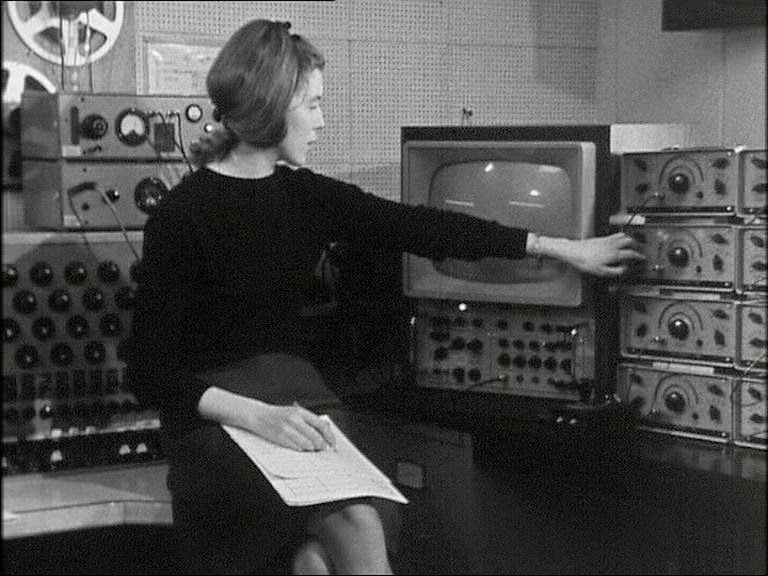
Formed in very late 1965, Unit Delta Plus was a collective composed primarily of Peter Zinovieff, developer of the prog rock-favoured VCS3 synthesiser, and Delia Derbyshire and Brian Hodgson of the BBC Radiophonic Workshop, with the stated aim of introducing a live performance element into electronic and taped music. Given how the Workshop are often depicted - not least in Doctor Who folklore - as eccentric tech-minded squares, many may be surprised to see Derbyshire and Hodgson's names mentioned in this context, but the fact of the matter is that they were young cutting-edge musicians very much involved in London's arts scene, and took part in a number of similar 'happenings' around this time. Indeed, there were numerous multimedia events staged by Unit Delta Plus themselves, after one of which they were introduced to musician David Vorhaus, with whom they would later form the influential electronic rock band White Noise.
Sadly, there is no available indication of what Unit Delta Plus may have performed at the event, nor even who was actually involved; the only clue is that Derbyshire retained a clipping from the Daily Mail about the event in her files, hinting that she may have participated in it. Incidentally, the paper was running their comic strip serialisation of the recently-released Thunderbirds Are Go! on the same page, which has nothing to do with Unit Delta Plus or The Beatles but does at least show what a remarkable time the mid-sixties was for boundary-pushing creative artists. However, other Unit Delta Plus events around the same time are known to have involved Derbyshire's religiously-themed 1964 sound collage for the BBC Third Programme Amor Dei, Zinovieff's montage of rhythmic loops Tarantella, an untitled Hodgson piece based around recordings of street sounds and passing conversations, Derbyshire's celebrated (and at that point unreleased) collaboration with Anthony Newley Moogies Bloogies, which uncannily anticipated the sleazy synth-pop duos of almost twenty years later, and Random Together, in which all three took part in a live unrehearsed mixing of sounds, so it presumably involved some or all of the above in some terrifyingly manipulated capacity.
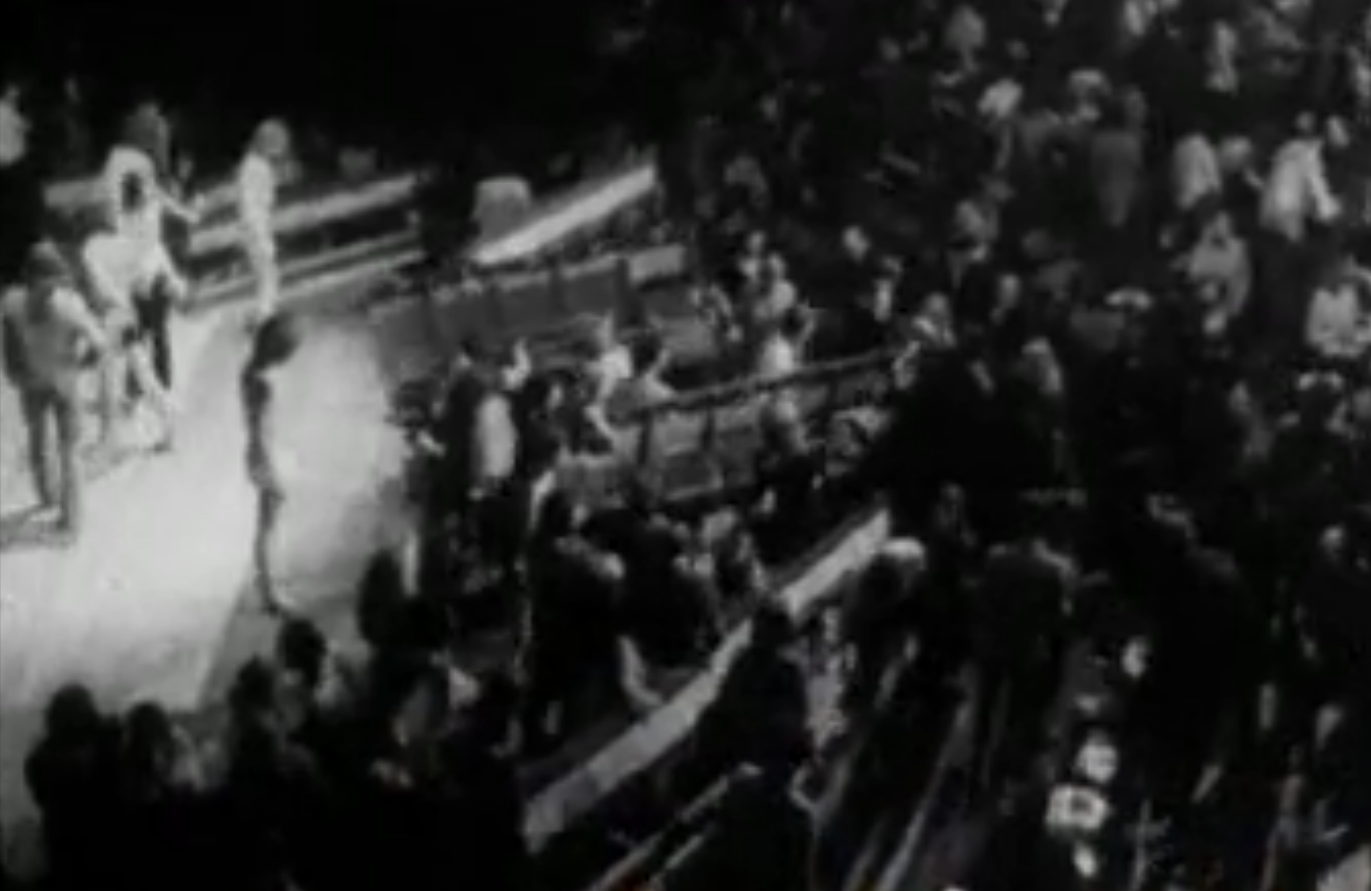
That's basically as much as we know about the million volt sounds, but what about the lights? It is known that the event involved four sixty foot-high screens and a bank of sixteen projectors, which changed their output in response to changes in sonic signals, while a further five projectors, hand-operated by Binder, Edwards and Vaughan, provided a series of contrasting and interlocking patterns, but beyond that details are frustratingly elusive. So far it's proved impossible to locate a decent review of or feature on either performance (and I really have looked), and there appears to be no available photographic evidence, let alone film footage. However, it's also true to say that there are plenty of photographs - and indeed a small amount of film footage - of similar events held at The Roundhouse, many of them involving giant screens and punters with weird patterns being projected onto them, so it's possible to make an educated guess at what it might have looked like. Anyway, from the sound of it, you'd have been hard pushed to get a decent sense of what it looked, sounded or felt like without actually having been there.

Nobody seems to know what happened to the fully mixed tape used at the event itself, although McCartney has indicated that he has his own copy, and in any case the multi-track master of Carnival Of Light still exists at Abbey Road. So, why hasn't it been more widely heard then? Well, nobody really seems to have an answer to that either. Carnival Of Light apparently came very close to appearing on Anthology 2 in 1996, but was vetoed by someone within the Beatles' inner circle. For once, we can't just point the finger straight at Yoko Ono - who to be honest probably wouldn't have had much of an issue with it on musical terms - as by all accounts the main dissenter was George Harrison, who reputedly 'quipped' "avant garde a clue" in true Principal Skinner You've Been Called The 'Funny One' fashion. Given that his two oft-overlooked late sixties solo albums - not to mention his later contributions to The Beatles - were packed to the rafters with avant-garde sounds, this is putting it mildly a little surprising; additionally, you also could argue that the man who inflicted Ding Dong on the world had a bit of a nerve.
Some of those who have heard it have made comments along the lines of everyone getting excited about something that's not really that exciting, though you do have to wonder just how familiar or comfortable they may or may not be with that form of off-script music making in the first place. It's worth noting that the few insiders who had heard Syd Barrett's long-lost twenty minute free-form instrumental Rhamadan recalled it as somewhat on the tedious side and certainly nothing worth getting worked up about, and fans used to his less inspired studio offcuts didn't really expect that they were missing out on much either; until it was finally released and everyone realised that it was actually rather good after all. Meanwhile, Paul McCartney continues to enthuse about Carnival Of Light and mention how much he'd love to give it a proper release approximately every three minutes, and on balance he is usually worth listening to about his own music.
What is more mysterious, however, is the fact that Carnival Of Light has consistently failed to appear on bootleg. This could normally be explained away as being due to it only existing as a multitrack tape and that there is nothing to surreptitiously copy, but this is The Beatles we're talking about, of whom every single other last extant recorded moment from 'closely guarded' early rehearsal tapes to head-maddeningly fuzzy microphone-to-TV-speaker recordings of them larking about with now discredited celebrities to outtakes from their Christmas fan club records, has not just escaped but been unofficially copied and 'released' millions upon millions of times over. Somebody somewhere at some point must have made a copy of it, so is it possible that Beatle 'superfans' are carefully controlling its distribution amongst a small elite to make sure that they remain 100% Officially Best At Liking Beatles? You're talking to a Doctor Who fan here. Of course that's bloody happened.

Apparently the reason that Carnival Of Light has been left off the new box set is that producer Giles Martin feels that it "wasn't part" of Sergeant Pepper's Lonely Hearts Club Band, to which we could add a snarky comment about it having been recorded in the same session as a song that wasn't part of Sergeant Pepper's Lonely Hearts Club Band either but has somehow found its way onto it now. That said, we could also add a more balanced and pertinent comment about how, regardless of its actual musical worth, it quite possibly had some bearing on Being For The Benefit Of Mr Kite!, Lovely Rita, Good Morning Good Morning and A Day In The Life. Whether or not Carnival Of Light really is 'part' of the album is a matter of conjecture. What it is part of, though, is a much bigger and more fascinating era of open-mindedness and experimentalism in the popular arts that stretched all the way from jazz and radio drama to comedy and supermarket own-brand food packaging. It deserves much better than to be left gathering dust in a tape archive. So, please... can we hear it back now?

 If you've enjoyed this, you can find more articles about psychedelia and pop music in my book The Camberwick Green Procrastination Society, available in paperback here, from the Kindle Store here, and as a full-colour eBook here.

Formed in very late 1965, Unit Delta Plus was a collective composed primarily of Peter Zinovieff, developer of the prog rock-favoured VCS3 synthesiser, and Delia Derbyshire and Brian Hodgson of the BBC Radiophonic Workshop, with the stated aim of introducing a live performance element into electronic and taped music. Given how the Workshop are often depicted - not least in Doctor Who folklore - as eccentric tech-minded squares, many may be surprised to see Derbyshire and Hodgson's names mentioned in this context, but the fact of the matter is that they were young cutting-edge musicians very much involved in London's arts scene, and took part in a number of similar 'happenings' around this time. Indeed, there were numerous multimedia events staged by Unit Delta Plus themselves, after one of which they were introduced to musician David Vorhaus, with whom they would later form the influential electronic rock band White Noise.
Sadly, there is no available indication of what Unit Delta Plus may have performed at the event, nor even who was actually involved; the only clue is that Derbyshire retained a clipping from the Daily Mail about the event in her files, hinting that she may have participated in it. Incidentally, the paper was running their comic strip serialisation of the recently-released Thunderbirds Are Go! on the same page, which has nothing to do with Unit Delta Plus or The Beatles but does at least show what a remarkable time the mid-sixties was for boundary-pushing creative artists. However, other Unit Delta Plus events around the same time are known to have involved Derbyshire's religiously-themed 1964 sound collage for the BBC Third Programme Amor Dei, Zinovieff's montage of rhythmic loops Tarantella, an untitled Hodgson piece based around recordings of street sounds and passing conversations, Derbyshire's celebrated (and at that point unreleased) collaboration with Anthony Newley Moogies Bloogies, which uncannily anticipated the sleazy synth-pop duos of almost twenty years later, and Random Together, in which all three took part in a live unrehearsed mixing of sounds, so it presumably involved some or all of the above in some terrifyingly manipulated capacity.
That's basically as much as we know about the million volt sounds, but what about the lights? It is known that the event involved four sixty foot-high screens and a bank of sixteen projectors, which changed their output in response to changes in sonic signals, while a further five projectors, hand-operated by Binder, Edwards and Vaughan, provided a series of contrasting and interlocking patterns, but beyond that details are frustratingly elusive. So far it's proved impossible to locate a decent review of or feature on either performance (and I really have looked), and there appears to be no available photographic evidence, let alone film footage. However, it's also true to say that there are plenty of photographs - and indeed a small amount of film footage - of similar events held at The Roundhouse, many of them involving giant screens and punters with weird patterns being projected onto them, so it's possible to make an educated guess at what it might have looked like. Anyway, from the sound of it, you'd have been hard pushed to get a decent sense of what it looked, sounded or felt like without actually having been there.
Nobody seems to know what happened to the fully mixed tape used at the event itself, although McCartney has indicated that he has his own copy, and in any case the multi-track master of Carnival Of Light still exists at Abbey Road. So, why hasn't it been more widely heard then? Well, nobody really seems to have an answer to that either. Carnival Of Light apparently came very close to appearing on Anthology 2 in 1996, but was vetoed by someone within the Beatles' inner circle. For once, we can't just point the finger straight at Yoko Ono - who to be honest probably wouldn't have had much of an issue with it on musical terms - as by all accounts the main dissenter was George Harrison, who reputedly 'quipped' "avant garde a clue" in true Principal Skinner You've Been Called The 'Funny One' fashion. Given that his two oft-overlooked late sixties solo albums - not to mention his later contributions to The Beatles - were packed to the rafters with avant-garde sounds, this is putting it mildly a little surprising; additionally, you also could argue that the man who inflicted Ding Dong on the world had a bit of a nerve.
Some of those who have heard it have made comments along the lines of everyone getting excited about something that's not really that exciting, though you do have to wonder just how familiar or comfortable they may or may not be with that form of off-script music making in the first place. It's worth noting that the few insiders who had heard Syd Barrett's long-lost twenty minute free-form instrumental Rhamadan recalled it as somewhat on the tedious side and certainly nothing worth getting worked up about, and fans used to his less inspired studio offcuts didn't really expect that they were missing out on much either; until it was finally released and everyone realised that it was actually rather good after all. Meanwhile, Paul McCartney continues to enthuse about Carnival Of Light and mention how much he'd love to give it a proper release approximately every three minutes, and on balance he is usually worth listening to about his own music.
What is more mysterious, however, is the fact that Carnival Of Light has consistently failed to appear on bootleg. This could normally be explained away as being due to it only existing as a multitrack tape and that there is nothing to surreptitiously copy, but this is The Beatles we're talking about, of whom every single other last extant recorded moment from 'closely guarded' early rehearsal tapes to head-maddeningly fuzzy microphone-to-TV-speaker recordings of them larking about with now discredited celebrities to outtakes from their Christmas fan club records, has not just escaped but been unofficially copied and 'released' millions upon millions of times over. Somebody somewhere at some point must have made a copy of it, so is it possible that Beatle 'superfans' are carefully controlling its distribution amongst a small elite to make sure that they remain 100% Officially Best At Liking Beatles? You're talking to a Doctor Who fan here. Of course that's bloody happened.

Apparently the reason that Carnival Of Light has been left off the new box set is that producer Giles Martin feels that it "wasn't part" of Sergeant Pepper's Lonely Hearts Club Band, to which we could add a snarky comment about it having been recorded in the same session as a song that wasn't part of Sergeant Pepper's Lonely Hearts Club Band either but has somehow found its way onto it now. That said, we could also add a more balanced and pertinent comment about how, regardless of its actual musical worth, it quite possibly had some bearing on Being For The Benefit Of Mr Kite!, Lovely Rita, Good Morning Good Morning and A Day In The Life. Whether or not Carnival Of Light really is 'part' of the album is a matter of conjecture. What it is part of, though, is a much bigger and more fascinating era of open-mindedness and experimentalism in the popular arts that stretched all the way from jazz and radio drama to comedy and supermarket own-brand food packaging. It deserves much better than to be left gathering dust in a tape archive. So, please... can we hear it back now?