Showing posts with label hits 5. Show all posts

Hits 5 Revisited: Side Four


We're now onto the fourth and final side of Hits 5, and if ever we were going to tear through the fabric and unleash a cosmic refracted blast of pure undiluted 1986, culminating an unending fountain of Citrus Spring, then that moment is now...


Red Box - 'For America'


So, after eight whole tracks (well, seven whole tracks if we don’t count True Colors, which we definitely shouldn’t) of musical and lyrical blandness with too much post-Berlin warbly synth bass, we’re finally clear of the ‘ballads’ side of Hits 5; and good thing too, as the overall uninterestingness of the music on offer has led to a corresponding lack of interest in the ensuing writeups. Try as you might, you just can’t get people to read an entry on a Lionel Richie song that probably even Lionel Richie himself has forgotten about, no matter how many ludicrously obscure references to 1986-specific catchphrases you contextlessly crowbar into it. Thankfully, we’re now onto the fourth and final side of this hit-compiling double album, and indeed onto a selection of much more interesting artists who came and went in a whirlwind of none-more-1986-ness. Not least the ones that have the honour of opening side four…

Better known to their friends and family as Simon Toulson-Clarke and Julian Close, Red Box formed in the early eighties with the intention of fusing synthpop with influences from Native American folk music and globo-politically-conscious lyrics to match. Initially signed to infamously eccentric indie label Cherry Red, they were soon snapped up by WEA, whose apparent sanity-defying belief that the wordy musos with their tin can drum sounds could become a sound commercial prospect was proved not to be quite such a defiance of sanity after all when Lean On Me (Ah-Li-Ayo) barged its way through the post-Live Aid chart clamour for dreary stadium rock to become one of the biggest hit singles of 1985.

By the end of the year they had an entire album pretty much in the can, but oddly, the label chose that exact moment to get cold feet about the angular uncommerciality of the whole enterprise, seemingly having completely forgotten their chart-hogging antics of about five minutes previously and darkly muttering that they were contractually bound to deliver something ‘for America’. Upon which Toulson-Clarke and Close duly wrote and recorded For America, a song that piled on the ethnic chanting and percussion even more heavily whilst also taking Uncle Sam to task for his less than enlightened military track record and national obsession with style over content. And, to the surprise of all concerned, it was an even bigger hit, bagging the duo an appearance on Wogan where they played with cardboard instruments to make a satirical point about something or other. Parent album The Circle And The Square was admittedly a flop, barely scraping the top seventy five in the UK on original release, though it stands up as one of the best releases of the decade and has recently been reissued on CD with tons of bonus tracks, including one which is possibly the only known record ever to sample Michael Parkinson.

Other than the fact that its pointedly Reagan-baiting lyrics are troublingly just as topical and pertinent now as they were in late 1986 (well, apart from the “urelei-urelei-urelei-urelei-urelei-urelei-ay urelei-urelei-urelei-urelei-urelei-urelei-USA” bit, but then nobody could understand that even at the time), one of the most interesting features of For America is that – production aside – it doesn’t really sound like a pop record from late 1986. It’s all violins and accordians and ethnic drums and it shovels on the World Music thing to an extent that even Hollywood Beyond would have considered a bit much, and then probably done an advert for The News On Sunday with Boys Wonder while scoffing Cheese Dips in protest. Similarly, the vocals are delivered in a soft non-commital style quite at odds with the aggressive barking favoured by other chartbound critics of US foreign policy at the time (reinforced by a video that combines the band being comically attacked by flying examples of American iconography intercut with shots of foxy chicks in ‘Uncle Sam-antha poses for FHM’ getup), and yet which one had unsuspecting pop loving youngsters joining in with the sarcastic “every house should have its hat on”? And yet it remains by far the best song on the whole of Hits 5, and arguably one of the best songs of the eighties full stop. And there you were dismissing it as mock-indie for the Roland Rat – The Series demographic. See? It’s better than that Rod Stewart song already. And there’s plenty more long-forgotten offbeat interestingness to come…


The Psychedelic Furs - 'Heartbreak Beat'


As we saw a couple of tracks ago, bagging the title theme to a big-budget film was a surefire way of scoring a massive transatlantic – and often even worldwide – hit in the mid eighties. The rarely mentioned dark side of this phenomenon, though, was that it was really all just about the song, or maybe even all just about the film, and nobody much cared who was singing it. There was never much chance of a substantial follow up hit, and for every million copies of Take My Breath Away sold, there were a million copies of Like Flames that remained resolutely unsold. Survivor, Kenny Loggins and a certain other individual we’ll be hearing a lot more from very soon hardly exactly found themselves in a position where ‘the charts’ had to take out a restraining order on them, and let’s just say the designer-clad vox-popped pop fan who confidently told BBC2′s Juice that Hip To Be Square by Huey Lewis & The News was “headed for Christmas Number One” is probably glad the show has never quite achieved cult status.

In this context, you have to feel some sympathy for The Psychedelic Furs. For the first half of the eighties, they’d been the nearly men of the post-punk scene, continually pushing their Berlin Bowie-inspired take on guitar pop close but not close enough to the top forty whilst Smash Hits continually touted them as a ‘weird’ band it was OK to like. Then in 1986, out of the blue, film director of the moment John Hughes decided to name his The Breakfast Club-following opus after the band’s ignored-yet-influential 1981 single Pretty In Pink, and stumped up the cash for them to record a brand new spruced up version for the soundtrack. Thus is was that The Psychedelic Furs ended up accompanying the ill-fated tug-of-love between Andie, Blane and Duckie alongside The Smiths, New Order, Suzanne Vega and, but of course, ‘Belouis’ ‘Some’, and as any feature presentation deemed to constitute a ‘Bratpack film’ was seriously big business with easily Americana-impressed teens at the time – to the extent that ordinarily perfectly sane schoolchildren began wearing letterman jackets and high-fiving each other in the corridors – it was a foregone conclusion that a song that had previously never troubled any charts outside of John Peel’s Festive Fifty would become a huge international hit. Not that the tame guitar sounds, twinkly synth bits and truly lamentable infiltration by the hated American Saxophone were in any way any kind of improvement on a record that was perfectly good to begin with, but it’s since led to the original version becoming a heavily-rotated staple of oldies radio, and that can only be a very good thing indeed.

While follow-up to a hit film Pretty In Pink went on to do very well indeed, follow-up to a hit single Heartbreak Beat didn’t fare quite so well, only proving a moderate hit in America and not even charting in the UK at all. In retrospect, it’s not difficult to see why – cut from very similar musical cloth to the remade Pretty In Pink, it probably offered too much of what fans of the film were expecting, including more of that sodding saxophone, and not enough of what fans of the band were expecting. This is something of a pity as it’s actually a pretty good song, just swamped by the not particularly sympathetic production and further shoved into the background by yet another of those ‘arty’ black and white videos that were ten a penny in 1986, although they do win points for using sixties iconography rather than its tiresome ‘fifties’ counterpart. Actually, perhaps this was the main cause of its lack of chart prowess, as even certain megastars with a fondness for all things paisley sometimes had difficulty getting their latest waxing into the top ten…


Prince - 'Anotherloverholenyohead'


With the obvious exception of David Bowie, Prince is quite possibly the closest thing that the million-selling mainstream megastar pop industry has ever had to a true auteur. Throughout his career, he’s pretty much done whatever he wanted both musically and visually, making no end of artistic about turns that have left fans, critics and nervous record company executives alike bewildered, with albums, singles, films and tours flopping or even being cancelled full stop, only for him to be back on top months later seemingly without having batted an eyelid. For no matter how far away from the beaten track he might have got at times, the fact remains that the overwheming majority of his output has highly commercial without ever straying into sell-out territory, and that’s more than enough to balance out his occasional diversions into his own creative universe. Anyway, when you’ve got a workrate as prodigious Prince, that sort of thing is bound to happen occasionally. Not for nothing did his record label, some seven years after Hits 5 was released, attempt to sue him for flooding them with too much releasable material.

1986 was no exception to this rule, as he took the unusual step of following two massively successful years’ worth of hit singles, albums, and even films (well, film singular, namely Purple Rain), and indeed a time in which he actually seemed to become more popular for turning his nose up at Live Aid, with the highly personal and wilfully uncommercial homage to Film Noir and silent comedy Under The Cherry Moon, and its accompanying understated-jazz-funk-filled soundtrack album Parade. Although extracted single Kiss would become a huge hit and ultimately one of his signature numbers, neither film nor album were particularly rapturously recieved by audiences or critics, selling and box-office-ticket-shifting only respectably (albeit by Prince’s extremely lucrative standards) but treasured by the devoted minority who ‘got’ them, and awaiting rediscovery at a later date. In many ways, Parade was Prince’s Dog Man Star, complete with the Brit Award-disrespecting antics, and the remainder of the singles culled from the album were about as successful as We Are The Pigs. The last of these, late in 1986, was the awkwardly titled Anotherloverholenyohead, though by that time the Sign O’ The Times album was more or less in the can so Prince probably couldn’t have cared less.

As you’d expect from Prince, Anotherloverholenyohead is a mighty good song, but lacks an obvious catchy hook, and also seems to have had random bits of about six other abandoned compositions (and even ’jams’) shoehorned into something that may once have been possibly distantly related to a conventional song structure, and as such while it works brilliantly on the album, and indeed in Under The Cherry Moon, the decision to release it as a single is entirely baffling even by his standards. Unsurprisingly it bombed as a single on both sides of the Atlantic – stalling just inside the top forty over here – though in fairness this may have had as much to do with its status as the umpteenth single from an album that anyone even halfway interested had already bought anyway, which came accompanied by ripoff-friendly well-known widely-available former-singles-themselves tracks as b-sides, as it did with the uncommercial nature of the song itself.

Unfortunately, due to Prince’s entirely predictably paranoid views on ‘the internet’, you won’t find Anotherloverholenyohead, or indeed any of his music, on YouTube (though you’re not really missing anything as the video was just some unexciting studio-based miming in a Cat-from-Red-Dwarf-anticipating suit). How that tallies exactly with him giving away an entire album free with a newspaper against the wishes of his record label twenty years later is anyone’s guess. The video for the next track on Hits 5 really better had be on YouTube, though…


The The - 'Infected'


With every compilation like Hits 5, you always got one song that felt like it shouldn’t have been on there at all. True, there was always a healthy quotient of unlikely hitmakers like, well, Red Box and The Psychedelic Furs, but beyond even these there was always one artist whom even those who liked The Jesus & Mary Chain considered to be a bit ‘out there’, whose record sleeves and interviews scared hapless fans of ‘Belouis’ ‘Some’, and whose presence on an otherwise happy clappy all singing all dancing collection of your favourite best recent hits was surely verging on contravention of the Trading Standards Act. And while Now That’s What I Call Music! 8 infamously boasted Billy Bragg, Hits 5 had The The.

“Hang on”, you’re probably thinking, “isn’t that the The The that later had loads of big-selling albums and recorded with Johnny Marr and all that?”. Yes indeed it is – but that elevation to stadium-filling status would come later. Back in 1986, Matt Johnson’s one-man-band had only recently moved to major label Epic from the near-performance art environs of legendary indie Some Bizarre, and despite gaining a more commercial sound still retained a fascination with macabre lyrical themes and bizarre imagery. This was reflected in the title, lyrics and indeed video (which saw Johnson catapulted around the globe in an ejector seat thingy whilst ‘satirical’ consumerism-related images were projected onto his sunglasses) for title-track-from-the-album Infected, but nonetheless it was a furious and catchy song that really did stand a good change of becoming a hit. Perhaps hoping for a touch of post-Frankie Goes To Hollywood notoriety-instigated exposure, Epic and Johnson really pulled out all the stops for Infected and scored a rare triple-whammy of banned-ness; Radio 1 wouldn’t play the single on account of the explicit – if unerotically graphic – last verse, the IBA banned the video on account of female semi-nudity and burning-at-the-stake antics, and many shops refused to even stock the single on account of the sleeve art showing what can only be described as Satan taking matters into his own hands. All of this combined to counteract any interest that any of the individual bits of controversy may have generated – not many people would really want to buy a record they’ve not even heard in passing – and it stalled just inside the top fifty; though, that said, perhaps late 1986 wasn’t exactly the most sensible time to be releasing a single with the hookline “infect me with your love”.

Quite what the sappier pop kids who considered Rain Or Shine by Five Star a tad harsh on the ears made of Infected is anyone’s guess. Viewed from this distance, however, it’s a remarkable song combining industrial influences with wailing soul diva technopop, and it’s hard to believe it wasn’t more of a hit; the strength of the song alone should have been enough to overcome all the promotional hiccups. It’s almost – almost – the best song on Hits 5, coming a very very close second to For America. And, what do you know, there’s one almost as good again right after it…


Frankie Goes To Hollywood - 'Rage Hard'


There was a time when the tabloid press would have had us believe that Frankie Goes To Hollywood were planning to murder us all in our beds, brandishing copies of Zombie Creeping Flesh and humming the theme from Hardwicke House as they went. And that was just the image; the music was, if anything, even more thrilling, a massive apocalyptic electropop riot with incendiary guitars and provocative lyrics about right-on issues, like The Sex Pistols had wandered into an Isaac Asimov novel, threatening and terrifying Thatcherism from right inside its bloated capital-obsessed heart. Quite simply, they were the most exciting to happen to mainstream pop music in a long time. Yet as the old adage goes, the light that burns twice as bright burns half as long, and by 1986 they were already starting to look like a washed-up relic from another age, sidelined by the musical after-effects of Live Aid, weighed down by their increasingly embarassing-looking publicity overload, and swamped by their own ubiquity; after all, they even had a totally unplayable ZX Spectrum game based on them. When word filtered out that they were working quietly away on a self-produced and more ‘mellow’ second album, the writing really was on the wall. With ‘FRANKIE SAYS’ in big letters in front of it.

In fairness, their admittedly apallingly titled second album Liverpool has always recieved slightly more stick than it actually deserved. True, it’s not a great album, it’s a massive comedown after Welcome To The Pleasuredome, it lacks any sense of coherency and there’s a couple of tuneless wastes of everyone’s time on there, but the majority of halfway decent tracks don’t deserve to be ignored by association, and occasionally – as on eventual third single Watching The Wildlife – it’s very good indeed. But nobody wanted the album back in 1986, and no small part of that was due to the anticlimactic impact of lead single Rage Hard.

Part of the secret behind Frankie’s success had always been the multiple epic 12″ mixes that were available for each single, turning the familiar radio version into something between a synthpop symphony and a big-budget film soundtrack and introducing all manner of previously unheard song segments and musical effects. Rage Hard feels a little too much like an attempt to do one of these widescreen productions within the confines of a 7″ edit, which kind of misses the point. There’s far too much packed into it for anything approaching radio-friendlyness, and though the extended intro makes for exciting listening in its own right, it takes far too long to get to the point and as a result lost some of the casual fans who’d liked the straight-in-there dynamism of Relax and Two Tribes. It made an impressive debut at number four in the charts, but dropped out again pretty quickly, suggesting that a great many had bought it on the strength of the band’s reputation without actually having heard it. After all this, you’ll probably be astonished to hear Rage Hard described as a great song. Well, it is – it’s just that it didn’t really work as a single in the way that anyone involved hoped it would, and probably did more to hasten Frankie's demise than any tensions with the record label or between band members, and its presence amongst a whole side’s worth of inexplicable chart misses and stray successes by obscurity-bound artists on Hits 5 only serves to underline this. And even if you don’t like Rage Hard, you’ll be begging to hear it again when you find out what’s coming up next…


Meat Loaf And John Parr - Rock'n'Roll Mercenaries


Meat Loaf. He’s one of those people that you automatically think you hate, and then a bit later realise you actually quite like some records by. For all of his endless attempts to remake Bohemian Rhapsody only with different hair, for all of his literally endless songs (well, nobody’s ever actually made it to the end to check), and for all of his lyrics about how with mom and pop we lived in Maine/and my brother Jeff who stole a plane/he crashed it in the pouring rain/we were never the same again/now the years have gone by between now and then/I think about Jeff every now and again et sodding cetera, the fact remains that when his rarely-amended formula works, it really works, and when everything clicks into place the energetic mix of metal, post-prog, rock’n'roll revival stage musical and everything-including-the-kitchen-sink production has resulted in some of the most exciting records in the history of popular music. And this wasn’t solely confined to his earliest efforts, as over the years he’s periodically hit the nail on the musical head again and again. The mid-eighties, it has to be said, was not one of these nail/head moments.

Contractually estranged from his regular songwriting accomplice Jim Steinman, by 1986 Meat Loaf was left scrabbling around for other suitable collaborators, ending up recording the album Blind Before I Stop with former Boney M head honcho Frank Farian. Reputedly, the sessions didn’t work out to either’s satisfaction, but parlous financial arrangements meant that the album had to be released regardless, and despite containing a couple of later live favourites and being plugged with a guest spot on Miami Vice, it failed to do much in the way of substantial business anywhere, and is said to be Meat Loaf’s least favourite of his own releases. All in all, then, it’s quite fitting that the lead single should have been the spectacularly lustre-free Rock’n'Roll Mercenaries. Performed in cahoots with briefly megastar-ish mullet-pioneering singer-songwriter John Parr – whose movie theme-generated hit single St. Elmo’s Fire (Man In Motion) was pretty much a call to arms for the homegrown Bratpack-obsessed crowd quaffing ‘sodas’ (in other words, Yellow Price Cola) in their letterman jackets and ‘sneakers’ – the song appears to have been intended as a blistering attack on music industry fatcats who put profit above art – indeed, it was more than likely influenced in no small part by Meat Loaf’s recent Steinman-injuncting legal headaches – with a stern ‘military fatigues’ video to match, but the somewhat vague lyrics make it sound more like a furious berating of session musicians. Well, they’d been getting away with it for too long.

Rock‘n’Roll Mercenaries, which stalled just outside the top thirty in the UK, is by no means a great song, but it is at least entertainingly silly, with its military two-step chanting backing and ludicrous vocal histrionics over something that, well, doesn’t really matter that much in the scheme of things. It is let down somewhat by the tepid production, which seems to have been tailor-made for hooking a slot on The Chart Show Rock Album or Soft Metal (“it ain’t heavy…”), but it’s still got a verve and sense of absurdity that has been sorely lacking in too many Hits 5 inclusions, especially those by Meat Loaf-level veterans. It’s also pleasingly unlike anything that anyone that famous should have been doing in the immediate aftermath of Live Aid. Hmmm, it’s almost like we’re building up towards giving somebody an almighty hammering…


Spandau Ballet 'Fight For Ourselves'


Over the course of this track-by-track look back at Hits 5, you may well have noticed some low-key animosity towards Live Aid. Without wishing to keep going on about it, let alone devote an entire first paragraph of an entry to it, the fact remains that Live Aid’s fundamental seismic effect on the entire pop industry is key to the story of this most curious of Various Artists compilations. For that one day in July 1985 changed things temporarily, and arguably even changed some things forever, and those who refused to play ball either musically, ideologically, or by not getting involved in the first place, found plenty of metaphorical and literal post-event doors being slammed in their faces. A pop chart that only months earlier had been awash with the likes of Japan, Talk Talk, The Smiths and Propaganda on the one hand, and the at least enoyably silly likes of Modern Romance on the other, was suddenly given over almost entirely to earnest, straight-ahead MOR rock bores – whether pre-existing or born again – and anything slightly left-of-field that did get through, such as For America or What’s The Colour Of Money?, was hardly exactly the foundation stone of a long and successful career. No more would the Top Forty reverberate to the sound of Break Machine.

The one small consolation was that not everyone who joined in the party got to enjoy such commercial benefits. Spandau Ballet – who, pre-Live Aid, were massive in a way that their latterday reputation weirdly seems to suggest that they weren’t, and who managed to just about toe a wobbly line of credibility to boot with their scene-pioneering New Romantic roots, occasional right-on pronouncements, and unstinting support for the charity-driven foundations of the original Band Aid, not to mention their general likeability as people - had been moving towards a slicker and more polished sound and indeed image for several years anyway, but their again-weirdly-underplayed-by-history prominent slot on the bill at Live Aid seemed to be the catalyst for a move into full-on stadium tedium, with saxophonist Steve Norman finally crossing the floor and fully embracing the dreaded ‘American Saxophone’. Unfortunately for them, their existing fanbase just weren’t buying it, either metaphorically or literally, and by the end of the decade they’d all moved on to for once rather successful ‘other projects’. They would in fact enjoy one last gigantic hit single late in 1986 – the to put it mildly not-universally-celebrated riposte to The Troubles Through The Barricades – but the actual single chosen to unleash the parent album Through The Barricades on an unsuspecting public was actually Fight For Ourselves.

There’s not much to say about Fight For Ourselves other than that it’s a transparent attempt by Spandau Ballet to reposition themselves as radio-conquering stadium rockers, and a ropey song without much in the way of a discernible melody; so much so, in fact, that the promo video went out of its way to obscure as much of the actual song as possible with ‘comedy bit’ dialogue about two fans trying to blag their way backstage (and even they probably fucked off pretty sharpish when they heard the song being performed). When the band went to court a couple of years later in an attempt to iron out their much-disputed composer credits, it’s doubtful that any of them were in any particular hurry to have their name slapped onto Fight For Ourselves. In some ways, it was a sad conclusion for a band who had been very much a part of the pre-Live Aid chart-openmindedness, but in other more satisfying ways it’s a metaphorical and literal two fingers to everyone who hopped aboard the post-Live Aid mediocrity bandwagon. And now, we’re on to the final track… but what could it be??


Robert Palmer - 'Addicted To Love'


Well, it’s been quite some journey through the tracklisting of Hits 5. Along the way we’ve reminisced about the mercurial television career of Felix Howard, likened Bruce Hornsby & The Range to burnt toast in audio form, attempted to form a religion based around Nick Kamen, stuck several boots into Live Aid, and been a bit sarky about Roses by Haywoode. We’ve even mentioned ‘Belouis’ ‘Some’ once or twice. No doubt, then, you’re not unreasonably expecting the last track on the album to be some era-defining uber-of-its-time forgotten left-field cerebral pop marvel that will have even Red Box turning in their ’1986′ pass at reception, and finish this epic series of articles with all the spectacle of a post-Bratpack imagined-fifties-Americana-riffing advert recreating one of those big budget gaudy technicolor Hollywood synchronised swimming setpieces, only performed by the Yes Of Course Christmas On 4 robots with Phil Cool emerging from the middle in a fountain of Citrus Spring. And then go on to finally make that third series of The Tripods.

Well, you might indeed be expecting that, but you’d be wrong. The final track on a double album collecting the hits of the closing weeks of 1986 is a song that was a hit back in January 1986. For that was when Robert Palmer, longtime resident of the lower reaches of the top forty and more recently featured vocalist on bizarre rock-and-disco combining Duran Duran offshoot The Power Station, finally broke through to megastar status with Power Station album in all but name Riptide, pioneering designer-clad Madeley-aped ‘smoothie’ image, and – most importantly – catchy radio-dominating single Addicted To Love, decidedly unhindered in its chart prowess by a feminist-and-Musician’s-Union-enraging video featuring Palmer miming in front of a ‘band’ of android-ish Vogue cover-esque lovelies, once perplexingly rumoured to have been Duran Duran in drag, but since revealed to have been genuine models, including ludicrously-knockered future Big Brother housemate Susie Verrico. As you all know the song already, and it doesn’t really belong on Hits 5, there’s not much point in saying much else about it, other than to speculate that the compilers had been holding out for Palmer’s more recent model-assisted hit I Didn’t Mean To Turn You On, only to find that it had been snapped up by rival compilation Now That’s What I Call Music! 8 at the last minute. Like Michael Palin being refused entry to The Reform Club at the conclusion of Around The World In 80 Days, we’ve been left waiting for a bus while 1986 parties on behind closed doors. But that, of course, was in 1989. Anyone got a spare copy of Monster Hits ..?

And, well, that’s Hits 5. Ahead for the listener would lie Bomb The Bass, GCSEs, Alison Lee’s Pants and, yes, Hardwicke House. Of course, there was a Hits 5 video with some exclusive non-album tracks on it,… but that’s another story.


If you've enjoyed this article, you can find more about eighties pop compilations in my book The Camberwick Green Procrastination Society, available in paperback here, from the Kindle Store here, or as a full-colour eBook here.

Hits 5 Revisited: Side Three


And now - you have been warned - we arrive at that most dreaded side of eighties chart hit compilation double albums... the 'Ballads' Side. Can the pan-Kamen leylines running through 1986 make Side Three of Hits 5 into an exception that proves the rule? Let us hope so...


Cyndi Lauper - 'True Colors'


It’s become something of a journalistic cliche to refer to Cyndi Lauper as being Christina Aguilera to Madonna’s Britney Spears. Though on face value there does seem to be something in this, on slightly-deeper-than-face-value it doesn’t really fit at all. Aside from the fact that this analogy does a tremendous disservice to Madonna – unless Britney has somehow managed to sneak out her own personal Dear Jessie without anyone actually noticing – it also conveniently ignores the fact that however she might have been pushed to the public by her record label and management, Cyndi Lauper wasn’t so much an ‘answer’ to Madonna as she was part of a full-on late eighties invasion of ‘kooky’ red-haired American women, with the likes of Katie Puckrik, Laurie Pike, Tori Amos, Sandra Bernhard, Ruby Wax, Rita Rudner and many more wowing Brit-based audiences with their loudmouthed ditzy zaniness, multicoloured ra-ra skirts, eyebrow-raising backcombing, and personalities somewhere between Rowan & Martin’s Laugh-In and a gold-digging heiress telling Bertie Wooster he’s engaged to them whether he likes it or not.

That said, one sense in which the analogy does fit is that Cyndi Lauper was every bit as alarmingly musically unpredictable as Christina Aguilera, darting between styles, genres, tempos and even levels of frivolity in a manner that continually wrongfooted both those who had liked and those had who hated Girls Just Wanna Have Fun. Indeed, her most recent single prior to the one you’ll find on Hits 5 had been the decidedly less than musically and ideologically heavyweight theme to that video shop-hogging film that everyone in 1986 had seen but you, Goonies ‘R’ Good Enough. True Colors, the lead single and indeed title track from her second album, had been written especially for her by mid-eighties uber-hitmakers Billy Steinberg and Tom Kelly – chart-topping song-merchants for the likes of The Bangles and Heart – as an overwrought piano-pounding gospel number, but at Lauper’s insistence it became the sparse, haunting, half-whispered arrangement that really did the song justice, emphasised by a surreal symbolism-laden stream-of-consciousness video that seems to have accidentally invented all of Helena Bonham Carter’s bits in Tim Burton’s films. For extra kookiness points, it also features a ra-ra skirt made of dollar bills.

Though it was deservedly yet another chart-topper for Steinberg and Kelly in America, over here True Colors almost unbelievably stalled at number twelve, which makes it all the more surprising that it’s since become so well remembered that some pillock decides to embellish a TV advert with an, erm, ‘slow’ version roughly every three minutes. On Hits 5, it’s a strong start to side three, which of course has the dubious distinction of being the traditional ‘ballads side’. And since these are mid-eighties ballads, chances are that the quality level is about to tail off very dramatically indeed…


Boris Gardiner - 'You're Everything To Me'


A good deal of this re-appraisal of Hits 5 thus far has concentrated on the post-Live Aid struggle between the born-again followers of stadium rock who preached that the exciting new sounds of Brian May’s squiggly soloing had come to replace your old-hat synthesiser (except when he used one on One Vision) and who really understood the lyrics of Born In The USA, and disgruntled Nik Kershaw fans who couldn’t understand why nobody was buying Radio Musicola. Existing entirely independently of this furious equation, however, were the large number of people who, when it comes down to it, simply Like A Good Tune. The same sort of listener who, earlier in 1986, had sent Chris De Burgh to the top of the charts for an obscene amount of time. And who, only a couple of weeks later, pulled off the same trick again for I Wanna Wake Up With You by Boris Gardiner.

Though he had form as a full-on proper serious cred reggae musician, there is no getting away from the fact that I Wanna Wake Up With You was intentionally fashioned for maximum sales-boosting easy-on-the-ear blandness, and indeed seemingly tailor made for Derek Jameson’s Radio 2 breakfast show, where it sat unobtrusively amongst the oft-expressed lack of belief over what ‘the telly people’ were planning to foist on ‘us’ later that day. Small wonder, then, that it should have been followed shortly afterwards by the almost-identical You’re Everything To Me, which closely adhered to the standard form for follow-ups to surprise chart-toppers by rocketing to number eleven and then disappearing from sight - and indeed, it seems, musical history - just as quickly again.

There’s not really that much to say about You’re Everything To Me – even less than there is to say about I Want To Wake Up With You – other than that it’s the commercial track record and enduring massive popularity this sort of musical whitewash that eventually led to the rise of Simon Cowell, and that whether anyone reading this likes it or not, Boris and his ilk outsold The Stranglers, Haywoode and Eurythmics alike in massive amounts, and as such this is perhaps the most out-of-place track on the whole of Hits 5, and certainly the one that paints the least vivid picture of the pop scene in late 1986. Though some of his tracklisting near neighbours weren’t exactly far off…


Rod Stewart - 'Every Beat Of My Heart'


Roderick David Stewart. Rod The Mod. Rod Made About Three Decent Records In 1970 Before Devoting Himself Exclusively To Chatting With Michael Parkinson And Wearing Daft Hats. Yes, whatever the era, whatever the genre, whatever the prevailing globalist sociocultural phase-shift, Rod Stewart has somehow always been around like some kind of post-Glam Rock Zelig, peddling the exact same act to unwavering commercial success and bewildering levels of popular affection, not least since the tiresome Music Festival industry bestowed ‘living legend’ status upon him.

1986, and indeed the eighties in general, was – you will no doubt be unsurprised to hear – no exception to this. While many of his peers at least made some varying attempts to move with the times – even Elton John was moved to ruminate on the Cold War and Apartheid in hit singles, even if he did then go and douse them liberally in ridiculous synthesiser noises - Rod just kept on churning out the same old bagpipe-drenched chat show band blues with the same old themes about travelling very slowly towards your ‘home town’. Every Beat Of My Heart, the title track of his 1986 album, which somehow managed to climb to number two when released as a single, wasn’t his worst crime of the eighties – that dubious honour must surely go to his mauling of This Old Heart Of Mine, which added insult to injury by roping in one of the Isley Brothers to drive the getaway car – but it wasn’t far off.

Sounding like a cross between a bad wine bar band version of Berlin’s Take My Breath Away and the sort of signature tunes the BBC Radiophonic Workshop were hammering out after they got a little too excited about Fairlights and MIDI (and with, inevitably, some bloody bagpipes in the middle), Every Beat Of My Heart chronicles, you guessed it, Rod’s desire to return to his ‘home town’ (apparently by, erm, seagull), a point that is oh so subtly alluded to by a video in which he boards a train and departs sepia-tinted frontier-days America for the comforts of modern-day full colour Scotland, somehow gaining a tie en route. In the circumstances, it’s probably best to deposit this song on a train headed for as far away from Hits 5 as possible. Meanwhile, there should be one pulling in from Chicago in a minute…


Peter Cetera - 'The Glory Of Love'


Given that big overwrought ballad film theme tie-in singles were pretty much the biggest commercial pop proposition of the entire the mid-eighties, and that there’s more than one example of the art form included on Hits 5, it’s something of a surprise that it’s taken until halfway through the third side to come across one. Glory Of Love, however, more than makes up for this wait. Taken from the awkwardly punctuated film The Karate Kid, Part II, where it appeared on the soundtrack alongside such artistically vibrant mid-eighties trailblazers as Carly Simon, Southside Johnny, The Moody Blues and - lest we forget - Fish For Life by bizarre Tears For Fears spinoff Mancrab, it could not have been a more suitable musical accompaniment for a second helping of Ralph Macchio’s adventures in trouncing the evil pupils of that bloke from Cagney & Lacey with the aid of some karate he’d learned by waxing a car, inspiring a million bored transatlantic schoolchildren to fashion those bandage things they’d been using to take their pulse with in double biology into makeshift ‘Karate Kid’ headbands before not actually bothering to see the film itself.

As Peter Cetera’s regular band Chicago had more or less invented the LA Law Theme-style sax-heavy muted-chord soft-rock sound that sonically typified the mid-eighties, it was only fair that he should have enjoyed a slice of solo chart action himself. In fact, probably more due to the radio-conquering appeal of the song itself than any actual levels of excitement over the parent film, Glory Of Love ended up topping the chart practically everywhere in the world; apart from, needless to say, the UK, where the martial arts craze had been and gone ten years earlier and had long since dissipated into the embarrassing realms of ‘Ever Thought Of Sport?’ campaigns and Alex Kingston playing a ‘judo expert’ on Grange Hill. Combined with the underwhelmed reaction towards a film that was generally considered to be no Back To The Future/Teen Wolf, this resulted in the hapless Mr. Cetera stalling at a lowly – yet still impressive compared to some of the chart disasters we’ve had on here – number three on the official Gallup-compiled UK Singles Chart.

Glory Of Love sounds probably pretty much how you remember it sounding – or, if you’ve never heard it before, probably pretty much how you’d expect to remember it sounding – full of soft keyboard tones, phatic exclamations of romantic adulation mixed in with some weird fairytale bits about a castle far away, compressed squealing guitars doing that ‘one random really high note’ thing, slamming drums just before the chorus, and the trademark Cetera low-bitrate-MP3-esque vocals. It’s also got probably pretty much the sort of video you’d expect, made up entirely of soft-focus miming in front of some sliding paper doors that occasionally part to reveal not-particularly-exciting clips from the film. And yet, despite all that, it’s actually rather likeable as this sort of mid-eighties movie-derived musical monstrosity goes, and while it would certainly need more than ‘wax on wax off’ to hold its own against Don’t Leave Me This Way, Suburbia or Some Candy Talking, it’s a pleasant enough and indeed evocative enough easy-on-the-ear mainstream hit covered in lashings of melted processed cheese. More to the point, it’s a flash of brightness on this most tedious of sides of Hits 5. And believe me, things are about to get very dull indeed…


George Michael - 'A Different Corner'


1986 was a big year for Wham!, for fans of Wham!, and for people who hated Wham! alike. For it was the year that pop’s least aware-of-the-major-globocultural-concerns-of-the-early-eighties duo decided to call it a day, with a series of Wembley Stadium-mounted farewell concerts played out to the inevitable end-of-days fan hysteria, and the release of a career-spanning double-album compilation retrospective which appeared to suggest that in their own heads they were possessed of the diversity of David Bowie, the longevity of Prince, and the obscurity-strewn-back-catalogue-ness of The Television Personalities. While Andrew Ridgeley would quietly retire from the public eye, marrying the hot one from Bananarama and investing his musical millions into helping Rohm Dutt quell an uprising of Swampies or something, George Michael had already tested the water for a solo career with two huge hits – gift-that-keeps-giving for chocolate-based pun lovers Careless Whisper in 1984, and A Different Corner shortly before the Wham! day-calling announcement in 1986. At this stage, there was still no hint of anything to do with narcotics, public conveniences, or collaborations with the people behind ITV’s single poorest excuse for a satire show ever (and yes that does include Stuff The Week).

Look, do we really need an entry on A Different Corner? Can’t we just pretend it’s failed ‘compliance’ like Morris Mitchener, and move on to the much more interesting next track on Hits 5? What do you mean, the people who’ve been reading the series so far expect that at the very least it will be listened to and commented on? That’s how the USSR got started! Oh alright then: weedy instrumentation, lack of any tangible melodic structure, overwrought woe-is-me lyrics, overenunciated vocals, unlikeable singer posing in what appears to be a Habitat catalogue shot in ‘arty’ black and white. There. That’s your lot.

A Different Corner, incidentally, was a chart-topper back in April 1986 – literally a different corner of the year – so what in the name of sanity it was doing tainting a collection of hits from the tail-end of the year is anyone’s guess. It’s not like The Final and indeed the single itself hadn’t been bought in their millions already anyway. So let’s just treat it as the abberation in every sense of the word that it is, and get on with the serious business of making surreal throwaway jokes about some of the least epochal pop singles of all time…


Shakin' Stevens - 'Because I Love You'


Even though he’d literally only just scored a well-deserved chart-topper with fifties-meet-eighties high watermark Merry Christmas Everyone, 1986 was a bit of a ‘Whither Shaky?’ moment for everyone’s favourite Madeley-walloping neon-collared neo-Rock’n'Roller. Seemingly feeling that the denim-dominated black-shirt-white-tie rockabilly-for-the-ZX81-era thing was in danger of outstaying its welcome, Shaky would spend the next two years attempting to diversify his sound with a little-remembered Motown Phase, a surprisingly successful flirtation with House Music, a smattering of covers of obscure T-Rex numbers, and even an album-side-long frantic live medley of some of his old favourites, though there was of course still room for a memorably swaggering revival of What Do You Want To Make Those Eyes At Me For?, accompanied by an equally memorable video featuring comedy copper-infuriating postbox-leaping antics, punk-serenading silliness, and an early appearance by one Vic Reeves. He did stop short of ‘goth’, however.

Needless to say, this excursion into experimentalism didn’t last, and 1988′s I Might was proudly promoted as a good old rockin’ and indeed rollin’ return to what ‘the fans’ really wanted, albeit shoved into a sleeve depicting Shaky amongst a small army of Viz characters for good sales-attracting measure. And, to be fair, the genre-hopping years had indeed seen a slight dip in chart statistics, though what’s surprising in retrospect is that the most successful of those singles – barring What Do You Want To Want To Make Those Eyes At Me For? – was the one that was perhaps the furthest removed from Shaky’s traditional musical style; synth-driven lighters-in-the-air ballad Because I Love You.

Though the video is basically laugh-free nothingness made up entirely of Shaky doing decidedly un-Shaky-like soft-focus ‘meaningful’ looks to camera in some sort of Camp David-esque woodland retreat, the first verse at least is a lot more folky and interesting than memory would suggest; it’s only later that it becomes swamped in tedious sub-Paul Young fretless bass and that ubiquitous mid-eighties ridiculous Nikita-esque synth trumpet sound. On top of that, it’s also a rather wishy-washy song, with bland lyrics and a melody so weedy it might as well be spluttering to a halt while being beaten into last place in a school sports day by Einstein from Skool Daze.

Shakin’ Stevens, whether the irony merchants or indeed the ‘cool’ merchants like it or not, has made some great records. This, while not actually being a bad record, is not one of them. Still, at least it’s pleasant and unassuming and musically keeps itself to itself, which you can’t exactly say about every track on Hits 5


Whitney Houston - 'Greatest Love Of All'


You really have to be careful how you talk about Whitney Houston. It’s all very well and good having found the majority of her music intolerable, and having laughed for about three days solid at Mark Radcliffe’s sarcastic “isn’t that right, Whitney?”, and always hearing Armando Iannucci’s remix of I Will Always Love You in your head rather than the original, and indeed resenting the role she inadvertently played not just in the rise of X Factor culture but also in Glee opting to abandon all of that pesky razor-sharp satire of the fame industry and surrealist bits with Brittany in favour of endless episodes where they all sing one song each by a ‘musical legend’ and NOTHING ELSE, but there’s plenty of people out there who don’t feel like that, and if you do feel like that, well, you can always just sod off and listen to Moose. At the end of the day, unlike many of her peers, she made some good records in her time and didn’t really do any harm to anyone but herself, and it’s not really fair to upset her fans when there isn’t really any good or worthwhile reason to do so. And anyway, all of those grumblings belong to the ‘future’, and we’re currently stuck squarely in late 1986 and Hits 5.

In fact, Whitney’s greatest musical moment was technically still in the ‘future’ too, as 1987 would see her release second album Whitney and a startlingly good run of singles that included Love Will Save The Day and So Emotional, for which her confusingly-titled debut album Whitney Houston and its attendant singles seem in retrospect to have been merely a warm-up. That’s not to say they were in any way poor songs though – yes, as ever, there were far too many ballads, but they were at least tuneful and likeable ballads, and she hadn’t got into that thing of using three hundred and seventy eight notes where one would have done yet either. Greatest Love Of All had in fact originally been the b-side of an earlier single, but was re-recorded for single release and album-tacked-on-ness at Whitney’s own insistence and against her record label’s advice, which shows she had a bit of commercial sense about her at that point too.

So much so, in fact, that Greatest Love Of All is one of the few songs on Hits 5 that really needs no introduction nor indeed discussion; it’s a soaring yet surprisingly subdued-for-its-time ballad with powerfully-delivered lyrics about – what else? – overcoming the odds, not to mention a borderline-tongue-in-cheek video worthy of, well, Glee, and you’ll still hear it at least once a week even now. See ‘Belouis’, we told you the post-New Romantic thing had a limited shelf life, but did you listen? That said, not all hit ballads by established ‘soul greats’ would go on to enjoy such enduring popularity…


Lionel Richie - 'Love Will Conquer All'


The problem with side three of Hits 5 – the ‘ballads side’, if you will – is that most of the artists featured on it have enjoyed long and hugely successful careers, meaning that it’s virtually impossible to make talking about their songs in any way evocative even of 1986 in general, let alone late 1986 in particular. Perhaps this is some sort of karmic retribution for the relentless rubbishing of the Live Aid-fuelled resurgence of the whole stadium megastar industry thing that dominated earlier ramblings about Hollywood Beyond and Nick Kamen, but at the same time this stuff really was huge in 1986 in particular and therefore it’s only fair and right that it should be so heavily represented on an album collecting some of the hits of the year. The only real downside to this is that it makes it virtually impossible to crowbar in any arcane humorous references to All The Bunch Love Dairy Crunch, Yes Of Course Christmas On 4, or That’s All From This Week Next Week For This Week We’ll See You Again On This Week Next Week Next Week So Until Next Week From This Week Next Week Goodbye.

Lionel Richie has been a huge star from the late sixties right up to the unexpectedly witty and self-parodic appearance he more than likely made on at least one television chat show last week, meaning that he’s about as 1986 as Ya Kid K pulling up on a Ninja Scootech to get some Tab Clear from Netto. His string of well-remembered hits of the year – which ranged from clue’s-in-the-title weedy ballad Ballerina Girl to the frankly inexplicable Dancing On The Ceiling, a song which he had apparently deliberately written in a fit of tongue-in-cheek subversiveness after seeing himself described as a ‘balladeer’ – fit about as well into the panoramic Phil-Cool-drinking-Citrus-Spring-while-watching-The-Trial-Of-A-Time-Lord meta-construct as the famously ridiculous spontaneous papier-mache-modelling of his head in the Hello video resonates with Threads. In between those two point-straying singles came the one – yes, yet another ballad – that would end up closing the third side of Hits 5; Love Will Conquer All.

If you’re struggling to remember how Love Will Conquer All went, that’s probably because the single itself failed to conquer much of anything at all, missing the top forty completely on release (though it was a top ten hit in America). The surprise, then, is that it’s actually quite good, veering off into Will Downing-esque ‘Smooth Jazz’ territory with plinky plonky synth tones, and accompanied an amusing video in which Lionel drives virtually the entire length of America through adverse weather conditions to find out why some woman with a very long phone number won’t return his calls. True, it’s not particularly musically distinguished or exciting, but it’s the sort of song you really wouldn’t mind hearing on an oldies station. If they really had to play something other than ‘Belouis’ ‘Some’, that is. And with that, the ballads side is over, and we’re into a fourth side that’s practically collapsing under the weight of 1986-reference-friendly forgotten pop ephemera…

Hits 5 Revisited: Side Two


On the first side of Hits 5, we encountered a bunch of quirky, sophisticated and sometimes angular mainstream pop and rock songs that didn't always quite come off, but between them amply demonstrated just what a strange year for chart music 1986 really was. But hold on to your Mexico '86 spiral paper hats, as we're about to get plunged straight into the dark side of that 1986 sound...


Paul Simon - 'You Can Call Me Al'


If you rejected the Tao of Nick Kamen (or, if you will, Kamenism), and had no desire to align yourself with the murkily-fringed sub-cultural world of the likes of The Smiths and The Jesus & Mary Chain, there was only one big showy look-at-me-I-disagree-with-the-populist-stuff stance left for you to adopt - namely affecting an interest in the burgeoning trend for ‘World Music’. Yes, 1986 saw a sudden increase in attention directed at all things global and groovy, as the broadsheet press and Channel 4 youth shows (not least the Eagle Eye Cherry-fronted Big World Cafe) were at risk of being submerged beneath a deluge of cake tin hats and people pretending that they’d liked all those African artists that Andy Kershaw played before you had even heard of them. And – whether those the people with the ‘Only when we have catapulted the last gnu will we realise we cannot eat KP Griddles’ mugs like it or not - the man who did the most to promote this, and indeed more than likely made the most money out of it (from royalties on record sales, before anyone reaches for the nearest lawyer), was quite probably the least expected of all. Well, least expected apart from ‘Belouis’ ‘Some’.

Paul Simon was already into his second decade as a solo artist when a chance hearing of Gumboots by the Boyoyo Boys changed his musical outlook forever. Out went slick post-folk-rock quirky tales of sub-Woody Allen romantic mishaps set to rinky-dink drum patterns, and in came rhythmically dense collaborations with artists from Africa and Latin America, still backing quirky tales of sub-Woody Allen romantic mishaps but cunningly mentioning ‘townships’ every now and then so nobody would ever suspect a thing. Needless to recount, Graceland – as the resultant album was cleverly titled in a double-barrelled reference to both his musical pilgrimage and a literal pilgrimage to Elvis’ former home (which doubtless added an extra element of too much perspective) - went on to become a multi-multi-multi million seller and was one of the albums responsible for ‘breaking’ the CD format, its massive success presumably contributing in some way towards the miraculous recovery of Mr. Simon’s hairline. Its musical, ethical, political, economic and indeed olfactory rights and wrongs have been widely debated elsewhere, and indeed it is still the subject of some controversy to this day, but at least it had The Boy In The Bubble on it. And, indeed, the single that eventually found its way onto the start of side two of Hits 5.

It’s scarcely worth going into any detail about You Can Call Me Al, nor indeed anything from Graceland, simply because it’s so well known, but despite the ‘unit-’shifting-related music press excitement and classmate hysteria over the quirky video featuring a lip-synching King Of The Video Rental Shops 1986 Chevy Chase being ‘zany’ that it generated at the time, the harsh reality is that it’s a fairly humdrum song with exceptionally irritating lyrics but one which is lifted no end by the then-unfamiliar instrumental flourishes, not least an arresting bass guitar solo by Bakithi Kumalo that everyone forgets about. More to the point, it’s difficult to stress just how well, in its original context, it fitted the winter-draws-on excitement of furtively scouring the Grattan catalogue for extra items to append to your Christmas list. As such, it’s only fitting that it should adopt such a prominent position on Hits 5 - though, that said, its positioning at the start of side two does seem to indicate that, having enjoyed an entire opening side’s worth of slightly-left-of-centre pop thrills, we might now be in for eight whole tracks of ‘quality rock’ drivel…


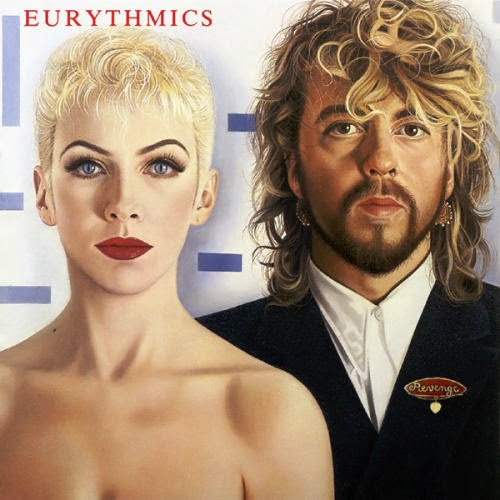
Eurythmics - 'Thorn In My Side'


Such was the all-conquering clock-resetting art-pop-decimating power of Live Aid that it was even able to work its ‘magic’ – in the most debatable definition of the word imaginable - on acts that didn’t even perform at the event. Eurythmics had in fact been pencilled in for a slot at Wembley Stadium, but had to pull out at the last minute due to Annie Lennox having a severe attack of vocal chord-related health worries, yet even so the latter half of 1985 would see them being pulled slowly but unstoppably towards the stadium rock end of the musical spectrum. Out went sophisticated if annoyingly arch two-person electropop with performance art leanings, and in came shoutalong choruses, eight million-member rock posturing lineups, and Dave Stewart flamboyantly strumming a guitar that was barely audible on the actual records. And throughout all of this, lest we forget, Dave Lee Travis insisted on telling Radio 1 listeners that he found their name – inspired by early 20th Century progressive theories on pre-school education techniques interpolating strictly-defined usage of rhythm patterns – ‘hilarious’. No, us neither.

It was something of a surprise, then – especially given the media-dominance of the irritatingly ubiquitous (and indeed irritating full stop) There Must Be An Angel (Playing With My Heart) the previous year – that their 1986 album Revenge was initially something of an under-performer in the UK, with lead single When Tomorrow Comes only just scraping into the top forty. However, their new-found theme-from-LA-Law-with-distortion-pedals-esque musical direction proved to be just what America was looking for, leading to music press murmurings of their off-radar States-conquering and the album being given a second push, duly propelling the uber-commercial Thorn In My Side into the UK top ten.

Though it was an obvious choice at the time for side two of Hits 5, it has to be said that Thorn In My Side isn’t exactly one of those inclusions on the tracklisting that fills the nostalgic relistener with excitement, and this is borne out by the fact that it’s actually quite pleasant to hear again for about thirty seconds, but after that massively outstays its welcome, especially during the seemingly endless ‘breakdown’ bit in the middle. What’s worse, it marks the first appearance on Hits 5 of that most hated of mid-eighties musical cliches, the American Saxaphone (of which The Housemartins perceptively observed “it follows me all the way from the telly to the public house/my fingers are always in my ears but the reed’s always in their mouth”), which immediately loses Dave and Annie any goodwill they may have been begrudgingly granted. Worse still, it bears some subtle but uncanny similarities to another, much better song that will appear later on Hits 5, and the video is overwrought model-festooned MTV-friendly glossy nothingness of the first order. Happily, some fellow post-punk stragglers are on hand to lift matters a bit…


The Stranglers - 'Always The Sun'


From legwarmers to yo-yos, from Batman t-shirts to those spidery octopus things that rolled down windows, fads famously came and went in the eighties with an alarmingly short average shelf life. The Stranglers, however, just kept on coming back. Every couple of years, they’d seem to fall out of fashion and into ridicule, only to suddenly score yet another hit with yet another strong single and find themselves flavour of the month yet again, with a fresh round of uniformly-adopted ‘The Men In Black Are Back!’ headlines even when they were wearing other colours. What’s more, with the aid of a liberal helping of tenuous adherence to (or, if you prefer, downright disregarding of) the Gregorian Calendar, you could make a reasonable claim that they sort of bookended the eighties with a brace of unlikely but well-recieved cover versions; Walk On By as the seventies faded, and 96 Tears as the nineties arrived.

Slap bang in the middle of the decade came yet another resurgence in career fortunes with the Dreamtime album, and its highly popular – if not exactly highly-top-thirty-scaling – attendant singles Nice In Nice and Always The Sun. The poor chart showing of these two particular singles – quite at odds with how successful the general public always seem to remember them as having been – is apparently still something of a sensitive point with the band, who even at the time were claiming that their then-record label weren’t responding to single-buying demand levels adequately. In the long term they would seem to have been proved right, not least on account of Always The Sun being reissued several times, becoming a cornerstone of a great many Greatest Hits collections, and later cropping up regularly in adverts and as backing music in TV shows.

It’s very difficult to be acerbic, sarcastic or surreal when you’re talking about a band that have had to put up with more than their fair share of mostly unwarranted and indeed mostly unfunny jibes over the course of a long career; even more so when it’s in relation to a song that’s never been given as fair a crack of the whip as it clearly deserves. Complicating matters still further, Always The Sun may not exactly be the most profound of statements on global economic inequality that climax with a cryptic allusion to nuclear war, but compared to most other mid-eighties attempts at doing this via the medium of pop music it’s at least restrained, impassioned and to the point. Even the video can’t really be mined for gag material, as it merely features The Men In, erm, Grey miming in a darkened studio with the occasional flash of ‘eco’-themed stock footage. Which makes it all the more pleasing to hear it on Hits 5, to be reminded how much of a great song it is, and to have little else to say so here. But will circumstances be quite so favourable for a certain other bunch of leftover New Wave-rs in it for the long haul…?


The Pretenders - 'Don't Get Me Wrong'
 

Like The Stranglers, The Pretenders are enduring New Wave-era stalwarts who have suffered from a long-term unreasonable image problem, though in their case it’s entirely the opposite kind of unreasonable image problem. Whereas the so-called Men In Black were all too regularly written off as little short of their own tribute act, unable to move on musically and trapped in the persona that had brought them their greatest public and critical adulation (both of which, as outlined in the previous entry, were demonstrably untrue), time has come to pigeonhole The Pretenders as ultra-bland ultra-radio-friendly stadium rock lightweights appealing to listeners who considered Q Magazine a bit ‘daring’. While Chrissie Hynde’s post-Live Aid ubiquity as featured vocalist on UB40′s rotten cover of I Got You Babe hardly exactly helped matters, this unfair bracketing does a tremendous disservice to their sharp and assertive early output, their frontwoman’s status as a take-no-prisoners role model for an entire generation of erstwhile teenage girls, and the fact that at this point they were barely two years away from a snarling, blistering song about the tragic fate of their original guitarist James Honeyman-Scott. Meanwhile, UB40 are yet another band that emerged from the post-punk scene and have since found themselves tarnished by an admittedly self-inflicted image problem that has all but wiped their better material from history… but unfortunately for them, they aren’t on Hits 5.

Sticking to bands who are on Hits 5, it’s difficult to avoid the fact that The Pretenders who made the album Get Close in 1986 were in many ways a different band to The Pretenders of the post-punk era. In fact they were almost literally a different band, with Hynde and Honeyman-Scott’s replacement Robbie McIntosh joined by former Haircut 100 drummer Blair Cunningham and perma-Raybanned bassist-for-hire TM Stevens, and a more jaunty and commercial sound replacing the often harsh-edged thrashy jangling of their earlier output. Though in balance, it did also include some ‘guitar synth’ work by Bowie sidekick Carlos Alomar, and a cover of Jimi Hendrix’s Room Full Of Mirrors, which hardly exactly left it sitting comfortably in the Deacon Blue bracket.

Released in the late summer of 1986, lead single Don’t Get Me Wrong was an unsurprising top ten hit, helped in no small part by a technically impressive-for-the-time video in which Chrissie Hynde was inserted into archive footage from The Avengers. It’s a bouncy and deceptively lightweight song bolstered by subtle but effective production (not least the unepected dramatic bursts of searing guitar towards the end), though despite what some Citation Needing contributors to Wikipedia may claim, the lyrics don’t really stand up to close scrutiny. In many ways, it’s a song that seemed tailor-made for ‘oldies’ radio even before it was a ‘newie’, and while it’s nice enough to hear again it’s not exactly a track that’s liable to get the listener freebaseing pure uncut 1986 nostalgia. Though sometimes even that can be a good thing. There is, after all, a dark side to Hits 5


5 Star - 'Rain Or Shine'


If you’re taking a track-by-track look at a compilation of then-recent pop hits from many years ago, chances are that you will eventually run into something you really can’t stand. Something that you hated so much at the time that you still consider it one of the most irredeemably awful records you have ever had the misfortune to hear. And indeed, something so nauseating and offensive to the ears that the prospect of having to sit through it again in its entirety almost put you off doing this project altogether. That record, in case you haven’t worked it out already (the clue is, quite literally, in the title), is Rain Or Shine by Five Star.

Since we’ve so far gone to great lengths to challenge the widespread public perception of both The Stranglers and The Pretenders, given the sociopolitical benefit of the doubt to Paul Simon, charted a crash course through Julian Cope’s haphazard eighties output with a couple of jokes thrown in for good measure, and explained just why that bloke from Hollywood Beyond was sitting in that big chair all the time, it’s only fair that we afford an equal amount of proportionally due respect to Five Star. So, in short, they were a family-derived collection of bacofoil-clad Jacksons wannabes with an unreasonably inflated idea of their own musical worth, who specialised in tepid dance-pop only with post-New Romantic lyrical references to technology and the space age to make it more ‘exciting’, and were so inconsequential that they were openly mocked by children on live television. Whether you liked The Smiths, A-ha, Madonna or even ‘Belouis’ ‘Some’, they seemed to be the absolute antithesis of everything you found moving, exciting or fulfilling about pop music, and in this regard were far worse offenders than anyone who was ever produced by the in comparison outrageously unfairly maligned Stock, Aitken & Waterman. And Rain Or Shine was by some distance the worst of the lot; which, when you have a back catalogue that also includes If I Say Yes, is no mean feat.

Rain Or Shine, a sickly mid-paced drippy ballad of such overpowering tweeness that it makes Sarah from Belle & Sebastian look like she’s picking a fight with an entire taxi queue, is so unremittingly awful that for the sake of linguistic decency it’s scarcely worth commenting on, other than to chortle at the line “Robin Hood and Major Tom/all the superheroes rolled into one”. Not only does this hint at a profound misunderstanding of the lyrics of Space Oddity, and indeed the legend of Robin Hood, it’s also worth pointing out that ‘all the superheroes rolled into one’ is more or less an accurate description of Peter Petrelli from Heroes, who would certainly have had some angsty difficulty in living up to the romantic promise of the lyrics. And who wrote those lyrics? None other than Pete Sinfield, formerly of King Crimson, and author of the oft-quoted around these parts 21st Century Schizoid Man. Well, we all have our off days. If anyone really cares, Rain Or Shine came from the album Silk And Steel, which was also handily namechecked in the lyrics, and it may actually have the worst video of all time. Anyway, you can stop covering your ears now, the next one on Hits 5‘s quite good…


Dead Or Alive - 'Brand New Lover'


What a difference a year makes. In 1985, Dead Or Alive were scarcely out of the pop charts, and thanks to visually and verbally provocative frontman Pete Burns, barely out of the papers either. Hailing from the same Liverpool-centric post-punk jamboree as Julian Cope - indeed, Burns had previously worked behind the counter of scene-pivotal independent record shop Probe Records - Dead Or Alive had made a couple of murky-yet-tuneful critically-raved-over proto-goth electropop singles for indie labels before they were snapped up by Epic. One moderately successful debut album later, they were teamed up with Stock, Aitken & Waterman – one of the first acts to work with the soon-to-be-dominant pop production team, in fact – in an audacious gamble that paid off handsomely. With their sound refined into a sort of spectral eurodisco, and their knack for a catchy hook emphasised by up-to-the-minute synth-pop production, second album Youthquake gave rise to no less than four seizeable hit singles, not least two-week chart-topper You Spin Me Round (Like A Record). And in what was perhaps their most startling achievement of all, Dead Or Alive even seemed to still be attracting public interest post-Live Aid.

Quite what went wrong between then and late 1986 is difficult to say, but despite the absence of any readily discernible reason, the inescapable fact of the matter is that surprisingly few people seemed to have much interest in the return of Dead Or Alive. So few, in fact, that ready-to-roll follow-up album Mad, Bad & Dangerous To Know, again produced by a by-then-very-much-in-the-ascendant Stock, Aitken & Waterman, ended up being delayed until early 1987 following the poor chart performance of big comeback single Brand New Lover. It’s probably true to say that it was really more of an ‘album’ as opposed to a straight-up collection of potential hits like Youthquake, and as such probably gave off much less commercial ‘vibes’ from the outset, but even so, you’d think that a few more of their clearly enormous fanbase of only twelve months previously might have been at the very least vaguely interested in what they got up to next.

The compilers of Hits 5 clearly assumed so too, which is how it ended up being plonked towards the end of the second side, and although some sources point towards a pressing plant error resulting in not enough copies being in the shops to meet first week demand, a quick relisten to Brand New Lover reveals the uncomfortable truth that it’s a really rather ordinary song by a really rather good band. It’s pleasant enough, but doesn’t really go anywhere, doesn’t really stand out, and the rather muted production – more like something you would have heard on an early Jason Donovan b-side before Mike, Matt and Pete started putting a bit more effort into these things - doesn’t do it any favours either. Put it this way, it’s no In Too Deep. Perhaps, then, its failure to progress any further than number thirty one isn’t so hard to understand. Then again, a really rather ordinary Dead Or Alive song is still a million times better than some of the codswallop that enjoyed a stronger chart showing in 1986…


Haywoode - 'Roses'


With every double-album recent hits collection like Hits 5 – so that will be the other Hits albums, the Now That’s What I Call Music!s, the Out Nows the Smash Hits Partys and that Raiders Of The Pop Charts thing – there was always one track that you’d just end up skipping altogether, sometimes even from the very first listen. Quite often the precise identity of this track would vary from listener to listener – opinion must have been divided on the likes of, say, Big Country, Jan Hammer and Jaki Graham to name but a few - but sometimes there turned out to be one song that almost everyone agreed on in their needle-lifting/fast-forward-hitting millions. Not because it was particularly bad, or particularly angular, or particularly by ‘Belouis’ ‘Some’, but just because it was, well, a bit on the dull side.

‘Sid’ Haywoode – for that was apparently her full name – had been making largely unsuccessful dance records since the early eighties, and it wasn’t until 1986 and a teaming up with Stock, Aitken & Waterman sideman turned part-time producer Phil Harding that she scored a hit with Roses. And the choice of Phil Harding was an apposite one, as everything about Roses – from the melody to the arrangement to the lyrics to even Haywoode’s actual adopted image for the video and tie-in appearances – smacked of little more than a transparent attempt to jump the pink-streaked bandwagon started by Mike, Matt and Pete’s big breakthrough act of the year before, Princess. The main difference, however, was that Princess had stronger songs, sharper melodies, denser production and, if we’re being pedantic about it, a better hat. Roses, with its ‘sassy’ lyrics masking a rather gender-politically dubious message and aesthetic-numbing Grandstand theme-aping squealy session guitar, was simply the right record at the right time. Everything else about it is just plain wrong.

What’s more mystifying is the question of what exactly it was doing on Hits 5. Roses had been a hit – actually stalling just outside the top ten – back in June 1986, and although as we shall see it wasn’t actually the oldest inclusion on the album, it was certainly long enough past its shelf life to strike any pop-obsessed youngster perusing the tracklisting as a chronological fish out of water. Haywoode clearly still has her followers, as there are plenty of online profiles out there that make ridiculously great play of her non-Roses achievements, coming across like some weird eighties pop counterpart to that article where Lester Bangs invented a parallel dimension decade-straddling career for sixties one-hit garage-psychers The Count Five, while Roses-sporting album Arrival has been reissued in a jaw-droppingly lavish Deluxe Edition. It’s not likely, however, that their ranks will be swelled by anyone taking a retrospective relisten to Hits 5. Still, at least people actually remember her one hit…


The Real Thing - 'Straight From The Heart'


For better or for worse, 1986 was the year when The Opportunistic Cash-In Re-release really came into its own. From jeans ad-soundtracking Kamen-endorsed Motown oldies, to anniversary-contorting punk hoedowns, to an unlikely rock’n'roll relic catapulted chartwards by an ideologically dubious claymation caricature, record companies were suddenly rifling through their back catalogues with a renewed vigour. The Real Thing’s seventies chart-topping disco favourite You To Me Are Everything hadn’t been used in an advert or film, nor was it – despite being subtitled ‘The Anniversary Remix’ – tied in with any tangible actual anniversary, nor was it even particularly favoured by the emergent ‘Rare Groove’ scene. In truth, it was really only promoting a standard-issue Greatest Hits album, and yet ironically it proved to be the most successful revival of the lot, only narrowly missing out on repeating its chart-topping antics and leading to two further Real Thing oldies – again in handy ‘Anniversary Remix’ makeovers – climbing almost as high again in the charts. And then, inevitably, they had to have a go with a ‘new’ song.

In fairness, The Real Thing had never really been away at all. They’d carried on scoring minor hits into the eighties, and once they hit a temporary brick wall chartwise, still managed to carve out a successful career in TV variety shows and backing old pals like David Essex. The second-time-around hits were in some ways little more than a welcome bonus for a band that were still a going concern and still doing very nicely thank you, and nobody could really blame them for trying to get their new material some exposure on the back of the reissue-mania. The problem, though, was exactly the same one that they’d faced the first time around – that despite their success in the field of Hill Street Blues theme-soundalike mid-paced balladeering, The Real Thing were actually a pretty serious band, heavily into their deep funk sounds and keen writers of socially aware material, including a startling late seventies song trilogy that more or less predicted the urban unrest that would break out in the UK in the early eighties, but whenever they headed in that direction, for some strange reason the public just didn’t want to know.

Straight To The Heart, the ill-fated ‘new’ single released at the tail-end of 1986, sat somewhere between their musical extremes, and – yes, you guessed it – once again the public just didn’t want to know. It only just scraped into the top seventy five, and thereafter disappeared from view completely, to the extent that it’s not even been uploaded to YouTube in any form. It is, however, preserved for posterity at the end of side two of Hits 5, and it’s a creditable effort with some neat jazz-funk touches in the backing and an interesting free-form approach to the verses. And, well, that’s it for side two, and ahead lies what you’ve all been dreading – the inevitable ‘ballads side’…