Showing posts with label skiboy. Show all posts

The Best Of Looks Unfamiliar #4: The Real Bowie Says To The Imagined Bowie


Looks Unfamiliar is a podcast in which writer and occasional broadcaster Tim Worthington talks to a guest about some of the things that they remember that nobody else ever seems to. This is a collection of highlights from shows nineteen to twenty four, featuring Paul Kirkley on The Kids From Fame Again, Garreth F. Hirons on Sweet 75, Darrell Maclaine on The Brennan JB7, James Gent on When The Wind Blows by David Bowie, Ros Ballinger on Microsoft Explorapedia, and Jonny Morris on Jesta Giggle by The Barron Knights. Along the way we’ll be finding out why The Barron Knights should have covered T.V.O.D., where the whistling from Never Let Me Down was ‘borrowed’ from, which CDs you should never trust your car with, and which former member of Nirvana really loves accordions. Plus there’s also something you may not have heard before – Tim on Betamax Video Club talking about Absolute Beginners, and an extra downhill slaloming surprise at the end…

You can get Tim’s new book, Can’t Help Thinking About Me, here.

DOWNLOAD IT HERE - SUBSCRIBE IN ITUNES - RSS


You can also find the full version of each show here...


Looks Unfamiliar is hosted by Podnose.


Support Looks Unfamiliar by buying one of Tim's books! Can't Help Thinking About Me is brand new and features loads of brand new material, including plenty about Camberwick Green, Trumpton and Chigley, and you can get it in paperback here or from the Kindle store here.

It's Still A Police Box, Why Hasn't It Changed? Part Eight: There's A Stahlman, Waiting By Some Pipes


When Doctor Who returned for its seventh run in 1970, it was almost a different programme. Much like we very nearly drew a line under this series of articles after the end of the black and white era, the BBC very nearly drew a line under the series itself; the details will always remain hazy and open to speculation, but with declining post-'Dalekmania' interest in mind, there were at the very least discussions about the possibility of replacing it with something new and exciting and more attuned to the thrilling new world of colour television. Thankfully, sanity - or more likely paperwork - prevailed, and producer Derrick Sherwin was encouraged to take Doctor Who in a fresh and reinvigorating direction.

Opting to literally bring the series down to Earth, Sherwin came up with a new format that crackled with the energy and freshness of the arrival of both colour television and a new decade; the exact same phenomenon that I touched on in the piece about Chigley in The Camberwick Green Procrastination Society, in fact. Inspired by certain recent hit movie franchises and ITV shows, with The Doctor in exile and working with a gadget-friendly military division dedicated to tackling alien, technological and quasi-paranormal threats, this gave rise to a fast-moving, action-packed, visually arresting set of episodes with a more relatable sense of menace, and a stylish new leading man in Jon Pertwee, who it's safe to say was one of the Doctors who enjoyed living the part. It also gave rise to the budget rapidly running out, and cost-consciously lengthy stories that continue to divide long-term opinion. Viewers at the time certainly seemed quite undivided, though, so fire up The Inferno and let's drill down to the real talking points about it...


Was The Opening Of Spearhead From Space Really A 'Shot-For-Shot Remake' Of The Opening Of Quatermass II?


Cash-spillingly made entirely on film and entirely on location, the appropriately-named Spearhead From Space was a powerhouse opener not just for the new series but for the entire new direction; indeed, there's a serious case for arguing that it is the single greatest Doctor Who story ever. Beating the BBC's simultaneously-launched new adult 'sci-fact' drama Doomwatch to the punch - created, possibly not entirely coincidentally, by recent ship-jumping Doctor Who scriptwriters Gerry Davis and Kit Pedler - it exhilaratingly scared the wits out of viewers with four episodes full of fast-moving Carry-On-film-gone-psychotic mayhem courtesy of a plastics factory infiltrated by a malevolent space octopus. And one fact that everyone knows about Spearhead From Space is that it opened with a 'shot for shot remake' of the opening of the revered 1955 BBC science fiction serial Quatermass II. Or did it? While it's established fact that as part of his relaunch strategy, Derrick Sherwin ordered up several episodes of the Quatermass serials from the BBC Film Library to plunder for inspiration, he himself has never referred to a 'remake' of any kind, let alone a 'shot for shot' one, and this appears to have been largely a fan assumption. A well-founded assumption, maybe, but an assumption nonetheless, and one that everyone has long just accepted on face value; how many dedicated fans of either programme could tell you with any certainty on the spot whether this was an accurate observation or not? After all, back when this phrase first became common currency, very few Doctor Who fans could realistically have seen Quatermass II. Now that we can see it, though... The Bolts, the first episode of Quatermass II, opens with spinning radars and dishes on top of military vans, a supervisor doing some trademark Nigel Kneale dry-witted dialogue with a radar operator about his voice going faint due to "the village boozer" and how "I'm going to make ruddy BBC announcers out of you lot if I have to soften up your gullets with my bare hand", reports of an unusual meteor shower that they actively dismiss as 'a jet or a fuel tank', and an interminable sequence with a farmer on a tractor stumbling across said non-jet/fuel meteors in transit. Episode One of Spearhead From Space opens with standard issue 'Earth seen from space' footage, a radar spinning on top of a radar station, a nervy operator calling 'ma'm' in for a second opinion on a weird meteor shower apparently flying in formation, and an impressive shot of the meteors searing through the sky and their mercifully quick discovery by the inaugural Pertwee-era Poacher, Sam Seeley. So not quite a shot-for-shot remake, but a very close and intentional homage, and very much in keeping with Sherwin's stated aim to capture the ambience and realism of the serials rather than just copy them directly. Anyway, if the comparison caused some fans to seek out the Quatermass serials, then there's nothing really wrong with a bit of harmless and convenient conclusion-jumping. Aside from which, there are bigger and more fundamental questions surrounding Spearhead From Space...


Who Was Channing?


When the Nestene Consciousness attempted to destroy mankind and take over the Earth, it did so with the assistance of specially created plastic human-ish figures with ray guns hidden in their wrists who did its space octopus bidding. At the most basic end of this artillery were a small army of skinheads in boiler suits whose efficiency would appear to be questionable at best. Next up the scale were the disconcertingly David McCallum-esque shop window dummies that smashed out onto the high street on cue, casually annihilating old women, members of The Bluetones and a not at all over-reacting man on a bike in a hat, and worse still causing disruption to poor old Wally The Workman's lunch break. And then there were the waxwork-usurping plastic replicas of politicians, world leaders, high-ranking military officials, and Auto Plastics' mysterious new manager, Channing. Hardly exactly somebody worth going to the trouble of replicating, you might think, and if you did then you'd be even more right than you thought. Not only is it never explained who the sinister figure given to Pearly Spencer-esque glares through frosted glass is supposed to be a replica of, it's even actively implied that there was nobody that he could even potentially have replaced; neither of his colleagues-by-proxy Ransome or Hibbert (with whom he forms an unnervingly Gilbert And George-esque double act) seem to associate him with any known figure from Auto Plastics management past or present, and there are even a couple of direct references to his just having arrived from nowhere. It's entirely feasible that the Nestene Consciousness might have simply plasticed him up from nowhere, but if that was the case, why not just replace Hibbert with a replica? It can't even really be argued that they needed the human staff of the factory under their control to 'make' Channing, as he appears to have pre-existed any of the actual untoward petrochemical-driven activity. One angular theory is that he may actually have been Hallam, Hugh Burden's character from the 1966 Michael Caine film Funeral In Berlin, whose defecting-to-the-East-to-steal-Nazi-gold chicanery would at least have made him an idea candidate to install as the head of a plastics factory bent on the destruction of humanity. Sadly, we may never know as, like all good Cold War double-agents, he melted at the end of the story. But at least he was something approaching a convincing mimicry of an actual identifiable human...


How Many Voices Did Radio's 'Man Of A Thousand Voices' Actually Have?


If there was one thing that Jon Pertwee was not short on, it was unlikely and frequently incoherent anecdotes that existed primarily to emphasise how brilliantly talented he was. From being offered virtually every part in Dad's Army at one point or another, to the endless pranks pulled by, with and on his 'old sparring partner' Tenniel Evans, to his frequently trotted out excuse about not having seen any of the subsequent Doctors because "I've been very busy working on another show called Worzel Gummidge", to the amusing mis-spellings of his name that weren't, to the proud proclamations that The Ghosts Of N-Space was 'Number One in the Hit Parade', to whatever that bewilderment was about bareback horse-riding in drag as 'Madam Pertweeova', he would offer each and every one of them uninvited if you gave him half the chance, and usually even if you didn't. And then there was his - and conspicuously few other people's - claim that he was known as Radio's 'Man Of A Thousand Voices'. Perhaps mercifully, he never really got to use any of them in Doctor Who. But he almost did. In episode five of Inferno, Pertwee utilised these self-proclaimed vocal talents to essay the part of a radio announcer reporting on the state of emergency imposed after the Parallel Earth's crust was penetrated by Project Inferno. To further cunningly conceal his identity and prevent anyone from suspecting a thing, Pertwee was actually seen on screen listening to his own announcement. Thankfully, producer Barry Letts saw sense and cut the brief scene before transmission, arguing that it was too obviously the series' lead actor doing one of his 'many' (it says here) voices and nobody would be fooled for a second. As sometimes happened in those days, though, this cut was actually enacted after duplicate copies of the finished episodes had been made for overseas sales, and when a full colour copy of Inferno was located in Canada in the mid-eighties, it turned out to have the missing sequence intact. Despite the best efforts of the cast and their 'concerned' faces, it has to be said that the voice issuing from the radio sounds absolutely nothing whatsoever like any newsreader in the entire history of news ever, and very much indeed like Jon Pertwee doing an effort-deficient impression of a Ray Alan-depleted Lord Charles in the middle of a maelstrom of static and crackles, giving rise to the possibility that Pertwee might actually have been responsible for the infamous 'Vrillon Of Ashtar Galactic Command' hoax. Mind you, it wasn't even the silliest line he delivered in that story...


"What Did You Expect? Some Kind Of Space Rocket With Batman At The Controls?"


In Inferno, The Doctor manages to get himself stuck in a parallel universe where he is able to observe what would happen if the drilling project in his own reality was allowed to continue unrestricted, and also if Benton shouted his lines with a slightly different inflection. While attempting to get back in time to warn everyone of the dangers of allowing furious toxic red sludge to seep corrosively all over the globe because a couple of self-satisfied men with bad hairstyles thought climate change was a myth, The Doctor has cause to show the detatched Tardis console to the alternate reality version of decidedly lava-averse drilling safety consultant Greg Sutton, whose bewilderment at this method of cross-dimensional transportation prompts The Doctor to ask if he was expecting "some kind of space rocket with Batman at the controls". Even aside from the logistical implications of acknowledging the Caped Crusader as a fictional element of the Doctor Who 'universe', and the question of exactly how much time he spent at the controls of space rockets of any sort, there's no swerving the fact that this is a quite comprehensive and authoritative slight aimed at a longstanding rival, and one whose big television adaptation had only recently been pitched directly against Doctor Who by the 'other side' to boot. Was this the new production team announcing that the days of furrowing brows over whatever ITV could throw at them were over, and the 'ratings war' was won before it had even started? Possibly, but what is more interesting still is that this was the start of what would turn out to be a very bleak decade for poor old Bruce Wayne. A long way from anything resembling an organised 'rebranding', Batman spent the seventies as little more than a quasi-comedic piece of iconography, with all manner of untamed licensing arrangements leading to everything from a bizarre early seventies 'tour' by Adam West accompanied by Nicholas Young from The Tomorrow People as Robin, to the seemingly endless procession of mind-hurting 'Bugs Bunny Meets The Superheroes' touring stage shows, and all the while repeats of the sixties series swirled around the schedules to the 'delight' of an audience who were perhaps slightly more cynical than those who watched it the first time around. While the actual comics tried their best to return the franchise to its darker roots, which in turn would ultimately lead to the late eighties reinvention, the most sophisticated take on Batman that the wider seventies public saw was the Filmation series, and that's not necessarily as impressive a yardstick as it might sound. Anyway, regardless of how familiar the production team may or may not have been with what actually happened in Batman, Doctor Who had reason to be bigging itself up, not least on account of some of its decisive breaks with its recent past...


They Like Intelligent Strong Sensibly-Dressed Female Lead Characters And They Cannot Lie


Over the past couple of instalments, we've seen plenty of evidence of just how fond the Doctor Who production team were of casting shapely young ladies as series regulars - and in supporting roles whenever they got the chance, which was more or less all of the sodding time, basically - and what delight the cameraman took in angling their shots around certain prominent physical features. Good lord, have we seen it. So much so, in fact, that there have been a couple of complaints, almost as though someone writing about television made in the sixties from the perspective of an entirely different century should have had some say over exactly how it was made. Or indeed should ignore how it was made. Well, I'm not taking the blame for some blokes in suits speculating on what might get 'the dads' watching back in 1967 for a moment longer, and thankfully it was at just this point in Doctor Who history that Derrick Sherwin decided that he'd had quite enough of the dolly birds getting in the way of telling a thumping good scientifically veracious story too. Given that the relaunch involved Earth-exiled The Doctor teaming up with military counter-alien task force U.N.I.T., and bearing in mind the example set by previous one-off proto-feminist characters like Ann Travers and Isobel Watkins, he took the opportunity to ditch the traditional assistant and pair him up instead with level-headed long word-spouting Cambridge-educated academic Dr. Elizabeth Shaw. Rational, deductive, and never prone to panic even when being chased over railings by weirdly crouching stuntmen or whacked on the head by bipedal lizards in a barn, Liz was a breath of fresh air both in character and in appearance, favouring sensible hairdos and with-it yet presentable clobber over a self-consciously 'sexy' look, and some would argue actually ending up looking more sexy as a consequence. Perfectly suited to the longer form and more cerebral approach of Series Seven, Liz gave reinvented Doctor Who a depth and a level of dialogue that did an enormous amount to tackle the 'lol you can see the strings!!! oh no hang on that's Stingray' sneery misconceptions that were already haranguing the show and make it into a relevant and widely enjoyable series again. It's just a shame that, due to a number of reasons, the character was amicably written out after the end of the series and never really seen again. It's also a shame that nowadays buffoons spend too much time splitting hairs over whether she was an official 'companion' or not because we never saw her travel in the Tardis or something; no but she was in The Ambassadors Of Death so stick that in your wilful refusal to consider the conventions for crediting regular cast in BBC shows around the time The Daleks' Master Plan was made and smoke it. While Liz definitely had a new look, though, was she actually part of a wider one...?


Was There Actually A 'New Look'?


It's entirely reasonable to say - as people quite often do - that Series Seven represented a new direction for Doctor Who. It's slightly more questionable to claim - as people equally often do - that this also involved a 'new look'. Although there's a definite unity of style, direction, ideology and indeed overall approach, it's less accurate to say that there's a tangible visual unity. On face value, the four stories would seem to have little in common with each other outside of being made in colour, and ironically it was precisely because of the use of new-fangled colour television technology that they ended up appearing so visually disparate. Due to industrial action over the deployment of new studio equipment, Spearhead From Space ended up being made entirely on film and entirely on location. The others used the traditional combination of filmed location and videotaped studio work, but the overspend on the first story meant that the amount of sets they used varied from several to, essentially, one big massive one. The new image-combining effect Colour Separation Overlay, still very much an untested and experimental process at that point, is effectively used for different purposes in all three. The Ambassadors Of Death plays around with elements of postmodernism, from the opening on-the-spot reporting incongruity to Jon Pertwee more or less walking off the set at the end. This isn't exactly helped by the fact that all four stories now effectively survive on different formats; the original colour film prints, a restoration made by combining black and white film prints with the colour signal from an off-air video recording, an alarming yet outstanding Frankenstein-esque hotchpotch incorporating elements of black and white film, electronically recovered colour, hand-colourisation, and an off-air afflicted by severe interference, and a conversion back from not-very-well-converted-in-the-first-place 525-line NTSC video masters respectively, with only the first episode of The Ambassadors Of Death still surviving on its gloriously glossy original videotape. Let's not split hairs about this, Series Seven is one of Doctor Who's absolute highpoints, but to suggest that it represented a solidly-defined vision of, well, vision is a bit of a stretch. In fact we'd have to wait for the next series for that. But while we're on about all of those minor yet significant differences...


Doctor Who And The Doctor Who And The Doctor Who And The Silurians


If you want concrete evidence that the production team had difficulty establishing exactly what this 'new look' should be, look no further than the fact that all four stories in Series Seven essentially had different opening titles to each other. Despite the 'title zooming out' business, Spearhead From Space at least has the early seventies opening titles more or less as we know and love them, even if they do somehow bafflingly manage to look 'on film' despite actually being on film in every single other episode they were used in anyway. Inferno goes for a mid-sixties-esque gambit of appending appropriate scene-setting stock footage - in this case rampant spewings of lava - to the end of the titles and behind the actual story title. The Ambassadors Of Death tries out a weird and not remotely successful stop-starty 'sting' approach with a recap of the previous week's cliffhanger intrusively shoehorned into the middle. And then there's The Silurians. Or, as the pedants would frowningly have it, Doctor Who And The Silurians. The whys and wherefores of this diversion from the norm and indeed from anything resembling logic may well have been endlessly speculated and debated on, but there's no getting away from the fact that that's exactly what it says at the start of all seven honkingly-soundtracked episodes. So is that how we should refer to it? Well, there's a thorny question and a half. Normally we're all for point-proving pedantry around here, but this just seems like a pedantically proven point too far. It looks wrong, it sounds wrong, it disrupts episode lists like nobody's business, and anyone who interrupts anyone else's perfectly valid and well-made observations about The Silurians to condescendingly chortle that it's actually called Doctor Who And The Silurians should be forced to write out 'I Must Remember To Occasionally Actually Enjoy Doctor Who As An Actual Television Programme Instead Of Looking At Huge Long Lists Of Nothing In Particular And Going 'Aaaaaahhhhhhh!' With A Big Self-Satisfied Look On My Face' ten thousand times whilst being forced to watch the episodes of The Tripods set in the vineyard on a loop and edited into 'movie format'. Seriously, in similiar circumstances, would you voluntarily refer to Blake's 7 And The Space Fall, Rising Damp And The Come On In The Water's Lovely, Trumpton And The Pigeons or Randall And Hopkirk (Deceased) And The Ghost That Saved The Bank At Monte Carlo? Probably yes, knowing some people, but that's by the by. It's a fascinating production slip-up - and one that feels oddly in keeping with the whole reinvention of the series to boot - but to use it to score imaginary points in your own head is just crackers. In any case, there were much stranger anomalies worth commenting on about The Silurians. Or were there?


The Music In The Silurians Isn't As 'Weird' As People Seem To Think


Aside from Channing looking through a frosted glass window, the big television event of 1970 was BBC1's adaptation of The Six Wives Of Henry VIII, famed as much for the towering central performance of Keith Michell as the divorce-behead-friendly monarch as it was for the honkingly dronethentic soundtrack provided by 'early music' firebrand David Munrow. Not far behind were the similarly Munrow-bolstered follow-up Elizabeth R and over in the cinema Ken Russell's The Devils, and Munrow himself could regularly be heard on Radio 3 introducing youngsters to the delights of the crumhorn in the storytelling slot Pied Piper. Prog Rock fans were thrilling to the adoption of medieval instruments by the likes of Led Zeppelin, Gentle Giant, Gryphon and The Roundtable, the last of whom coincidentally featured a certain David Munrow in their lineup. While it may well have been largely down to the efforts of one particular clavichord-wielding evangelist, the fact of the matter is that there was a significant resurgence of mainstream interest in 'early music' as the seventies rolled around. So when Carey Blyton opted to emphasise the earthy prehistoric nature of the primary antagonists of The Silurians by marking their appearance with something somewhere between Chris Morris' 'Answer Prancer' music and a minuetting goose, it wasn't quite so much of a deviation from normality as the average 'programme guide' might seem to suggest. Yes, it might be repetitive, distracting, and at a massive seven episodes' worth of it even verging on annoying in places (although, let's be honest about it, the sound made by that Silurian tracker detector thing was way more irritating), but suggesting that this was some crazy uncontrollable experiment in audience torture that got out of hand is a suggestion that could be disproven by Okdel in six seconds flat. And in any case, this was far from the only infiltration of the series by Progressive Rock...


Who Were The 'Heads' On The Production Team?


In some ways, Series Seven was quite 'Prog' in itself, with its lengthy stories, abstract concept album-friendly themes and storylines, and combination of mythological and futuristic concepts with slow-moving and refreshingly unspectacular scientific veracity. It's reasonable to assume that this was a fortuitous coincidence of timing and budget, and at the very most - and not unlike the 'early music' business - a background influence from the general popular-cultural mood of the time rather than a deliberate attempt to distract the far-out types who meant it, man, from their fourteen thousandth listen to Nice Enough To Eat. Though, that said, there was enough direct infiltration from actual Progressive Rock into Doctor Who to raise the odd retrospective eyebrow. The appearance of a short but prominent burst of Fleetwood Mac's Oh Well - Part 1 in Spearhead From Space can just about be explained away as being due to the fact that it was rocketing up the charts at the time the story was filmed, although it does seem a tad incongruous when they could have opted for something less hard and heavy - and probably easier to license for commercial releases later on - such as Early In The Morning by Vanity Fare. What can be less easily waved away, however, is a scene recorded for the next series story The Mind Of Evil later in 1970, wherein The Master is seen listening to The Devil's Triangle, an instrumental suite from King Crimson's top five LP In The Wake Of Poseidon. While this was undoubtedly one of the top sounds of the year, it was only really that amongst a certain audience of tuned-in album-leaning prog types, and somebody must have intentionally picked it out and argued the case for dubbing it on to a television programme with an audience made up primarily of people who probably thought that Yellow River by Christie was a little on the loud side. So who, if anyone, was wandering around the Doctor Who production office waving around copies of Space Hymns, May Blitz and Three Parts To My Soul? Although he probably would have loved Quintessence, it's doubtful that Barry Letts was first in the queue for the nearest A-AUSTR gig. Terrance Dicks would probably have said that Progressive Rock was fine by him "as long as they progress as far away from me as possible!". Jon Pertwee has been described by both of the above as a 'middle-aged teenager whose musical tastes ran to heavy rock', but although they certainly indulged his demands to perform 'funny voices' and dress up as a washerwoman every three minutes, would he really have been insisting on communicating his latest musical discoveries to the masses like some frock-coated John Peel? Can we assume, then, that it was the various directors assigned to the various stories? Or might this even be a silly and scarcely convincing contrivance to fill up a bit of space because with all of the stories being so long there's comparatively little to say about them? Or - hey - maybe they were all so stoned that they can't remember. LOL teh drugz etc. Anyway, whoever it was, they played their own small part in making sure that we actually got more Doctor Who...


What Did We Nearly Get Instead Of Series Eight?


As successful as the relaunch of Doctor Who may have been from the outset, both internally and with viewers, there was still no guarantee that it would actually return the following year until very late in the day. Not, in fact, until the incoming production team, Barry Letts and Terrance Dicks (who we'll be hearing a lot more about soon, incidentally), were just about to start work on Inferno in March 1970. Needless to say, both Letts and Dicks were sufficiently concerned about what they might do or ineed not do next that both had been actively developing other potential projects for the BBC, both of which have been extensively namechecked despite surprisingly little actually being known about either of them. Letts had done some quite extensive groundwork for Snowy White, an action serial about an Australian based in London, which is usually quite lazily described as sounding 'like Crocodile Dundee' when in fact it was more than likely influenced by Barry Humphries' massively popular 'Barry Mackenzie' comic strips, and would probably have had more in common with contemporaneous BBC offbeat crime dramas like Spy Trap and the updated take on radio favourite Paul Temple, as masterminded by one Derrick Sherwin. Dicks meanwhile was working on Better Late, a programme idea that he has seemingly never described in anything other than "well it wasn't better and it was late!"-type witticisms, though we can take a guess that it was probably about Ian Better who was always late, and Ian Late who was better at turning up on time, and the zany events that took place between the two arriving. Thankfully, neither series ever actually had to happen, and we all got to thrill to the small-screen adventures of Bert The Landlord and The IMC Robot instead. As for Derrick Sherwin, he moved on from Paul Temple to create the legendary Skiboy... but that's another story.

So join us again next time for fans getting confused by diphthongs, a Sensorite falling down a lift shaft, and polite and considered speculation on the intelligence level of viewers who actually believed that the BBC might have blown up a church...


You can find the full baffling story of Skiboy - along with features on Glam Rock, Hanna Barbera, Animal Kwackers, Seventies Film And TV Soundtracks and plenty more besides - in my book The Camberwick Green Procrastination Society, available in paperback here, from the Kindle Store here, and as a full-colour eBook here.

The Top Ten Most Least Best Worst Underrated Overrated Up And Down In And Out Round About Eeny Meeny Macka Racka Rare Are Dominacka Shickeypoppa Dickywhoppa Om Pom Stick TV Programmes In The World... Ever!


The Guardian has recently caused something of a stir with their rundown of 'TV's Most Criminally Overrated Shows'. If you've not read it, this basically reduces down to a list of ten relatively recent critical favourites, each unflinchingly 'debunked' by a columnist saying little more than 'my friends all liked it but when I watched it I didn't!!'. Meanwhile, quite what criminality is involved here is sadly not clarified.

The correct response to this and indeed anything like this, of course, is to ignore it as lazy 'outrage'-courting clickbait nonsense of the first order and just get on with holding your own opinion on the criminal overratees. After all, even if you find This Is England to be patronising misery-porn with distractingly glaring chronological inaccuracies, are bored senseless by The Walking Dead's 'edgy' rehashing of cliches that you saw in a million straight-to-video epics back when 'zombies' weren't quite so trendy, want to punch everyone involved in Lost for their smugness over that weak lemon drink con-trick of an ending, and aren't even entirely sure of what Downton Abbey actually is, you should at least be able to concede that this is entirely a matter of personal preference and that they are all genuinely in the top ten percent of television made in the digital age (if not ever in some cases), and on top of everything else should simply be able to come up with a better argument.

Except that they've now chosen to follow it up with a list of 'TV's Most Underrated Shows' - essentially a collection of uber-hip programmes that their friends haven't discovered yet and so are presumably OK to like, punctuated by Top Gear which at least gets talked about more than practically any other current TV show, and Time Trumpet, a misfiring sketch show that even hardcore fans of the participants would be hard pushed to describe as anything stronger than 'quite good'. True, you would hardly expect such a list to feature Colour Me Pop, The Secret Service, Ask The Family and Rik Mayall Presents, and indeed nor should it. There's not even anything particularly wrong with the majority of the actual choices on either list, just the smug, mock-'iconoclastic', I'm-in-a-secret-club-and-you're-not attitude underpinning the entire venture. Nobody needs to be told off for watching or not watching something. Unless it's Captain Butler.

Yes, that's all very well and good, as some shirty individual is probably already saying on Twitter, but I didn't like Mad Men either!!!!!8 so what are you going to about it eh eh? Well nothing, frankly, other than to suggest that maybe you read the first three paragraphs again. This has started off an interesting train of thought, though - what are the ten most popular programmes ever covered on here, and what do they say about what people really think is over-and-underrated in television? Probably very little if we're being honest about it, but you're getting that top ten and you're liking it. Doctor Who has been left out, though, as it quite obviously eclipses anything else by a long margin. Anyway, we're starting somewhat inevitably with...


10. Skiboy


Amazingly, when my feature on Skiboy first went up, there were quite a few accusations that it was all an elaborate hoax. Some suggested it might have been some kind of sophisticated satirical prank on the obscurer-than-thou element of archive TV enthusiasm, while others even named a couple of likely-sounding films that I might have lifted screengrabs from and pulled off some convincing Photoshop trickery. But no, it's a series as real as they come, and one that for all its flaws and ridiculousness I would love to see released on DVD in full; it's certainly more underrated than sodding Treme. And judging by the number of hits it continues to get, I'm not the only one.


9. This Life


A surprisingly high entry, given than on the whole posts about more 'modern' stuff never do even half as well, and that these days This Life seems to get at best written off as self-conscuiously trendy 'of its time' fluff and at worst to blame for any given malaise currently afflicting the broadcast industry. But within minutes of going live the link was being shared like crazy - certainly faster and more enthusiastically than the Ask The Family piece - which suggests that there's a silent majority out there who actually quite like it and aren't ashamed to say so. This Life probably wasn't too far away from that 'Most Overrated Shows' list. To which we say yah boo sucks, frankly.


8. Rentasanta


The week of in-depth features on seventies Children's BBC Christmas Specials was a huge success all round (well, apart from the one on Bod for some reason), and it's a format that's probably worth revisiting. But for some reason, the one about the little-seen feature-length Rentaghost Christmas Special went way beyond all the others, and is still hovering inside the top ten most viewed posts each week even now. Part of this can be explained by someone noticing that some of the panto costumes were actually recycled from Doctor Who And The Robots Of Death, but beyond that, presumably people just didn't remember it and REALLY wanted to know where Dobbin came from.


7. Buzzfax


This was actually technically the first part of an epic-length look at the Battle Of The Planets two-parter The Fierce Flowers, but the huge drop-off when it came to the (actually impressively viewed in themselves) instalments proper points towards it being the weird one-week-only Ceefax Linking Saturday Morning TV experiment that everyone was really interested in. There's probably a serious point to be made here about how these sort of odd one-offs were both more likely to get through and indeed more likely to be remembered in a pre-multichannel/streaming landscape, but probably everyone would just get huffy that you were dissing Joss Whedon or something.


6. Orbiter X


Not strictly a TV programme - well, not actually a TV programme at all - but the response to a bit of background detail on a creaky old radio serial that I thought only I was listening to was little short of phenomenal, widely shared and even picked up on by a couple of academic and archive literature sites. I'd deliberately tried to make it more than just a 'review' and give as much of a feel to the information on the context and production of the show as to the descriptions of the show itself, and this must presumably have struck some sort of a chord with people. I'd very much like to do more about forgotten old radio on here so this is a good incentive.


5. Days Like These


It took a long time to put together a decent comparison of the first episode of That 70s Show with its tepid point-missing ITV remake, and it first it seemed that this might have been wasted effort. Nobody really appeared to be that interested, and it was rapidly eclipsed by a jokey look at a couple of Doctor Who clippings from Radio Times that went up shortly afterwards. However it eventually took off and even Days Like These scriptwriter Sam Bain got in touch to say he'd enjoyed it. As an attempt to look at why a notorious TV flop didn't work rather than just sneering, I'm quite proud of it I have to say. But please don't try rehabilitating Days Like These.


4. The Mersey Pirate


For reasons that will become obvious if you scroll back a couple of posts, this look at the strange story behind ITV's most ill-advised idea for a Saturday Morning show ever wasn't exactly written in the brightest and most upbeat of circumstances, but in some ways that made me more determined than ever to turn it into an interesting and amusing account and I'd like to think that the staggering popularity it met with reflected this. Identifying which actual ferry Gerry Marsden was on in which promo film is probably verging on madness, but it's also the sort of detail that people seem to enjoy and which really gives an extra sense of depth. Yes, depth and The Mersey Pirate in the same sentence...


3. How Do You Do!


When I announced that I'd found some wiped episodes of this long-forgotten BBC children's show, some prat decided for no obvious reason that this meant I had found Doctor Who And The Power Of The Daleks and went around saying as such on various sodding forums, leading to badmouthing and threats when the 'truth' emerged. Other more general archive TV enthusiasts were unstinting in their gratitude. And then there were the massive number of teary-eyed late thirtysomethings who got in touch to thank me for letting them see Carmen, Greg and Miss King's Class again. Happy to be of service to all of you, including the mad Doctor Who fans.


2. Play School


Perhaps a bit of an obvious one, and also it's a 'score' based on a couple of posts combined (though even separately they'd still sneak into this list), but there's no getting away from the fact that both the look at the Christmas Eve edition from 1970 and the complete rundown of Play School and Play Away albums attracted massive interest from the off, as indeed did my trivia-drenched live-Tweeting of that edition that BBC4 repeated recently. While we really shouldn't be encouraging Hamble, perhaps this is an indication that Play School is a programme that the BBC really ought to be doing more to exploit?


1. Hardwicke House


Well, it looks as though more people want to see ITV's notoriously banned sitcom than perhaps anyone had expected. This is certainly true if you look at the sheer number of sites that have copied the content of my Hardwicke House pieces uncredited - only with more italics and exclamation marks! Scandalously, of course, it's still not available for ridiculous and quite possibly spurious reasons, which you can read more about here. And I say again, you may find my obsession with this show baffling (though I'm clearly not alone), but what possible good is being done for anyone by continuing to withhold it. There's your entire overrated, underrated, good, bad, best, worst list right there, Grauniad!


Although, as we've already established, there is one individual, whose many and varied adventures across time and space would apear, in terms of popularity at least, to have no equal:


Hang on a minute... Parky? What's he doing here?!


You can hear me talking to writer Rae Earl about Battle Of The Planets in an edition of Looks Unfamiliar here.


You can find more about Hardwicke House, Battle Of The Planets, Days Like These and Skiboy in The Camberwick Green Procrastination Society, available in paperback here, from the Kindle Store here, or as a full-colour eBook here.

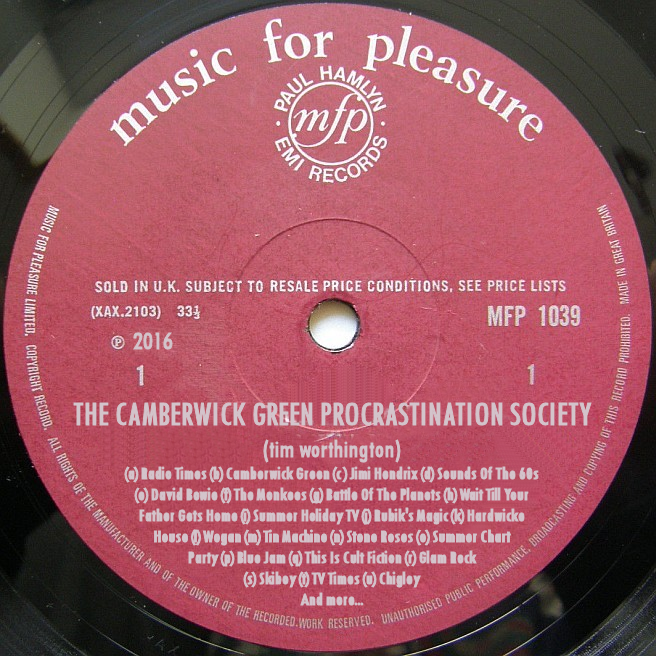
The Camberwick Green Procrastination Society

The Camberwick Green Procrastination Society by Tim Worthington

The Camberwick Green Procrastination Society is a book collecting some of my recent columns and articles, mostly in massively expanded form. And if you've already read them, there are brand new previously unseen features on Chigley and its role in the end of 'the sixties', Wait Till Your Father Gets Home and its role in the end of the hippy dream, and David Bowie's wiped early TV appearances and their role in being wiped. Also, if you get the paperback or eBook version, they're all in appropriate and painstakingly recreated magazine layout pastiches; you can see some examples of these below.

In The Camberwick Green Procrastination Society you can find out what Jimi Hendrix was really watching when he wrote The Wind Cries Mary, why old Glam Rock compilations are an ethical nightmare, and how time stood still in the middle of Summer Holiday mornings on BBC1, alongside in-depth features on Camberwick Green, Battle Of The Planets, Hardwicke House, Doctor Who, Blue Jam, The Monkees, The Stone Roses, Pink Floyd, the aural horror that is Summer Chart Party, and plenty more besides, including more detail than anybody ever wanted or needed about Skiboy. Even Skiboy himself.

You can get The Camberwick Green Procrastination Society as a paperback here, or as a full colour eBook here. Or, if you want it without the pictures but with an additional chapter on Trumpton, it's also available from the Kindle Store. And if all of that doesn't entice you, have a look at some of the pages...

The Camberwick Green Procrastination Society by Tim Worthington
Feature on Jimi Hendrix, Camberwick Green and The Test Card from The Camberwick Green Procrastination Society by Tim Worthington
Feature on David Bowie's lost early TV appearances from The Camberwick Green Procrastination Society by Tim Worthington
Feature on Hardwicke House from The Camberwick Green Procrastination Society by Tim Worthington
Feature on Tin Machine from The Camberwick Green Procrastination Society by Tim Worthington
Feature on Summer Chart Party from The Camberwick Green Procrastination Society by Tim Worthington
Feature on That 70s Show from The Camberwick Green Procrastination Society by Tim Worthington
Feature on Skiboy from The Camberwick Green Procrastination Society by Tim Worthington
Feature on Chigley from The Camberwick Green Procrastination Society by Tim Worthington
Feature on Radio Times, Doctor Who and Play School from The Camberwick Green Procrastination Society by Tim Worthington
Back cover of The Camberwick Green Procrastination Society by Tim Worthington


If you've already got The Camberwick Green Procrastination Society, you can find more books by me here.


The Camberwick Green Procrastination Society is available in paperback here, from the Kindle Store here, or as a full-colour eBook here.

TV's Newest Series


One thing that those big walloping housebrick-sized books about the 'end' of 'the sixties' never get round to mentioning is the decline of ITC. Once ITV's in-house powerhouse of dynamic fashion-driven action serials, when everything started sliding towards loudly-patterened curtains and mirror-disc top hats and all the hippies jumped in a bin to hide from the BBC Schools Diamond or something, ITC lost their small-screen hitmaking direction in a way that their Jaguar-swerving lead characters sure would never have done.

Perhaps reflecting the more street-level politicised nature of the times, as the seventies rolled on audiences were increasingly looking for something grittier and grimier featuring detectives who wrestled with real 'issues' rather than billionaire supervillains and dangerous new inventions, which ITC seemingly took as their cue to move in completely the opposite direction. They may have seen in the decade strongly with UFO, Jason King and The Persuaders! - all of which at least technically began production in 1969 - but within a couple of years they'd moved on to such unmemorable fare as Millicent Martin-starring swinging air hostess solving crimes in her spare time effort From A Bird's Eye View, a vision of jet-setting glamour that was already jarringly several years out of step with the times, and bizarre co-production funding-driven Gerry Anderson-helmed detective series The Protectors, which even the cast and crew later admitted that they never quite understood. They also cut the average running time of their shows from an hour to thirty minutes, presumably in pursuit of some unfathomable Stateside 'syndication' deal, which hardly even gave them the chance to develop properly as action-driven television shows, let alone catch on with audiences. All in all, ITC's single biggest success of the time was The Adventures Of Rupert Bear, a long way and yet only a few years from their triumphantly lording it over the Saturday Night schedules with Captain Scarlet And The Mysterons and The Prisoner.

Times change, though, and nowadays even the biggest and boringest of TV flops of yesteryear has a reasonably profitable degree of cult appeal. Good, bad and The Adventurer alike, you'll now find every last ITC series on DVD, on Bluray, and on repeat channels on an unending loop. With one very glaring exception. First seen in 1974 (though some sources insist that the two-part pilot The Mountain Witch was shown as a one-parter in an hour-long slot in 1973), Skiboy starred seventeen year old Steve Hudis - son of Carry On films creator Norman - as Bobbie Noel, a skiing instructor who solved crimes, mounted daring rescue missions and defused wartime bombs in the Swiss Alps in his spare time. And that was literally the only skill and advantage he had at his disposal - skiing. In crimefighting terms, that makes him about as useful as Nathan Petrelli.

One area where young Bobby's quaterpiping skills should have proved an advantage, though, was in attracting viewers. At the time, fuelled by spectacular Olympic displays, glossy glamorous books like Stein Eriksen's Come Ski With Me, and World Of Sport's need to fill fifteen billion hours every Saturday with stuff that they could actually get the rights to, skiing was seen as pretty much the high altitude of thrill-packed glamour and sophistication. Ski chases and Alpine romances were a regular feature in James Bond films, while the Milk Tray man wouldn't even have considered delivering a single Strawberry Temptation without getting in a spot of downhill carving along the way. 'Action' comics like Tiger and Hotspur were crammed with storylines about their stunt plane pilot/record-breaking sportsman characters making emergency landings in hazardous off-piste areas, and their readers also thrilled to the endless procession of ski-themed Fisher Price Adventure People playsets. Toblerone was still the classy 'expensive chocolate' gift of choice, and it was unusual to see a European-made soft porn film that didn't feature a spot of hot Ski Lodge lovin'. Erm, apparently.


There was more than enough behind the scenes ambition to pull this off too. Skiboy was masterminded by producer Derrick Sherwin, who had recently pulled off a successful full colour relaunch of the floundering Doctor Who - including casting Jon Pertwee - and cameraman Charles de Jaeger, who had worked on some of the early Quatermass serials and was also primarily responsible for the infamous Panorama Spaghetti Harvest hoax. Under the letterhead-friendly auspices of 'Skiboy Productions', they were basically handed a huge wodge of co-production cash and told to go off and make a series on location to capitalise on this most intangible of crazes; only a couple of years later, they'd doubtless have done it as a martial-arts themed show called 'Dragonboy', which just goes to show what a huge potential audience they had. And they were given all this on the basis of what Sherwin recalls as a two-paragraph pitch, and the belief that a combination of their experience and the sheer glamour and exoticness of the setting would make for a winning formula. It was like Heaven's Gate, Neither Fish Nor Flesh and The Contrabulous Fabtraption Of Professor Horatio Hufnagel all rolled into one. And about as successful as any of them too.

Is this really fair though? Does Skiboy really deserve its... well, it doesn't even really have a reputation, does it. Does Skiboy deserve its obscurity? There's only one way to find out - to do something that possibly nobody at all has done since the scattered repeats finally took an Eddie 'The Eagle' Edwards-style jump into oblivion in the late eighties, and actually watch an episode...


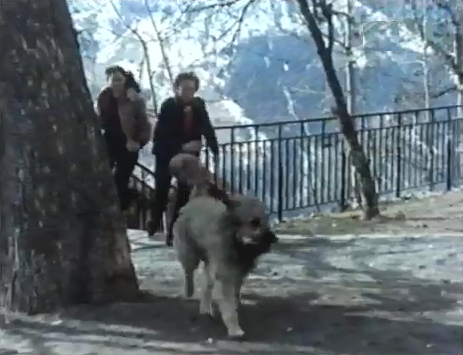
Written by Derrick Sherwin himself, Hot Ice opens with a pair of standard issue big-coated seventies 'heavies' more or less shouting "BLAH BLAH SECRET PLAN" as they approach the ski lodge - to the accompaniment of some fancy wah-wah guitar and electric piano - in search of someone to guide them up a nearby mountain. While they do so, Bobbie and his winsome fellow instructor stroke love interest Sadie pass by unwittingly in the background, chasing their bone-pursuing pet dog Gruff and uttering some conveniently foreshadowing dialogue about how "thieves always bury their loot". Resort head honcho Claire is reluctant to assign any of her staff to guide them up what turns out to be called Monk's Fall, pointing out that it's completely inaccessible in winter, but clearly has some suspicions about their motives for wanting to visit the 'beautiful' Chalet Blanc; and not without good reason, as once they're back outside, the flatter-nosed 'heavy' announces that he'll find someone to take them "even if I have to use some... persuasion", adding rather obvious-statingly that he'll "kill anyone who tries to stop us".


Anyone who knows their ITC will be aware that this is usually the moment when the opening titles kick in, and lo and behold we're promptly treated to some startling footage of Bobbie skidding down slopes and hurtling through the air, to the accompaniment of the truly unhinged theme song. Written by Anthony Isaac, who was not exactly noted for his subtlety and restraint in the art of small screen show-openers, this features a brass-led disco-funk combo whipping up a storm whilst a string section play as if running on an overload of adrenaline and some harmonising girls belt out "SKI-BOY! SKI-I-I-I-I-YEE-BOY" at appropriate intervals. If nothing else, the series is worth revisiting for this thrillingly alarming piece of music alone, which is uncannily close to the sound that Air would later turn into a global sensation; and as the series was actually rather popular in France, where it was broadcast as A Skis Redoubles! -  a more or less untranslatable title which basically means nobody skis more than him - it's not beyond the bounds of possibility that they might have been tuning in.


The 'heavies' take their coats off menacingly and approach Peter Stringfellow-esque ski instructor Jean, who rejects their substantial offers of money and sternly informs them of the story of how Monk's Fall got its name. It's exactly how you suspect it got it. Back outside, there's some more conspicuous exposition about how they have to get there before a fellow criminal is released from prison and "we can't wait... and we won't". With a menacing growl of slap bass, this is followed by some lengthy footage of them skiing and arguing, more or less confirming the suspicion that the pair are played by stuntmen rather than full-time actors. Bobbie and Sadie, watching from the top of a nearby slope, are also suspicious of them, but for very different reasons; they've noticed the ne'er-do-wells watching them, though not closely enough to get wind of the plot to kidnap Gruff to ensure their assistance. And sure enough, once they've gone for a nice sit down in the lodge, the hapless mutt is tempted away with a rather inflexible-looking chop and bundled into the boot of a car.


Bobbie and Sadie head out to look for the errant pooch, and split up after about eight seconds, upon which Bobbie is promptly approached by the suspicious characters, who persuade him to help them in exchange for Gruff's safety in the manner of Dino and Luigi Vercotti. Early the next morning, Sadie can't find her dashing chum, and that's because he's already headed out to help guide the crooks on their treacherous journey, which takes in some genuinely hazardous-looking ice-climbing, occasioning the nervier of the 'heavies' to throw a momentary panic and refuse to move any further; "then stay there", adds his more menacing chum, "you'll either fall off, or freeze to death".


Back at the lodge, Claire, Sadie and Jean are busily comparing notes about Bobbie's disappearance, Gruff's disappearance and their encounters with the two sinister interlopers, but bewilderingly manage to conclude that none of them are in any way linked. They're in for a surprise, though, as Gruff has somehow managed to tunnel his way out of the hut where the villains had stashed him, and bounds up to them like some snow-drenched Lassie trying to alert them to the situation. It's only at this point that Claire realises that she recognises the men and that they're actually dangerous criminals who'd been up to no good in the area a couple of years previously; surely you'd actually have to make an effort not to remember that?! A lengthy display of skiing across Monk's Fall follows before the trio arrive at the Chateau, with the bad guys electing to shoot the padlock off the door when they find it's frozen shut. "That was no hunting rifle!", exclaims Jean from some considerable distance away, informing Sadie to call the authorities as he races off in his car.


After Bobbie is unconvincingly thrown to the floor, the 'heavies' start chiselling open the wall and find a cache of stolen diamonds - "the only ice on this mountain that's hot!" - but while they're babbling some rubbish about the ghosts of the old monks hiding it, Bobbie makes his escape and deftly skies not only around their gunshots but with sufficient verve to cause the snivelling smuggler to tumble down the mountainside. Every action series from around this time was required by law to have a scene featuring a helicopter, and sure enough, that's how Jean, Sadie and a snow-copper in a furry hat arrive on the scene; the less easily dissuaded bad guy tries firing on them but they zoom in close enough to make him lose his balance, upon which Bobbie races up and literally skis the gun out of his hand. You don't get that in Sons Of Anarchy.


Back at the lodge, Gruff and Bobbie are both eagerly tucking into breakfast when Claire suggests that he's likely to receive a reward; like some slalom-friendly Alberto Frog, Bobbie announces that he wants the biggest ice cream sundae Sadie's ever seen, and - in as standard issue an ITC closing gag as it's possible to get - as a special treat he's going to let her watch him eat it. Then there's some really rather thrilling closing titles, in which Bobbie races down a slope, slicing up huge clouds of snow and zigzagging through what look like real-life skiiers, before pausing, grinning at the camera in close-up, and whizzing off across the horizon into the invisible distance... and that's Skiboy.


Never exactly the star of the TV slopes - some regions would hastily shunt it into their weekday children's schedules, while all that Look-In could find to say to promote it was that it was 'TV's Newest Series' - poor old Skiboy never quite made the jump to a second series. Before long it had become TV's Forgottenest Series, to the extent that only just over a decade later, the famously exhaustive fanzine Time Screen overlooked it entirely in a massive retrospective of ITC scriptwriter Dennis Spooner's career. ITC looked as though they were finding their feet again afterwards, with Space: 1999 and Return Of The Saint, but other ITV companies had stolen their thunder with the likes of The Professionals and The Sweeney. ITC's response to this was a significant and ambitious change of direction, turning their attention towards grittier and harder-hitting feature films; a plan which was derailed by their washing their hands of the already-completed The Long Good Friday, and then sunk completely by Raise The Titanic.

Given that it's quite possibly the first thing that anyone has said about it from that day to this, the first thing to say about Skiboy is that it's not actually a bad series. In fact it's actually rather charming and enjoyable, and certainly a lot more fun than Spyder's Web or The Zoo Gang to name a couple of contemporaneous ITC offerings. True, it's hardly The Singing Detective, and the all-too-obvious desire to make it as 'family friendly' as possible leaves it feeling a bit on the lightweight side, but it looks amazing and zips along at a fair old pace, and sometimes, that's all you want from a television programme. Viewers at the time might not have wanted it, but that's not really a good enough reason to leave it languishing on the archive shelves; after all, they didn't want The Strange World Of Gurney Slade either.

Skiboy isn't just a half-decent not-even-half-remembered action series from a lost age of television, though; it's also a fascinating snapshot of that lost age of television, and indeed in some ways of the world around it. It's a textbook example of how shows were commissioned and made in the days before focus groups and tone meetings, when anyone with a proven track record could pitch a basic idea, and more than likely be handed a wodge of cash and told to go off and bring home the televisual bacon; which admittedly Skiboy didn't exactly manage to do but they were at least allowed to try before failing. It's also a vivid depiction of the last gasp of that sixties and seventies fascination with jet-setting Eurocentric glamour, before harsh economic realities and The Sex Pistols saying 'BARSTARD' at Bill Grundy moved the sociolcultural goalposts and the entire world went on to washed-out 16mm ITN newsfilm. On top of all that, thanks to the combination of dazzling location footage and equally dazzling fluorescent Alpine fashions captured on garish oversaturated film stock, it doesn't even look like any other TV show of the same vintage; if anything, it looks closer to those films that you'd stumble across on SAT1 and Bravo at a million o'clock in the morning like Modesty Blaise, Vampyros Lesbos and that German one about the three girls who stole a speedboat and a cine camera and... um... sorry, you were saying? Anyway, the cold hard fact remains that no matter how many column inches of ecstatic raving-over the latest HBO/AMC/Showtime/They're Just Making These Up Now heavyweight drama might inspire, none of them will ever be as inadvertently redolent a document of their time as Skiboy.

So, there you have it. Skiboy may not be the greatest television series ever made, but nor does it deserve to be languishing at the back of a cupboard where it's been for so long that it's probably gone mad and thinks it's actually zigzagging between Melbourne House Software and Hardware lorries on the way to the nearest ski hire shop. Given that even Stainless Steel And The Star Spies has been dusted down for reassessment, it's high time that TV's Newest Series got an opportunity to be TV's Newest Old Series. Just don't ask me to reassess The Adventurer.


You can read more about Skiboy, and other examples of The TV That Time Forgot, in my book Not On Your Telly.