Showing posts with label the monkees. Show all posts
Can't Help Thinking About Me
Can’t Help Thinking About Me is a new book by me, full of old features given a new twist. It’s part autobiography, part cultural history, part bewildering manifestos about ridiculous sixties pop records and terrifying television puppets. Inside its massive page count you’ll find…
– An introduction from Samira Ahmed
– Over a hundred pages – and over three hundred footnotes – with all new material on how and why I came to end up writing about such obscure and absurd subjects
– Previously unseen features on Sound Of The 60s, Michael Caine films, The Ghosts Of Motley Hall, Chorlton And The Wheelies, and why I prefer forgettable cinematic rubbish to ‘landmark’ movies
– Previously little-seen features on Wait Till Your Father Gets Home, Chigley, A Clockwork Orange and David Bowie’s lost early television appearances, as well as a series of philosophical meditations on the para-cerebral properties of dubbed television bear Barnaby
– New and updated versions of the features on The Beatles’ Carnival Of Light and the 1970 Christmas Eve edition of Play School, with newly-discovered extra behind-the-scenes detail; yes, I do know what presents Brian and Julie gave each other now…
– What happened after I found some lost episodes of a late seventies BBC children’s programme
- At long last, the full version of the epic tale of my spiritual quest to find a copy of Music From BBC Children’s Programmes
– features on Radio Times, Jimi Hendrix, That Was The Week That Was, Camberwick Green, Trumpton, Chigley, The Beatles, BBC Test Card F, The Stone Roses, Blur, The Beach Boys, The Monkees, Smash Hits, Battle Of The Planets, Captain Scarlet And The Mysterons, The Mersey Pirate, Hardwicke House, Blue Jam, Elvis Presley, Doctor Who, 1986’s Top Christmas Present Wish List, why I really hated Play Chess, and much much more. Yes, including Skiboy!
You can get Can’t Help Thinking About Me in paperback here or from the Kindle Store here.
Can't Help Thinking About Me is available in paperback here or from the Kindle store here.
This Is The Camberwick Green Procrastination Society/Now On The Kindle Store For You To Add To Your Library!
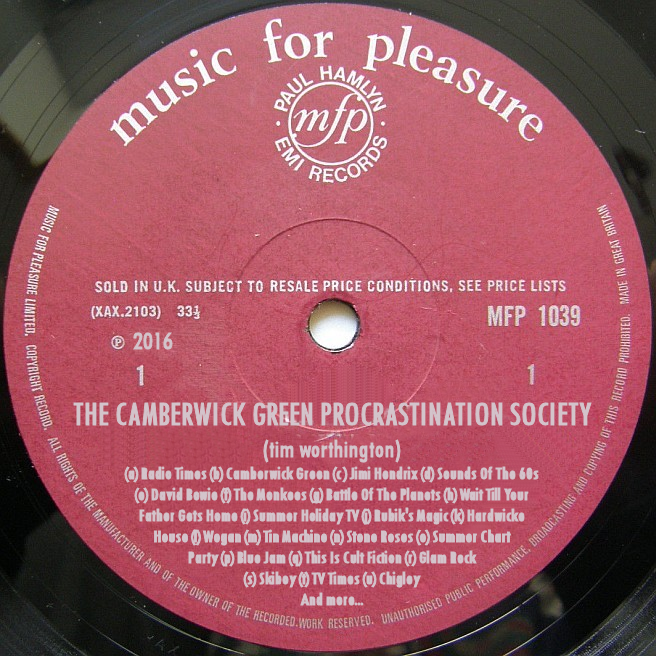
The Camberwick Green Procrastination Society, a book collecting some of the ridiculously lengthy diversions I've gone on about archive TV and pop music when I really should have been working on something more substantial, is now available from the Amazon Kindle Store. Regular readers may be interested to know that it includes exclusive and previously unpublished pieces on Chigley, Wait 'Till Your Father Gets Home and David Bowie's early TV appearances. Elsewhere there are features on Doctor Who, The Monkees, Battle Of The Planets, Tin Machine, Skiboy, The Stone Roses, Glam Rock, Jimi Hendrix, Hardwicke House, Rubik's Magic, Blue Jam and Camberwick Green. There's quite a lot about that, in fact.
You can get The Camberwick Green Procrastination Society from the Kindle Store by clicking here. Or if you'd prefer, you can still get the paperback from here, or the original full-colour eBook from here.
The Camberwick Green Procrastination Society
The Camberwick Green Procrastination Society is a book collecting some of my recent columns and articles, mostly in massively expanded form. And if you've already read them, there are brand new previously unseen features on Chigley and its role in the end of 'the sixties', Wait Till Your Father Gets Home and its role in the end of the hippy dream, and David Bowie's wiped early TV appearances and their role in being wiped. Also, if you get the paperback or eBook version, they're all in appropriate and painstakingly recreated magazine layout pastiches; you can see some examples of these below.
In The Camberwick Green Procrastination Society you can find out what Jimi Hendrix was really watching when he wrote The Wind Cries Mary, why old Glam Rock compilations are an ethical nightmare, and how time stood still in the middle of Summer Holiday mornings on BBC1, alongside in-depth features on Camberwick Green, Battle Of The Planets, Hardwicke House, Doctor Who, Blue Jam, The Monkees, The Stone Roses, Pink Floyd, the aural horror that is Summer Chart Party, and plenty more besides, including more detail than anybody ever wanted or needed about Skiboy. Even Skiboy himself.
You can get The Camberwick Green Procrastination Society as a paperback here, or as a full colour eBook here. Or, if you want it without the pictures but with an additional chapter on Trumpton, it's also available from the Kindle Store. And if all of that doesn't entice you, have a look at some of the pages...
If you've already got The Camberwick Green Procrastination Society, you can find more books by me here.
The Camberwick Green Procrastination Society is available in paperback here, from the Kindle Store here, or as a full-colour eBook here.
Dedicated, Inseparable, Invincible (Except When Confronted With Carnivorous Plants): Part 2
Watching The Fierce Flowers again - which isn't easy, as the DVDs have been out of print for quite some time - the first thing you notice is that each episode of Battle Of The Planets originally opened with a spoileriffic teaser with a silly bombastic voiceover, all of which were thankfully edited out by the BBC for transmission over here. Whether they made any other edits is difficult to determine from this distance, though it's quite feasible that they did, so potentially we're dealing here not just with a re-edited show in the style of The Monkees and The Banana Splits, but a re-edit of an already re-edited show. But before you start letting that possibility frazzle your mind too much, please rest assured that in a weird sort of double-negative way, in this scenario it doesn't actually matter. The Fierce Flowers had such an unsettling impact that no amount of reinstated snipped bits here and there could possibly amplify or intensify it in any way. It was as creepy as fuck and will always remain so.
Anyway, let's just quietly tiptoe past the jarringly ill-fitting teaser, as it's not only the one thing that was definitely not present in the BBC broadcasts, it's also structure-disruptingly liable to pre-empt some of the stuff we're most likely going to be covering later on, and above all is both annoying and rubbish. Instead, let's move straight on to the opening titles, and indeed to the two primary reasons why Battle Of The Planets seemed so dazzlingly, exotically and futuristically different from the norm. And from The Space Sentinels.
Ignoring the shameless typographic attempt at jumping on the slantily scrolling Star Wars bandwagon (or should that be Landspeeder?), if there's one thing that you can say about the Battle Of The Planets opening titles, it's that they were cut together by somebody who knew how to grab the target audience's attention. Spaceships shoot across the screen and we're introduced by a booming proto-Barrowman voiceover to G-Force, "five incredible young people with super powers", and - watching over them from Centre Neptune - 7-Zark-7. There's some edge-of-the-seat grandstanding about "surprise attacks by alien galaxies from beyond space", while Mark, Jason, Princess, Tiny and Keyop blast off in their signature multi-atmospheric transport The Phoenix, dodge an attack by SPECTRA's fighter pilots, and finally form a human pyramid and whirl around in a circle until they create a bad-guy walloping mini-vortex. And as they break away at its apex and tumble haphazardly through the clouds, there's an infamous glimpse of Princess' alarmingly detailed pants. "Always five, acting as one - dedicated, inseparable, invincible!" concludes Voiceover Man as The Phoenix pulsates into the legendary 'Firey Phoenix', and admit it, you're wanting to watch from that description alone, aren't you? And we haven't even started on THAT theme tune yet.
Hang on a minute, let's just rewind a couple of sentences there. It's the early eighties, it's the BBC, it's slap bang in the middle of children's television, and some animated eye candy's jaw-droppingly contoured scanties are taking up the lion's share of the TV screen. How in the name of every single letter to Points Of View about Grange Hill did that one manage to slip through?? Well, in all honesty, it was probably more to do with money than anything else. Although, as we have seen, the BBC were not exactly averse to going to the time and expense of making great big butterfingered cuts for a variety of reasons to the imported likes of The Monkees, The Banana Splits and Boss Cat (call it by its proper name), by this time their efforts were really starting to look a little bit embarrassing and a lot like battered and badly-edited film prints, yet purchasing shiny new replacement copies would have been well beyond their meagre means. It's more than likely that whichever newer broom was looking after their bought-in catalogue by then didn't want to pay for any more trims than were absolutely necessary, and certainly wouldn't have wanted a huge great Least Effectual Top Cat-style music-kilter-skewing jump-cut at a key moment, especially if it might have to be reverted a couple of years down the line, and so just left it in. As for how it got there in the first place, it's possible that Sandy Frank Entertainment may have seen it as a younger viewer 'excitement'-generating selling point, but it's more than likely that it just slipped the net when they were trying to eradicate every single other trace of unsuitability from the decidely more adult-aimed Japanese original. As we shall see, sometimes this 'adult' nature was just too strong to disguise with any amount of chopping and changing, and without wanting to put anyone off there are a couple of troubling hints to come that a quick flash of knicker might have been the least of Science Ninja Team Gatchaman's worries. Anyway, suffice it to say that this did not go unappreciated by a generation of pre-Internet youngsters who had to take their kicks where they could find them. And also the reason why if you Google for some combination of 'princess', 'battle of the planets', 'cosplay' and 'comic con', you might find yourself with some explaining to do.
Meanwhile, the aforementioned undisguisable origins of the show meant that the target audience were at least able to get another, very different sort of kick where they could find it. At that time, the lurid and vivid world of Japanese animation (and indeed 'suitmation') was something of a far-flung exotic mystery, barely known about even by those who 'know these things', and only infrequently and unrepresentatively glimpsed through clunkily repurposed monster movies, earlier TV cartoon manglings like Marine Boy, and the occasional awestruck whisper from someone whose older brother had read about something once. Along with the similarly Anglicised Star Fleet (or, in old yen, X-Bomber) and Ulysses 31 (erm, Space Legend Ulysses 31), it gave an exciting hint of a whole alternate universe of sci-fi-flavoured animated entertainment, although despite the iconographically recognisable design hallmarks few actually knew what it was, less still what it was called. Stuck for a genre name, some would simply resort to calling it 'A-a-aaaaaa', in reference to the downtrodden and enthusiasm-deficient sigh croaked by the inevitable Keyop-esque 'gawky non-human child' character as they were knocked to the floor by a guard, or, if raining, saw a bird's eye gleam or something. It wasn't until somewhere around the late eighties/early nineties, when home video became more widely and affordably available and Akira briefly became the underground cineaste's obscurity of choice before being taken up en masse by an army of grubby schoolboys in WASP t-shirts, that anyone really realised that it was actually a 'thing'. And even then they mistakenly referred to it as 'Manga' at first.
Of course, once 'Anime'-mania kicked in, news of Battle Of The Planets' true origins spread like SPECTRA-disseminated plant life, and almost overnight those chirpy linking droids went from being dimly recalled figurheads of childhood cartoon excitement to fandom-denounced hate figures, mounted on a virtual dartboard for over-furious proto-bloggers to throw uncensored Metal Bird Things at. Even sidestepping the humourlessness, the tedious purism and the undertones of smug 'I could do better at cartoons because I seened a cartoon once'-ism inherent in this kind of attitude, it's also one that should be challenged because, well, untampered-with Science Ninja Team Gatchaman was not the reason why we all fell in love with Battle Of The Planets to begin with. Viewers who didn't know any better enjoyed the episodes with 7-Zark-7 and 1-Rover-1 present and correct, not in spite of them, and that wasn't simply down to blinkered youthful inexperience as everyone detested Scrappy Doo and wished that they'd just go back to showing proper Scooby Doo, Where Are You?. They were as much part and parcel of the show's success and appeal as, on a similar note, Godzooky and Brock (who is provably 'canon') were to Hanna-Barbera's contemporaneous Americanisation of the similarly-sourced Godzilla franchise, and never let anyone tell you otherwise.
Of course, this partness and parceldom does mean that 7-Zark-7 and 1-Rover-1 are going to be featuring heavily in The Fierce Flowers, the two-part story that this has somehow managed to expand into a three-part review of, so maybe we should get on with talking about those actual two parts themselves...
NEXT TIME: 7-Zark-7 causes a new 'BBC Fakery' scandal, Zoltar forms a double-act with Stewart Lee, and we might actually get around to talking about those 'Spaceburgers' at last..
Anyway, let's just quietly tiptoe past the jarringly ill-fitting teaser, as it's not only the one thing that was definitely not present in the BBC broadcasts, it's also structure-disruptingly liable to pre-empt some of the stuff we're most likely going to be covering later on, and above all is both annoying and rubbish. Instead, let's move straight on to the opening titles, and indeed to the two primary reasons why Battle Of The Planets seemed so dazzlingly, exotically and futuristically different from the norm. And from The Space Sentinels.
Ignoring the shameless typographic attempt at jumping on the slantily scrolling Star Wars bandwagon (or should that be Landspeeder?), if there's one thing that you can say about the Battle Of The Planets opening titles, it's that they were cut together by somebody who knew how to grab the target audience's attention. Spaceships shoot across the screen and we're introduced by a booming proto-Barrowman voiceover to G-Force, "five incredible young people with super powers", and - watching over them from Centre Neptune - 7-Zark-7. There's some edge-of-the-seat grandstanding about "surprise attacks by alien galaxies from beyond space", while Mark, Jason, Princess, Tiny and Keyop blast off in their signature multi-atmospheric transport The Phoenix, dodge an attack by SPECTRA's fighter pilots, and finally form a human pyramid and whirl around in a circle until they create a bad-guy walloping mini-vortex. And as they break away at its apex and tumble haphazardly through the clouds, there's an infamous glimpse of Princess' alarmingly detailed pants. "Always five, acting as one - dedicated, inseparable, invincible!" concludes Voiceover Man as The Phoenix pulsates into the legendary 'Firey Phoenix', and admit it, you're wanting to watch from that description alone, aren't you? And we haven't even started on THAT theme tune yet.
Hang on a minute, let's just rewind a couple of sentences there. It's the early eighties, it's the BBC, it's slap bang in the middle of children's television, and some animated eye candy's jaw-droppingly contoured scanties are taking up the lion's share of the TV screen. How in the name of every single letter to Points Of View about Grange Hill did that one manage to slip through?? Well, in all honesty, it was probably more to do with money than anything else. Although, as we have seen, the BBC were not exactly averse to going to the time and expense of making great big butterfingered cuts for a variety of reasons to the imported likes of The Monkees, The Banana Splits and Boss Cat (call it by its proper name), by this time their efforts were really starting to look a little bit embarrassing and a lot like battered and badly-edited film prints, yet purchasing shiny new replacement copies would have been well beyond their meagre means. It's more than likely that whichever newer broom was looking after their bought-in catalogue by then didn't want to pay for any more trims than were absolutely necessary, and certainly wouldn't have wanted a huge great Least Effectual Top Cat-style music-kilter-skewing jump-cut at a key moment, especially if it might have to be reverted a couple of years down the line, and so just left it in. As for how it got there in the first place, it's possible that Sandy Frank Entertainment may have seen it as a younger viewer 'excitement'-generating selling point, but it's more than likely that it just slipped the net when they were trying to eradicate every single other trace of unsuitability from the decidely more adult-aimed Japanese original. As we shall see, sometimes this 'adult' nature was just too strong to disguise with any amount of chopping and changing, and without wanting to put anyone off there are a couple of troubling hints to come that a quick flash of knicker might have been the least of Science Ninja Team Gatchaman's worries. Anyway, suffice it to say that this did not go unappreciated by a generation of pre-Internet youngsters who had to take their kicks where they could find them. And also the reason why if you Google for some combination of 'princess', 'battle of the planets', 'cosplay' and 'comic con', you might find yourself with some explaining to do.
Meanwhile, the aforementioned undisguisable origins of the show meant that the target audience were at least able to get another, very different sort of kick where they could find it. At that time, the lurid and vivid world of Japanese animation (and indeed 'suitmation') was something of a far-flung exotic mystery, barely known about even by those who 'know these things', and only infrequently and unrepresentatively glimpsed through clunkily repurposed monster movies, earlier TV cartoon manglings like Marine Boy, and the occasional awestruck whisper from someone whose older brother had read about something once. Along with the similarly Anglicised Star Fleet (or, in old yen, X-Bomber) and Ulysses 31 (erm, Space Legend Ulysses 31), it gave an exciting hint of a whole alternate universe of sci-fi-flavoured animated entertainment, although despite the iconographically recognisable design hallmarks few actually knew what it was, less still what it was called. Stuck for a genre name, some would simply resort to calling it 'A-a-aaaaaa', in reference to the downtrodden and enthusiasm-deficient sigh croaked by the inevitable Keyop-esque 'gawky non-human child' character as they were knocked to the floor by a guard, or, if raining, saw a bird's eye gleam or something. It wasn't until somewhere around the late eighties/early nineties, when home video became more widely and affordably available and Akira briefly became the underground cineaste's obscurity of choice before being taken up en masse by an army of grubby schoolboys in WASP t-shirts, that anyone really realised that it was actually a 'thing'. And even then they mistakenly referred to it as 'Manga' at first.
Of course, once 'Anime'-mania kicked in, news of Battle Of The Planets' true origins spread like SPECTRA-disseminated plant life, and almost overnight those chirpy linking droids went from being dimly recalled figurheads of childhood cartoon excitement to fandom-denounced hate figures, mounted on a virtual dartboard for over-furious proto-bloggers to throw uncensored Metal Bird Things at. Even sidestepping the humourlessness, the tedious purism and the undertones of smug 'I could do better at cartoons because I seened a cartoon once'-ism inherent in this kind of attitude, it's also one that should be challenged because, well, untampered-with Science Ninja Team Gatchaman was not the reason why we all fell in love with Battle Of The Planets to begin with. Viewers who didn't know any better enjoyed the episodes with 7-Zark-7 and 1-Rover-1 present and correct, not in spite of them, and that wasn't simply down to blinkered youthful inexperience as everyone detested Scrappy Doo and wished that they'd just go back to showing proper Scooby Doo, Where Are You?. They were as much part and parcel of the show's success and appeal as, on a similar note, Godzooky and Brock (who is provably 'canon') were to Hanna-Barbera's contemporaneous Americanisation of the similarly-sourced Godzilla franchise, and never let anyone tell you otherwise.
Of course, this partness and parceldom does mean that 7-Zark-7 and 1-Rover-1 are going to be featuring heavily in The Fierce Flowers, the two-part story that this has somehow managed to expand into a three-part review of, so maybe we should get on with talking about those actual two parts themselves...
NEXT TIME: 7-Zark-7 causes a new 'BBC Fakery' scandal, Zoltar forms a double-act with Stewart Lee, and we might actually get around to talking about those 'Spaceburgers' at last..
Dedicated, Inseparable, Invincible (Except When Confronted With Carnivorous Plants): Part 1
As we've already discussed at some considerable real-Nesmith-hatted length here, the BBC didn't in fact commence their early eighties repeats of The Monkees with the actual first episode, Royal Flush, preferring for no readily obvious reason to open proceedings with the more assured twenty fourth instalment Monkees A La Mode. Instead, Davy's rapier-wielding beachfront entanglement in a plot to overthrow Princess Bettina of Harmonica would have to wait until the repeats were temporarily shunted from their inaugural weekday slot to Saturday Mornings, where it was fortunate - well, we say fortunate - enough to form part of one of the weirdest TV schedules of all time. No, not just one of the weirdest Saturday Morning ones. One of the weirdest ones ever. Full stop.
For reasons best known to themselves and to whatever had apparently leaked into their collective cerebral cortex, on 22nd August 1981, the BBC saw fit to hand over the summer-replacement-for-Swap-Shop Saturday Morning presentational reins to one Buzzfax. And despite the seemingly straightforward embarrassing-attempt-at-being-down-with-the-kids implications of title, this was no ordinary summer replacement for Swap Shop (and let's face it, the majority of them were very ordinary indeed). It involved no clean-cut aspirant Blue Peter presenters gamely attempting to link tedious filmed inserts about 'improving' hobbies and interests with sufficient verve to prevent a mass switchover to ITV. No up-and-coming pop stars were seen struggling through the throwaway b-side of their hit single to mass disinterest in lieu of a proper 'second number'. Instead, Buzzfax saw the whole ninety minutes thrown open to the 'backroom boys', with the full morning's entertainment presented entirely 'by' Ceefax.
Yes, you did read that right. For one week only, The Monkees, Battle Of The Planets, long-forgotten Popeye-affiliated Hanna Barbera canine gigantism third-divisioner Dinky Dog, and the inexplicably revived yawn-inviting Chopsticks-heralded slow-motion black and white comedy escapades of Edgar Kennedy (this week apparently seen facing off against 'The Big Beef') were interspersed with blocky renditions of their primary characters and chirpy quiztacular interjections from 'Buzz', a Ceefax-derived post-Space Invaders Vectrex Gaming System-esque geometrically askew character who may or may not have been voiced by the same bloke as Jig from Jigsaw, and whom in an early excursion into primitive multiplatform interactivity also introduced some puzzles that volleyed back and forth with those set in the back pages of that week's Radio Times. No prizes for guessing, then, that Jigsaw supremeo, Radio Times puzzle-setter extraordinaire, and veteran 'backroom boy' in general Clive Doig was the main creative mover and shaker behind Buzzfax.
In some respects, Buzzfax was an attempt to roll back the post-Posh Paws clock to the lawless frontier days of Saturday Morning TV, when programmes were linked by terrifying splurges of electronic noise and psychedelic graphics courtesy of the over-exclamation marked likes of Zokko!, Outa-Space! and Ed And Zed!, all of which with their dustpan-and-brush-in-a-cupboard-with-cables-in-it ambience did little to counter the prevalent juvenile lack-of-in-vision-continuity-fuelled assumption that 'The BBC' was a big empty building that showed the programmes via some sort of sentient machines that worked of their own volition. But by that point, of course, Noel Edmonds had not only brought 'in vision' continuity right slap bang into the middle of the whole shebang, but had done it with the sort of sense of fun that you weren't really supposed to come across in the square-jawed, improving world of children's television, so no matter how much technological wizardry may have been involved, there was simply no going back and poor old Buzzfax felt the full weight of force; in fact, it's interesting to compare this with the last gasp I Have A Horsey Neigh Neigh flooding of the afternoon Children's BBC schedules with ropey linking BBC Micro-derived 'computer graphics' a couple of years later before Philip Schofield was brought in to perform his own particular riff on the Edmonds format. Well it would be interesting to do that, except that it would be straying a little too far onto the 'serious' side of things for what we're trying to do around here. We're talking about some talking Teletext, for 4-T's sake.
Zokko!'s name might have rung out from the corners back in the day, but we weren't back in the day no more. The week before Buzzfax, outdoor pursuit-obsessed Hazel O'Connor-themed Peter Powell-fronted deluge of irritating chipperness Get Set For Summer had come to the end of its somewhat more conventional six week run. The week after, the very same programmes that had been bookended by 'Buzz' were left to fend for themselves in the continuity wilderness. Buzzfax lasted for one solitary week and was an experiment that was never to be repeated, and yet was so bewilderingly, well, bewildering that it burned itself indelibly into the memory of anyone who witnessed it. And yet this memory-searing may not even have been entirely down to 'Buzz' and his 888-troubling antics, as within its scheduling walls fell possibly the most disturbing, disorientating, disquieting and just plain inappropriate twenty five minutes ever to find their way into children's television. And no, it wasn't Edgar Kennedy.
First shown by the BBC in September 1979, Battle Of The Planets was infamously a redubbed re-edit of the 1972 Japanese animated series Science Ninja Team Gatchaman, which it's probably fair to say, what with its cross-dressing villains, neck-twisting wallops, 'choice' language and what have you, was originally aimed at a slightly older audience. It had been purchased by the massively-credited Sandy Frank Entertainment to cash in on the first throes of post-Star Wars spacemania, and retooled for wider merchandise-friendly Stateside consumption by cutting out whopping great inappropriate chunks, replacing them with new explanation-heavy linking footage featuring R5D4-infringing fretbucket 7-Zark-7 and his comedy electro-canine sidekick 1-Rover-1, adding a big walloping disco soundtrack, and generally renaming everyone, everything and everywhere until it was, to all intents and purposes, a different series.
Most of the time, though back-of-the-mind question marks did still remain over such widely-spotted anomalies as why Mark's metal bird throwing star thing caused the Spectra guards to recoil in incapacitated 'astonishment' or indeed what in the name of all that was suitable for the target audience was going on with a certain bit in the opening titles that we'll be coming back to very soon indeed, this audacious gambit worked and little of Battle Of The Planets' origins was perceptible to the untrained eye. Sometimes, however, much like when the BBFC tried and failed to make The Texas Chain Saw Massacre suitable for an 'X' certificate around the same time, the source material was simply too strong for any amount of re-editing to prevent its true nature from seeping through. And nowhere was this more obvious than in shudderingly-recalled two-part story The Fierce Flowers.
When the first part of The Fierce Flowers rolled up as an accident-rather-than-design component of Buzzfax, it wasn't actually the first time that it had been seen by an unsuspecting audience; over the Christmas of 1980, as part of a mighty school holiday mornings schedule that actually extended into the afternoon, and impressively included Chigley, California Fever and The Red Hand Gang alongside the expected likes of Lassie, Play Chess and Why Don't You...?, a couple of new episodes of Battle Of The Planets had sneaked out more or less under the radar. As they were shown on consecutive mornings in the no-man's land between Christmas and New Year when officially nothing ever happens and TV viewing-depleting visits to distant relatives are the order of the day, it's likely that most juvenile fans of the show missed one or both episodes, with only the briefest of glimpses of its bio-horror hardcore weirdness to play on their minds until the repeats rolled around. And when they did roll around, in that more accessible and noticeable Saturday morning slot, it's fair to say that The Fierce Flowers was what the young people call a 'game-changer'. But more on that in good time...
NEXT TIME: Princess' Pants, The Great 'Spaceburger' Shortage, and what people called 'Anime' before they knew it had a name...
Take A Giant Step
Over the years, without anyone ever asking or probably even wanting me to, I've no doubt given several wildly conflicting accounts of where and how my interest in sixties music started. If you listen to this interview here, you'll hear me talking about how it all really started when I got hold of a ropey C90 of legendary garage punk compilation Nuggets, and heard the terrifying juddering buzzsaw guitar opening of I Had Too Much To Dream Last Night for the first time. At various other times, I've gone on record and in print with similar recollections - 'anecdotes' would be erroneously suggesting that they were stories that actually went somewhere - about similar inaugural encounters with Shapes Of Things, The Tears Of A Clown, Alone Again Or, See Emily Play and doubtless several dozen others that I can't remember right now. Then there's that feature I wrote about Sounds Of The Sixties. I've probably even tried to pin the blame on the poor old Walham Green East Wapping Carpet Cleaning Rodent And Boggit Extermination Association before now.
The problem with all of these versions of events, though, is that they're all pretty much dependent on a pre-existing fascination with the hilariously amorphous concept of 'sixties' pop music. They're all ever so slightly similar accounts of where the story really started, rather than where it actually started. And if we're going to get anywhere near that - and indeed if anyone reading actually wants me to get anywhere near that - we're going to have to go back, give or take the odd Beatles film and/or cartoon, to when the BBC decided for no readily obvious or apparent reason to start repeating a TV series from almost two decades previously as part of their afternoon children's schedules.
Yes, I have tried and tried and tried to determine how and why The Monkees shored up in that post-school timeslot, but the reasons - if indeed there were any - have proved predictably elusive, so for now we'll just have to conclude that the BBC simply felt like showing them again. But shore up it did, and immediately caused a shockwave of baffled excitement as playground speculation ran rampant over whether those four identically shirted moptops that had achieved near-Rentaghost levels of laugh-inducement were 'new' or 'from them days'. As is only right and proper, Micky, Mike, Davy and Peter's antics and music quickly caught on in a way that probably nobody would really have expected of a fairly ancient imported TV show flung out as a bit of cheap filler. Birthday parties were momentarily suspended so that the assembled cake-crazed revellers could watch the episode with Stan Freberg as the toy factory owner, with howls of laughter greeting the scene where The Monkees accidentally invented a boomerang-esque toy that couldn't be thrown away - especially when Peter closed a window on it - that were quite possibly louder and more raucous than any actual party events. Reader's Digest's fortuitously-timed compilation Here Come The Monkees, which in line with their collectably esoteric wont placed hits alongside a handful of fairly obscure album tracks, proved a handy Christmas Present option for otherwise stumped relatives and gave their new-found fans the opportunity to enjoy the music without being distracted by speeded-up footage of chases on weirdly elongated bike-kart things. Those same after-the-event converts would quickly draw in their even younger siblings, giving rise to shared reminscences about how 'clever' they thought the lyric "Mr Green, he's so serene, he's got a TV in every room" was, or how weird that fast song with all the different coloured trumpets where Micky sang about them finding him in the morning wet and drowned was, or just how entertainingly re-enactable and generally sidesplittingly hilarious the 'Chaperone' episode was, in the same sort of circumstances where others would rightly elect to look jointly back on landmark family holidays. In truth, given their subsequent ubiquity in the Summer morning schedules, for some The Monkees actually were their holidays.
Many, if not most, would move on to other more modern thrills soon enough, but for some - like, you guessed it, me - this was an obsession that stuck. And, more importantly, led directly into other obsessions. Fascination at the fact that, as became apparent shortly afterwards during a brief spell of Monkee-free scheduling, someone had decided to copy it only more weirdly and with more cartoons about families who had a shrinking car and renamed it The Banana Splits Adventure Hour was one of the mundane yet intriguing things that got me wondering about the history of this television whatnot, and how it all fitted together and responded to changing fashions and values and advertising demands and what have you. And also, The Banana Splits Adventure Hour was mindblowingly off-the-wall and had even better songs still... but that's a subject for another post. A constantly thwarted desire to see The Monkees' elusive and rarely-discussed big-screen outing Head, which finally showed up on Channel 4 in the late eighties (and let's not even get started on the long, long hunt for 33 1/3 Revolutions Per Monkee), and the quest for tiny scraps of information in whopping great oversized books in the Film And TV section of the local library, was instrumental in instituting a fascination with other neglected and forgotten corners of cinema history. Later, I would have enormous fun disproving the longstanding myth that Head was never shown in the UK at the time of release, but again, that's another story. More significantly, the search after seeing Head for a copy of The Porpoise Song - you would not believe the prices that the not-yet-reissued soundtrack album commanded in those days - led me to an obscure import-only American psychedelic compilation that also featured the likes of Love, The Turtles, The Seeds, Strawberry Alarm Clock, Vanilla Fudge and Kenny Rogers And The First Edition. Whilst in that record shop, I also picked up a VHS bootleg of episodes of the TV series, which included the one where their old mucker Tim Buckley strummed and yodelled a really rather startling song at the end whilst sat on a smashed-up old car. It is safe to say that I was being ever so slightly lured in a certain musical direction.
It's also safe to say that we're also being inadvertently ever so slightly lured in that certain musical direction again now, which isn't so much addressing the conundrum outlined in the opening paragraph as replicating it entirely. So before we get irretrievably diverted and caught up in endless recollections about hunting down copies of Super K's Bubblegum Explosion, let's get back to what this outbreak of rambling originally set out intending to do, and take another look at that episode of The Monkees that so captured all those imaginations all that time ago. As it made such an indelible impression, we won't be needing BBC Genome to tell us that the episode in question was Monkees A La Mode - which, incidentally and astonishingly, still isn't available on DVD over here - so let's just put down the Tommy James And The Shondells 'Original Album Series' box set and get on with it, shall we?
Despite what you might not unreasonably assume, Monkees A La Mode was not actually the first episode of The Monkees but the twenty fourth (though we might also have reason to similarly revisit the actual first episode, A Royal Flush, very soon indeed... but more about that later); predictably there is no discernible rhyme, reason or logic to them, but all the same we're playing by the BBC's idiosyncratic rules here, and that's something that will come very much to the fore in a couple of paragraphs' time. Equally surprisingly, Monkees A La Mode doesn't open with a trademark display of four-handed Beatle-resenting social satire quickfire japsesmithery, but with one of those 'cold opens' that are all the rage now (or at least since Lost did one and everyone copied them), featuring an icy behatted career woman, a mod-attired groovy chick, and a camp psychedelic dandy getting up to all manner of Ugly Betty-prefuguring fashion industry-lampoonery in a Pop Art-styled publishing office as they rifle through pics of up-and-coming celebrities to feature in a forthcoming spread, alighting on some black and white glossies of The Monkees and summarily announcing plans to make over the long haired weirdos 'in our own image'. Then the action flips over - literally - to the long-awaited Monkee hangout, where the invitation to appear in Chic magazine is greeted with no little disdain, with Davy volunteering the style tip "why not take little metal bottle tops and nail them to your living room floor? It gives you the impression that you're walking... on... little metal bottle tops". Peter, however, is impressed that it features a 'serial' every month - "this month it's cornflakes", he adds whilst decanting some from the magazine into his bowl.
Then it's straight into the opening titles, but not the opening titles as anyone who watched those repeat broadcasts would know them. In the years since The Monkees had first been shown, the BBC had made all manner of 'improvements' to their purchased prints of the show, from removing flashframe cutaways and onscreen caption gags - you can bet the quick burst of that end credits montage of them trying on trendsetting hats that appeared during this episode's opening sequence had gone, for starters - to removing entire songs for no readily obvious reason. The Monkees was, of course, far from the only show to be subjected to this often blunt-scissored reappropriation, and not too far from it in the repeat schedules you would often find The Banana Splits (as it was renamed in ad-free BBC-land due to no longer lasting an hour), which had somehow mislaid the live action Danger Island serial along the way, and the famously doctored prints of Boss Cat (we'll call it by its proper name around here, thanks) which had been hamfistedly whittled to remove any trace of inadvertent free advertising for a certain pet food manufacturer, with the truncated opening titles cutting mid-Dibble-disobedience to an infamously shoddy title caption card, and a whopping great mid-lyric jump cut as he prepared for bedtime in a bin in the closing credits. Quite when and why this happened in the case of The Monkees is anyone's guess, but at some point the BBC's prints all had the series two opening titles edited onto them, which is why most viewers would probably be expecting the Wild West/Foreign Legion/Live Performance/Running Away From The Tide antics and the Peter? Peter! gag, but instead get an entirely different load of clips with the Monkeemobile surprisingly very much to the fore. And, erm, Mike sitting on a skateboard. What's more, it's followed by a Kellogg's sponsor bumper with its own Monkee jingle and box-hoisting comedy antics, which would doubtless have been binned before this episode got anywhere near the BBC. Then at last there's the familiar Four Faces On Orange Background caption card and brief harpischord reprise of the theme, but it's already obvious that this is, in some respects, going to be a slightly different experience to that of those edit-unaware youngsters watching way back when. But are we going to put this feature on hold for several months while we track down a possibly non-extant copy of that bizarre BBC-mangled version? Are we Mijacogeo.
Instead, it's straight back to the Monkees' joint, where a quick burst of polo-necked cod-Shakespearianism gets derailed by the arrival of the put-upon fashionistas - Tobi Willis and Robroy Fingerhead to give them their full names - wondering aloud how they are going to whip these long-haired scruffians into photoshoot-friendly shape. Their suggestion is that they should show the world "what you are and the way you live", to which Davy responds with alarm "you want to get us arrested?", and earns a Snorky-esque timpani-accompanied elbow in the ribs from Mike for his troubles; in an amusing bit of postmodernism, it appears that Davy has actually made this noise himself, and he sternly reminds Mike "don't do that". Some journalistic rifling through the band's bric-a-brac - including that never-explained Gerald Campion-alike ventriloquist's dummy - ensues, all of it hampered by a manically flailing Peter and sarcastically sceptical Mike, though it's actually the surprisingly touchy Davy who takes passionate exception to the shorthand-happy twosome's snobby dismissals. Micky just stands on the sidelines smirking, as though he's waiting for the right moment to deliver a scene-flattening one-liner, and sure enough it's him who delivers the spurious historical-one-line-cutaway-accompanied claims that the the various items of junk dotted about the place were in fact handed down a Monkee line of succession by the likes of George Washington and Paul Revere. Robroy remains cattily unimpressed, but Tobi is more sympathetic and asks them to come to the office at 9am the following morning. "What have we got to lose, fellers?" asks an unconvinced Davy. "Our shirts" is the group reply. You can guess the cutaway.
The following morning the Wilhelmina-Slater-Meets-Helen-A-esque Madame Quagmeyer is ruminating on "the worst looking dummy I've ever seen" when, bang on cue, Peter ambles into the studio. After being introduced to some haughty society gal-type researchers, occasioning Mike to 'introduce' himself to the other Monkees, Micky to try and seduce one by posing as a Chinese-born French-talker, Davy to remark that what he looks for in a girl "depends on what I've lost", and Peter to strike up a conversation with a lamp, they are ushered before the camera, where Robroy attempts to get himself on the Olympic bitching team with exasperation at their posture and lack of colour-coordination (not to mention Micky's incessant drumming), before it all degenerates into a performance of Davy-sung second album filler Laugh, accompanied by all manner of high-speed photo session diorama slapstick ranging from Micky wrestling with a stuffed tiger to Peter larking about with giant scissors and pencils and Davy being pursued by an alarmingly realistic-looking toy chimp. In a gleeful note of subversion, even some audience-pleasing shots of them actually smouldering for the camera get the rug pulled from underneath by the unexpected addition of comedy 'arrow-thru-head' props and what have you, simultaneously both acknowledging and refusing to take seriously the main reasons for the band's popularity.
Madame Quagmeyer is so pleased with the results of the photo session that she screws up the pasted-up pages without reading them and flings them binwards in front of Tobi's astonished face, and duly commissions Robroy to make a second attempt at it; in true media creep fashion (and indeed fashion), he's already got one ready in his jacket pocket. Meanwhile, back at the pad, the boys are busying themselves in, erm, feeding a toy giraffe when a procession of angry girls turn up at the door to slap them and a note around a brick comes through the window (which Davy presumes is "an advert for a glass factory"), before Tobi finally turns up with the long-awaited copy of Chic - "we haven't read it, but we've a feeling some of our friends have", muses Mike. Indeed, Robroy's hatchet job repositioning them as cultured aesthetes and overall snobs is so denigratingly effective that it has caused Tobi to quit her job in a fit of ethical pique. Flushed with success, Madame Quagmeyer sends them a telegram demanding that they represent her at The Young American People Trophy Award Thing later that evening, but while Davy and Micky propose replying with 'Monkee Telegram 26a' ("you can take your trophy and..."), they inevitably elect instead to turn up to the awards with a plan to create mayhem.
What follows is a description-defying frenetic madcap explosion of mime, sabotage, vandalism, snoring, babbling, pratfalls, bizarre accents, loose-limbed tomfoolery and close harmony barbershop caterwauling, striking terror into the very cultural sensibilities of the assembled 'suits', and culminating in them dedicating the award to Robroy, whose attempts to sneak out with his reputation intact are thwarted by more choreographed Monkee antics. Instead it's the boys who flee the building, performing conjuring tricks and building towers of teacups as they go. The next morning, they turn up at the Chic offices demanding a retraction, only to find that Tobi is now editor, with Robroy and Madam Quagmire as her meek and terrified assistants, and that despite this apparent game of musical office chairs basically nothing has actually changed. Rather a strong note of social satire for a sitcom widely derided as inconsequential trend-surfing zaniness-heavy appearing-and-disappearing-on-top-of-hills-fixated Beatle-plagiarising fluff to end on, you might think.
Except it's not quite the end of the episode itself, as there's still a mimed performance of then-as-yet-unreleased corker You Just May Be The One - written by Mike, and with most of them contributing to the instrumental backing, so stick that in your Not Even Mike Nesmith's Real Hat and smoke it - followed by the familiar end credits only with Variety-sized Kelloggs boxes troubling their faces. And, well, that's Monkees A La Mode, the very same episode that brought their getting the funniest looks from everyone they meet to a whole new audience way back when, and in its own small way did a large amount to introduce the idea that the pop music of the past could be resold to those outside of the more nostalgic members of their original target audience. Whether that was a good or a bad thing is something that you will need to take up with your nearest Fourteen Thousand Hits Of The Sixties - The Era That Defined An Era (Some Tracks Have Been Recreated Using As Many Of The Original Artists As Possible) box set.
So, how does Monkees A La Mode measure up to the reaction that it unexpectedly caused back then? Well, that's something that's very difficult to gauge, mainly on account of the fact that the entire attitude towards, and availablity of, archive media of all forms has so fundamentally shifted since then (and in a way that is most definitely a good thing). Despite the juvenile confusion over whether it was 'new' or not - in itself an indication of just how little archive material you'd find on television in those days - it was a garish film stock-facilitated window into the sound and style of another age at a time when ninety nine percent of anything that wasn't one hundred percent current was locked away in a big box labelled 'the past', and even something like Ragtime could seem like a hazy memory only a year or two after they stopped showing it. Or, if you prefer something a bit culturally, chronologically and geographically closer to The Monkees itself, the original Scooby Doo, Where Are You? did after it disappeared for a couple of years to be replaced by wall to wall Scooby Doo And Scrappy Doo. Even though, as noted earlier, this episode is bafflingly not commercially available, it only took me a couple of seconds to find and start watching it (yeah, and what are you going to do about that, Ian Screen Gems?; bring it out to buy and I'll buy it), and that couldn't be further removed from the days when you were lucky if you saw twenty seconds of Peter And Gordon during a local news report on someone 'bringing back' the 'swinging sixties'. And that's not even taking into account the fact that this is a substantially different cut of the episode to the one that went out at the point we're harking back to. These things do make a difference you know. As you'd know if you'd heard the album edit of The Porpoise Song.
What it is easy to conclude, however, is that it's a good deal more sophisticated than zinger-and-camera-trickery-festooned memory and columnist prats who scoff that they weren't any good until Head might suggest, and certainly streets ahead of the likes of The Ghost And Mrs Muir that some would appear to want to retrospectively relegate it alongside. The satire of the fashion industry is much more barbed and disdainful than might perhaps be expected - something that was also very much true of the subjects tackled in other episodes - and in that sense, with all the music and film tinkering taken into account too, it's a lot closer to The Goodies than to The Mothers In Law. On a side note, it's also surprising to see just how involved as a character Davy was; often misrembered as a perma-chipper ludicrously-accented number-maker-up whose primary purpose was to fall inconveniently in love - an misconception that he admittedly did little to help with his self-parody bits in Head - here he's actually shown to be the most cynical and at times even most surreal of the four (which is no mean feat), though perhaps that kind of sardonic wit is easily lost on younger viewers. Even so, it's precisely that kind of hidden depth that caused it to become precisely the kind of renewed success it was; practically every other fondly-remembered comedy from the children's schedules around the same time, from Seaview and Maggie to Educating Marmalade and Behind The Bike Sheds to Smith And Goody and Luna, credited its audience with an intelligence and sophistication that was rarely to be found in any of the rest of the output aimed at them, which is perhaps why we're talking about them now and not sodding Brendon Chase.
So that's why The Monkees are still watched, listened to, enjoyed and indeed talked about now in a way that certain of their self-aggrandising contemporaries only ever have been in their own heads. Also, I would like an award for resisting the temptation to call this article 'Monkee Business'. I thank you.
Time Will Crawl
Every day during the school summer holidays, at somewhere around 10:55am on BBC1, time would stand still.
This was, of course, the weird five minute limbo between what the TV schedules delineated as the 'morning' and the 'afternoon', when the initial crack of dawn exhiliaration at a lack of school and a couple of hours' worth of mostly pretty good programming (and, let's be honest about this, the BBC's Monkees/Pink Panther/Battle Of The Planets-heavy lineups were always preferable to ITV's lazy slinging out of a ropey film and an even ropier imported 'edutainment' series like 3-2-1 Contact or Unicorn Tales) gave way to a realisation that an afternoon of mindless ennui and parental-instigated trudging around hardware stores would follow. And in between those two extremes fell an atemporal vacuum that seemed to stretch on into infinity.
Imagine, if you will, that time had been stopped by Hiro Nakamura right in the middle of the slowing-down-and-speeding-up bit of Time Has Come Today by The Chambers Brothers at the exact same moment that the mechanism of the Trumpton town clock was jammed by that paint pot, and amplify the effect tenfold, and you're not even halfway there. It's not even possible to use the scribbled-in-the-margin reference to those slow motion sequences in Doctor Who And The Time Monster, or indeed the gag about it making Rag Tag And Bobtail look like The Wizard Of Speed And Time stuck on fast forward, as that would give the impression that time still perceptively moved forwards during those nominal five minutes, which it most certainly did not. The accepted boundaries of chronometric physics were simply not interested in applying.
And it was in this Galileo-averse gap in the schedules that the most banal, inconsequential and interminable animated series ever committed to celluloid would set up camp, and not so much refuse to leave as expand exponentially to fill the void. The worst offender of these by some considerable distance was C.P. And Qwikstitch, which depicted the cheaply rendered escapades of two miserable scrap-hewn R2D2 and C3PO emulants encountering the inevitable 'problems a little like yours and mine' whilst stranded on spare part-strewn planet Junkus Minor; literally a piss-poor imagination-free counterpart to Droids. In fact it's quite possible that nothing ever actually happened in it at all, but so powerful and pervasive was the accompanying eradication of temporal awareness that there was no option but to watch. Even the act of changing the channel was too deeply rooted in established scientific frameworks to seem feasible. The Why Don't You? Gang tried to warn us all to switch off our television sets and go out and do something less boring instead, they really did.
Eventually, after what seemed like whatever the equivalent of millennia are in a parareality with no use for gradations of time, normality would jolt back in with the brief and quickly faded out thrill of the Wimbledon/Cricket opening music. And yet even the phenomenon itself seemed to last for longer than it actually did; by 1986, with the rolling out of a structured BBC daytime service, and the associated move towards branded and strip-stranded children's programming, that five minute black hole of time had all but collapsed in on itself under the combined onslaught of But First... This and Andy Crane reading out the top ten in a leather jacket. The BBC did try to harness its reality-warping properties with daytime schedule staple Five To Eleven, which offered a five minute window for 'reflection' as bland actors read out bland poetry and some panpipe music played over a photo of a gorilla, but that simply made time appear to be moving very very slowly, not stopped completely. It just wasn't the same thing at all.
Whether C.P. and Qwikstitch ever managed to find their way off Junkus Minor is something that, frankly, nobody knows nor cares about. But in a completely unintended sense, their adventures took them into a realm of scientific improbability that even Steven Moffat-era Doctor Who would have had second thoughts about. Well, possibly.
This Was... Cult Fiction Part 4: 'This Is... Son Of Cult Fiction'
Late in 1970, when progressive rock was still relatively new and exciting and its key practitioners weren't above having a laugh (or indeed composing something short enough to go on a 7" single), Pink Floyd were hard at work on that most radical and indeed progressive of concepts - a song that would take up the entire side of an album and stretch the available studio technology to its limit. They had of course been building up to this for some time - from the nine minutes and forty one seconds of Syd Barrett-led space-riffing that made up Interstellar Overdrive to the previous year's side-long instrumental suite Atom Heart Mother - and indeed would go on to take the idea further and expand the 'concept' to a whole album, but the technically demanding epic that they had variously labelled 'Nothing - Parts 1-24', 'Son Of Nothing' and 'Return Of The Son Of Nothing' marked a real turning point. Unfortunately, this turning point involved everyone else turning into a humourless cul-de-sac where 'real' musicianship was prized above all else and frivolity was to be avoided at all costs. Possibly not what they had envisaged when providing a wry commentary on some bacon frying onstage the year before.
Late in 1996, things were starting to get all serious and heavyweight and stoneyfaced yet again, with the likes of The Verve and Kula Shaker and even makeweights like Embrace reminding us all at every given opportunity that their music 'meant' something more substantial than silly frivolous Britpop, and the laugh-a-minute likes of Trainspotting and Our Friends In The North doing much the same for visual entertainment. Leading the charge were, inevitably, Oasis, though much like a certain other Knebworth-favouring outfit once upon a time, maybe that wasn't what Noel Gallagher had in mind back when he was composing witty throwaways like Married With Children. Suffice it to say that the mood suddenly became very much stop-that-laughing-at-the-back fact-times-importance-equals-news mister-carpark-has-been-kind-enough-to-come-here-this-afternoon-all-the-way-from-nottingham, and even the most hardended disliker of Play Away-esque novelty gurners Space must have winced at the Select review dismissing their album Tin Can Alley or whatever it was called alongside a cartoon of The Bloke From Space in a Hawaiian shirt taking a photo of himself on a 'fun camera' set against giant Rushmore-esque stone faces of Richard Ashcroft and 'Thom' Yorke. Perhaps it's no coincidence, then, that the volume of Cult Fiction that sought to take a snapshot of this era - and followed on from the infectiously light-hearted This Is The Return Of Cult Fiction - should have adopted the mantle This Is... Son Of Cult Fiction.
Yes, only halfway through the entire series, the titular '...' that everyone automatically associates with Cult Fiction finally puts in an appearance. And... there's not really very much more to say about that, so let's take a look instead at the other more obvious visual re-routings. Gone are the jaunty retro flashes and judicious use of whitespace and pale colours that had defined both This Is The Return Of Cult Fiction and This Is Easy (and even arguably, to an extent, the original This Is Cult Fiction itself), replaced by moodier shades of blue with appropriately gritty decorative pattern, Action Movie-friendly fonts, and a whopping great cover illustration of a psychedelically-decorated cross between The Mystery Machine and the Fisher Price Daredevil Sports Van. Something about all this would seem to suggest that we're not exactly in for an album's worth of flute-heavy seventies sitcom themes, hamfistedly faded out or otherwise.
Yes, it's 'serious' film music for 'serious' film fans, and pretty much the same for the handful of 'allowed' TV shows, nearly all the way here, with no psychedelic spies, wide-tied crooners or surrealist animated dogs on hand to frighten people. The rough, tough outdoorsy vibe is almost overpowering, and there's very little room left for anyone who's turned up hoping for a bit more safari-jacketed fun. This is, on face value, the compilation equivalent of Paul Weller's contemporaneous bit of ridiculousness Woodcutter's Son. But it's also a Cult Fiction compilation, so we're almost certainly in for the odd surprise or two.
This Is... Son Of Cult Fiction kicks off in fine style with Quadrophenia's dynamic curtain-raiser The Real Me, sounding so punchy and loud that you feel like jumping onto a scooter in front of some back-projected London streets and shouting "BOLLOCKS! FUCK OFF!" at some rockers, followed by the dynamic collision of Loungecore and hard rock in CCS' one-time Top Of The Pops-introducing cover of Whole Lotta Love, but it all goes very rapidly downhill. Well, not downhill so much as off-script. Film and TV-associated the opening tracks may well be, but they are both 'proper' songs that predated their use in a soundtrack capacity, and, well, that's what the bulk of this compilation is composed of. There are very few hard-to-find gems previously hidden away in title sequences or beneath film dialogue here, just a collection of admittedly very good pop and rock songs that happened to later show up on soundtracks that anyone could have got hold of and stuck together on a tape easily enough. What's more, it's all very much leaning towards the bluesy stoner-friendly hard-rock gentlemen-welcome-to-the-second-base-mobile end of the scale, with the likes of All Right Now, Born To Be Wild, Smoke On The Water and Be-Bop-A-Lula queueing up to give you the impression that you've inadvertently picked up one of those point-missing late seventies The Old Grey Whistle Test spin-off compilations by mistake. Throw in a Trainspotting-referencing Lust For Life and it's all starting to sound a bit like what the most boneheaded of 'New Lads' circa 1995 would put onto the student union jukebox on a loop to show them namby pamby Blur fans wots wot uh hur hur hur.
Meanwhile, the actual from-the-original-soundtrack selections start off well with the theme from The A-Team, complete with oft-omitted Hannibal-dressed-as-a-crocodile middle eight, but quickly lose their way to the extent that it's actually a challenge to listen towards the end. Echo And The Bunnymen's bafflingly overlauded banda copier facsimile of People Are Strange from The Lost Boys and Urge Overkill's still-overexposed sub-Crash Test Dummies Strepsil-averse twang through Girl, You'll Be A Woman Soon are skip button-friendly enough, but out in the furthest reaches you'll find such endlessly listenable fare as Duelling Banjos from Deliverance, the theme from Northern Exposure (so devoid of melody that it makes those of The Cosby Show and St. Elsewhere look like lost Gershwin tone poems), and John Williams arpeggiating his way through Cavatina, included here on account of its The Deer Hunter credentials though surely it would have been more saleable to the album's target audience on the basis of its contemporaneous adoption as the 'The Gallery' music in Take Hart. True, the theme from M*A*S*H (as performed by, of course, 'The M*A*S*H') is on board to add an upbeat note (well, relatively speaking), but when the most musical selection in this long procession of album-closing atmospherics is that Calling You song from Bagdad Cafe, you know it's set to be something of a slog. In fairness it all just about works in the context of the compilation's 'mood', but the last album's sign-off was the theme from Roobarb. All of this 'serious' business can sod off and frown to itself in the corner, frankly.
Fortunately - and indeed precisely why this prolonged downbeat ending works in the context of the album as a whole - there are a couple of brighter passages earlier on. There's a refreshing run of mid-sixties sourced psych-tinged selections midway through, taking in White Rabbit, Venus In Furs, Louie Louie, Green Onions and Herbie Hancock's Deee-Lite sampled Bring Down The Birds from Blow-Up (which is a convenient point at which to mention the nameless NME hack who, while sneering at a James Taylor Quartet album in a wince-inducing 'look at me I'm controversial' fashion around this time, scoffed of their cover of the main theme from Blow-Up that "halfway through they decide to start playing Groove Is In The Heart for some reason"), though the lone unwelcome feature of the previous Cult Fiction album makes an equally unwelcome reappearance here. Presumably for space-saving reasons, the compilers have opted for the shorter edit of The Monkees' The Porpoise Song from the actual Head soundtrack album, which is more of an audio collage than a collection of songs, meaning that we get the abrupt police siren-drenched fade in while the glorious extended coda is completely missing, and it's literally not half the song it should be. Still, it must have been worth it to get the Northern Exposure theme squeezed on there.
Meanwhile, if you've been paying attention, you'll already be aware that the greatest strength of the Cult Fiction series was that the compilers were always prepared to go just that little bit further and include rarities and obscurities that were wowing fans of the genre or scene and deserved wider exposure, and happily This Is... Son Of Cult Fiction is no exception. Not only do we get Warren Zevon's decidedly odd (though not that odd when you know about his former musical escapades as half of Lyme & Cybelle) slice of late seventies soft-rock Werewolves Of London, which like Brown-Eyed Girl, I Believe In Miracles and The Whole Of The Moon is one of those records whose enduring popularity far outstrips its actual success at the time, there's also the sexually aggressive sitar groover The Lions And The Cucumber by Vampyros Sound Inc., drawn from the soundtrack of deeply hallucinogenic early seventies Spanish horror/soft porn crossover Vampyros Lesbos, which like many films of a similar vintage, origin and persuasion had recently become a cult favourite with UK viewers on account of their Sunday night appearances in stray German sattelite channels (a phenomenon that you can read more about here). In case you were wondering, Vampyros Lesbos is set on a party island that hides a secret society of nubile young lady vampires desperate for a bit of girl-on-girl B Negative-siphoning action. And if you're thinking that sounds like the plot of an episode of Buffy The Vampire Slayer only with more shagging, or indeed like the plot of an episode of Torchwood only with less shagging, you'd be exactly right. By the end of the year Quentin Tarantino would have reused the track in Jackie Brown, but this compilation came out nearly twelve months earlier and, in effect, the Cult Fiction compilers had outdone the very person they were originally inspired to emulate. Stitch that, 'Trackspotting'.
Yet for all of its isolated shortcomings, it has to be said that This Is... Son Of Cult Fiction hangs together incredibly well as an album. Though the preponderance of well-known rock classics makes it by far the least interesting of the series, this is actually a strength from a listening point of view, starting off as a superbly judged bit of air-punching anthemic fun before taking a turn in a weirder - and ultimately bleak and haunting - direction. Meanwhile, Pink Floyd's follow-up to the album that nearly had 'The Return Of The Son Of Nothing' on it, as the history books know only too well, built on their experiments in a direction that saw it unexpectedly become purportedly the biggest selling album of all time. The follow up to This Is... Son Of Cult Fiction, however, didn't...
Subscribe to:
Posts (Atom)